The Rijksmuseum in Amsterdam is presenting a landmark retrospective of Willem de Kooning that marks one hundred years since the Dutch artist stowed away to New York. This vast exhibition showcases the abstract expressionist's fierce boundary-pushing and illustrates his lifelong struggle against the very conventions that shaped his formative years. According to the museum, the show brings together more than 120 works spanning over 65 years of his drawing practice, from student work to rapid charcoal sketches, and represents the largest European De Kooning exhibition in more than 40 years.
How did academic training shape De Kooning's rebellion?
De Kooning belonged to the final generation of truly transformative painters educated in the classical academic tradition that most people still recognise as "good drawing"—accurate as a photograph, yet subtly tidied to meet ideals of classical proportion. His instructors at the Rotterdam academy drilled into him the principle: "Draw what you see and not what you think." Raw personal emotion had no place in this disciplined world, a stark contrast to the master of abstract expressionism he would become.
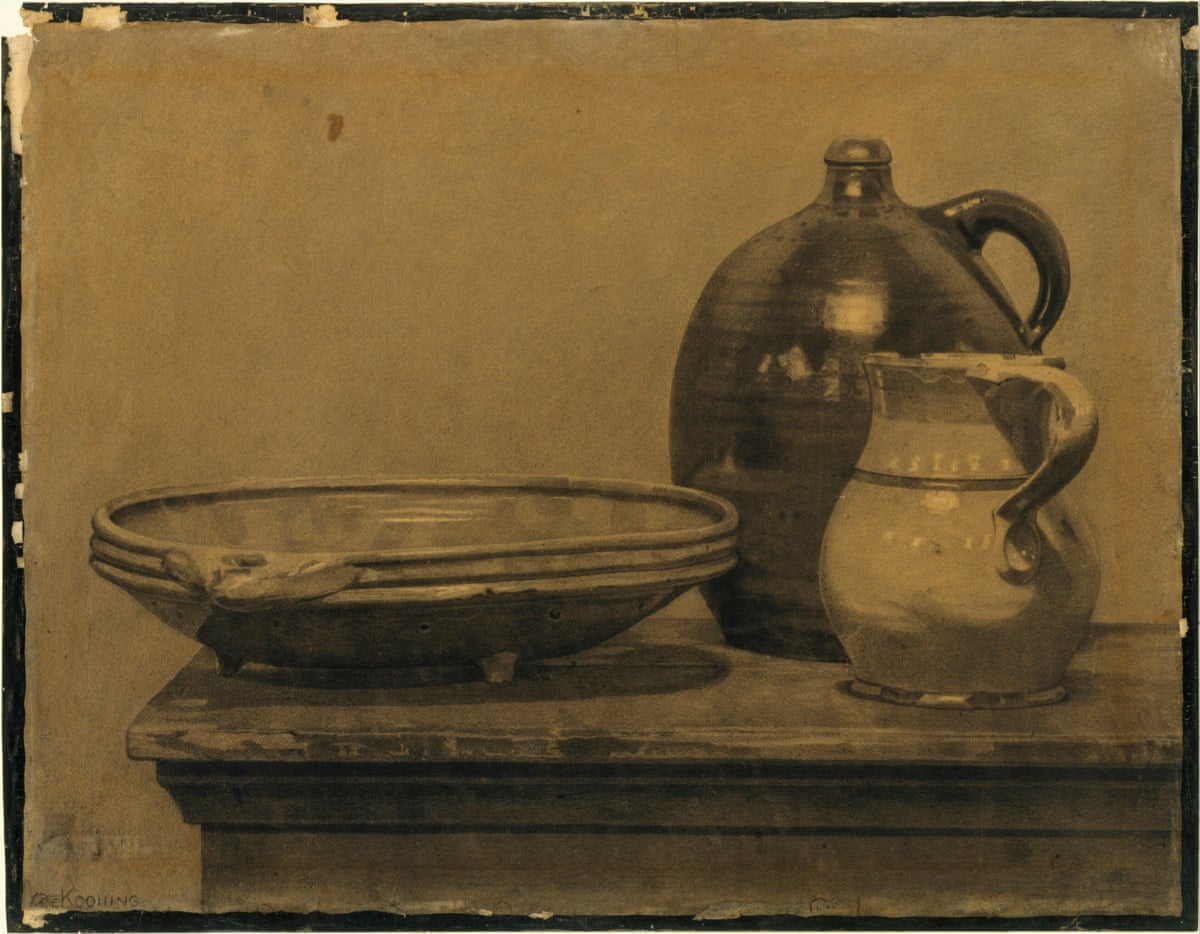
The intensity of this training is evident in the charcoal still life Dish With Jugs, created when De Kooning was in his mid-teens. So meticulously rendered that it resembles a sepia photograph, the catalogue estimates the work consumed 600 hours of labour at the academy. The purpose was not to produce a single finished picture but to ingrain a way of seeing and reconstructing the world so thoroughly that it becomes automatic and inescapable.
This exhibition, brilliantly researched and curated, makes a persuasive case for how thoroughly that training succeeded. By setting standout paintings among a wider selection of drawings, the show demonstrates how the artist waged a lifelong battle against rules so deeply internalised that he could push fiercely against their limits without entirely abandoning them. The struggle itself is thrilling to witness.
What role did his immigrant experience play?
De Kooning's education extended far beyond the academy walls. A working-class youth, he attended evening classes subsidised by the design firm where he worked during the day. After arriving in the United States at age 22, he survived by working as a sign painter and commercial illustrator—lessons that would eventually find their way into his art. The difficulty of synthesising academic training with these practical commercial skills may explain the struggles of his early career; he did not have a solo exhibition until he was nearly 44 years old.
His formative drawings reveal the influence of the classical tradition. An early study of the dancer Juliet Browner and a deftly rendered portrait of his wife, Elaine, both show the mark of Ingres, the master of academic draughtsmanship. Rival New York painters viewed De Kooning's superior technical skill with suspicion, regarding it as too refined, too European. The immigrant artist appeared to place himself under intense pressure to dismantle the aesthetic conventions of the old world and reconstruct them into something suited to the new: irreverent, free, immediate, and expressive.
How did De Kooning dissolve the boundary between drawing and painting?
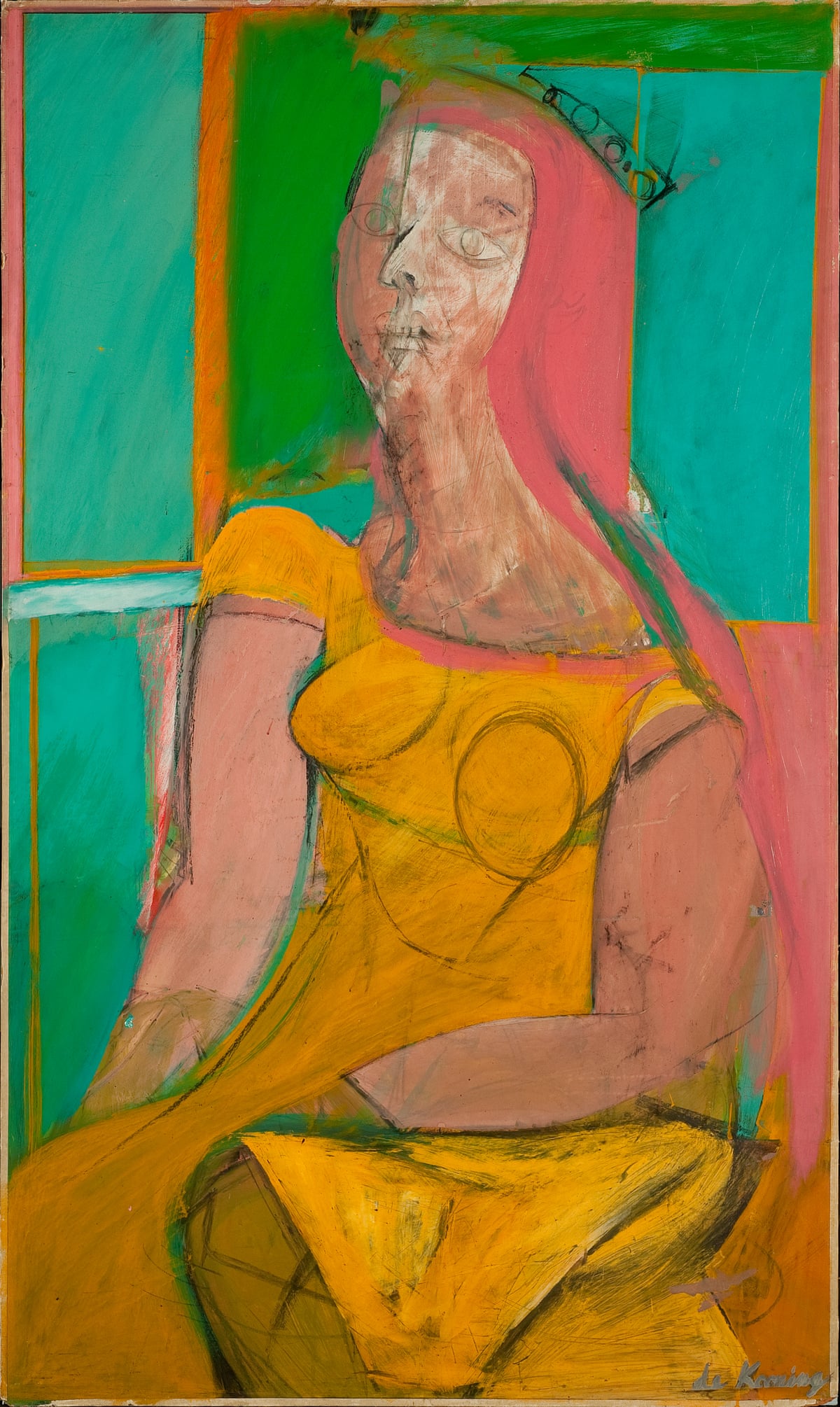
Central to De Kooning's revolutionary achievement was his refusal to distinguish between drawing and painting—the traditional hierarchy in which outlines are drawn first and colour fills the space between them. In Queen of Hearts, a work that foreshadows his later obsession with the female figure, he drags charcoal sticks across wet paint to create soft, blurred edges, sanding down and painting over layers like a house painter preparing walls.
The breakthrough arrives in a seminal work on paper completed in 1949: an arrangement of white sparks against a black ground that evokes comets dancing through the night sky. Yet De Kooning was no starry-eyed mystic. At the bottom edge, those white sparks transform into liquid spurts, anchored by a crude, scrawled cock and balls—a gesture that grounds the cosmic vision in bodily irreverence.
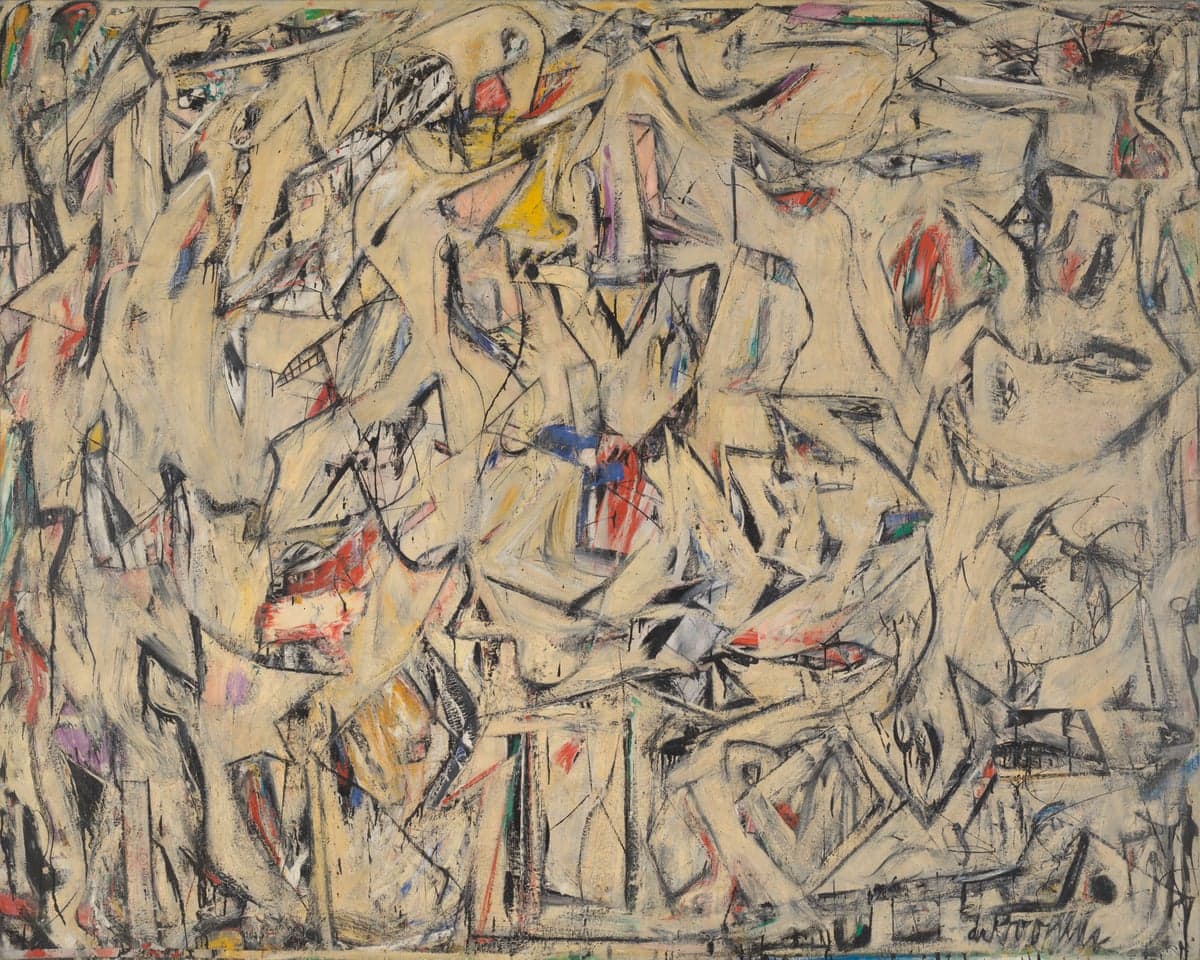
Excavation, a masterwork completed in 1950, initially appears as an abstract pattern of interlocking geometric shapes before revealing itself as a maelstrom of screaming faces and dismembered body parts. The painting conjures both Europe's mass graves and an orgiastic ecstasy of bodies dissolving into one another. Sex and death, heaven and hell, the end of the old world and the birth of the new converge in a single image. The exhibition's intelligent arrangement pairs Excavation with a drawing from four years earlier, aptly titled Judgment Day.
What is the significance of Woman I?
The exhibition's most famous painting, Woman I, hangs in a separate gallery normally reserved for the Rijksmuseum's treasures from the Dutch golden age. This placement is not accidental: the work holds its own against Vermeer and Rembrandt, and proves unexpectedly at home in their company. When first exhibited, the painting provoked outrage, with critics accusing it of defaming all womankind through its "monstrosity." Such accusations now seem rooted in mid-century assumptions about how women should be represented. Whatever one's view of Woman I, she could never be mistaken for a submissive sex object or a passive domestic figure. Woman I and Woman and Bicycle are displayed in the Rijksmuseum's Gallery of Honour, underscoring their status as masterworks.
Did De Kooning sustain his revolutionary energy?
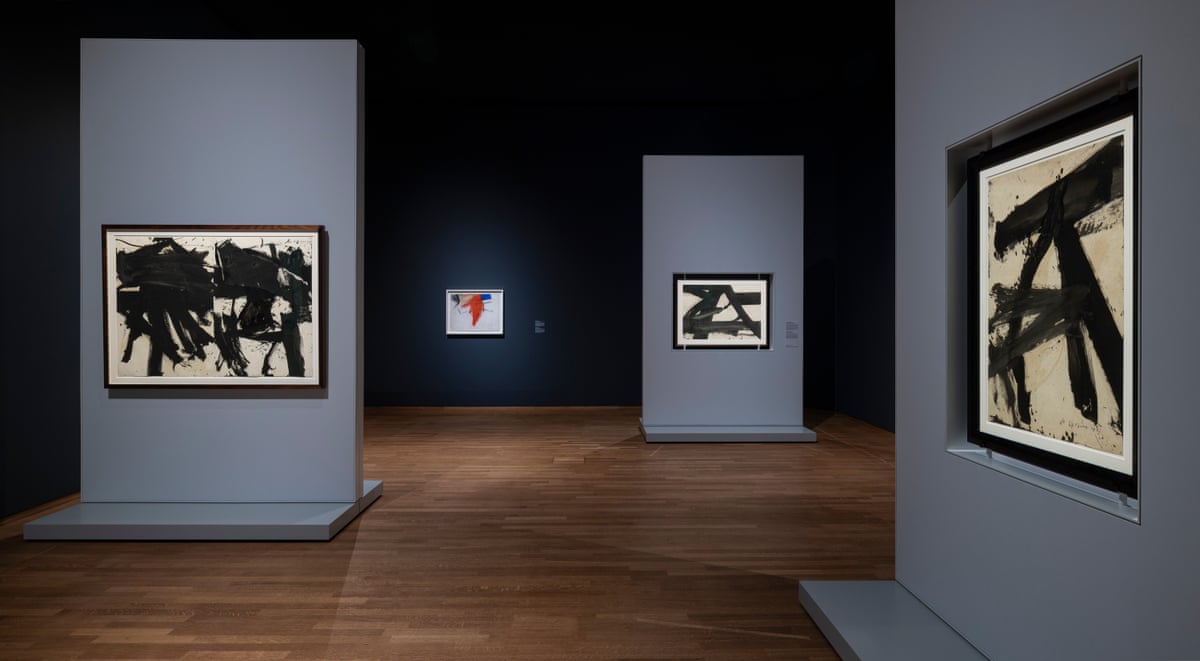
De Kooning's relentless assaults on convention—which is to say, on himself and everything else—exacted a heavy price. A series of black-and-white works created in Rome in the late 1950s mark the end of his imperial phase. While these vaguely calligraphic graphic signs make a point about the convergence of painting and drawing, they feel somewhat slapdash and derivative of Franz Kline. From this point forward, the exhibition does little to challenge the received wisdom that De Kooning struggled over the next two decades to reach the same heights.
There are notable exceptions. Clam Diggers, an irrepressible portrait of two women standing in shallow water rendered in ice-cream colours and buttery textures, stands out. A gorgeously fleshy painting from the mid-1970s demonstrates the painter's occasionally overlooked gift as a colourist. If the paintings from this period are uneven, the drawings reveal that even as alcoholism and personal chaos took their toll, De Kooning could always depend on his line.
How did De Kooning's final works reflect his decline?
That line persists to the very end. The exhibition closes with an astonishing painting from 1985, created during a period when De Kooning's cognitive decline was increasingly evident. Sinuous blue and black lines curve across a mottled white ground, weaving a pattern suggestive of bodies yet emptied of desire. The work is serene, strange, and straightforwardly beautiful, as if everything the artist had struggled to compress into his work had been distilled to its essential principles. He returns to fitting the world into a pleasing form, but with a crucial difference: it is no longer a template inherited from the classical tradition, but rather a shape moulded by his own experiences and entirely his own invention. He no longer needs to think about it. The battle has ended.
When and where can visitors see the exhibition?
The Rijksmuseum exhibition opens on 9 October 2026 and runs through 17 January 2027. The show is a collaboration with the Art Institute of Chicago and The Willem de Kooning Foundation in New York.
Key Facts
- De Kooning spent approximately 600 hours on the charcoal still life Dish With Jugs during his mid-teens at the Rotterdam academy, learning to see and reconstruct the world according to classical principles.
- The artist did not hold a solo exhibition until age 44, despite his superior technical draughtsmanship, which rival New York painters viewed with suspicion as too European.
- De Kooning revolutionised abstract painting by refusing to distinguish between drawing and painting, dragging charcoal across wet paint and layering materials like a house painter.
- His late works, created during cognitive decline, distil decades of struggle into serene, essential forms shaped entirely by his own experience rather than inherited classical conventions.
- This retrospective brings together over 120 works spanning 65 years and represents the largest European De Kooning exhibition in more than four decades.