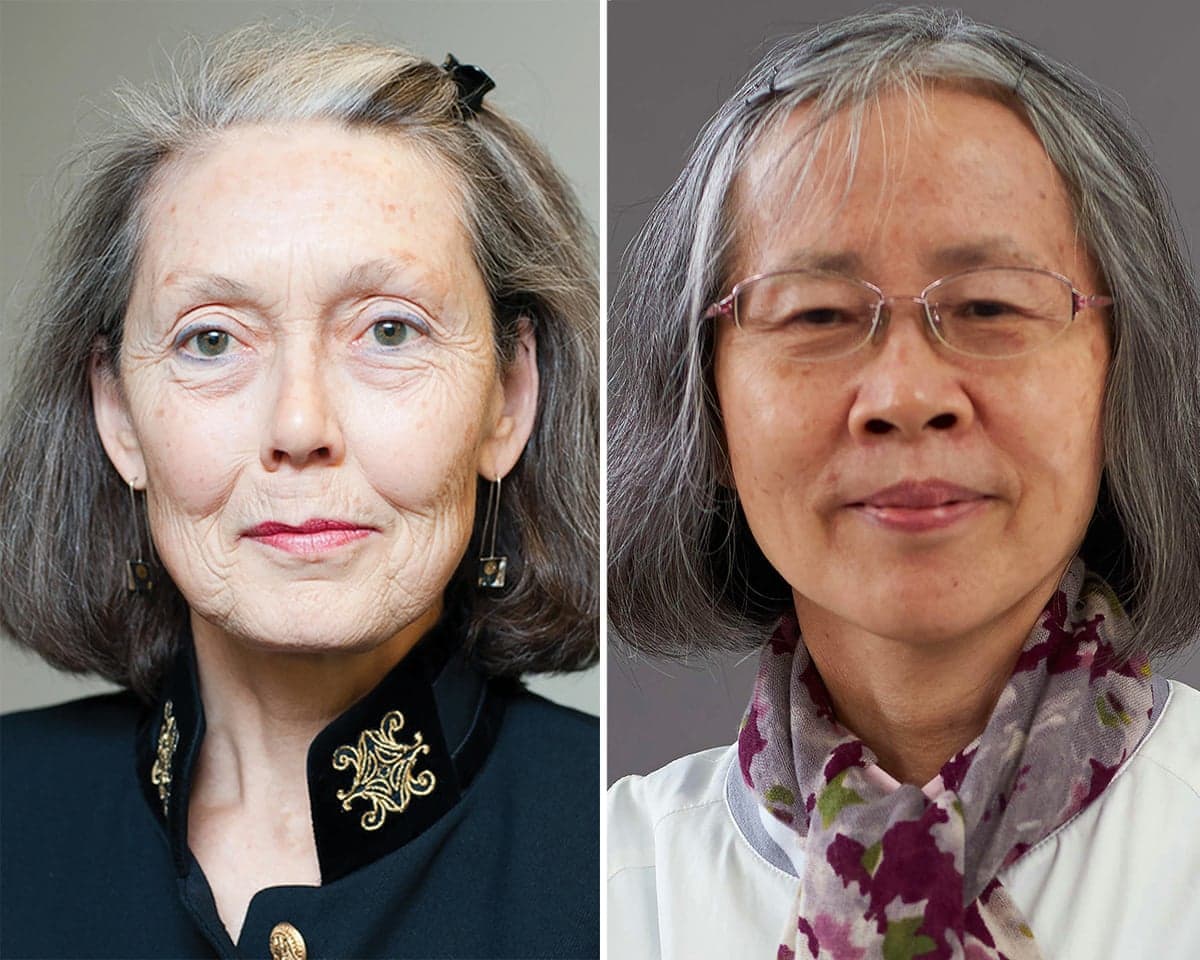
Canadian poet Anne Carson and Chinese experimental writer Can Xue are the bookmakers' frontrunners to claim the 2026 Nobel Prize in Literature, with both carrying odds of 10/1 according to Ladbrokes. The award will be announced on Thursday, 8 October, at 13:00 CEST. According to reporting on the Nobel Foundation's announcement, the prize money has been increased to 12 million Swedish Krona (approximately £900,000), up from 11 million the previous year.
Who are the leading contenders?
Carson, aged 76 and born in Toronto in 1950, has built her reputation on a distinctive hybrid approach that merges poetry with prose while weaving contemporary narratives alongside classical mythology. After completing her doctorate in classics, she taught at several universities while literary magazines began publishing her work. Her major breakthrough came in 1998 with her verse novel Autobiography of Red, a queer coming-of-age narrative that reimagines a Greek poem centred on Heracles. She has published more than 20 books of poetry, essays and translations. In 2001, she became the first woman to win the TS Eliot Prize for her collection The Beauty of the Husband, and has also received Guggenheim and MacArthur fellowships.
Can Xue, 73, whose birth name is Deng Xiaohua, was born in Cangsha City in 1953 and grew up during China's Cultural Revolution, when her parents were sentenced to manual labour in the countryside and she was unable to finish her education. She writes about this turbulent childhood in a foreword to her short story collection Dialogues in Paradise. Her experimental prose and stream-of-consciousness, dreamlike style have been influenced by Western writers including Kafka, Tolstoy and Shakespeare. She has twice reached the longlist for the International Booker Prize: in 2019 for her novel Love in the New Millennium, translated by Annelise Finegan Wasmoen, and in 2021 for her short story collection I Live in the Slums, translated by Karen Gernant and Chen Zeping.
Japanese novelist Haruki Murakami follows at 14/1 odds. Among the most commercially successful writers in the running, Murakami has achieved global recognition through works such as Norwegian Wood and Kafka on the Shore.
What other writers are in contention?
Australian avant-garde writer Gerald Murnane and American postmodern novelist Thomas Pynchon both carry 16/1 odds, placing them in the next tier of contenders.
At 20/1 odds sits a group of seven writers: Margaret Atwood, Cristina Rivera Garza, Enrique Vila-Matas, Jamaica Kincaid, Lídia Jorge, Lyudmila Ulitskaya and Michel Houellebecq.
Atwood, the Canadian novelist behind The Handmaid's Tale, has already accumulated numerous major literary honours, including the Booker Prize and the Giller Prize. Rivera Garza, a Mexican author, won the Pulitzer Prize in 2024 for Liliana's Invincible Summer, a memoir documenting the life and murder of her 20-year-old sister by a former partner.
Vila-Matas ranks among Spain's most significant contemporary novelists, recognised for his fusion of fiction with essay form. In 2020, he reached the International Booker Prize longlist for his metafictional work Mac and His Problem, translated by Margaret Jull Costa and Sophie Hughes.
Kincaid, an Antiguan-American writer, has gained prominence through novels including Annie John, A Small Place and Lucy, which frequently examine family dynamics and the destructive legacy of colonialism. Poet Jackie Kay observed in 2022 that Kincaid "is a writer you don't just read; she is a writer that takes you back to yourself."
Longer odds apply to Karl Ove Knausgård, Alexis Wright, Colm Tóibín, César Aira, Deborah Levy, Don DeLillo, Emmanuel Carrère, Leila Aboulela, Michael Ondaatje, Mircea Cărtărescu and Salman Rushdie.
How is the Nobel Prize in Literature selected?
The selection process operates with considerable secrecy. According to the Swedish Academy's procedures, the formal nomination process began a year before the 2026 announcement. Eligible nominators include members of the Academy itself, university professors specialising in literature, previous Nobel laureates in Literature, and representatives of officially recognised writers' organisations.
The 18 life members of the Swedish Academy who decide the prize are often referred to as The Eighteen. These are living professionals with real jobs: literary historians, lawyers, linguists and journalists. Nearly half (seven) of them are female, and one linguist, David Stefan Håkansson, is under 50. The Academy's selection process is year-long. In September of the previous year, hundreds of eligible individuals and organisations are invited to submit nominations. In spring, a Nobel Committee of four or five academicians whittles down the nominations to a highly confidential shortlist of five, which it presents to the Academy. The Academy spends the summer reading and decides in early October.
The Eighteen's criteria are not made public, but changes in the Academy's membership can have real consequences on voting tendencies. Swedish observers are tipping for a poet Nobel winner this year, partly because the newest member, Anna Hallberg, elected in May 2026, is herself a poet. Hallberg has published nine collections of verse and has been hailed by the Academy as "one of the most uncompromisingly innovative and form-conscious voices in contemporary Swedish poetry".
What is the recent history of the prize?
The 2025 Nobel Prize in Literature was awarded to Hungarian writer László Krasznahorkai, a 72-year-old novelist known for his dystopic, melancholy prose. According to the Nobel Foundation, he was recognised for an oeuvre that "in the midst of apocalyptic terror, reaffirms the power of art."
Krasznahorkai was born in Gyula, Hungary, in 1954 and established his reputation with his first novel, Satantango, published in 1985. Set in a deteriorating rural community, the novel was later translated into English and became the basis for Béla Tarr's film adaptation. His fiction is characterised by extraordinarily long sentences and sustained intensity—Satantango is divided into 12 chapters, each comprising a single paragraph. His work has prompted comparisons with writers including Nikolai Gogol, Herman Melville and Franz Kafka. Travel has been a recurring influence on his writing. He left Communist Hungary for the first time in 1987 as a DAAD fellow in West Berlin. Later journeys through East Asia, particularly Mongolia and China, informed books including The Prisoner of Urga and Destruction and Sorrow Beneath the Heavens. While writing War and War, he travelled extensively around Europe and spent a period living in Allen Ginsberg's New York apartment, where the Beat poet extensively advised him on the novel's construction. Susan Sontag described him as "the contemporary Hungarian master of apocalypse", WG Sebald praised the universality of his vision, and literary critic James Wood wrote that his books "get passed around like rare currency".
The publisher with four Nobel winners
London-based Fitzcarraldo Editions has significantly punched above its weight since launching in 2014. Its first Nobel success came when Svetlana Alexievich won in 2015—Fitzcarraldo had acquired English-language rights to her book Second-hand Time just the year before. Its second was Olga Tokarczuk, the 2018 laureate, for whom Fitzcarraldo had published English translations of her novels Flights and Drive Your Plow Over the Bones of the Dead before her win. The third victory was Annie Ernaux in 2022. Fitzcarraldo published six of her books before the win and has since released 14 works by the French writer in total, including her most famous memoir, The Years, spanning 1941 to 2006. A second consecutive win arrived when Jon Fosse, best known for his seven-part novel Septology, was announced as the 2023 laureate. The publisher also added the 2004 laureate Elfriede Jelinek to its catalogue in 2021, publishing Rein Gold, originally written as a libretto for the Berlin State Opera. Fitzcarraldo even sells a pack of four titles by its Nobel-winning authors—quite the achievement.
When will the winner be announced?
The 2026 Nobel Prize in Literature will be announced on Thursday, 8 October, at 13:00 CEST at the earliest, when the Swedish Academy makes its decision public.
Key Facts
- Anne Carson and Can Xue share the shortest odds at 10/1 to win the 2026 Nobel Prize in Literature
- The prize money has increased to 12 million Swedish Krona, up from 11 million in 2025
- Haruki Murakami, one of the world's bestselling authors, carries 14/1 odds as the third favourite
- The announcement will take place on Thursday, 8 October, at 13:00 CEST
- The selection process involves nominators including Academy members, university professors, previous laureates and writers' organisation representatives