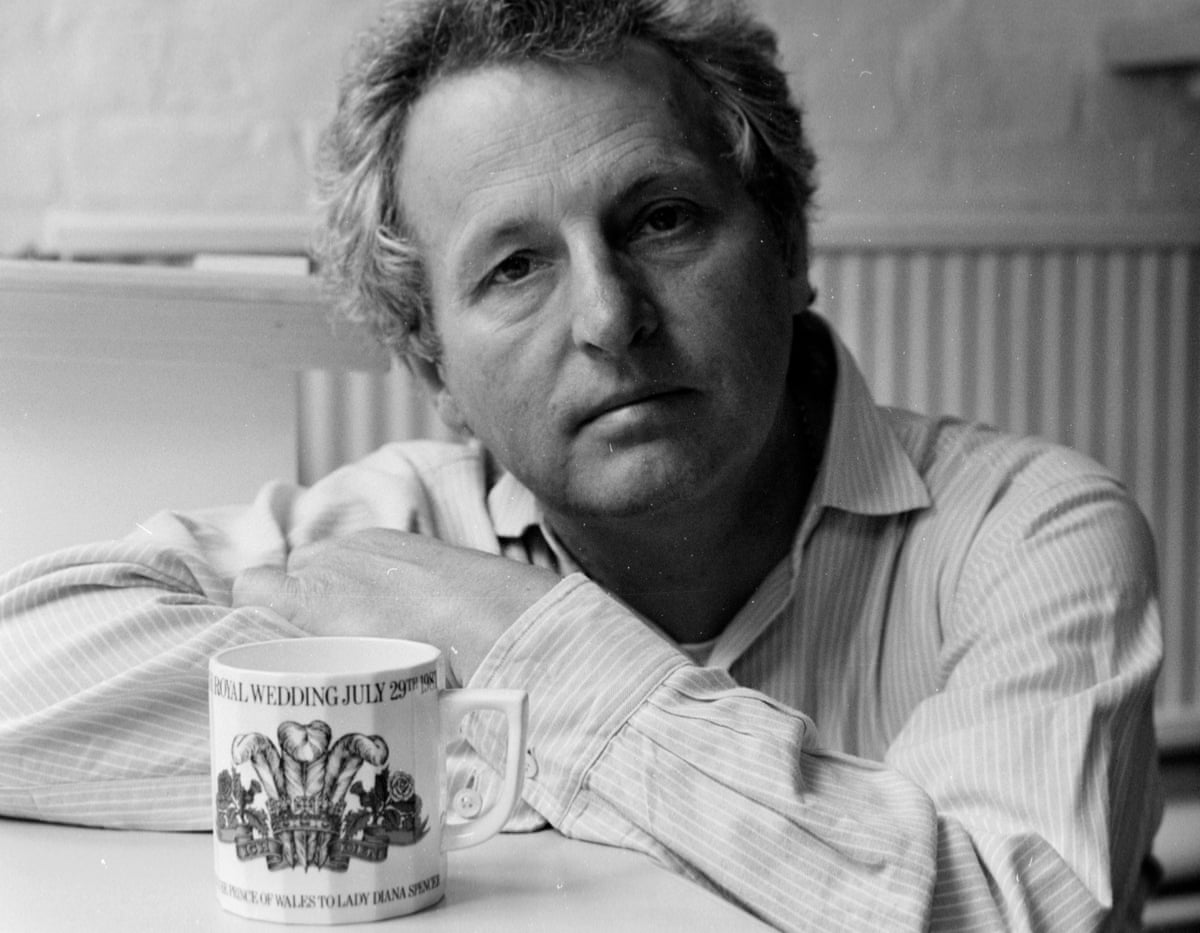
David Queensberry, who has died aged 96, was an adventurous ceramics designer with exacting aesthetic standards, a sharp commercial instinct and a deep, informed love of ceramics. As the 12th Marquess of Queensberry, he liked to note that he had inherited little besides a collection of old plates made for his family in the late 18th century, a fitting inheritance for someone who spent his life shaping tableware for a mass market.
He loved ceramics in all their forms, from industrial mocha wares to raku and stoneware, and also took pride in the work of his students at the Royal College of Art in London, where he was professor of ceramics from 1959 until 1983. His career bridged studio practice, education and industrial production, and he became one of the key figures in making modern ceramics both accessible and commercially successful.
With the designer David Hunt, in 1966 he co-founded the consultancy Queensberry Hunt, and together they bridged the frequently insuperable gulf between good design and commercial success. Their work included the sculptural Concept range (1976) for Hornsea Pottery and Trend (1983) for Rosenthal Thomas.
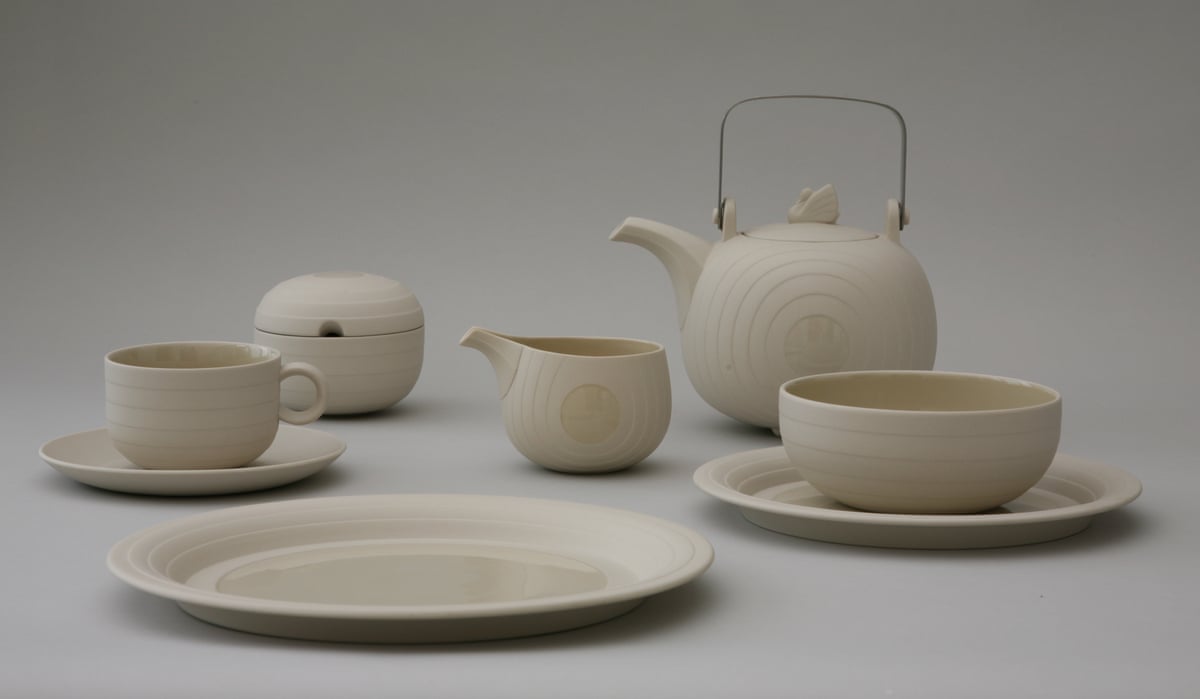
Trend exemplified tableware designed for modern informality, symbolised by the pasta plate, a hybrid between a plate and bowl that is now a standard form. It was followed by Loft (1999), based on Queensberry’s awareness of the increasing fashion for Asian cuisine, in which square and rectangular plates are traditionally used.
For Loft, high-tech isostatic dust pressing — ceramic dust pressurised into metal moulds — was used to make non-round shapes at low cost. Other successful ranges included bone china for Jamie Oliver in 2009, and Orelia (2017), a fine translucent porcelain for Portmeirion in collaboration with the Sri Lankan porcelain factory Dankotuwa.
Queensberry Hunt’s Trend and Orelia bone china continues to sell at John Lewis, and their porcelain remains a mainstay at the North American chain Crate & Barrel. If Hunt, John Horler and Colin Forster, all of whom worked with Queensberry Hunt, were fine designers, Queensberry was the ideas man, alert to changing dining habits and the obsolescence of formal dinner services. In effect he helped transform the look of the ceramic scene, keeping decoration to a minimum.
“we are shape guys – that is what we do,”
His paternal background might have seemed unpromising. The eldest son of Francis Douglas, 11th Marquess of Queensberry, a stockbroker, David was born in London and educated at Eton college, followed by national service as a Guards officer. But the Eton drawing school under the artist Robert Medley included pottery, and after studying in London at Chelsea School of Art, David went on to the Central School of Arts and Crafts, where he initially saw himself as a studio potter.
Deciding he did not want to make work for the few but wished to reach a mass market, he got on his motorbike and travelled to Stoke-on-Trent, still in those postwar days a hive of industrious production. His mother, Anne (nee Sinnett-Jones), the second of Francis’s three wives, was a respected portrait painter, while his maternal grandmother, Florence Pasley, was an interior designer who put him in contact with the H & R Johnson Tiles factory, where he was offered a junior laboratory role researching glazes. He made his own work in the evenings and weekends.
In the 1950s Queensberry threw himself into life in the six towns of Stoke-on-Trent, assisting with the last firings of the Crown Staffordshire bottle kiln, where he witnessed the vitrification of the bone china being tested tacitly by sight and sound rather than by scientific pyrometers, attending North Staffordshire Technical College, forming local friendships and drinking in the roughest of pubs. He was also part of the 50s “youth quake” of talent along with designers such as Colin Melbourne and his friend David Hunt, with Queensberry Hunt later sold at Conran’s Habitat stores.

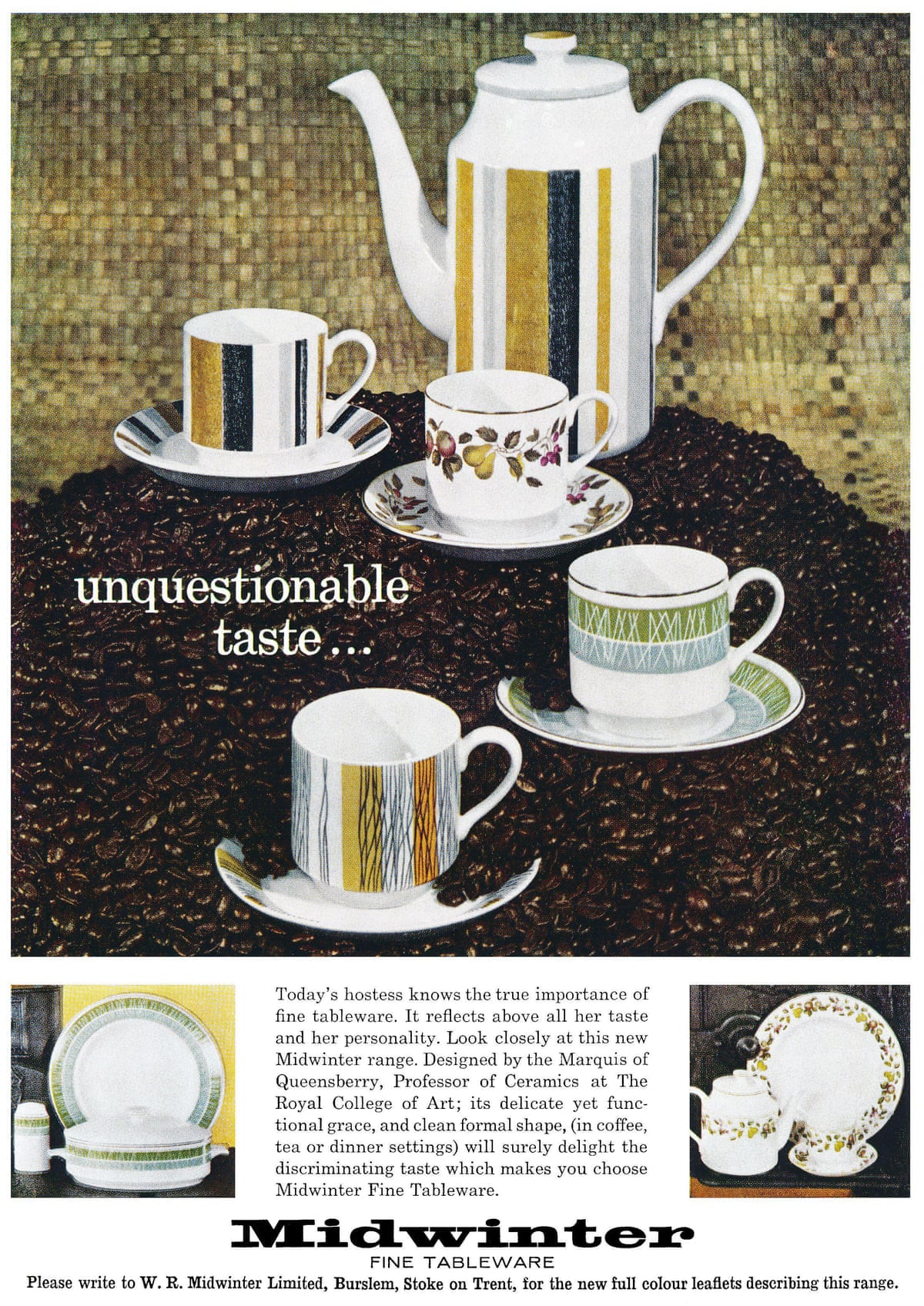
Queensberry — who until his father’s death in 1954 was styled Viscount Drumlanrig — briefly set up Drumlanrig & Melbourne with Colin Melbourne in 1952, producing plates with two abstract “atomic” designs sold by Gerald Gulbenkian’s Flavian Trading Company. He designed for Crown Staffordshire, the work selling at Heal’s department store in London, and later for Midwinter, for whom he created the best-selling Fine Shape in 1962.
Over time he was to witness and mourn the gradual shrinkage of production at Stoke, and, as manufacturing bases shifted, Queensberry Hunt became active in south-east Asia, principally in Bangladesh and Sri Lanka. Visiting a factory with Queensberry was a delight, so deep was his empathy with the workforce and his knowledge of both traditional processes and cutting-edge technologies.
In 1959 Queensberry returned to London and the Royal College of Art. There he ran a department where art, studio ceramics and advanced industrial design could flourish, bringing in the studio potter Lucie Rie and the artist Eduardo Paolozzi as tutors. The atmosphere in the department was tolerant and inspiring, with his brilliant student Daniel Katz’s little son made welcome, reminding his students that this was a place that did not operate conventionally.
Although he worried that so many students were drawn to what he called “para-art activity” rather than design for industry, the department produced figures of the stature of Geoffrey Wharton, Glenys Barton, Alison Britton, Jennifer Lee, Dame Magdalene Odundo and Jacqui Poncelet, Queensberry forming long friendships with them all. His students knew they were at the best place at the best time.
Hunt was another of his most brilliant pupils, a superlative craftsman and model-maker. Initially they ran Queensberry Hunt within the department, later moving to studios in Brook Mews North across Hyde Park from the college. Queensberry also recruited Levien and Horler, former students, and for a while the practice was named Queensberry Hunt Levien.
He helped another of his students, David Grant, launch Highland Stoneware in 1975 in Lochiver, Grant riding pillion as they motorbiked into the City to raise funds. Highland Stoneware became something of a busman’s holiday for Queensberry, taking his children to the Highlands over the summer and right up until his death working on Highland Stoneware’s Geological Glaze project, inspired by the geological formations of the north-west Highlands.
His life was recorded during 2003-04 for National Life Stories at the British Library. A substantial collection of Queensberry Hunt ceramics are in the collection of the Victoria & Albert Museum.
A visit to his house in London was always a delight, as likely to involve a discussion of poetry as a stern quizzing on tri-axial glazes, the walls hung with paintings by his mother and his grandfather, with Paolozzi plates for Wedgwood propped on shelves. Though Queensberry made little of his ancestry, it was the 9th marquess who had denounced Oscar Wilde because of his connection with his third son, Lord Alfred Douglas.
Once Queensberry was able to sit in the House of Lords, after the passing of the Peerage Act 1963, which granted that right to Scottish hereditary peers, he offered his support to the sexual offences bill, making it the subject of his maiden speech. This became the Sexual Offences Act of 1967, which decriminalised sex between men over 21 in private, the beginnings of proper reform.
Queensberry is survived by his third wife, Chun Liao, whom he married in 2000; their daughter, Beth, died in 2008. He is also survived by three daughters, Emma, Alice and Victoria, and a son, Abimbola, from his first marriage, to Ann Zane (nee Sinnett-Jones), which ended in divorce; two sons, Sholto and Torquil, and a daughter, Kate, from his second marriage, to Alexandra Wyndham, which also ended in divorce; a son, Ambrose, from a relationship with Ann Carey; 16 grandchildren and four great-grandchildren; and his half-brother, Gawain. Another son, Milo, from his second marriage, and four grandchildren predeceased him.