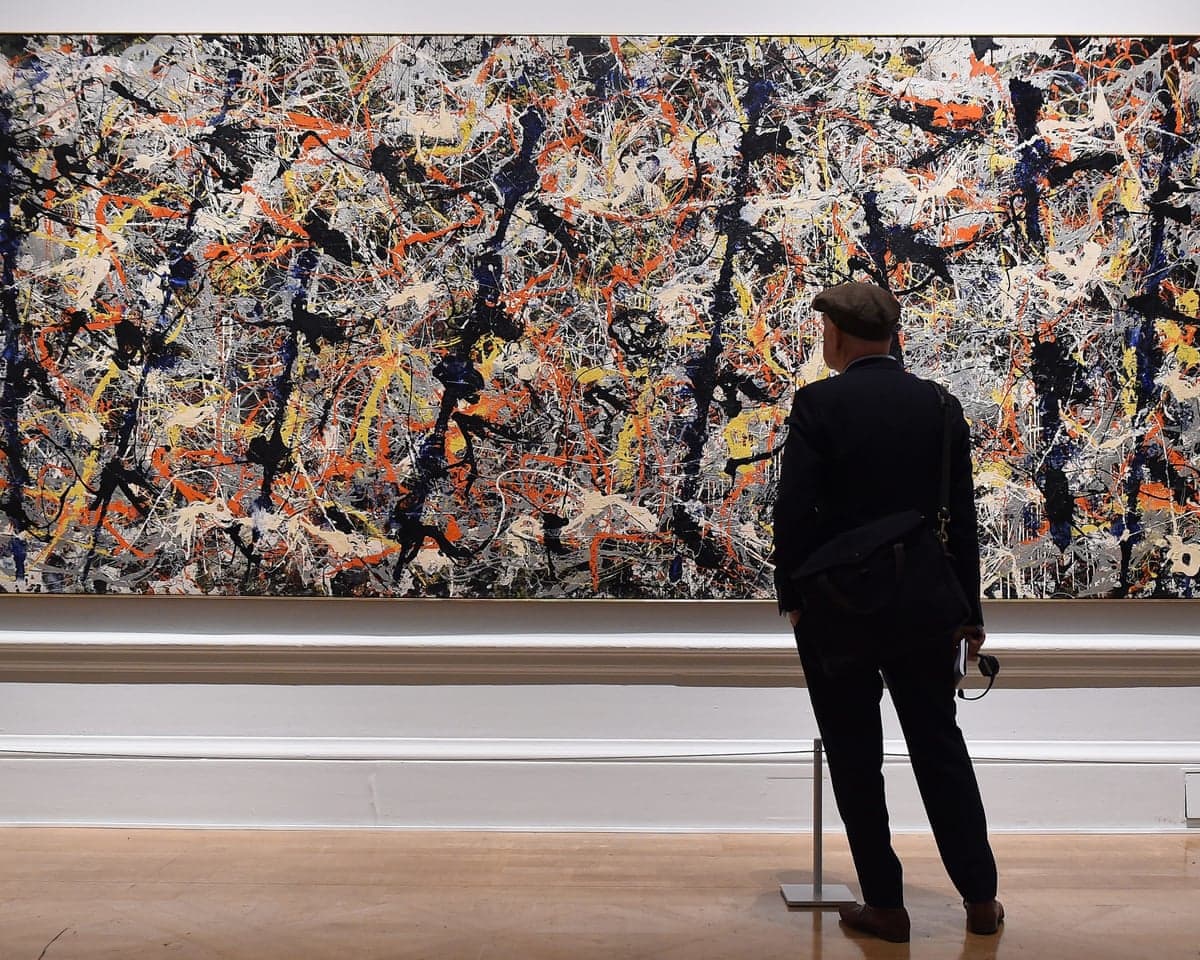
Jackson Pollock's monumental abstract expressionist work Blue Poles will travel to Western Australia for the first time in more than two decades, marking a significant moment for the nation's cultural institutions. Prime Minister Anthony Albanese will announce on Tuesday that the masterpiece from the National Gallery of Australia's collection will be loaned to the Art Gallery of Western Australia in Perth from April to September 2027. The work has not undertaken an interstate tour since appearing at the National Gallery of Victoria's 20th anniversary exhibition in 2003 and 2004.
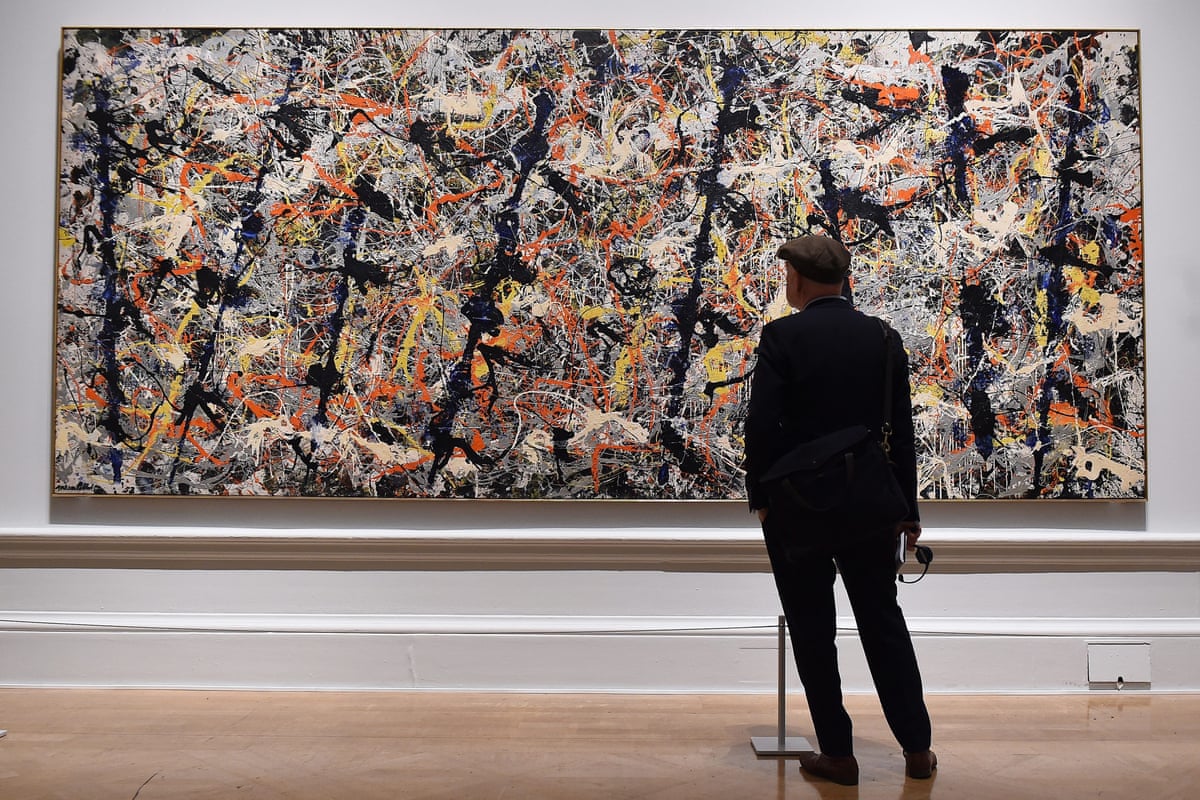
The loan forms part of the Sharing the National Collection program, designed to distribute key artworks and cultural items from Australia's national holdings across regional galleries. The initiative coincides with essential renovation and upgrade work scheduled at the NGA's Canberra headquarters. According to the Prime Minister's office, as of 30 June 2026, more than 2.1 million Australians had engaged with more than 327 loans from this program across 42 galleries and cultural venues nationwide.
How did Australia acquire this iconic painting?
The Whitlam government made a controversial purchase of Blue Poles in 1973 for $1.4 million, a sum that generated significant public debate at the time. The acquisition represented the highest price Australia had paid for an American artwork. The National Gallery notes that the work was valued at $500 million in 2023, reflecting its status as one of the nation's most treasured cultural assets.
Albanese framed the decision to send the work west as an expression of democratic principle.
Blue Poles changed our nation, so it makes sense that the nation gets to see it. The national collection belongs to every Australian – no matter where they live. That's why we're sending Blue Poles to Perth, making sure the west can enjoy this masterpiece and important part of our national story.
What is happening with Sydney train services?
Commuters across Sydney's north shore faced widespread disruptions on the morning of 26 August 2026 following urgent overhead wiring repairs required at Chatswood, a major train hub. The issue stemmed from a failure in the counterweight system that maintains tension on the overhead wires supplying power to the rail network. Matt Longland, chief executive of Sydney Trains, explained the technical problem to ABC Radio Sydney.
We have very heavy weights that hang off to the side that keep the tension, keep the wires held up. One of those counterweights failed last night. So crews have been on track through the night. They're still working through the repairs at the moment, but it's likely to be later this morning until that work's completed and they test the wiring system and turn that power back on.
Transport for NSW deployed limited bus replacement services from Gordon through to Chatswood, with an unscheduled rail shuttle operating between Hornsby and Gordon in both directions. Commuters were advised their journeys could take up to 45 minutes longer than usual, and were encouraged to use Sydney Metro services where possible. Services on the T1 western line, intercity routes and the central coast line also experienced reduced frequency and cancellations.
Longland indicated that primary repair work was expected to be completed by 10:00 am, with secondary work and power restoration to follow.
We've obviously worked very closely with Sydney Metro, who have got extra services in place on the Sydney Metro network to keep passengers flowing towards the city.
What is the current state of NSW social housing demand?
The number of households in urgent need of priority social housing in New South Wales has reached its highest level in over a year, according to data published on 21 August 2026. The NSW government's social housing register recorded 13,776 households classified as priority cases—those facing imminent risk of homelessness—as of 31 July 2026. This represents an 18 per cent increase over the preceding 12 months.
The overall social housing waitlist climbed back above 70,000 households, reaching 70,244 in July 2026, with general applicants increasing by 3 per cent during the same period. Luke Achterstraat, chief executive of the Community Housing Industry Association NSW, warned that these figures mask a deteriorating situation within the queue itself.
The waitlist has sat [at] around 70,000 since May. Anyone reading that as stability should look at what is happening inside that number. Urgent need is growing six times faster than general need on this register. Every month, a bigger share of the people waiting are people who cannot afford to wait.
The data underscores mounting pressure on the state's social housing system, with an increasing proportion of applicants facing acute housing insecurity. NSW continues to publish current social housing expected waiting times and allocation-zone data on an ongoing basis.

What are Aria's new rules on AI-generated music?
The Australian Recording Industry Association has introduced restrictions on artificial intelligence-generated music in its official charts, effective from Monday, 31 August 2026. Recordings that are wholly generated by AI systems will be ineligible for chart consideration, though tracks incorporating generative AI in a supporting capacity may still qualify.
Under the updated codes of practice, a recording using AI technology is eligible only if it is "substantially human-made" and raises "no stream or chart manipulation concerns." Annabelle Herd, Aria's chief executive, explained the rationale behind the policy shift.
These changes reflect our intent to remain dynamic and promote the human nature of artistry in what is – to say the least – a rapidly developing space. Artists already use AI tools in their work, the Charts can and should evolve to keep room for that, but music generated wholesale by services built on artists' recordings is a different matter. … This gives everyone who releases music in Australia a clear rule to work to.
The distinction drawn by Aria acknowledges that many contemporary musicians already employ AI as part of their creative toolkit, while drawing a line at wholesale replacement of human artistry with algorithmic generation. The policy reflects broader industry concerns about the use of training datasets built from existing recordings without artist consent.
What threat do resistant varroa mites pose to Australian agriculture?
A second incursion of the varroa mite, a parasitic pest that devastates honeybee colonies, has introduced a chemically resistant strain that threatens Australia's food security. The new wave of mites, confirmed in April 2026, carries resistance to synthetic chemical treatments, complicating efforts to control their spread. Varroa mites were first detected in New South Wales in June 2022 and have since spread across most Australian states and territories.
Bees play an irreplaceable role in food production across Australia, with an estimated $12.9 billion worth of crops at least partially dependent on them for pollination. Sara Bryant, an apiarist and Australian National University PhD candidate, described the situation facing the beekeeping community.
It's definitely a really scary time for beekeepers. But if you keep that story going, it's a scary time for pollination and a scary time for food security.
The emergence of a chemically resistant population raises concerns that existing pest management strategies may prove insufficient, potentially allowing mite populations to expand unchecked if alternative control methods cannot be rapidly deployed.
What is the government's position on Western Australia's GST arrangement?
Federal Resources Minister Madeleine King has defended Prime Minister Anthony Albanese's commitment that Western Australia's share of the Goods and Services Tax will not change while his government remains in office. King appeared on ABC Radio National breakfast on 26 August 2026 to address concerns raised by the Productivity Commission's interim report into the GST distribution formula.
King expressed concern that the Productivity Commission's analysis did not adequately consider Western Australia's submissions on the matter.
When you look through the report, you'll notice there's zero reference to suggestions made by the WA government. … the report also doesn't acknowledge that no state has suffered from the current arrangements. No state has had any money taken from them or any less of it.
She further argued that all states have benefited financially from the 2018 GST reforms, with Western Australia's iron ore royalties—which generate the bulk of the nation's mining revenue—distributed across the country.
It's my understanding that all states have actually been better off since the 2018 reforms. … But what's important to know is that states have all benefited because the iron ore royalties that Western Australia has earned for the country have been distributed for the most part, like 90%, all around the country. And that's a good thing for the country.
What charges has been laid in a prison drug smuggling case?
A 47-year-old man has been charged following the interception of a drone carrying approximately one million dollars worth of contraband into a Queensland correctional facility. On 17 May 2026, officers intercepted a package inside Townsville Correctional Complex that allegedly contained methylamphetamine, GBL (gamma-butyrolactone), various prescription medications, syringes, a glass pipe, a mobile phone and SIM cards.
Joint investigations conducted by officers from the Corrective Services investigations unit, the Townsville and Bundaberg Criminal Investigation Branch and Queensland Corrective Service resulted in the arrest. The man has been charged with five counts of supplying dangerous drugs into a correctional facility, one count of trafficking dangerous drugs, one count of dealing with a prohibited item in a corrective services facility, one count of supplying a medication and multiple drone-related offences.
Key Facts
- Blue Poles will be displayed at the Art Gallery of Western Australia from April to September 2027, its first interstate tour since 2003–04
- The painting was purchased by the Australian Government in 1973 for $1.4 million and is now valued at $500 million
- NSW social housing priority cases have increased 18 per cent in 12 months, with urgent need growing six times faster than general need
- Aria's new rules ban wholly AI-generated tracks from charts but permit AI used in a supporting creative role, effective from 31 August 2026
- A chemically resistant strain of varroa mites confirmed in April 2026 threatens Australia's $12.9 billion pollination-dependent agricultural sector