

Independent artists say they are locked in an increasingly exhausting battle to stop alleged counterfeit versions of their work being sold on online marketplaces, with illustrator Kerrie McNeill among those reporting apparent copies of her designs appearing on Temu. Temu told the broadcaster it "does not permit unauthorised use of intellectual property" and said it was taking steps to remove the disputed listings of McNeill's work from its platform.
The internet has opened up huge opportunities for artists to sell their work globally, but that same reach has made it far simpler for designs to be copied, tweaked slightly and resold without consent. An illustrator can spend weeks perfecting a new piece only to later find a near-identical version being sold on the other side of the world through an online marketplace.
McNeill, who produces art prints, greeting cards and stationery, described the experience of finding likely copies of her work online as deeply unsettling once the initial shock faded.
"It makes it not enjoyable, constantly being on edge," she said.
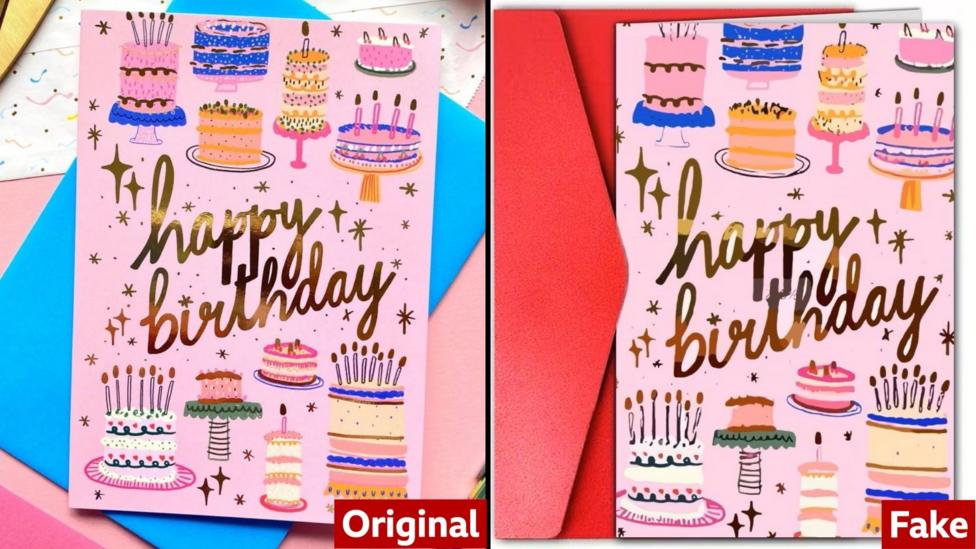
For independent artists such as McNeill, the concern is not only that their artwork has allegedly been taken without permission, but that the income tied to it is also being lost. She converts her colourful illustrations into art prints, greeting cards and stationery items that she sells directly to customers.
One example highlighted was her pink Happy Birthday card, decorated with colourful birthday cakes and finished with gold foil detailing. A version appears to be listed on Temu for 96p, compared with £3.60 for the genuine article on McNeill's own website. Set next to one another, the two designs look almost identical, with only minor differences distinguishing them.
According to experts, these small alterations are becoming a more common tactic. While there are several ways artwork can be duplicated, the growth of image-editing software, including artificial intelligence tools, has made it far quicker to produce modified versions of existing designs, making the resulting copies more difficult to detect.
"If artwork is accessible then people think that it is theirs to take," McNeill said.
"Because so many people think that it's okay to do, more people do it, and they just don't care."
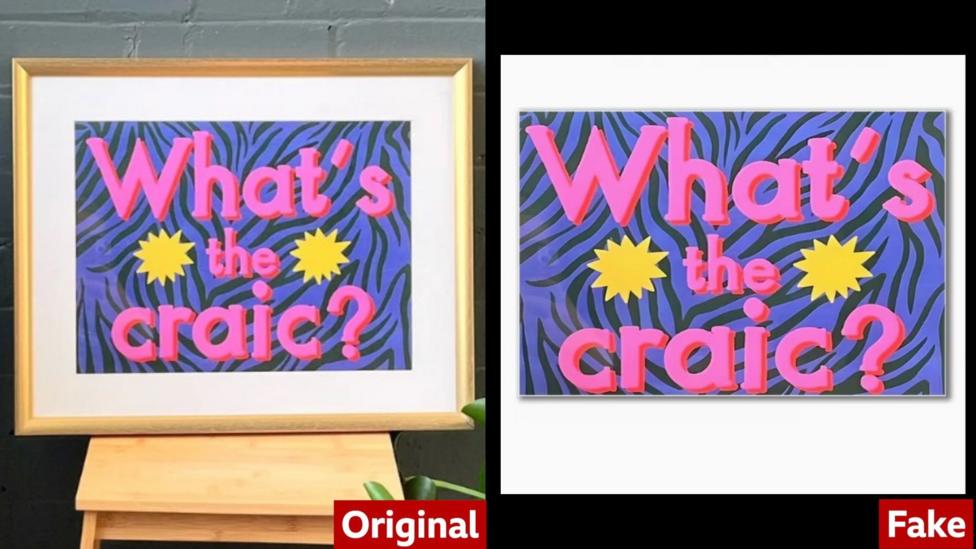
McNeill said that when she first noticed apparent copies of her illustrations on Temu, the company took the listings down after she flagged them. Two years later, however, she said the process of identifying and reporting suspected fakes has become a draining, repetitive task, with new versions continuing to surface and each report requiring significant time and effort. She added that some of the alleged copies appear to have been produced using AI editing tools, making them harder to spot.
"It's just unfair," she said. "I don't think that it should be my job to take down all these listings of my own artwork that has been stolen."
Why are painters also affected by alleged fakes?
The issue is not confined to illustrators working in greeting cards and stationery. Terry Bradley, whose contemporary paintings of Belfast dock workers and female figures have built him a following well beyond Northern Ireland, has also seen his work targeted by suspected counterfeiters.
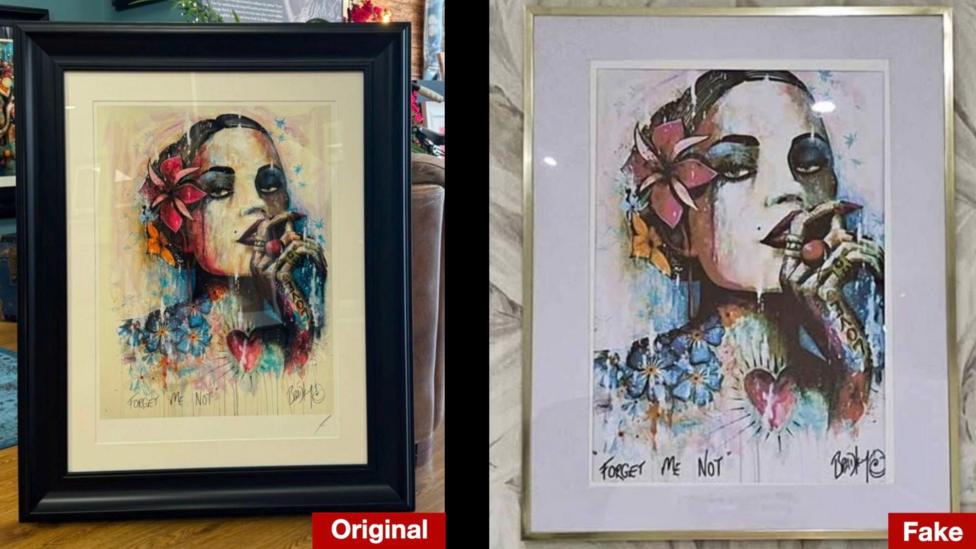
His son, Hal Bradley, who serves as creative director at Terry Bradley Art, said suspected reproductions of his father's paintings crop up regularly across a range of different online platforms, though Temu is not among them. In one instance, a copy of one of Terry Bradley's paintings was even found hanging in a bar in Thailand.
"Terry's put so much time into these pieces," Hal Bradley said.
"When somebody shows us a botched reproduction of his painting, it kills that for him."
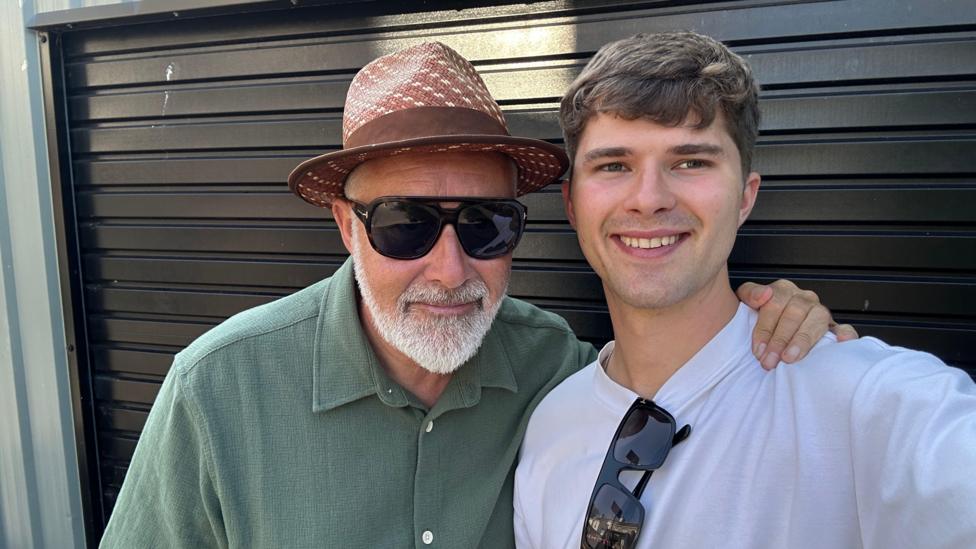
Hal said the family frequently comes across suspected fakes both in people's homes and for sale online.

"It's not just that it's fake," he said. "It's also that it's attributed to our paintings. It ruins the whole art piece."
Because Terry Bradley's career started well before online marketplaces became a significant channel for counterfeit goods, the family has since introduced measures to help buyers verify authenticity, with every original painting now embossed, signed and issued with a certificate of authenticity. Like McNeill, Hal said the process of reporting individual listings is a source of ongoing frustration.
"The people doing it are breaking the law," he said.
"It seems that if we don't do every little thing to remove individual listings, they are just allowed to do it."
Is the law keeping pace with online counterfeiting?
No, according to cyber security expert Kevin Curran, who said that legal protections for creators have failed to keep up with how quickly the technology behind copying and altering artwork has advanced.
"Legislation is lagging far behind," he said.
Curran said pursuing legal action is often not a realistic option for individual artists, since cases can drag on for years and cost thousands of pounds, especially when the sellers involved are based abroad or cannot easily be identified.
"The sheer scale is very hard for owners," he said.
"You're faced with a future where you won't be able to claim for your original artwork anymore."
Online counterfeiting is not limited to visual art. In a separate case reported earlier this year, Welsh jewellery shoppers said they were left out of pocket after being deceived by an AI-driven scam, in which a website calling itself Seren Cardiff Jewellery presented itself as a genuine Welsh business while reportedly using stolen images to sell products, leaving customers hundreds of pounds worse off.
How widespread is art forgery and copying beyond online marketplaces?
Concerns about counterfeit and manipulated art extend well beyond small online retailers. In April 2026, a father and daughter in New Jersey admitted to selling forged works attributed to Picasso, Warhol and Banksy, with federal authorities saying at least 200 counterfeit pieces were involved and that buyers had been defrauded of at least $2 million, according to reporting on the case.
Law enforcement agencies in Europe have also treated large-scale art forgery as organised crime. An international operation backed by Eurojust led to the seizure of 2,000 fake artworks and resulted in 38 indictments, with potential losses estimated at €200 million, according to Eurojust. In an earlier case, Italian police said that tracking fraudulent listings online led them to a workshop containing 71 paintings, alongside hundreds of other works of questionable authenticity that had been advertised on platforms including eBay and Catawiki, according to a report on the investigation.
The problem of digital manipulation in art-related content has also extended into misinformation. In April 2026, a video branded as a news report claiming a painting by Cézanne had been stolen from Volodymyr Zelenskyy's office was found to be fake and digitally altered, according to fact-checks by a news agency's fact-checking team and an international broadcaster, illustrating how manipulated footage can be used to spread false claims about art theft.
Separately, concerns about the burden placed on individual creators when policing copies of their work are not new. A 2021 report noted that the rise of NFT marketplaces made it easier for digital art to be copied without permission, and that takedown processes largely left artists responsible for tracking and reporting infringements themselves, according to a technology news report — a pattern that echoes the experiences described by McNeill and the Bradley family.
What can artists do if they suspect their work has been stolen?
Guidance from the FBI's art crime programme advises victims of suspected art theft or fraud to contact local police as soon as possible, preserve any relevant evidence, gather documentation and images of the original work, and maintain contact with investigators throughout any inquiry, according to the agency's official guidance.
What are marketplaces doing to tackle suspected infringements?
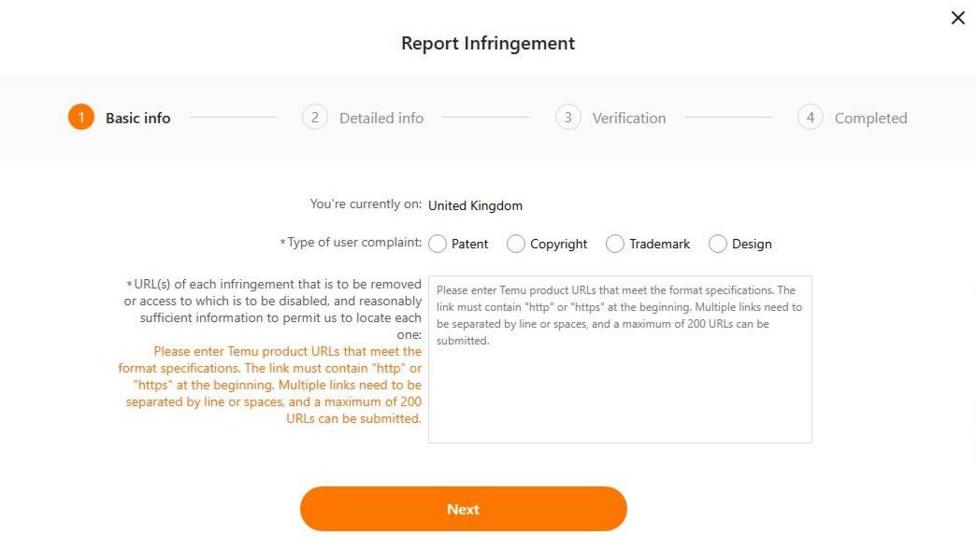
Most major online marketplaces, including Temu, operate reporting systems that allow copyright holders to flag suspected infringements for removal. In October, following pressure from the Greeting Card Association, Temu introduced a dedicated takedown process specifically for greeting card publishers.
Previously, companies were required to report each individual listing separately. Under the new trial system, publishers can submit a single link, allowing automated software to identify and remove other listings that use the same design, which is intended to stop identical copies simply being re-uploaded under new listings.
Regarding McNeill's illustrations specifically, Temu said its sellers are required to comply with applicable laws and the platform's policies as a condition of operating on the marketplace.
"Regarding the artist mentioned, we are reviewing the identified listings and are in the process of removing them. At the same time, we are adding Kerrie McNeill's works to our IP database for ongoing proactive monitoring to help prevent them from being listed again by bad actors."
Temu said it uses a combination of automated detection tools and manual review to protect rights holders, and that it currently scans more than 47 million images and more than 9.5 million keywords as part of that process.
Key Facts
- Illustrator Kerrie McNeill says likely copies of her greeting card and print designs have repeatedly appeared for sale on Temu.
- A version of her Happy Birthday card reportedly sold on Temu for 96p, compared with £3.60 for the genuine product on her own website.
- Painter Terry Bradley's work has allegedly been reproduced and sold online, with one suspected copy found hanging in a bar in Thailand.
- Temu says it scans more than 47 million images and 9.5 million keywords and introduced a streamlined takedown process for greeting card publishers in October.
- Separately, a father and daughter in New Jersey admitted selling forged Picasso, Warhol and Banksy works worth at least $2 million, according to reporting on the case.


