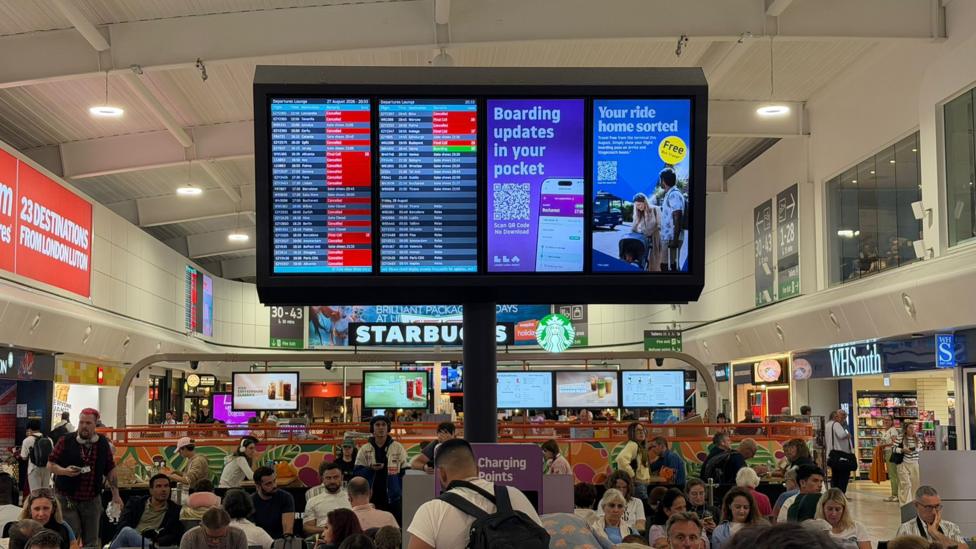
Operations at London Luton Airport have resumed following a temporary shutdown caused by a lightning strike that damaged air traffic control equipment during severe Thursday weather. The incident resulted in numerous flight cancellations and diversions, with ongoing delays as airlines work to restore their schedules.
Air traffic control systems went offline between 17:40 and 19:15 BST after being struck by lightning during a period of intense storms. The same weather system brought flash flooding to local roads and the airport approach, compounding the operational challenges faced by the facility.

An airport spokesperson confirmed that the suspension affected both arriving and departing flights.
"Flights to and from London Luton Airport have now resumed following an earlier suspension of operations caused by a lightning strike affecting Air Traffic Control equipment,"they stated.
"The disruption coincided with a period of severe weather across the area, resulting in flash flooding on local roads, and the airport approach."
What is the current situation?
Although normal operations have returned, the airport continues to experience knock-on effects from the earlier shutdown.
"As operations return to normal, some flights may continue to experience delays or cancellations as airlines work to recover their schedules."Passengers were advised to contact their airline directly to check the status of their bookings.
How does this fit into a pattern of disruption?
Luton Airport has experienced weather-related operational challenges before. According to previous reporting on the airport's history, the facility was forced to suspend operations in 2022 after extreme heat lifted part of the runway surface. More recently, EasyJet restored operations following an earlier Luton Airport shutdown in 2023, though delays persisted as the airport reopened.
The broader region has also faced repeated travel disruptions from severe weather. Overnight storms in late June 2026 caused flooding across London, affecting Heathrow Airport services and multiple transport networks, demonstrating how vulnerable major transport hubs are to extreme weather events.
What happens next?
Passengers should monitor their airline's website or contact them directly for updates on flight status. The airport's passenger information page indicates that separate disruptions are planned for 30–31 August 2026, when East Midlands Railway services will operate only between approximately 08:00 and 19:00 due to strike action.
Key Facts
- Air traffic control systems were offline for approximately 1 hour 35 minutes (17:40–19:15 BST)
- The lightning strike coincided with severe weather that caused flash flooding in the airport area
- Multiple flights were cancelled and diverted as a result of the suspension
- Ongoing delays are expected as airlines recover their schedules
- Luton Airport has a documented history of weather-related operational disruptions