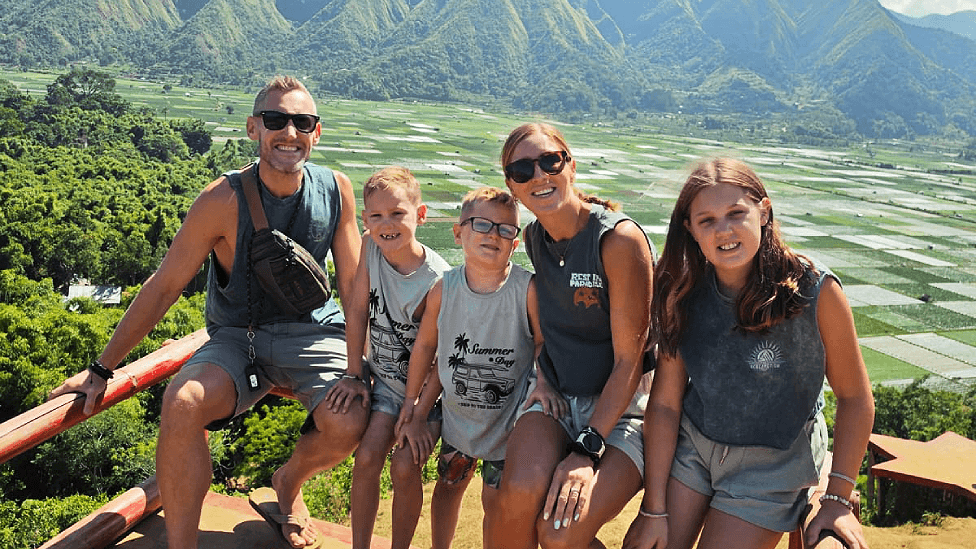
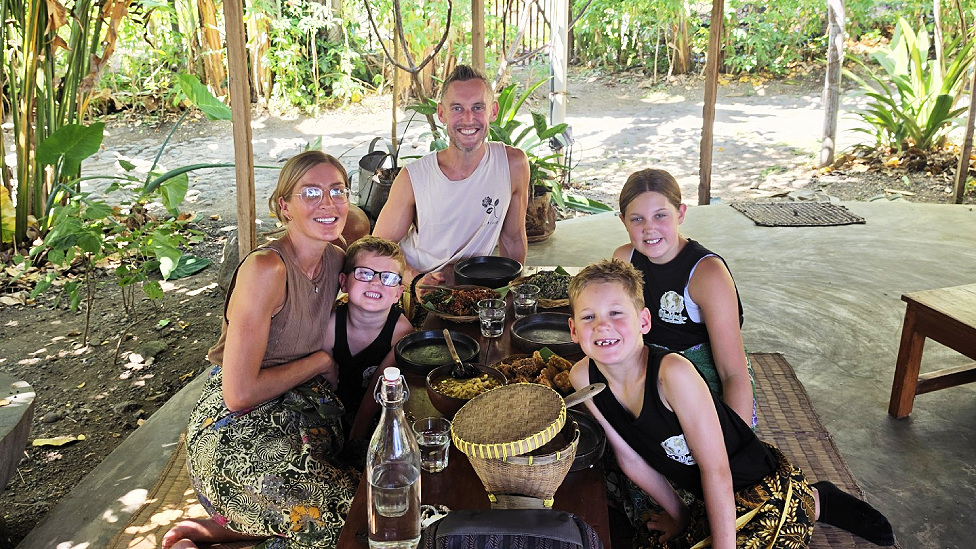
Dani and Tom Wooldridge, along with their three children Olivia, Morgan and George, made the extraordinary decision in May to liquidate their assets and embark on an open-ended round-the-world journey. The family departed for Indonesia with only backpacks containing their belongings, having sold their renovated 1970s home and closed their respective businesses as a nurse and construction company owner.
Five months into their travels, the Woolridges remain in south-east Asia, having spent the majority of their time exploring Indonesia's islands. Their decision to abandon conventional life represents a dramatic shift from their previous existence, where Dani, 39, balanced nursing with running an aesthetics business while Tom, 38, managed a construction enterprise. The couple had invested approximately seven years transforming their house into a family home before deciding to sell it at the beginning of the year.
What inspired such a radical life change?
The roots of this decision trace back to both parents' early experiences with travel. During their twenties, Dani and Tom each took gap-year journeys that left lasting impressions. Throughout their years of building careers and raising children, the idea of extended family travel remained a recurring conversation, though the responsibilities of mortgages, businesses and established lives seemed to make it impractical.
A pivotal moment arrived nearly two years ago when the family took a month-long holiday to Thailand over Christmas.
We were fortunate enough to have a month over there, travelled round with the kids and obviously they were almost two years younger than they are now, and managed really well. It all went really smoothly and it was great seeing the kids experience a completely different world to what we'd all grown up.Tom reflected on how the experience demonstrated their children could adapt to unfamiliar environments. This holiday sparked intensive research into families who had undertaken similar journeys.
The decision-making process was thorough and deliberate.
We made lots of lists – lots of positives, lots of negatives,Dani explained. The couple grappled with fundamental questions about education, career continuity and the logistics of managing property remotely. Ultimately, they concluded they needed to be
100% committedto the venture, which meant selling rather than renting their house.
How did the children react to leaving their lives behind?
The three young travellers responded differently to the prospect of departure. Morgan, seven, and four-year-old George embraced the idea from the outset, viewing it as an adventure. Olivia, 12, faced a more difficult transition. Having just begun high school in September, she was leaving behind established friendships and a familiar social structure when the family departed in May.
Olivia was a bit nervous. She'd just started high school in the September and we left in May this year. She was very apprehensive about leaving all her friends. Morgan and George do mention their friends now and again but they're a bit younger so they didn't have that emotional attachment as much as Olivia.
Extended family members initially questioned the decision with concern.
Why are you selling everything you've worked so hard to get?was the typical response from grandparents.
Most people have got bets on when we're coming back,Dani noted with humour, adding that relatives had each wagered on a different return date within a year.
What was the emotional experience of departure?
After selling their house at the start of the year, the family occupied rented accommodation for several months before heading to the airport in May. The farewell proved intensely emotional.
We were very fortunate that we had a lot of family coming to the airport with us. We'd checked our luggage in, and we got to the security gates, and that was hard.Tom described the moment. The couple acknowledged that leaving behind their close family and friendship networks represented the most significant loss, rather than any material possessions.
Once airborne, however, the emotional weight lifted and anticipation took over.
We remembered where we were going,Tom joked. Despite both parents having visited Bali previously, the sensory intensity of returning to Indonesia proved overwhelming.
It's just everything. Your senses are just heightened. It's the smells, seeing everything around, it's so different to home.Dani noted that Bali had become significantly busier in the 15 years since their last visit, with scooters and crowds creating initial anxiety. Olivia remained emotionally volatile during the first days, compounded by jet lag affecting the entire family.
What have been the positive aspects of life on the road?
Despite the initial culture shock, positive experiences emerged quickly.
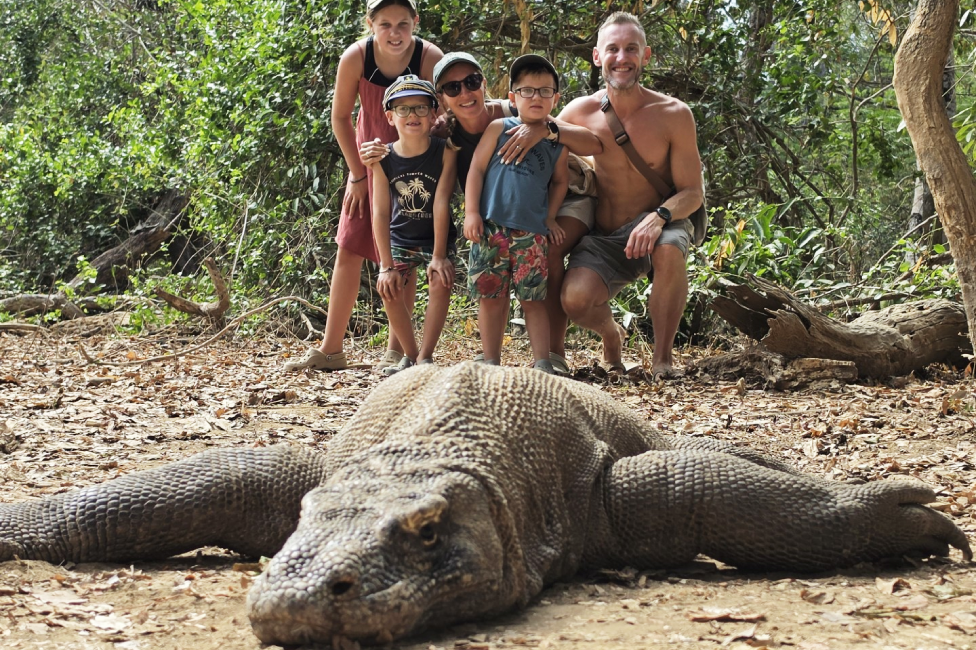
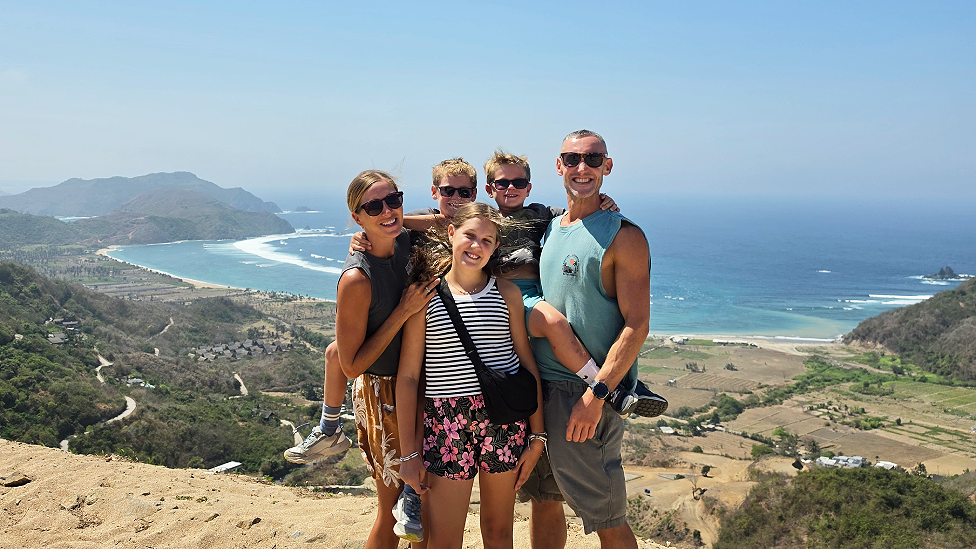
The food instantly was amazing. And the people are just beautiful, and so kind. And just to feel the heat on our skin.Tom highlighted the immediate pleasures of their new environment. The family moved progressively through Bali, transitioning from the southern beaches to climb the volcanic Mount Batur in the north, then exploring the cultural village of Ubud inland. They subsequently island-hopped eastward across the Indonesian archipelago before returning to Lombok for an extended second stay.
The constant movement created an unusual psychological experience.
So each time it was almost like that feeling of going home because we were packing up, but we weren't going home. I think it took us months to really think, wow, we're not actually going home.Dani reflected on the disorientation of perpetual relocation.
How are the children continuing their education?
Abandoning formal schooling did not mean abandoning educational standards. Dani emphasised that while the family prioritises real-world learning experiences, they remain committed to maintaining academic opportunities.
Even though we want our children to experience the world and have that kind of real world learning, we have said we also want them to have opportunities. So if they want to go to university and be a doctor or a nurse or whatever career path they want to go down, we still want them to have those opportunities.
The family transported a substantial collection of textbooks and workbooks recommended by their children's teachers before departure and follows the UK national curriculum. Olivia receives online mathematics tuition from her former high school's head of maths, who had also taught Tom at the same school in Rhondda Cynon Taf. The younger children work with a tutor covering the primary curriculum, English and some science content for Olivia.
During their time in Lombok, the children attended a world-schooling centre that provided what the parents described as a "lovely routine" and exposure to "amazing friends". This arrangement offered structured learning alongside social interaction with both local and international peers.
What practical challenges have emerged?
The family's initial packing proved excessive.
We brought way too much stuff,they acknowledged. Through their travels, they have distributed surplus possessions to locals they encountered and refined their luggage to two 120-litre backpacks for the parents and two 100-litre rolling packs, with one dedicated to educational materials.
The kids will have virtually nothing on their backs, just maybe a really small backpack to get on the plane,Tom explained. The children have proven less enthusiastic about carrying their own bags than anticipated.
Unexpected emergencies have tested their flexibility. Tom has already flown back to the UK once for a funeral during the trip, demonstrating that despite their commitment to continuous travel, family obligations occasionally require interruption.
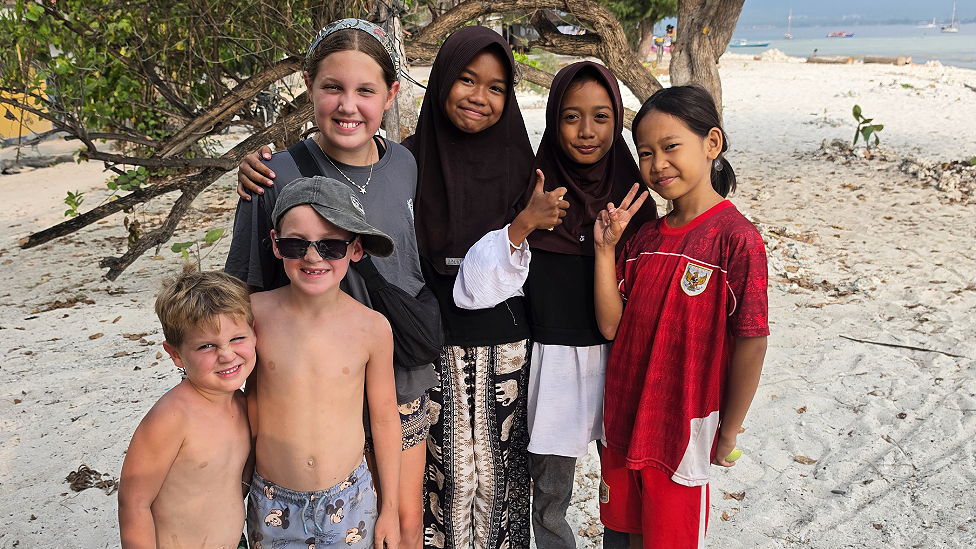
What lies ahead for the family?
The Woolridges have structured their immediate future with reasonable flexibility. Their rough itinerary includes Malaysia, then Thailand, Cambodia, Vietnam and the Philippines, with approximately a year planned ahead but no firm destination after Asia. In Malaysia, they intend to visit an orangutan sanctuary in Borneo and spend extended time at another world-schooling centre to provide the children with peer interaction. Thailand will host separate visits from Dani's mother and Tom's parents, with the family selecting a suitable location to celebrate Dani's 40th birthday.
We're going to do as much as we feel we want to in a continent and then go to the next one. Just keep going for as long as we can, and want to. If at some point we don't want to then we'll have explored a lot of places to pick somewhere to stop.Tom outlined their philosophy of open-ended exploration.
The family maintains a likely brief return visit to the UK to reconnect with family, though no permanent endpoint has been established. Personal aspirations shape their continental ambitions: Dani has always wanted to experience an African safari, while Tom, with his surfing background, envisions visiting Tahiti, particularly as he approaches his 40th birthday in December.
Key Facts
- The Wooldridge family of five sold their home and closed their businesses to begin indefinite world travel in May, carrying only backpacks
- The children continue their education following the UK curriculum with online tutors and world-schooling centres, maintaining university pathway opportunities
- Five months into their journey, the family has explored Indonesia extensively and plans to progress through Malaysia, Thailand, Cambodia, Vietnam and the Philippines over the next year
- The family has refined their luggage from excessive initial packing to two 120-litre and two 100-litre backpacks through donations to locals encountered during travels
- While missing close family relationships, the parents believe the cultural experiences and confidence gained by their children outweigh the negatives of leaving their previous life