Visitors to Yr Wyddfa, Wales' highest mountain at 1,085 metres (3,560 feet), are increasingly unable to reach the summit trig point because of congestion and people bypassing queues during peak season. The issue has sparked frustration among tourists and hikers, with some forced to abandon their attempts after waiting 30 minutes or more, while others have resorted to climbing around the formal queue on rocky terrain.
The problem intensified during summer 2026, with reports indicating that around three-quarters of a million people summit the mountain annually, creating severe bottlenecks on the stone steps leading to the summit marker. Experienced hikers have been documented walking past queues, raising questions about fairness and safety at one of the UK's most visited peaks.
This issue builds on tensions that escalated earlier in the summer as crowds created bottlenecks at the summit trig point, with videos showing clashes between visitors waiting in line and others skipping ahead.
Why couldn't Helen Pacey reach the summit?
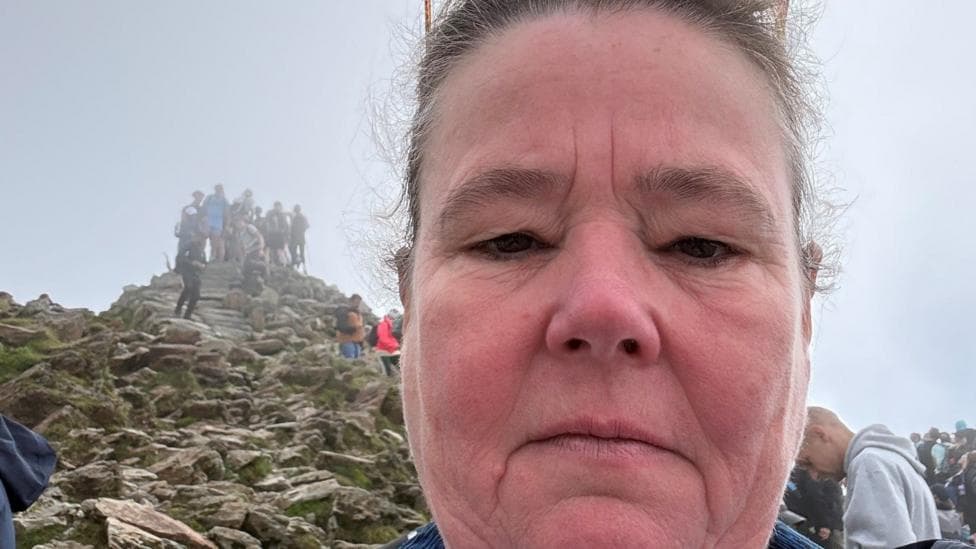
Helen Pacey, 58, from Hull in Yorkshire, travelled to Yr Wyddfa on the Snowdon Mountain Railway with her husband, sister and brother-in-law on 22 August, hoping to touch the metal plate at the mountain's highest point. However, she was unable to complete her goal because of the combination of queuing delays and her physical limitations.
Pacey had undergone hip replacement surgery on both sides and could not navigate the rocky terrain that some visitors were using to bypass the formal queue.
I've had both my hips replaced, so there was no way I could have gone up the rocky side of it,she explained.
Because people were pushing in, we missed out. That is not fair.
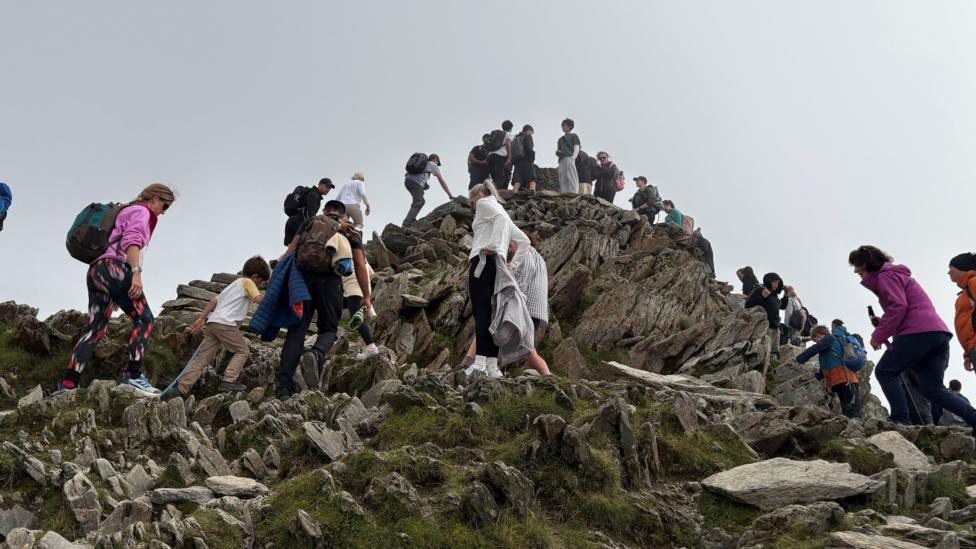
When the group disembarked from the train, they encountered a lengthy queue at the summit.
It was hectic,Pacey recalled.
There were people just pushing and shoving and running past us and climbing up the rocks to get up.The group had only 30 minutes before their return train departure, and they did not reach the trig point before they had to begin their descent.
Pacey expressed concern about the safety implications of the crowded conditions.
Pacey said the summit was so crowded that she was surprised nobody fell.She added that the experience was discouraging and that she would not attempt the climb again.
It was quite sad,she said.
It's really disappointing we didn't actually go right to the summit. But for me, it's not something I would do again, I just felt it was too dangerous up at the top with the amount of people shoving and pushing.
What access issues do visitors with different abilities face?
Pacey highlighted a broader concern about who the mountain serves and how physical limitations affect visitor experience. She argued that Yr Wyddfa should be accessible to people of varying fitness levels and abilities, not just experienced hikers and runners.
The mountain was "for everybody", not just the "endurance runners and hikers".she said.
It's not fair that these people that are much fitter than others are just running up the rocks and getting to the top.
Pacey proposed practical solutions to manage the congestion.
She said there should be an "authority figure" to help keep order, or a barrier telling people which way to go up and down the steps.Her suggestions reflected the need for clearer management of foot traffic and visitor flow at the summit.
Why did some visitors decide to skip the queue?
Not all visitors who bypassed the queue did so without hesitation or regret. Serena Cain, 50, from Norfolk, travelled to Yr Wyddfa with her partner to celebrate his 56th birthday. The couple had trained for the hike and considered reaching the summit a significant personal achievement.
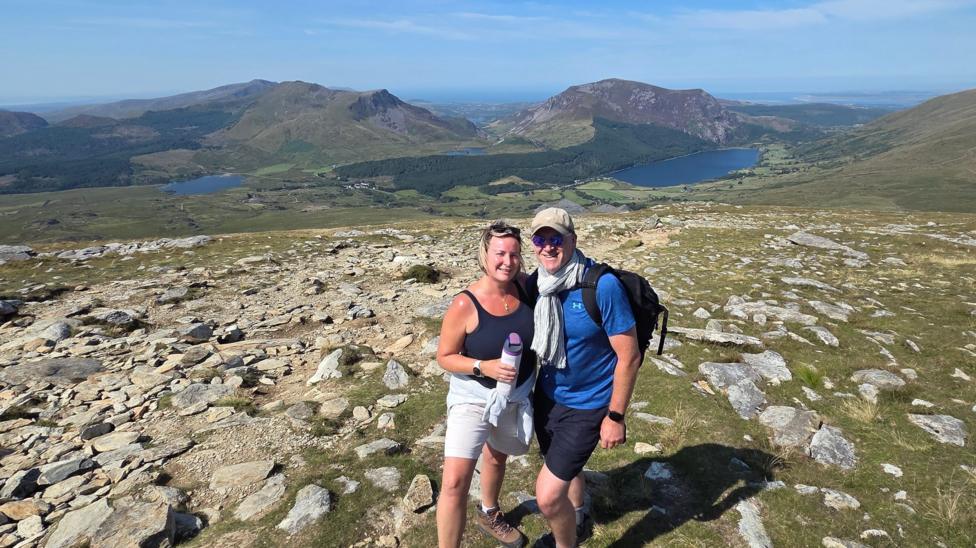
When they arrived at the top and saw the long queue, Serena's reaction was immediate.
I literally go to pieces in a queue,she said. Serena has ADHD and explained that standing still in crowded conditions causes her physical distress, particularly when already exhausted.
It is very difficult for me, particularly when I'm exhausted and overstimulated.
Faced with the choice between abandoning their summit attempt or climbing the rocks to bypass the queue, Serena and her partner chose the latter.
We just didn't see what other option there was at that point, other than just not reaching the top, which would have been gutting,she explained. The couple also had a birthday meal scheduled and needed to descend in time to attend it.
Despite reaching the summit, the experience was marred by confrontation.
But she recalled how one woman was "so cross with me" that "it ruined that moment completely for us". "We didn't want to upset anyone, and we'd like to apologise if we did."
Serena acknowledged the legitimacy of queuing and suggested better communication could help.
She said she understood why people waited in a queue, and thought there should be a sign at the beginning of the route to make people aware of the possibility.
How did the Three Peaks challenge affect queue dynamics?
James Munday, 21, from Loughborough, faced a different time constraint when he and two friends attempted the Three Peaks challenge earlier in August. This endurance event requires hikers to ascend the three tallest mountains in the UK—Ben Nevis in Scotland, Scafell Pike in England, and Snowdon in Wales—within 24 hours, including driving time.
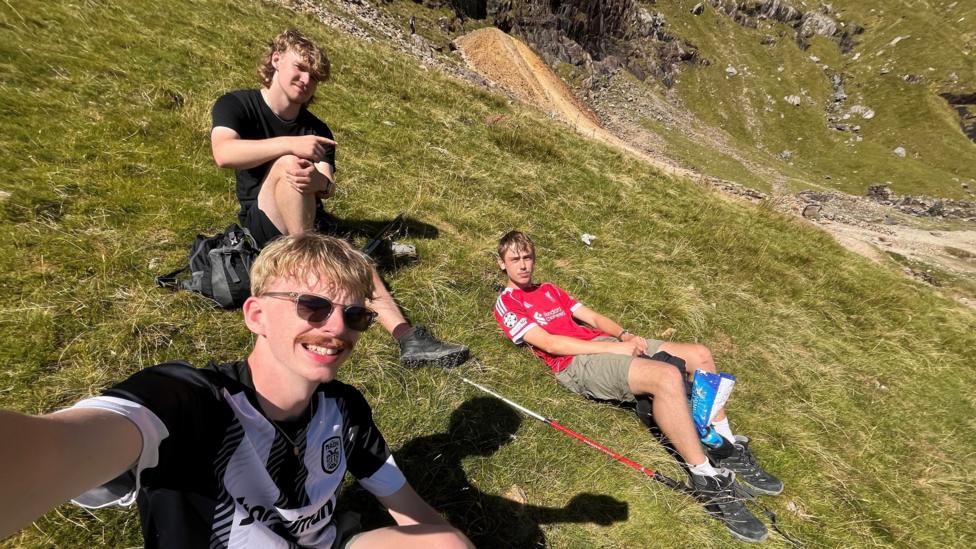
It's a challenge where you hike up the three tallest mountains in the UK, which is Ben Nevis, Scarfell Pike, and Snowdon. The aim is to do it within 24 hours, including all of the driving. We managed to do it in 23 hours and 13 minutes.Munday and his friends were raising money for a hospice, adding a charitable dimension to their effort.
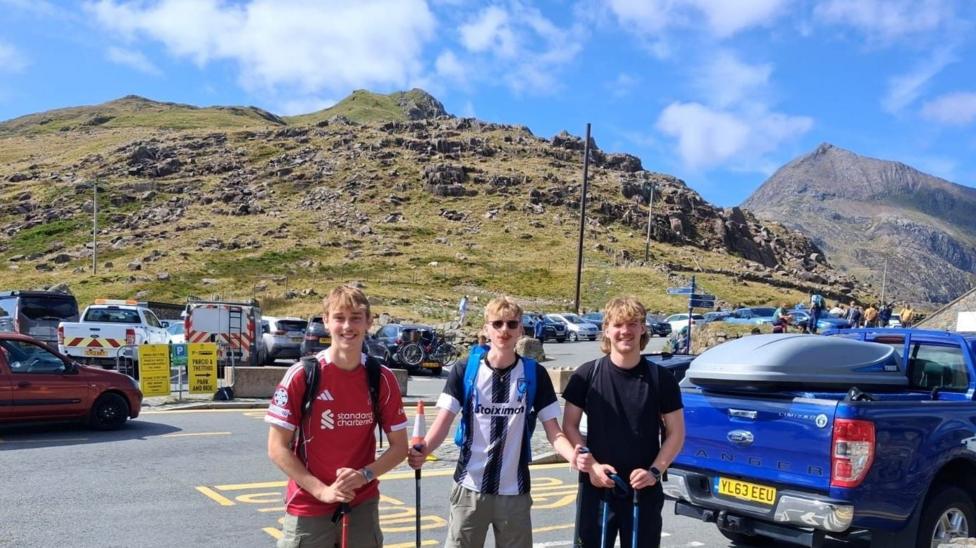
When they reached Yr Wyddfa's summit, they encountered significant congestion.
The queue started sort of towards the bottom of the steps that led up to the summit, but there was there was quite a few people not queuing and just climbing up the back, touching the top and then leaving straight away.Munday estimated between 100 and 150 people were queuing to reach the trig point.
Given their strict time constraint, Munday and his friends did not join the queue. As they made their way to the top, a woman who had been waiting confronted them.
He said a woman who was queuing "had a dig" and said "she'd been queuing for 40 minutes".Munday responded by apologising and explaining their situation.
Munday said they apologised and explained it was a timed Three Peaks challenge for charity.
Munday believed that understanding the context of their climb would have changed people's reactions.
I feel like it was valid because obviously she doesn't know that we're doing the Three Peaks and that it's for charity. But I think if people understood... you have to do it under 24 hours, and if you're doing it for charity, I feel like people would understand a bit more.
He suggested that the queuing problem was specific to Snowdon's popularity and reflected broader British cultural norms.
Munday said he believed queuing was "Snowdon specific" due to how popular it is. "And I think it's just what British people do, really, isn't it?"
Munday proposed that the mountain authorities establish clear rules and signage.
Munday said he had no issue with people queuing but "they either need to make it a rule that you must queue and signpost it, or police it... or have a queue and a sign that says Three Peaks climbers don't have to queue, please respect that".
Is this a new problem?
The queuing issue at Yr Wyddfa's summit is not a recent phenomenon. Liam White reported that congestion and queue-jumping have been recurring problems for years.
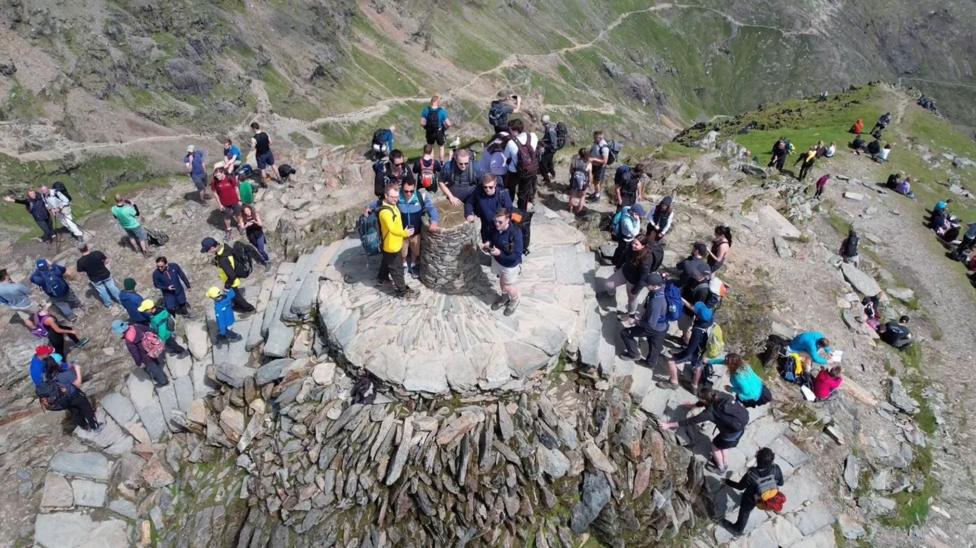
White and his friends climbed the mountain in 2023 and encountered similar conditions.
He said he and his friends climbed the mountain in 2023 and had to wait in a queue for more than 30 minutes to reach the summit. "There were those that were just jumping the line, getting straight up to the peak and touching the old metal plate,"he recalled.
It's obviously a little bit frustrating because you're patiently waiting,he added.
White noted that his friend's frustration was so acute that he booed people as they cut past the queue. The underlying cause, White explained, stems from the sheer volume of visitors attempting to reach the summit simultaneously.
The reason people queue is because of "the sheer volume of people" who are walking up the set pathways leading to the trig point,he said.
When you've got a lot of people waiting to do something, you can't all rush out at the same time. If people start pushing and shoving, it's a bit of a risky place to do it. Because if someone slips, falls, they might not stop falling.
White suggested that modest interventions might help without requiring formal enforcement.
White said he did not think a warden would be good as he feared it could result in charges for hikers, but "maybe just a few signs to say 'be considerate'".
What is the official response from park authorities?
The Eryri National Park Authority has taken a cautious approach to the summit congestion issue. A spokesman stated that the authority has no immediate plans to intervene in disputes over queuing at the summit.
A spokesman for the Eryri National Park Authority previously said there were "no plans to intervene in a dispute over hikers queuing at the top of Yr Wyddfa".
The authority acknowledged the scale of visitor numbers as a contributing factor.
"There are three quarters of a million people summitting annually, so queues are likely to be expected in peak times,"the spokesman added.
However, the matter is not being ignored entirely.
He said the matter would be discussed at a meeting to mark the end of the season in the early autumn.This suggests that any policy changes or new management strategies are unlikely to be implemented during the current visitor season.
What happens next?
The Eryri National Park Authority will revisit the summit congestion issue at an early-autumn review meeting after the visitor season ends. No new measures have been planned for implementation this year, meaning the self-policing approach will continue through the remainder of the peak season.
The outcome of that meeting could determine whether formal queuing systems, signage, warden presence, or other management strategies are introduced for future seasons. Until then, visitors to Yr Wyddfa's summit will continue to navigate the informal and sometimes contentious dynamics of reaching Wales' highest point.
Key Facts
- Yr Wyddfa receives approximately 750,000 summit visits annually, creating severe bottlenecks during peak season
- Visitors report waiting more than an hour to reach the summit trig point at busy times
- The queuing problem affects people with different physical abilities, time constraints and accessibility needs differently
- The Eryri National Park Authority has no immediate plans to intervene and will discuss the issue at an end-of-season meeting in early autumn
- Proposed solutions include clearer signage, designated queue routes, and consideration of special provisions for time-limited activities such as the Three Peaks challenge