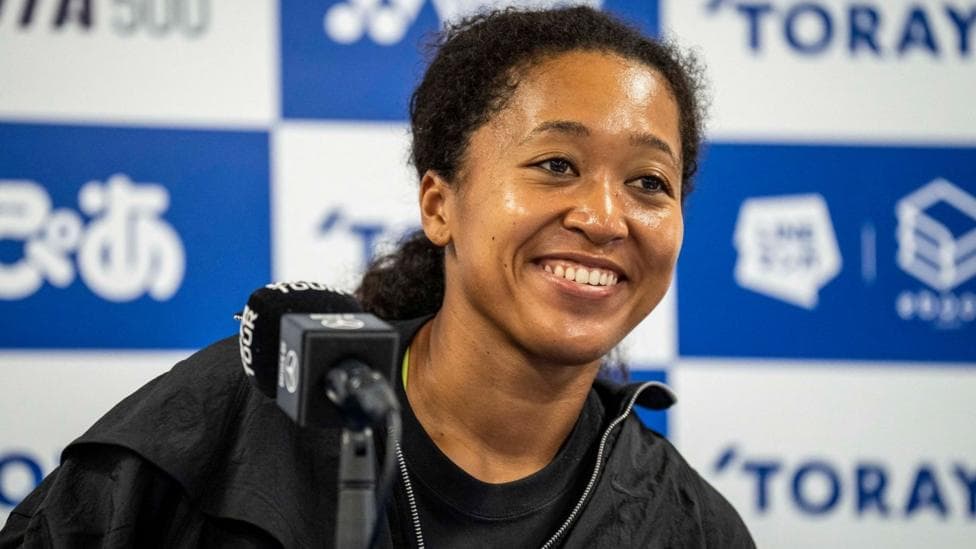
Naomi Osaka believes she remains within striking distance of recapturing the form that produced four Grand Slam titles, yet she continues to grapple with questions about her long-term future in professional tennis. The 29-year-old Japanese competitor has acknowledged that parenthood has fundamentally reshaped her priorities and approach to the sport, with her three-year-old daughter Shai now occupying the centre of her decision-making process.
According to BBC Sport, Osaka's most recent Grand Slam victory came at the Australian Open in February 2021, during a remarkable period between 2018 and 2021 when she claimed both the US Open and Australian Open titles twice and ascended to world number one.
Osaka stepped away from competition in 2021 to address her mental health concerns, then took a further 15-month hiatus following the birth of her daughter before making her competitive return in 2023. Since her comeback, she has steadily climbed back up the world rankings and positioned herself as a contender for major titles once again.
When asked about her commitment to tennis, Osaka made clear that her daughter's wishes would take precedence over her career ambitions.
"It's tough, sometimes I look towards my future and I often wonder how long I'm going to play. Because if my daughter did say she didn't want me to travel as much, I'm not the type of person to ignore that."
How has motherhood changed Osaka's approach to tennis?
Osaka's perspective on her career has shifted considerably as she has matured and embraced her responsibilities as a parent. She emphasised that her daughter represents her foremost concern, even as she endeavours to maintain her competitive edge in professional tennis.
"I try my best to put as much energy as I can into tennis. I wouldn't say I'm part-timing it but my entire day doesn't consist of that. If I think about it in certain ways, I'm really proud of where I am now because it's not like I can dedicate my entire time to the sport."
This recalibration of her daily routine reflects a broader philosophical shift. Rather than viewing her divided attention as a limitation, Osaka has reframed it as a source of personal pride, recognising that she has managed to maintain elite-level performance while honouring her family commitments.
What has Osaka's recent tournament performance revealed?
Osaka has demonstrated tangible progress in her return to competitive tennis, currently ranked 19th in the world and seeded seventh at the Pan Pacific Open in Tokyo. Her recent results underscore her capacity to compete against the sport's elite players. She defeated top seed Aryna Sabalenka en route to the quarter-finals at Wimbledon earlier in the year, having previously finished as runner-up at the Bad Homburg grass tournament. She also advanced to the fourth round of the French Open and the third round of the US Open, where her campaign ended against eventual champion Elena Rybakina.
During the North American hardcourt swing, Osaka reached the semi-finals in Washington and the quarter-finals in Toronto, demonstrating consistency across multiple surfaces and tournament formats. Her Wimbledon quarter-final run was bolstered by her new coach and family support, factors that have contributed to her resurgence on court.
More recently, Osaka withdrew from the Wuhan tournament in October but returned to competition in Beijing on October 2, defeating Maria Timofeeva in three sets, signalling her continued readiness to compete at the highest level despite earlier physical concerns.
Can Osaka return to winning Grand Slam titles?
When assessing her prospects for reclaiming major championship glory, Osaka expressed cautious optimism about her trajectory.
"I genuinely don't feel like I'm that far off. I think there are certain instincts that I don't want to say I lost, but maybe I forgot and I'm kind of relearning but yeah, I don't think - I hope - I'm not far off. I think I built a pretty solid base and I'm just excited to see if I can continue learning and going further in tournaments."
Her assessment reflects a realistic understanding of the work required to return to championship-winning form. Rather than claiming imminent dominance, she acknowledges that she is in a process of rediscovering certain competitive instincts while building upon the solid foundation she has established since her return. Osaka has expressed optimism for the year ahead, suggesting she views her current trajectory with genuine hope.
What is Osaka's tournament draw at the Pan Pacific Open?
Osaka occupies the opposite section of the draw from world number one Elena Rybakina at the Pan Pacific Open in Tokyo. Rybakina enters the tournament as the defending champion following her dominant victory over Canada's Leylah Fernandez, whom she defeated 6-2 6-2 in the Ningbo Open final in China. That triumph marked Rybakina's fourth title of the year and her first tournament victory since winning the US Open the previous month.
Osaka is scheduled to face Italy's Jasmine Paolini in the Pan Pacific Open first round in Tokyo on October 25, providing her with an immediate opportunity to build momentum in her home country.
Key Facts
- Osaka has won four Grand Slam titles—two US Opens and two Australian Opens—between 2018 and 2021, reaching world number one during that period
- She currently ranks 19th in the world and is seeded seventh at the Pan Pacific Open after reaching the quarter-finals at Wimbledon and the third round at the US Open in 2026
- Osaka has stated she would retire from professional tennis if her three-year-old daughter Shai requested that she reduce her travel commitments
- She has credited her new coaching team and family support system for her recent competitive improvements following her return from maternity leave