

Jack Draper has opened up about the emotional collapse that saw him break down in tears during his first-round exit at the Canadian Open just over a week ago, describing it as the product of 15 months of accumulated frustration over a persistent arm injury. The former world No 4, now ranked 143, says he has since reached a stage of acceptance about rebuilding his career from close to scratch. He spoke ahead of his first-round match against Martín Landaluce at the Cincinnati Open on Thursday, where he is competing on a wildcard.
Footage of Draper's distress during the closing stages of his defeat to Térence Atmane, two games from losing the match, spread widely online. The moment capped more than a year in which a bone bruise injury to his left arm has repeatedly disrupted his season, leaving him unable to compete consistently at the top level despite sustained efforts to manage it.
According to a report from the New York Times' athletic desk, Draper had played only eight competitive matches in 2026 before his return, a stark illustration of how severely his season had been curtailed. The same report notes he described his injury ordeal as having to
watch my declineas his ranking slid from the top four into the hundreds.
Despite the raw images from Montreal, Draper was back on the practice court the following day, and his name remained on the Cincinnati entry list as a wildcard recipient, signalling his intention to press on with the comeback.
What caused his emotional collapse in Montreal?
Draper explained that the breakdown stemmed from the cumulative weight of trying to manage constant change in his game while coping with pain, rather than from any single moment of despair. He said he does not often show such emotion, recalling one earlier instance in May when knee tendinitis combined with arm soreness left him in significant pain during practice.
I don't get emotional often. There was once I got emotional in practice in May when I had really bad knee tendinitis and my arm was really sore as well. I was in so much pain. I was running and my knee [hurt] and my hitting the balls and my arm was sore.
Last week came from a place of, I think I had so much to focus on and manage, so much change going on in my tennis. I got to [No]4 in the world through doing the same things, the consistent work, the differences, and then went through this whole process of a lot of setbacks and a lot of struggle.
That's taken a lot out of me. But then at the same time, I'm in a position where I'm having to start again. That reality is difficult sometimes.
The reason I got emotional was that through all the challenges, you can forget who you are on the court. And last week I felt like I couldn't give any more. I was emotional because I didn't recognise the player I was out on the court due to my injuries and due to probably the way I've been feeling for a long time.
When you reach rock bottom like that you can come back up again. Since then I've practised really well, I've had amazing support from the people around me and you get to a point more and more of acceptance. We've definitely reached that acceptance phase now.
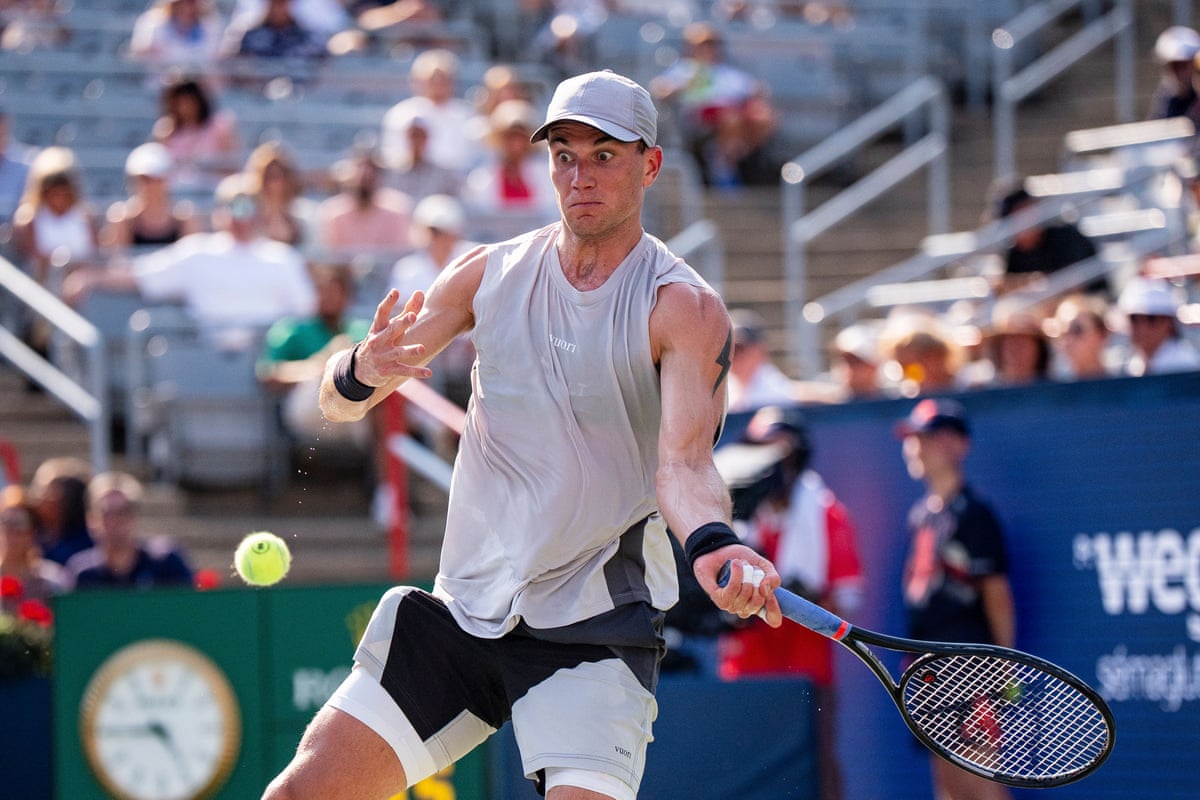

How is he adjusting his equipment to cope with the injury?
Draper has made further changes to his setup after fresh soreness in his arm forced him to abandon a return to some of his earlier string and technique adjustments on the eve of the tournament. He has now gone back to a hybrid gut string configuration and switched to a noticeably more flexible racket, which appears to come from a manufacturer other than his sponsor, Dunlop — a detail he declined to discuss.
After this long period, my shift has gone away from performance. I'm changing my string. I desperately don't want to. I desperately know it's hopefully not something that I'm going to have to do moving forwards, but it's something I have to do for the nature of my injury. Same with the racket.
It's a difficult one because I'm a winner. I'm out there, I want to perform. But I have to accept reality, which is that I have to find a way in very uncomfortable circumstances right now. But if that can get me to the end of the year where I'm feeling really good again and my body's in a great place and my mind's in a great place, then that's only going to help me to move completely past this injury. But there is a way out and I'm seeing that on a day-to-day basis.
Separately, a report on his comeback preparations noted he has also altered his service action, moving to a step-up method as part of the broader effort to reduce strain on his body. Another interview quoted him admitting he had feared he might never return to his previous form because of the long-standing elbow problem underlying much of his recent struggles.
How far has his ranking fallen?
Draper's collapse down the rankings has been one of the most dramatic in the men's game over the past year. Twelve months ago he stood at a career-high No 4 in the world; he is now ranked 143 and, because of the stop-start nature of his layoffs, does not qualify for a protected ranking. That leaves him dependent on wildcards to enter ATP Tour events rather than on qualifying draws or the Challenger circuit.
At the very start of my injury, if I was to say to myself: 'Right, I'm four in the world now, what's the worst outcome?' It would probably be where I've got to. But there's a certain peace in that and acceptance because I have to start again. And what a challenge.
This is not the first time Draper has spoken publicly about the toll of his injuries. In an earlier interview before his Eastbourne return, he likened the experience to watching his own decline, though he remained determined to fight back. Weeks later he withdrew from the Washington event after further soreness in the same arm raised fresh doubts about his readiness for the US Open, and his tearful exit in Montreal was described at the time as adding to those concerns.
According to ESPN, Draper's comeback has been shaped in part by a coaching relationship with Andy Murray, who joined his team in 2026 and has been closely involved in guiding his return to competitive form — a development first flagged when he discussed joining Murray's team ahead of Wimbledon. The same report notes that Draper has already tasted success during this comeback, beating Marcos Giron in the first round of the Lexus Eastbourne Open. A separate account quotes Draper describing his 2026 season as a “perfect storm” of injuries, which contributed to him missing all three Grand Slams this year before his planned return around the US Open.
What happens next?
Beyond Thursday's match against Landaluce in Cincinnati, Draper is scheduled to play in two tournaments before the US Open as part of a carefully managed recovery timeline, according to the same Yahoo Sports report. Separately, Tennis365 reports he is also due to feature in Great Britain's Davis Cup tie in Manchester on Friday, adding another fixture to an already packed schedule as he attempts to rebuild match fitness and ranking points before the final Grand Slam of the year.
Key Facts
- Jack Draper broke down in tears during his first-round defeat to Térence Atmane at the Canadian Open just over a week ago.
- He has fallen from a career-high ranking of world No 4 a year ago to No 143 currently, and is not eligible for a protected ranking.
- Draper has switched to a hybrid gut string setup and a more flexible racket, possibly from a brand other than sponsor Dunlop, to manage a bone bruise injury in his left arm.
- He has played only eight competitive matches in 2026 and missed all three Grand Slams this year because of injury, according to outside reporting.
- Andy Murray has joined his coaching team, and Draper is scheduled to play two more tournaments before the US Open, plus Great Britain's Davis Cup tie in Manchester on Friday.


