Introduction
Last month, Aryna Sabalenka experienced a highly publicized post-defeat meltdown and declared she was done with tennis. On the eve of Wimbledon, she discusses the reality behind that moment and explains why her intense on-court demeanor often leads to misunderstandings about her personality off the court.
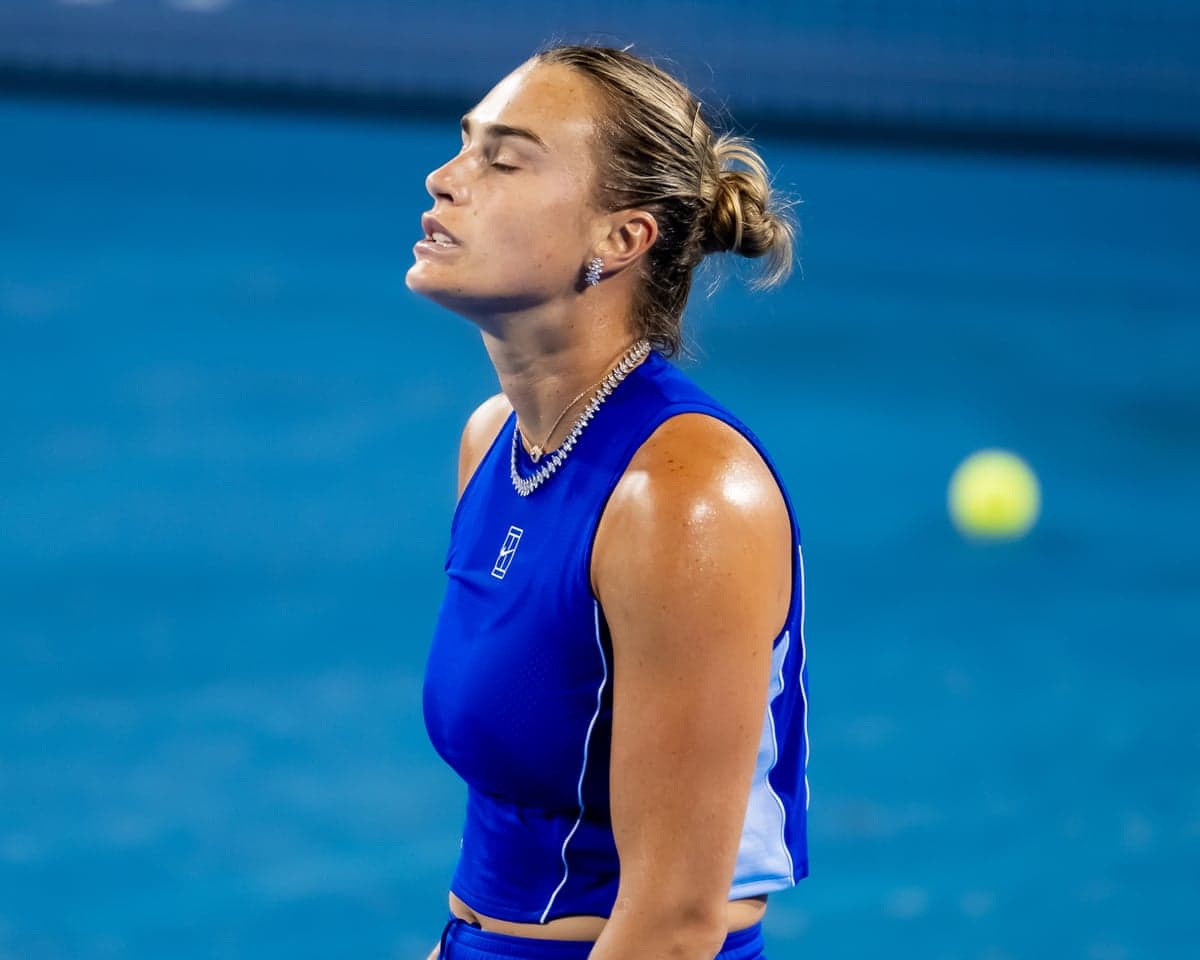
It has been less than a month since the world No 1 tennis player revealed she felt like quitting the sport. Sabalenka’s reputation for emotional implosions is as well-known as her aggressive playing style, but this incident marked a new level of intensity.
During the French Open, one of tennis’s four Grand Slam tournaments, Sabalenka was performing at an exceptional level. She dominated rallies from the baseline, combining powerful winners with delicate drop-shots to outmaneuver opponents. By the round of 16, she appeared invincible.
However, in the quarter-final, with most of her main competitors eliminated, the 28-year-old had a clear path to her fifth Grand Slam singles title. Facing world No 25 Diana Shnaider, Sabalenka won the first set 6-3 and led 5-3 in the second, making victory seem inevitable. Then, conditions deteriorated as the wind intensified, and tournament organizers failed to close the roof.
Sabalenka began to lose control, hitting multiple shots out of bounds. Frustrated, she directed loud screams at her coaching team, a behavior she is known for, but her self-criticism was even harsher. She lost ten consecutive games, eventually dropping the final two sets 7-5 and 6-0 to Shnaider, a player relatively unknown outside tennis circles.
After the match, Sabalenka appeared shocked and stated,
"I just want to quit tennis right now,"admitting she had fallen into a
"deep, dark hole."
In the same tournament, men’s world No 1 Jannik Sinner experienced a similar defeat but handled it differently. Sabalenka’s collapse was one of the most dramatic in tennis history, though not entirely unexpected given her history of emotional volatility, controversies, and on-court confrontations.
Today, speaking from Berlin via video link ahead of Wimbledon, the next Grand Slam, Sabalenka addresses the Paris meltdown openly, seeking to process the experience. She reveals that she delayed speaking to the press to regain composure but ultimately expressed her true feelings.
"I actually took an hour and a half before doing that press conference and I thought, like, OK, I’m better now. And then I just went there and I said, ‘I want to quit tennis!’"
When asked if she regretted her statement, she smiled and replied,
"No. Actually I thought I’d been pretty good."She explained that honesty was necessary given the circumstances and defended her criticism of the tournament organizers for not closing the roof during extreme weather, emphasizing that she respected her opponent and did not intend to be rude.
Sabalenka reflected on a similar incident from the previous year during the US Open final against Coco Gauff. Leading by a set, she lost the match 2-1 and made disparaging remarks about her own performance in the post-match press conference, calling it the
"worst final I ever played"and suggesting Gauff won mainly due to Sabalenka’s mistakes. She later felt ashamed and apologized to Gauff, who accepted the apology graciously.
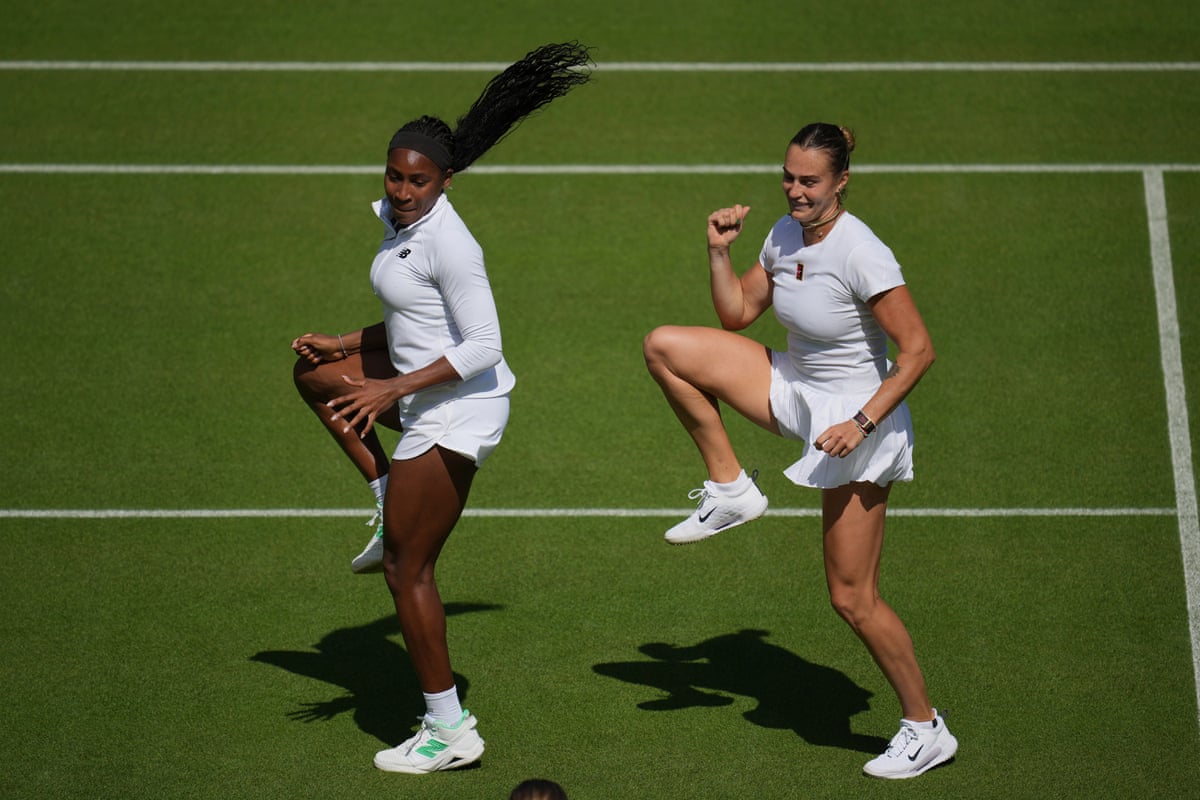
Sabalenka’s reconciliation with Gauff was marked by a lighthearted moment when they performed a TikTok dance together during a practice session at Wimbledon, symbolizing their restored friendship and camaraderie.
"We just scheduled the practice. And I was just, like, ‘Girl, don’t you think it would be fun like to do a dance and loosen it up a bit, so people in the community understand that we’re good?’"
"No. I knew the dance, and Coco’s so talented she picked it up really quickly. It was two tries and we’d done it. It was very cool. It was fun."
Despite her intense demeanor on court, Sabalenka acknowledges that people often misinterpret her personality. She shares an anecdote about her friendship with fellow tennis player Paula Badosa, who initially thought Sabalenka was unfriendly, a misconception that was mutual but ultimately overcome.
"When we met, I was, like, ‘Oh, I thought you were a bitch!’ And she’s, like, ‘I thought you were a bitch, too.’ I was, like, ‘Well, I guess that’s not true, so we can be friends.’ She’s, like, ‘Yeah, we’re actually quite similar.’ I guess it’s just the attitude that we carry on court."
Sabalenka also attributes some of the misunderstanding to her facial expressions, which she describes as naturally severe and unsmiling, a trait she refers to as her "Slavic face."
"When you see me for the first time, you’re probably going to think that I’m a bitch because of my Slavic face. It doesn’t help with that."
She explains that her natural features can make her appear aggressive or unfriendly, but those who get to know her understand it is simply part of her nature.
Sabalenka was born and raised in Minsk, Belarus, a country that gained independence after the Soviet Union’s collapse in 1991. Coming from a sporty family, her grandfather was a boxer, and her father Sergey briefly played professional ice hockey before a car accident ended his career. Her mother studied economics and worked in the corporate sector.
As a child, Sabalenka was energetic and active. Her parents sought to channel her energy into a healthy activity, leading her to try tennis at age six when her father noticed nearby courts.
"I was a really active kid. I wouldn’t do random stuff that kids would do back then, like smoking. Kids were rough in Belarus. They wanted me to live a healthier life. One day when I was six, my dad was passing by tennis courts and he thought, ‘Why not?’ And I tried it."
Her father was not a tennis player but supported her without becoming an overbearing coach.
Regarding her upbringing in Belarus, Sabalenka describes the people as kind and the environment safe and green, though she acknowledges the strictness of coaches who demanded near perfection.
"Coaches can be really tough on you. You have to be almost perfect for them to even give you a compliment."
She recalls being criticized for overhitting and missing targets, sometimes being called "stupid," but responded with resilience.
Academically, Sabalenka excelled in school, particularly in mathematics and physics, until her focus shifted toward tennis training.
She expresses a deep love for tennis, appreciating its competitive nature and the ability to change outcomes at any moment.
"I love that you can change anything at any time. You have to win 24 points to win a set and it’s two sets. And if something goes wrong you still have the third set. I love that everything is in your hands. It’s not like rhythmic gymnastics, when they rate your performance and winning depends on judges. I love the competition. I love to win. I love the feeling of improving, of winning the trophies that you’ve been dreaming of, and the life that you’re living. I love it and I’m definitely not quitting."
Sabalenka’s statement about needing 24 points to win a set reflects her mentality of striving to win every point, a standard that contributes to her frustration when she falls short.
Turning professional at 17 in 2015, she won her first WTA tournament at the Mumbai Open in 2017. Two years later, her father died suddenly at 43 from meningitis, a loss that deeply affected her.
In the Netflix tennis documentary series Break Point, Sabalenka shared her obsession with fulfilling a shared dream with her father of winning two Grand Slam titles by age 25. At 24, she expressed anxiety over not having achieved this goal yet.
However, in 2023, she won her first major title at the Australian Open and successfully defended it the following year. She also won the US Open in 2024 and repeated the victory in 2025.
Sabalenka’s physical strength is a key asset. Standing 6 feet tall and broad, she delivers powerful groundstrokes and serves. Her average forehand speed during the 2024 US Open was 80 mph, faster than top male players such as Carlos Alcaraz, Jannik Sinner, and Novak Djokovic at that time. Her fastest serve, at 133 mph, is the fastest in women’s tennis and only slightly slower than Alcaraz’s top serve.
In Break Point, she admitted that her emotions once undermined her performance, leading to overreactions and loss of focus. She recognized the need to control her emotions to prevent opponents from exploiting her mental state.
Reflecting on this, Sabalenka acknowledges that managing emotions remains an ongoing challenge, but she has improved significantly since the series was filmed.
"I think it’s always going to be an ongoing battle with my emotions. Life throws stuff at you you’ve never experienced before and you’re just going through different things for the first time. You don’t even know how you’re going to react, and you’re always fighting. And I have to say that since that series was recorded I have improved a lot. I’m definitely much better on court right now."
She has become more accepting of her emotional nature, viewing it as integral to her identity and a necessary outlet during matches.
"Even if sometimes you see me getting emotional or yelling at my box, it’s something that I need. It’s something that we spoke about with my team; that whenever I feel like I’m holding too much, just throw the racket, yell something, let it go. Now I’m in better control, but, of course, still I do things that I’m not proud of."
Tennis is often perceived as a refined sport, but it is mentally demanding, especially in singles where players face pressure alone. Many great players have struggled with emotional outbursts, including John McEnroe, Serena Williams, and Alexander Zverev.
Sabalenka has had her own moments, such as at the Wuhan Open in October, where she threw her racket during a meltdown after losing a match despite leading 5-2 in the final set.

She contrasts her approach with that of Björn Borg, who suppressed emotions on court to his detriment.
"See. Everyone says, ‘You have to be in control, you have to be flat with your emotions, don’t show anything.’ And I found it was destroying me from the inside. You’re just holding so much. So I asked my team to be OK with me yelling at them; like, just throwing this aggression to someone that can handle it, just so I can continue fighting on the court."
Sabalenka’s screams during matches have been measured at 100 decibels, a level that can cause hearing damage with prolonged exposure. She denies using her vocal intensity as a tactic to unsettle opponents.
Asked if she screams in everyday life, she emphatically denies it, describing herself as averse to conflict and preferring to spread joy.
"No! I think it’s really difficult to get into conflict with me. You have to do something really, really painful. You have to betray me. In real life, I don’t like conflict. I like to spread the joy and feel the joy around me. I’m a different person."
She believes tennis provides a suitable outlet for her aggression and jokes about pursuing boxing after retirement, although she acknowledges the risks of injury.
"I’m throwing everything on the court. So when I retire I’ll have to find something where I can throw it out. Maybe boxing."
"Yes. I’ve done boxing for a little time, but it can be tricky because you can get injured. Maybe after tennis I’ll become a boxer and a model."
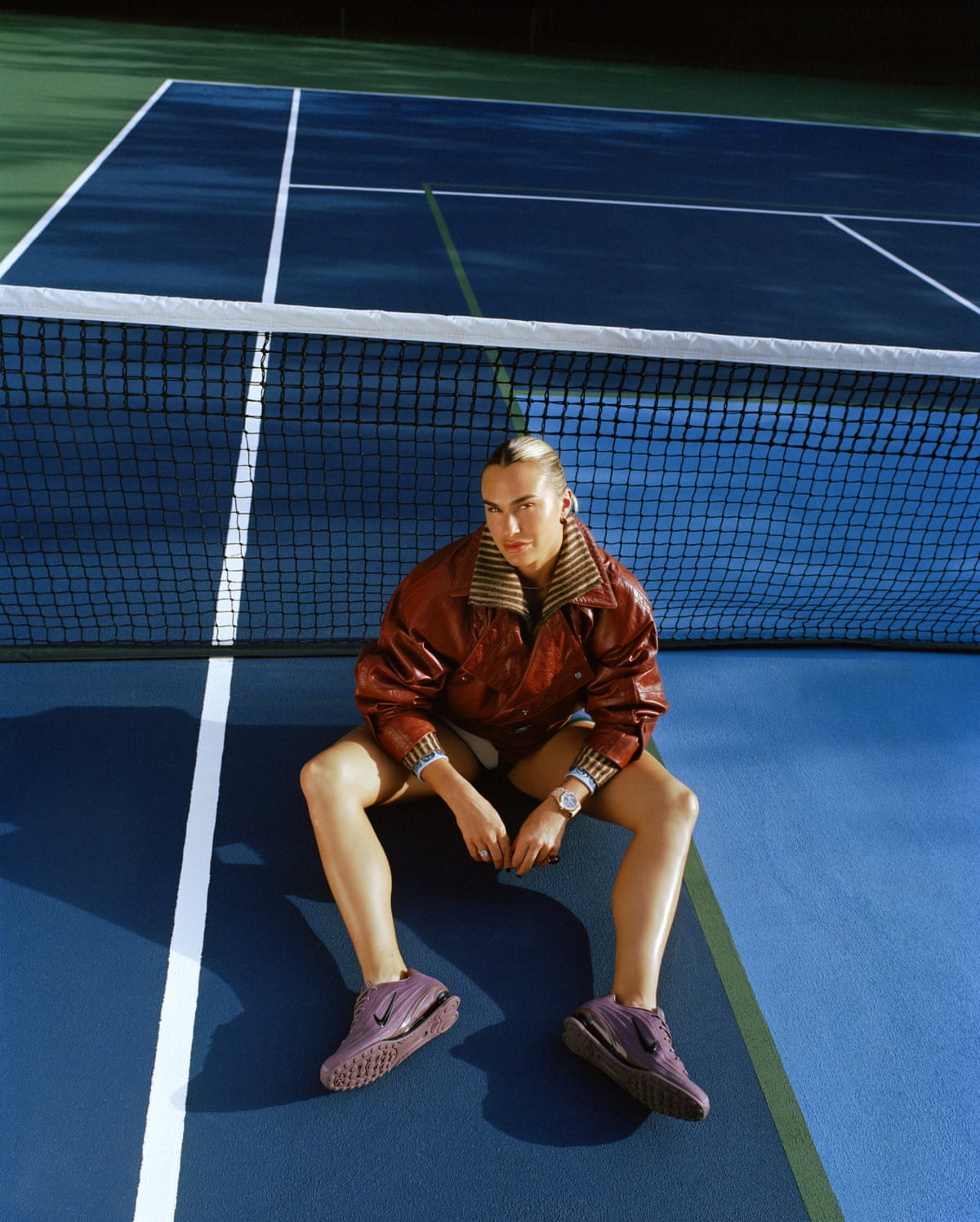
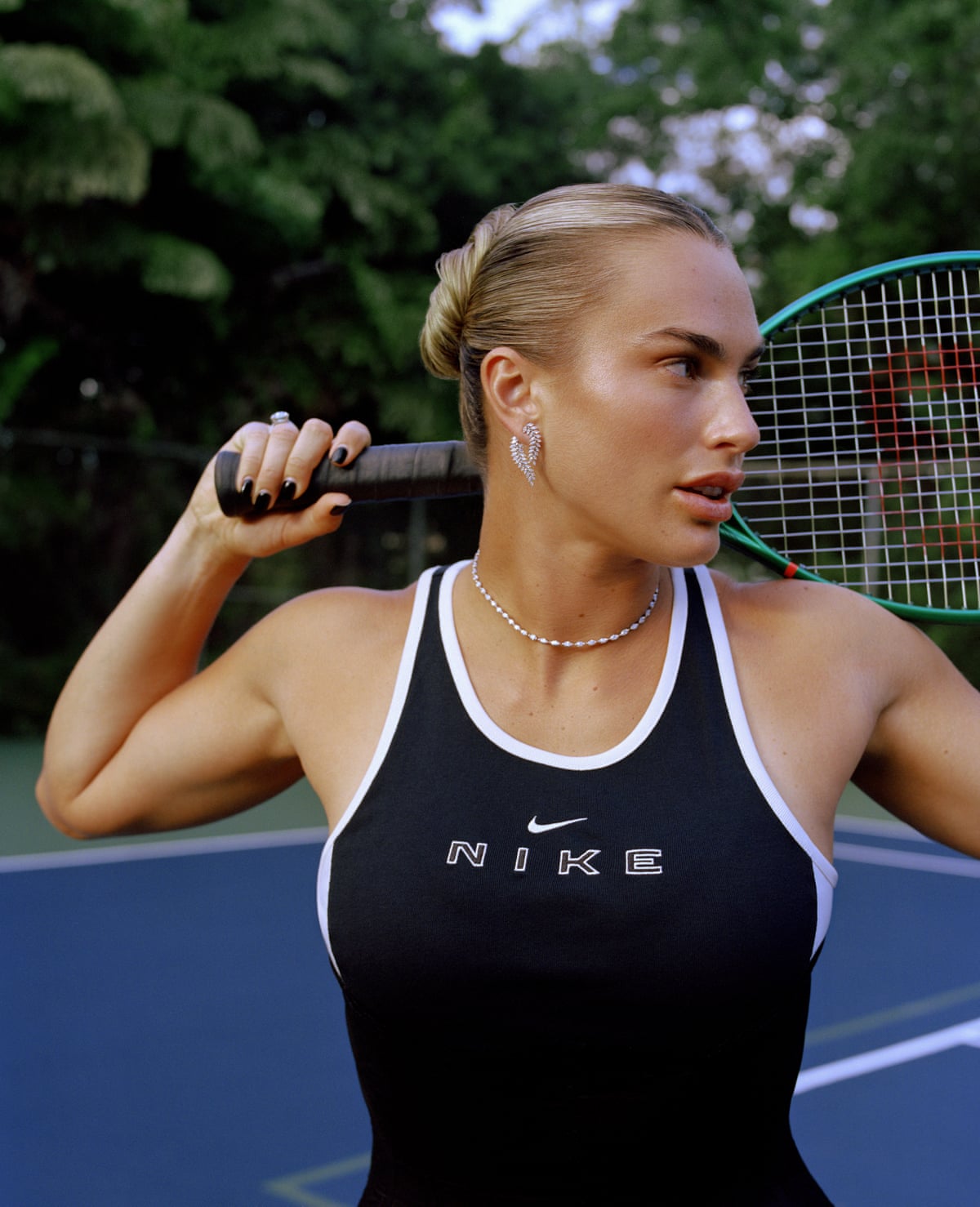
During the interview, Sabalenka wears a large owl-like diamond engagement ring estimated at $1 million, along with matching earrings and a gold tennis racket necklace adorned with colored diamonds, reflecting her distinctive style.
In a memorable post-match press conference after winning the Brisbane Open in January, she thanked her boyfriend, Brazilian businessman Georgios Frangulis, hinting at their engagement.
"Thank you to my boyfriend … Hopefully, soon I’ll call you something else, right. Let’s just wait and see."
Two months later, Frangulis proposed before the Indian Wells Open, presenting her with the oval-cut engagement ring, which she wore during matches until a minor injury prompted her to remove it.
Frangulis, founder of the acai chain Oakberry, is estimated to be worth between $75 million and $100 million. Sabalenka has earned nearly $50 million in prize money and has an estimated net worth of $22 million.
Sabalenka’s off-court life has attracted significant media attention, including a relationship with ice hockey star Konstantin Koltsov, 17 years her senior. His wife, Yulia Mikhailova, publicly criticized Sabalenka on social media, though she later forgave her following Koltsov’s tragic suicide in March 2024.
Sabalenka issued a statement expressing heartbreak over Koltsov’s death, noting they had separated weeks earlier. Mikhailova acknowledged Sabalenka’s kindness toward her children and maintained a neutral attitude. When Sabalenka and Frangulis made their relationship public in 2024, Frangulis’s wife, Isabella Armentano, implied an ongoing affair.
Some controversies involving Sabalenka stem from external factors, such as Ukrainian players refusing to shake hands with her and other Russian and Belarusian players due to geopolitical tensions. These moments have been difficult to witness, with Sabalenka sometimes waiting for a handshake that does not occur, which she attributes to forgetfulness rather than provocation.
She understands the reasons behind such actions but hopes for unity, emphasizing that no one desires war and expressing frustration over politics interfering with sport.
"I understand why they’re doing that. But I just hope that we could fight it together because nobody wants the war. Like, nobody. Nobody voted for the war to happen. Everyone wants peace and everything to stop."
"No. I don’t think it’s right. I feel by shaking hands you show respect to another person as an athlete not as a passport holder of a certain country. But I can’t blame them. They are fighting for peace in their country. I just hate when politics becomes involved with sport."
Among controversies of her own making was a highly publicized exhibition match against Australian player Nick Kyrgios, known for his on-court antics and admitted history of assaulting a former girlfriend. The match was promoted as a replay of the historic 1973 "Battle of the Sexes" between Billie Jean King and Bobby Riggs.
Despite warnings that the event might be counterproductive for women’s tennis, Sabalenka approached the match competitively but lost 6-3, 6-3 to Kyrgios, who was ranked 671st in the world at the time and recovering from injury.
Sabalenka rejects criticism that the match was a failure or damaging to women’s tennis, defending Kyrgios’s credentials and the event’s purpose of attracting attention to the sport.
"No, I don’t think so. For some people, you’re never good enough. Growing up in Belarus taught me not to give a fuck about that. But there are also people who understood what we were doing. We wanted to show you can do fun stuff and bring more eyes on tennis. The numbers were insane on the views."
While the original 1973 match drew an estimated 90 million TV viewers, the replay attracted approximately 6,000 spectators in a 17,000-seat arena, with no broadcast figures released.
When asked about the perception that losing to a lower-ranked male player was damaging, Sabalenka responded with characteristic defiance.
"It’s so ridiculous to say that; the guy played grand slam finals. He was coming back after injury and he has been in the top 10. He was the biggest server, the biggest showman on court. How can you compare a regular 600-and-something ATP player to Nick Kyrgios?"
She acknowledged the factual differences but maintained her stance, smiling as she described her rebuttal to critics.
"It was just a ridiculous comment from someone outside the tennis bubble. I punched them back."
Sabalenka’s fighting spirit is evident in her post-Paris meltdown press conference, where she was asked about her next steps.
"You know those rooms where you just go in and you smash everything? Probably I will spend a whole day tomorrow over there destroying stuff."
She later admitted she did not get the chance to do so but suggested tournaments provide such rooms for players to relieve stress.
"That’s the best therapy. But I was not in the mood to search for something to smash."
"Or we could do it Greek style. With plates."
Sabalenka has a prominent tattoo of a tiger on her left forearm, symbolizing strength and resilience. She had it done at 17, inspired by being born in the Year of the Tiger and recurring dreams about the animal.
"It’s a reminder that, no matter what, I have to get stronger and to fight till the very last moment."
Regarding her potential legacy, Sabalenka acknowledges she must win more Grand Slams to join the sport’s elite. At 28, she is in her prime and believes she can dominate the women’s game if she maintains focus without overthinking.
Reflecting on the Paris experience as Wimbledon approaches, she describes it as a
"slap in the face,"but does not consider it a panic attack.
"No, I don’t want to call it something that big. It was just that I forgot how to do everything. I am a strong believer that everything happens for a reason. Maybe, later on, I will see the reason and I’ll look back and say, ‘Oh, thank you.’ Sometimes you need to get slapped in the face."
This article was sourced from theguardian