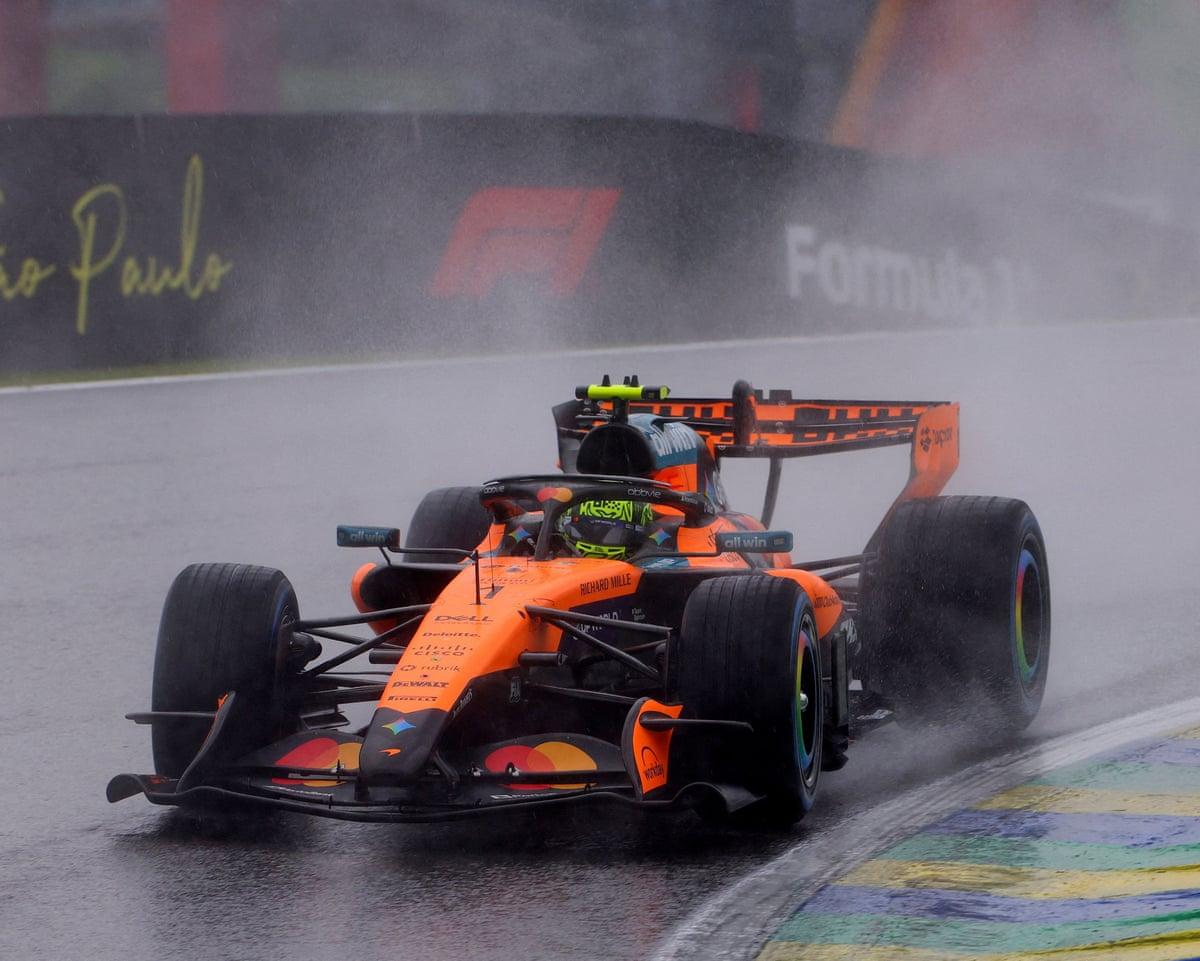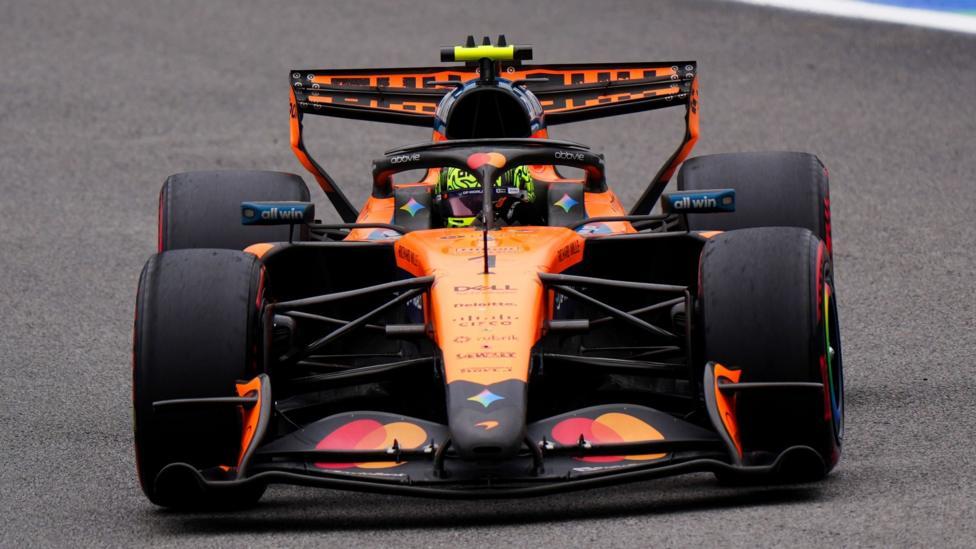
Lando Norris claimed victory at the São Paulo Grand Prix, capitalising on mistakes from new world champion Kimi Antonelli and George Russell to secure his third win of the 2026 season. According to BBC Sport, the McLaren driver started from pole position but faced a challenging race in difficult, changeable conditions at Interlagos. Norris finished 14.6 seconds ahead of Max Verstappen, who delivered a remarkable recovery drive from 21st on the grid, while Isack Hadjar completed the podium.
The result meant Mercedes clinched the constructors' championship with Russell finishing fourth and Antonelli fifth, a week after the Italian had secured the drivers' title. The Guardian reported that the achievement represents Mercedes' ninth constructors' title and their first drivers' and constructors' double since Lewis Hamilton took the championship in 2020. The team needed to outscore second-placed Red Bull by just three points in Brazil and comfortably closed out the championship.
Norris's victory came after Formula1.com reported that he won the 71-lap race by capitalising on critical errors from his rivals. This marked his second consecutive victory in Brazil and the 14th of his career, ending a two-month drought at the top step of the podium since the Dutch Grand Prix at the end of August.
How did Norris take the lead?
Despite starting from pole, Norris immediately lost first place when Antonelli surged ahead from the front row at the start. The Mercedes driver built a commanding advantage, extending his lead to five seconds within ten laps as he appeared poised to crown his championship achievement with a maiden grand prix victory.
Antonelli's advantage stretched beyond eight seconds by lap 13, but as the track began to dry, Norris made the crucial tactical decision to pit three laps later for dry-weather slick tyres. When Antonelli followed a lap behind, Norris had gained sufficient time to rejoin directly behind the Mercedes car on the racing line.
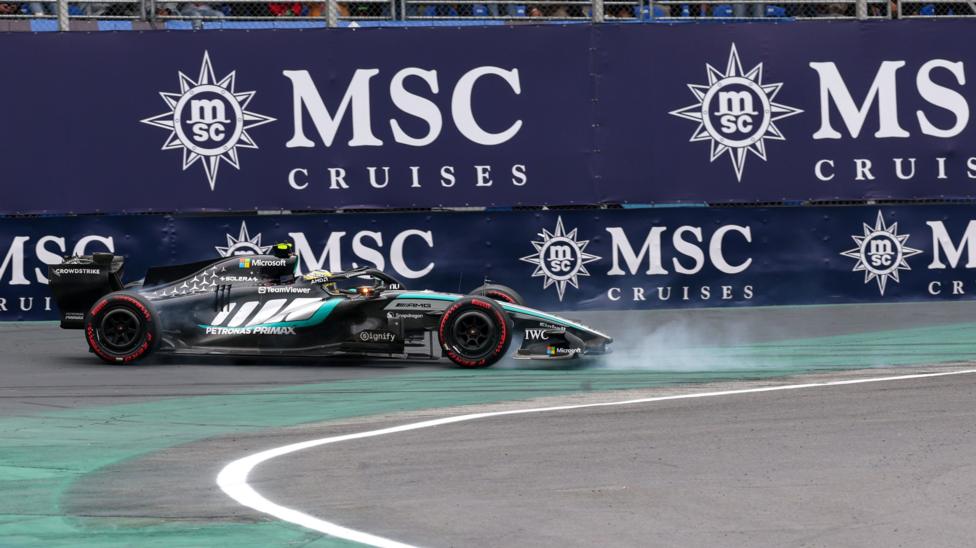
After defending for a couple of laps, Antonelli reported over the radio that his car felt unstable under acceleration. The Guardian noted that Antonelli's difficulties appeared to stem from an imbalance in tyre temperatures during his first pit stop. On lap 20, he lost control entering Turn One and spun, handing the lead to Norris. According to Formula1.com, Antonelli spun twice during the race, including once before the start, compounding his difficult afternoon.
What happened to Russell and Verstappen?
Russell's day unravelled when he spun exiting the pits while working his way into podium contention from his seventh-place starting position. The spin cost him 15 to 20 seconds and derailed what had been a promising recovery drive, though he ultimately salvaged fourth place to help Mercedes secure the constructors' title.
Verstappen, meanwhile, produced a supreme performance in the changeable conditions. Starting from 21st place due to an engine penalty, the Red Bull driver climbed steadily through the field and moved into third when Antonelli ran wide at Turn One four laps after his initial spin, handing the position to the Dutchman. The Guardian highlighted that Verstappen's recovery to second place ranks among his best comebacks at Interlagos, where he previously finished third from 16th in 2016, third from the pit lane in 2025, and won from 17th on the grid in 2025.
Hadjar, who had been running ahead of Verstappen, matched the four-time champion's pace but proved less consistent and made too many errors. Red Bull ordered Hadjar to yield to Verstappen on lap 39, hoping the team leader could challenge Norris. However, Norris maintained superior pace throughout and held off Verstappen's advances, switching to soft tyres before transitioning to intermediates as rain intensified in the final ten laps.
How did conditions shape the race?
The wet conditions at Interlagos played a defining role in the outcome, testing every driver's adaptability and racecraft. Norris demonstrated mastery of both dry and wet-weather scenarios, managing his tyres expertly and maintaining composure through the late shower that forced another strategic adjustment. The Guardian reported that in clean air out front, the McLaren had immense pace that allowed Norris to dictate throughout, even as late tension emerged when rain swept the track in the final ten laps, causing a flurry of pit stops for wet rubber.
Verstappen's performance in the changeable weather proved particularly impressive, showcasing his renowned ability to extract maximum performance regardless of track conditions. His climb from 21st to second place highlighted his exceptional skill in navigating the technical demands of Interlagos in variable weather.
In contrast, both Antonelli and Russell struggled with the transition between wet and dry conditions. Antonelli's complaints about the car's behaviour under acceleration preceded his critical error, while Russell's spin suggested difficulties in managing the car's balance during the pit sequence.
Mercedes' dominant season and championship clinch
The constructors' championship represents the culmination of a remarkable season for Mercedes. The Guardian noted that the team was dominant for the opening half of the year, having developed both the best car and the best engine for the complex new regulations of 2026, an advantage which they made the most of by winning the opening six races of the year. They have since taken 12 wins in total with Antonelli scoring nine and Russell three from 20 meetings.
McLaren, Ferrari and Red Bull developed their cars strongly to come back at Mercedes, with all three taking wins, but Mercedes remained operationally strong and continued to maximise their return, even given they were not bringing upgrades at the same rate as their rivals. Reliability has been their only real weakness, perhaps to be expected given the new regulations.
Norris and McLaren's strong finish
For Norris and McLaren, the victory represents a significant result, delivered with impressive precision as the final set of upgrades they brought to this round, notably the front wing, appear to have paid off. Norris had shown great pace in qualifying with pole and proved that the car had similar form in race pace. The Guardian reported that while the title is gone, Norris remains determined to make the most of every opportunity, with wins still on the table allowing McLaren to remain in the fight with Mercedes, Red Bull and Ferrari as they look ahead to 2027.
Key Facts
- Norris secured his third victory of the 2026 season over 71 laps, finishing 14.6 seconds clear of Verstappen, with Hadjar completing the podium in third
- Antonelli's two spins, including one before the race start, proved costly despite his new world champion status, with tyre temperature imbalances contributing to his difficulties
- Mercedes clinched their ninth constructors' title and first drivers' and constructors' double since 2020, with Russell fourth and Antonelli fifth
- Verstappen's recovery from 21st place to second demonstrated exceptional racecraft in difficult, wet conditions at Interlagos, ranking among his best comebacks at the circuit
- The race featured multiple tyre strategy changes as conditions shifted between wet and dry throughout the 71-lap distance, with late rain forcing additional pit stops