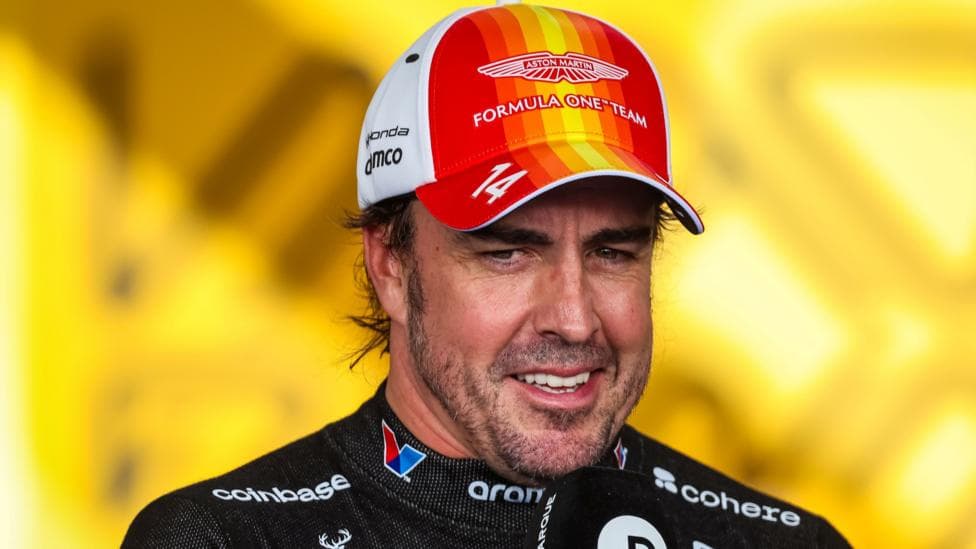
Fernando Alonso has pledged to continue his Formula 1 career with Aston Martin for at least one additional season, citing his enduring confidence in his own abilities as the primary motivation behind the choice. The 45-year-old Spanish driver announced the decision on Tuesday following months of deliberation about his future in the sport.
Alonso's commitment comes despite his well-documented frustrations with the 2026 hybrid power unit regulations, which he has criticized alongside Max Verstappen and Lando Norris. His decision to remain reflects a complex calculus involving personal performance, team potential, and the influence of design authority Adrian Newey, whose arrival at Aston Martin has reshaped the organization's technical direction.
According to Formula 1's official driver records, Alonso has competed in 442 Grands Prix, claimed 106 podium finishes, secured 32 victories, and won two world championships across his career that began at the 2001 Australian Grand Prix—before eight of the current grid were even born.
Why Alonso Decided to Stay
When asked to explain his reasoning, Alonso emphasized that racing has become inseparable from his identity.
First, this is my life. I have this in my blood and I keep racing and I keep enjoying and this is a way of life, in a way.
The decisive factor, he explained, stems from his conviction that he remains competitive with any driver on the grid.
Probably for me the biggest, or the clearest thing to keep racing is I still feel self-confidence that I have something extra. And when I think about stepping down or taking a different role in the team or not driving the car or whatever, in a way I feel it should not be like that because I still feel as fast as anybody. So let's have another go.
Alonso's assessment of his own capabilities is grounded in direct observation during practice sessions. He observes other drivers making errors—locking brakes, missing apexes—and concludes he performs at a higher level.
When I jump in the car, in free practice, I will see some people braking late in a corner, locking up the front tyres here or there, making mistakes there. I feel that I'm OK. Or, I'm faster than them.
Even when finishing outside the points, Alonso derives satisfaction from outpacing faster machinery.
So when I get changed and I go back home, even if I'm P18, in a way I feel some satisfaction and pride inside, even if it should not be the case because we are not competitive.
The prospect of retirement troubles him precisely because he believes he retains the edge to compete.
How will I be in the living room, watching TV, thinking that I can do better? That will be my feeling now. When that changes, if I see that I lost abilities, I lost speed, I lost reflexes, I lost something, then I will be happy to watch from my living room the race. At the moment, I feel it was not the time because I'm better than that guy. I'm better than that other guy. I will think like that. And I cannot stop racing if I still think like that.
Proof on Track
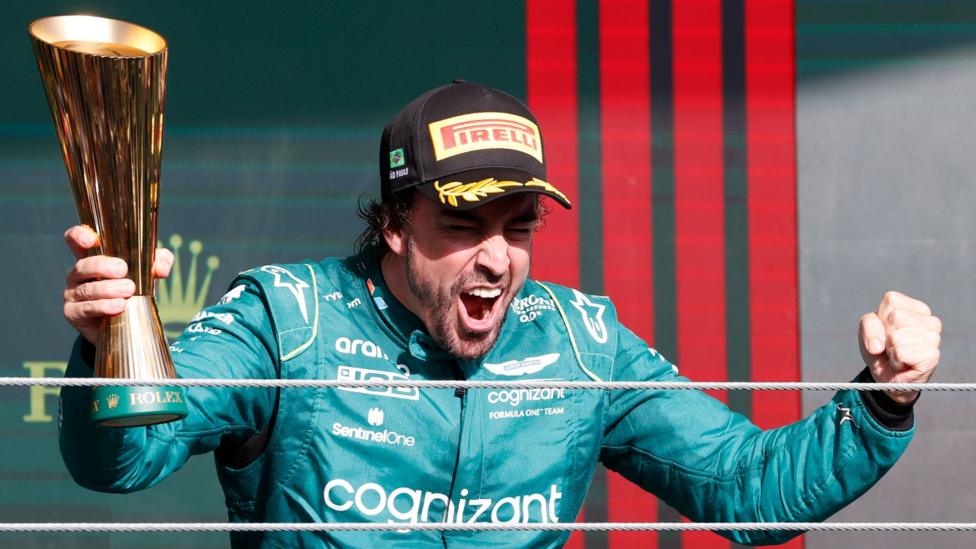
Alonso has had limited opportunities this season to demonstrate his capabilities. After 15 Grands Prix in 2026, according to Formula 1 standings data, he occupied 19th position with three points, two top-10 finishes, and six retirements. One standout performance came at the Dutch Grand Prix, where he finished ninth while defending against faster competitors from Alpine and Racing Bulls in the closing stages.
Alonso acknowledges that such performances, while validating to him personally, carry little weight with the broader audience.
You only prove to people when you are at the podium or you are on TV. That's where eyes are open, and people remember suddenly that you're still on the grid. So now I'm at peace with this period of time that I'm anonymous, and no one knows that we're still there and we're still fast. We are preparing ourselves for the moment of truth and that will be a surprise for everybody again.
Reconciling His Dislike of Modern F1 Cars
Alonso's decision to continue racing presents an apparent contradiction. Throughout 2026, he has been among the sport's most vocal critics of the hybrid power unit architecture, which splits energy generation roughly 50-50 between internal combustion and electrical systems. The design creates two primary problems: cars deplete their battery reserves before reaching certain corners—a phenomenon known as "derating"—and demanding corners have been neutered because they serve as battery charging zones.
Alonso has deployed colorful language to express his dissatisfaction. He has termed the championship a "battery world championship," described fast corners as "the charging station for the car," and suggested that "the chef could drive the car" through a particularly compromised corner in Bahrain that once represented a major technical challenge. He has also dismissed the increased overtaking created by energy management variations as mere "avoidance actions."
When confronted with the apparent contradiction between these criticisms and his decision to continue, Alonso acknowledged the tension.
That's a good question, because that was the hardest thing for me.
His willingness to persevere stems partly from planned regulatory adjustments. The FIA and Formula 1 have committed to shifting the power ratio toward 60-40 in two incremental steps by 2028, a trajectory Alonso hopes will address the sport's fundamental problems.
This year, there have been some good races and some bad races. Maybe some of the shorter circuits that you had the battery until the braking point are changing the way you perceive the driving. And some of the circuits like Silverstone, Spa, Suzuka, they were very bad, you know, because they derate and things like that.

Alonso expressed optimism that near-term adjustments might improve the driving experience.
Maybe even for next year they can tweak a little bit the battery power to have a little bit maybe less battery for longer or something like that because F1 at the moment is not natural driving. Reaching the top speed in the middle of the straight, it goes against the driver instinct of braking late and going on power earlier. It seems that if you want to drive these cars fast, you ended up going slower and that's not the way it should be.
As an elder statesman of the grid, Alonso feels a responsibility to contribute to the sport's evolution. The receptiveness of governing bodies to driver feedback has provided reassurance.
It does help that the sport keeps chasing ideas and talking to the drivers and the teams (about) how to make things better, even for the next set of regulations. This gives me also some hope that I will enjoy more the driving next year than I did this year.
The Adrian Newey Factor
A pivotal influence on Alonso's decision has been the arrival of Adrian Newey as Aston Martin's managing technical partner in March 2025. Newey, widely regarded as the greatest technical mind in Formula 1 history, has accumulated 14 drivers' championships and 12 constructors' titles across his career. For Alonso, the opportunity to collaborate with Newey for the first time represented a once-in-a-lifetime prospect.
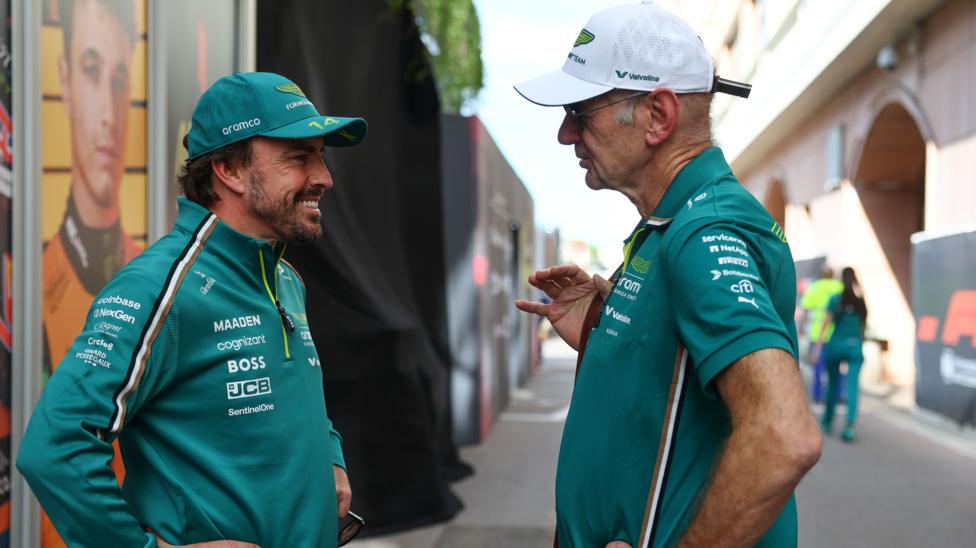
Newey's late arrival delayed the development of Aston Martin's 2026 car, contributing to a disastrous season for the team. The organization has struggled with an uncompetitive chassis and an underperforming Honda power unit on the Japanese manufacturer's return to the sport. However, a substantial upgrade introduced at the Hungarian Grand Prix reduced lap times by approximately two seconds, signaling potential for the coming year.
Alonso explained that abandoning the partnership after a single compromised season would have been premature.
This team has all the ingredients to have success in the future, and I didn't feel that this was the moment to leave. It was the moment to keep on going, giving a second chance to Honda as well to fix their problems as well and stay together with the team. Adrian was probably the biggest contributor to this. We didn't start it right this year but things are moving in the right direction and he's capable of changing things very quickly.
Alonso's relationship with the Stroll family—team owner Lawrence Stroll and teammate Lance Stroll—has also anchored his commitment.
Aston is my family. I know Lawrence and Lance for many, many years. We keep open conversations, many different topics, every week. And that will be the case also for next year.
The Honda engine upgrade that debuted at the Dutch Grand Prix in late August proved unspectacular, and Alonso carries difficult memories from his McLaren years between 2015 and 2017 when Honda engines were similarly problematic. He acknowledged that reliving that experience "has been difficult." Nevertheless, he believes the manufacturer has implemented meaningful organizational changes.
They are moving in the right direction. There are no guarantees that next year the engine will be completely fixed but all the changes that are happening in Honda made sense, so I have faith. The trust that I have in the team, it didn't change even throughout this difficult year. In the future, I don't know how long it's going to take, but it will be a successful team, and I want to be part of it.
Family Considerations
Alonso became a father in March 2026 when his partner, Spanish television presenter Melissa Jimenez, gave birth to their son, Leonard. When asked whether fatherhood had influenced his career decision, Alonso initially suggested it might have, but ultimately concluded it played a minor role.
I would say not. I was (initially) thinking yes, and I tried to think about, family first, what will be the best for my son next year if I have this tight calendar or not and things like that. But then quickly I realised that it was not really a key factor.
At six months old, Leonard has found travel challenging, but Alonso anticipates his son will accompany him to approximately half of next season's races.
I think next year he will come to 50% of the races or more. So I could even enjoy my life more, travelling around the world with my son. That's a huge privilege that I will hopefully enjoy next year.
Alonso emphasized that racing remains his natural inclination regardless of circumstances.
Racing next year, it was my natural, final decision. I will be racing in any car, even when I stop Formula 1, but F1 is still in my blood. One more year made all the sense in the world for now.
Looking Beyond 2027
While Alonso has committed to 2027, he left open the possibility of extending further.
I see that it would not be only one year, but I don't have any pressure to think about it.
Aston Martin has also confirmed that Lance Stroll will continue as Alonso's teammate for the 2027 season. The team's technical trajectory under Newey's direction will likely determine whether Alonso's commitment extends beyond the coming year.
Alonso's decision aligns with broader trends among senior drivers. Max Verstappen signed a contract extension with Red Bull through 2030 in August 2026, ending speculation about moves to rival teams despite frustrations with the new regulations. Similarly, Lando Norris committed to McLaren through 2030, describing the decision as straightforward.
What Happens Next
The Formula 1 calendar continues with the Bahrain Grand Prix scheduled for October 2–4, 2026. Alonso will aim to build on the team's recent technical improvements and demonstrate that his confidence in his abilities remains justified as the season concludes.