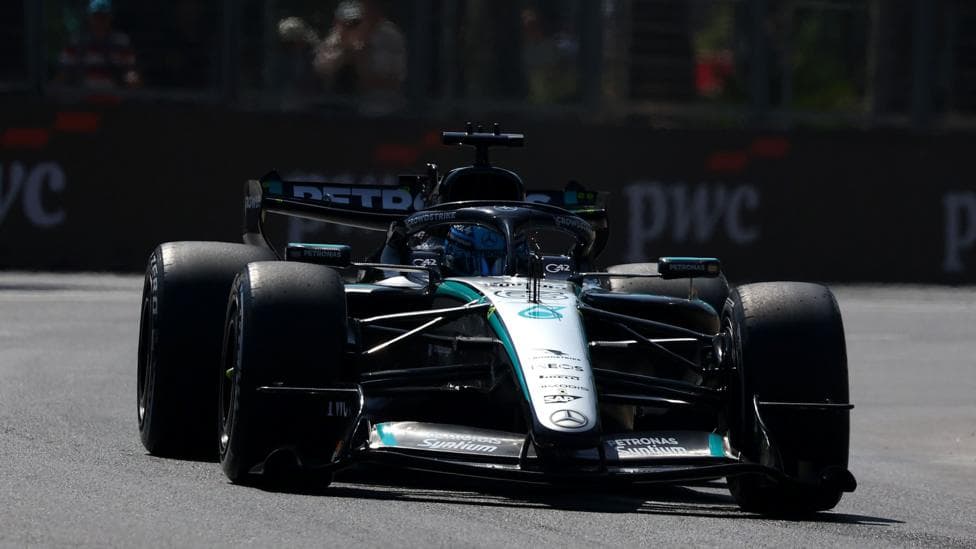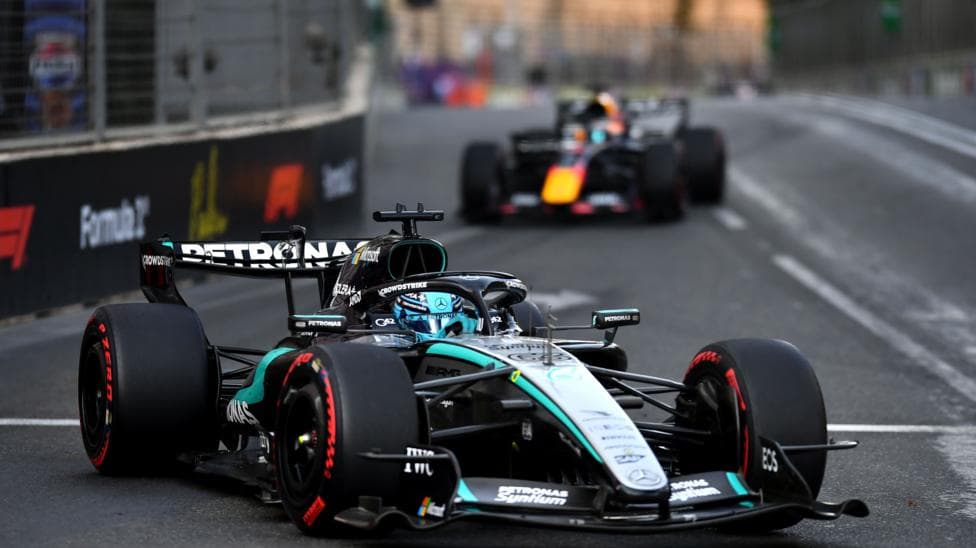
George Russell claimed his first Formula 1 victory since the Austrian Grand Prix in June, fending off a determined assault from Max Verstappen in the closing stages of the Azerbaijan Grand Prix. The Mercedes driver's triumph at the Baku City Circuit on 26 September 2026 came after two safety car periods compressed the field and set up an intense final battle to the finish line, with Russell prevailing by just 0.196 seconds. The victory significantly boosted Russell's championship hopes, reducing his deficit to team-mate Kimi Antonelli from 81 points to 66 with eight races remaining.
Russell had controlled much of the race from pole position, establishing a commanding lead of over 11 seconds while Verstappen fought his way upward from eighth on the grid. The Red Bull driver's recovery was hampered when he became trapped behind McLaren's Oscar Piastri, unable to find a way past until the first safety car intervention reshaped the order. Two caution periods in rapid succession then transformed the contest into a tense duel, with Verstappen repeatedly threatening but ultimately unable to complete an overtaking manoeuvre.
The result marks a significant moment for Russell's season. His victory, combined with Antonelli's recovery from 16th place to fifth, demonstrates Mercedes' competitive standing as the season progresses. According to ESPN's race results, Russell's performance underscores his ability to deliver when it matters most.
How did Russell dominate the opening phase?
Russell's early control of the race was comprehensive. Starting from pole position with a 1:42.526 lap, he steadily extended his advantage over the field during the opening laps. Oscar Piastri, who had moved into second place at the start by passing Ferrari's Charles Leclerc, lacked the pace to mount a serious challenge to the Mercedes driver. Russell's lead grew to a comfortable margin as the race unfolded with minimal incident in its opening stages, reaching over two seconds within the first few laps.
Verstappen's path to the front was obstructed by Piastri, who held third place and resisted the Red Bull's advances. The three drivers—Russell, Piastri, and Verstappen—circulated in a stalemate for several laps, with Verstappen catching Piastri by lap nine but unable to pass. Teams anticipated the safety car intervention that would eventually materialise and reshape the race dynamics.
What triggered the dramatic late-race sequence?
The race's character shifted dramatically on lap 30 when Williams' Alex Albon crashed at Turn Five, prompting the first safety car deployment. On the restart six laps later, Verstappen seized the opportunity to pass Piastri into Turn One and move into second place behind Russell. The pit stops under the safety car negated Russell's 11-second lead but also moved Antonelli forward in the field to eighth place.
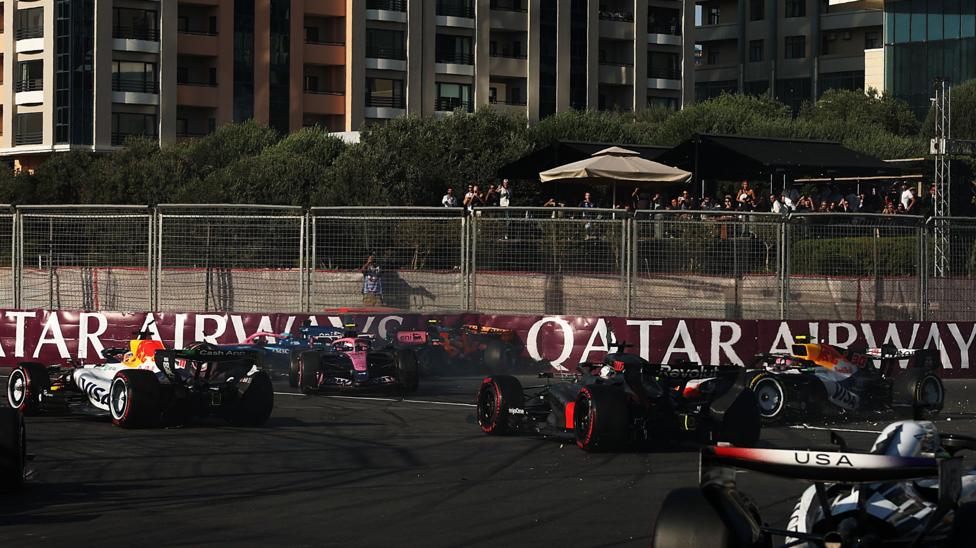
The respite proved brief. Almost immediately after racing resumed, a multi-car incident unfolded at the first corner as Alpine's Franco Colapinto collided with team-mate Pierre Gasly, who in turn struck McLaren's Lando Norris. The Racing Bulls also became entangled behind them, with Arvid Lindblad tipping Liam Lawson into a spin. This second safety car restart positioned Verstappen directly behind Russell for another assault on the lead.

Russell responded to the restart by accelerating early and catching Verstappen somewhat unawares, but the Dutchman remained within striking distance, hovering approximately 0.5 seconds behind throughout the subsequent laps. Despite his proximity, Verstappen could never close the gap sufficiently to attempt a decisive overtaking move into Turn One, the circuit's primary passing opportunity. Antonelli, meanwhile, moved steadily through the field, reaching sixth place before passing Lewis Hamilton for fifth on lap 42.
How did Russell survive the final lap drama?
Verstappen's final opportunity arrived on the last lap when Valtteri Bottas crashed his Cadillac at Turn 15. Russell backed off for the yellow flags, but in doing so lost his turbo boost, which cost him electrical power on the run to the finish line. Verstappen closed dramatically, but Russell held firm to cross the line with just 0.196 seconds separating the two cars. This represented the closest green-flag finish to a grand prix since the 2002 United States Grand Prix.
Russell's anxiety during this final sequence was evident.
After an issue with energy deployment, Russell was scared Verstappen would pass him on the run to the line, but held on to win by just under 0.2 seconds.The British driver weathered the immense pressure with aplomb, demonstrating the composure required to secure victory in such circumstances.
What was the broader context of the race?
Russell's victory represented a significant recovery from his previous drought. His last win had come at the Austrian Grand Prix in June, and that triumph had similarly come after an intense battle with Verstappen. The Austrian result had moved Russell to second in the championship at that time, and this Baku victory continues his momentum in the latter stages of the season.
Verstappen's performance in Baku demonstrated his capacity to recover from adversity. A difficult qualifying session, in which a cascade of technical problems prevented him from securing a front-row position, left him starting eighth. His climb through the field showcased the pace advantage Red Bull possessed, even if circumstances ultimately denied him victory. Racing on a new engine, Verstappen swept past team-mate Isack Hadjar on lap seven to take third place.
McLaren's race unravelled despite a promising start. Piastri's early advancement to second place suggested the team might challenge for victory, but the Australian driver lacked the pace to trouble Russell and subsequently became a focal point of Verstappen's recovery. A late lock-up dropped Piastri out of the points entirely. The team's afternoon was further complicated by the incident involving Norris, which ended the defending world champion's race and left McLaren without a significant points scorer.
Antonelli's recovery to fifth place demonstrated impressive racecraft. Having made an error in qualifying by clipping the barrier early in the session, the 20-year-old's comeback from 16th on the grid was an impressive feat of damage limitation. This marked the second time he has recovered from a poor grid position in a dominant car, having driven from 19th to victory at Monza earlier in the season.
Key Facts
- Russell won the Azerbaijan Grand Prix by 0.196 seconds, the closest green-flag finish since 2002
- The victory was Russell's first since the Austrian Grand Prix on 28 June 2026 and his third of the season
- Russell reduced his championship deficit to Antonelli from 81 points to 66 points with eight races remaining
- Two safety car periods in quick succession transformed Russell's 11-second lead into a tense finale
- Verstappen's recovery from eighth on the grid to second place demonstrated Red Bull's competitive pace