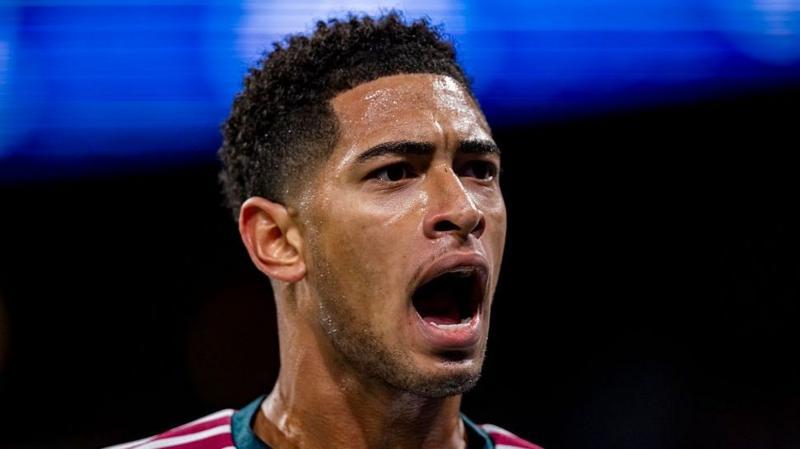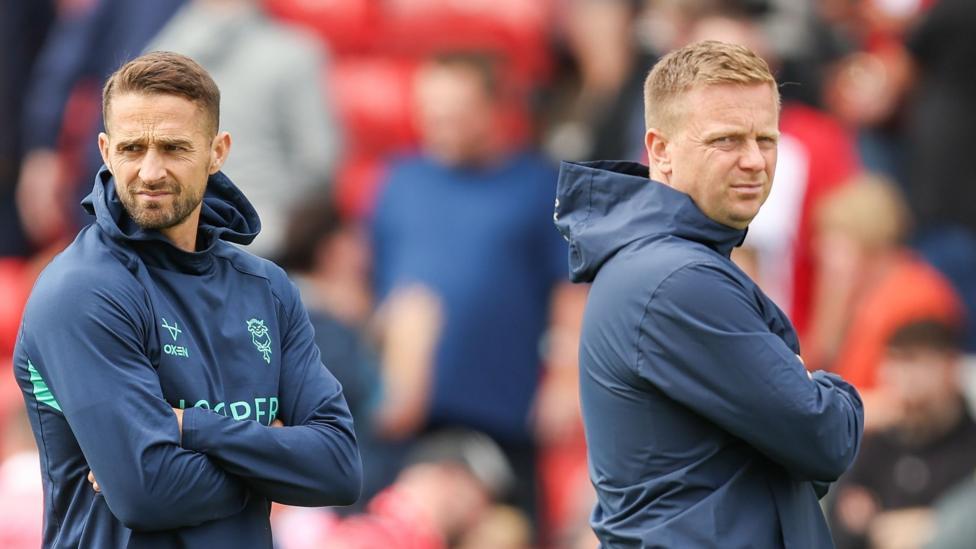
Leny Yoro will be available for Manchester United's fixture against Brentford on Saturday after an independent commission rescinded his one-match suspension, yet the reversal has sparked a broader disagreement between the club and Pro Ref, the organisation responsible for refereeing standards in English football.
According to BBC Sport, the dispute centres on how the red card decision itself is viewed by different bodies within football's governance structure. While the Football Association's regulatory commission deemed the dismissal incorrect, Pro Ref's leadership maintains the original decision was not "clearly wrong" — a fundamental disagreement that exposes tensions in how football's disciplinary and refereeing systems operate independently of one another.
What happened during the Liverpool match?
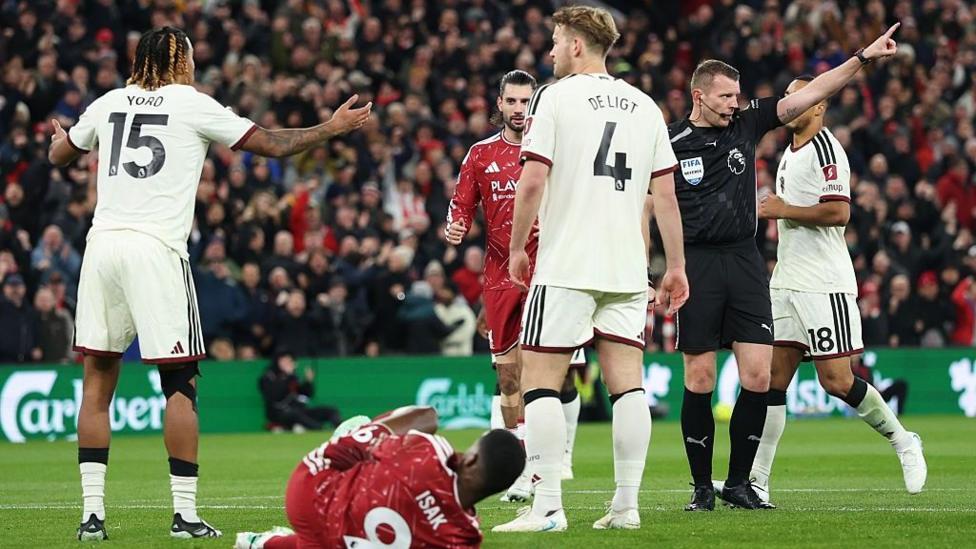
Yoro received a straight red card in the eighth minute of Manchester United's 4-0 defeat at Anfield on Sunday after bringing down Liverpool striker Alexander Isak. Referee Sam Barrott issued the dismissal, and video assistant referee John Brooks upheld the decision after reviewing the incident. The central question was whether Isak would have reached the ball ahead of United goalkeeper Senne Lammels had the challenge not occurred, making it a clear goalscoring opportunity.
The decision divided opinion among pundits and supporters. United argued that Isak's heavy touch meant goalkeeper Senne Lammels would have reached the ball first, forming the basis of their successful appeal. This was Pochettino's first match as Manchester United head coach, and the dismissal fundamentally altered the contest.
How did the appeal process work?
On Tuesday, the FA's independent regulatory commission upheld United's appeal and cancelled the red card. However, moments before the club held its pre-match news conference, Pro Ref chief Howard Webb stated the original decision was not "clearly wrong" — suggesting the referees' body disagreed with the commission's finding.
The commission operates as an opinion-based system rather than a technical review. Three panel members, usually former players but occasionally a retired referee, examine evidence submitted by the club. A designated referee delegate answers questions on the laws of the game but cannot offer opinions on the specific incident. Pro Ref's only formal input is the referee's brief report detailing which law was applied.
United submitted a body of evidence including videos, images and testimony to persuade the panel. United manager Mauricio Pochettino called the decision "completely unfair" after the match, and the club's appeal centred on objective data about player positioning and movement speed. The burden of proof rests entirely on the appealing club, as there is no right of reply from the referees.
Why can Pro Ref still defend the original decision?
The apparent contradiction — an FA commission saying the red card was wrong while Pro Ref insists it was not clearly erroneous — stems from the different standards and purposes each body applies. The FA is responsible purely for disciplinary measures and has no authority over how professional matches are refereed. Pro Ref, by contrast, sets refereeing standards and determines when VAR intervention is appropriate.
Pro Ref does not automatically align its views with FA commission decisions, nor does it use those rulings as benchmarks for future decisions. The organisation places greater weight on the judgements of the Premier League's Key Match Incidents Panel, which creates the merit table for referees and shapes how decisions are made going forward, particularly for VAR officials.
The burden of proof for VAR intervention is considered higher than for an FA commission appeal. Webb acknowledged the argument against a red card — that Isak would not reach the ball — but maintained it was not sufficiently egregious to warrant VAR intervention. This reflects a broader philosophy about when video review should overturn on-field decisions.
What is the VAR threshold debate?
The disagreement highlights an ongoing tension in football about when VAR should intervene. Webb's position suggests that even if a decision is ultimately wrong, it may not be wrong enough to justify VAR overturning the referee's initial call. This reflects the current Premier League approach, where VAR is intended to correct only clear and obvious errors.
A recent stakeholders' survey found 65% of respondents wanted to maintain the current VAR intervention threshold, 20% wanted it increased, and just 15% wanted it lowered. However, the Yoro incident remains subjective territory — reasonable people disagree on whether it meets the threshold for intervention.
Pochettino reserved particular criticism for the VAR's handling of the incident, suggesting the official took only a cursory look at where the ball would travel. United felt the review lacked the thoroughness required for such a consequential decision in the opening minutes of the match.
Why is the system so unpredictable?
The FA commission system operates as an opinion poll in which a club must persuade at least two of three panel members to overturn a decision. This unpredictability makes outcomes difficult to forecast. The commission's role is explicitly not to "usurp the referee by re-refereeing the incident" but to assess whether the original decision was justified under the laws of the game.
A notable precedent occurred four years ago when Aston Villa successfully appealed Douglas Luiz's red card for violent conduct. Luiz had been sent off via VAR review for a headbutt on Aleksandar Mitrovic. The panel's written reasons stated the appeal succeeded partly because Luiz was "a few inches shorter than Mr Mitrovic so his forehead is naturally at the same height as Mr Mitrovic's nose/face as the two players come together." The panel concluded that when the players bumped chests, the headbutt was accidental rather than deliberate.
Such reasoning demonstrates how commission decisions can hinge on factors that may not have been apparent to the match officials in real time, and how subjective interpretation remains central to the process despite attempts to apply objective standards.
What is Manchester United's broader frustration?
The Yoro incident is not isolated in United's recent experience. Two of the club's biggest matches this season have been defined by refereeing decisions. Earlier, a VAR error allowed Erling Haaland's match-winning goal in the Manchester derby despite Enzo Fernandez clearly committing an offside offence. This pattern has fuelled frustration with the consistency and quality of officiating.
Pochettino's forceful response to the Yoro decision reflected both the immediate disappointment of losing his first match in charge and accumulated frustration with how decisions have shaped United's campaign. The manager defended his criticism by stating: "You ask me a question and I need to defend our situation and our club and our players."
Some observers suggested Pochettino may have been attempting to create a siege mentality around the club following the heavy defeat, though the underlying grievances about refereeing standards appear genuine and substantive.
What happens next?
Yoro is eligible for United's home match against Brentford on Saturday, 28 November. The independent commission's written reasons for upholding the appeal are due to be published in due course, though no specific date has been confirmed. Those reasons may provide clarity on how the panel weighed United's evidence about Isak's positioning and movement speed.
Meanwhile, Pro Ref and Manchester United remain at an impasse. The club is unlikely to let the matter rest, while Pro Ref has shown no inclination to revise its position on the original decision. The dispute underscores a fundamental structural issue in English football: the independence of disciplinary and refereeing governance means two authoritative bodies can reach opposite conclusions about the same incident without either being obliged to reconcile their views.