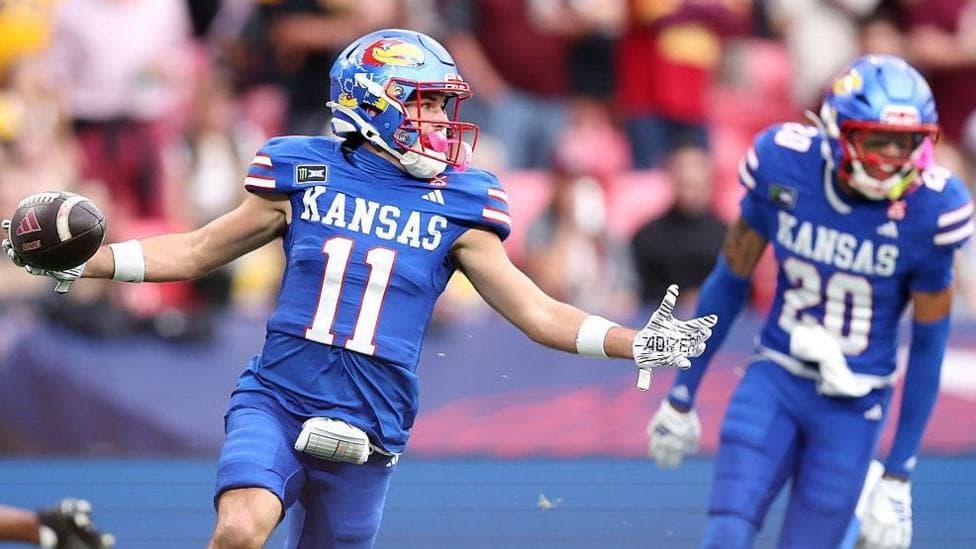
Tate Nagy of Kansas scored the opening touchdown with a 72-yard punt return, but the real spectacle at Wembley on Saturday was the collision of two distinct American college football cultures meeting on English soil for the first time. Arizona State defeated Kansas 24-17 in front of 46,523 supporters at the inaugural Union Jack Classic, marking a watershed moment for the sport in the United Kingdom and a significant expansion of American college athletics beyond the continental United States.
The rivalry between the Kansas Jayhawks and Arizona State Sun Devils had ignited long before the teams took the field. Fans of both programmes gathered at a pre-game party in Waterloo on Friday, where Kansas supporters chanted their rallying cry "Rock Chalk, Jayhawk", while their rivals countered with "ASU, ASU". After London had hosted 42 National Football League games since 2007, this marked the city's introduction to a fundamentally different brand of American football—one rooted in university tradition, family loyalty, and a level of pageantry rarely seen in professional sport.
The event represented a historic milestone for college football in Britain. This was the second college football matchup ever played in London, following a 1988 game at Crystal Palace, but the first at Wembley and the first to feature two FBS (Football Bowl Subdivision) teams in England. The Big 12 Conference, to which both teams belong, had positioned this fixture as part of a broader international expansion strategy for college football.
The Tailgate Tradition Comes to London
Union Jack Classic organisers set out to recreate an authentic college gameday experience in London, beginning with tailgate parties—a tradition far more elaborate and central to college football culture than anything seen at NFL games in the city. The main tailgate at Wembley opened at 10am, seven hours before the 17:10 kick-off, with Kansas City rapper Tech N9ne performing to entertain the gathering crowd. One American fan told a national broadcaster she preferred the tailgate atmosphere to the game itself, underscoring how integral pre-match festivities are to the college football experience.
Arizona State alumni organised their own separate party, drawing nearly 2,000 fans and featuring performances by ASU's marching band and cheerleaders on stage. The most energetic gathering, however, took place on Wembley Way, where Fox Sports had established an outdoor studio for its live pre-game broadcast. The network's crew actively stoked the rivalry between the two fan bases while the Kansas and ASU bands engaged in musical competition both on Wembley Way and on the pitch before kick-off.
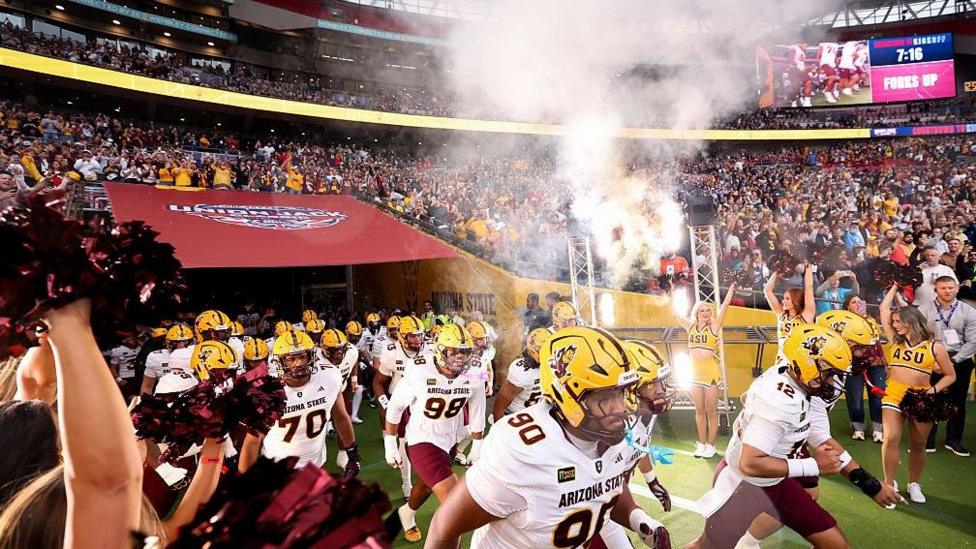
Why College Football Inspires Such Passionate Devotion
The intensity of college football fandom stems from fundamentally different roots than professional sports loyalty. While NFL fans often choose their team based on preference, college teams are typically inherited through family tradition and institutional connection. Hannah, a Kansas supporter interviewed at Wembley, described the experience as rooted in "loyalty to your lineage", and characterised college football fans not merely as fanatical but as "rabid" in their commitment.
A national broadcaster spoke with multiple families at Wembley who had multiple generations attending the same university, as well as alumni now scattered across the United States who travel thousands of miles to watch their alma mater compete. Sophie, a current Arizona State student, said her family "bleeds maroon and gold"—the Sun Devils' colours. Her friend Amelia had decorated her entire house with ASU merchandise and had recently purchased a car painted in the same maroon hue.
The transatlantic journey underscored this devotion. Kansas travelled more than 4,500 miles to London for the fixture, while approximately 15,000 fans made the journey from the United States—9,000 supporting Arizona State and 6,000 backing Kansas. College games in the United States rarely feature significant away fan contingents, but the neutral London venue and substantial travelling support from both sides created an atmosphere some visitors compared to a playoff game.
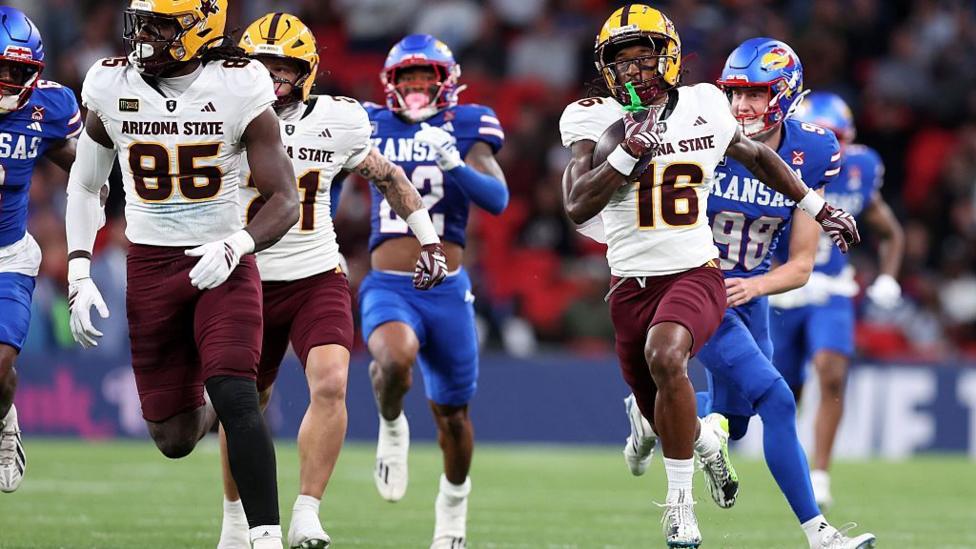
Jaren Hamilton delivered the game's most spectacular moment with a 100-yard kick-off return at the start of the second half, propelling Arizona State to a 17-7 advantage. The Sun Devils ultimately prevailed 24-17, though the result flattered Kansas given the quality of play on display.

Building College Football's Footprint in Britain
The appeal of college football extended well beyond the two competing universities. Fans from 35 countries purchased tickets, and like previous NFL games at Wembley, supporters of numerous teams attended—some wearing jerseys of major programmes such as Oklahoma, Miami, and Texas, while others sported British university colours. More than 100 universities across the United Kingdom field American football teams, and Union Jack Classic organisers deliberately targeted this grassroots community, recognising that students often find college football more relatable than the professional game.
The organisers forged partnerships with the British American Football Association, British Universities and Colleges Sport, and the Jacksonville Jaguars to strengthen connections with the UK's developing American football ecosystem. The Union Jack Classic was presented as a three-year deal with an option to extend to a fourth year, signalling that Wembley college football could become a recurring fixture. The event had already trained more than 1,050 British coaches and referees during the year leading up to Saturday's game, some of whom were present at the stadium.
Cambridge University player Alex reflected on the experience, saying it had been "cool" to learn the histories of Kansas and Arizona State and that he would likely attend future college games "if they're teams we can rally behind". Such responses suggest the potential for college football to establish deeper roots in British sporting culture.
The Spectacle and Its Limitations
Organisers had planned for an attendance of 60,000, but the actual crowd of 46,523 fell short of projections. To maintain sightlines, some ticketholders were relocated to lower tiers while upper sections remained empty. Although the game featured several notable plays, the overall entertainment value did not match pre-match expectations. Music acts performed throughout the contest and a light show illuminated the third quarter, offering UK audiences a flavour of college football pageantry, yet the event lacked the full pomp and circumstance characteristic of regular games in the United States.
The scaled-down nature of the production reflected logistical constraints. Fewer marching band members and cheerleaders than typically appear at college games performed at Wembley, and crowd noise levels fell short of what Arizona State generates at home—the Sun Devils averaged 54,000 supporters at their stadium during the previous season. Both teams brought 105 players each, with 90 percent of the student-athletes travelling to England without a passport before this trip.
Despite these limitations, the experience resonated with participants. Many fans and members of coaching families visited London for the first time. Arizona State head coach Kenny Dillingham stated that attendees had "an experience they will remember for the rest of their lives". Kansas head coach Lance Leipold praised the hospitality extended by the host city and noted that the hotel and practice facilities provided "a win" for his programme.
The Future of College Football in London and Beyond
Big 12 Conference Commissioner Brett Yormark expressed satisfaction with the inaugural event's execution.
It exceeded my expectations, from the crowd to the logistics to how the local community has embraced us. It's been fantastic, so we want more.Yormark confirmed that the conference had signed an exclusive multi-year agreement with Wembley and that other Big 12 institutions had expressed interest in competing in London.
The Big 12's international ambitions extend beyond England. The conference has also staged two games in Dublin over the preceding 13 months, and Yormark indicated that expansion to additional international markets remained under consideration.
There's not a two-week period where I don't get a call to say 'take some of your product to this country or that country', so we're exploring that right now.
Yormark announced that details regarding next year's London fixture would be revealed "within the next month or two", providing UK audiences with time to familiarise themselves with the next two programmes set to bring their traditions across the Atlantic. The announcement timeline suggests momentum behind the initiative, with the Big 12 positioning college football as an exportable product capable of building audiences and generating revenue in markets beyond North America.