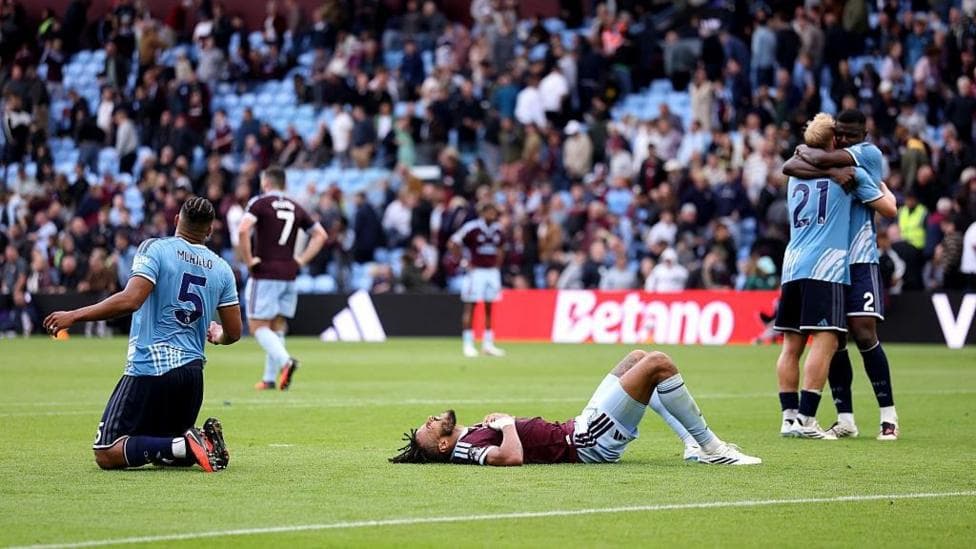
Aston Villa have lost three of their opening four Premier League games, while Tottenham has managed just one goal across the same period. Combined spending exceeding half a billion pounds has yielded minimal reward: three points and a single goal between the two clubs. Both sides are desperately seeking Premier League momentum as they prepare to meet at Tottenham Hotspur Stadium on Saturday.
The pair arrive as recent Europa League champions but occupy positions in the bottom four of the early table standings. This fixture represents a critical juncture for both organisations, each having undergone substantial summer restructuring that has yet to translate into on-pitch success.
How has Villa's summer rebuild affected their early form?
Aston Villa's transformation has been dramatic in scope. Manager Unai Emery has integrated 10 new players following expenditure exceeding £250m, while simultaneously managing the departures of established figures. The scale of change—10 arrivals and six significant exits—means the squad is still finding cohesion.
Emery's track record provides reassurance. He transformed Villa from mid-table mediocrity into Europa League winners, securing European qualification in every season since his appointment and guiding them back into the Champions League this year. Yet this campaign presents a different challenge: success while absorbing wholesale personnel changes.
The manager acknowledged uncertainty following last Saturday's defeat to Nottingham Forest, admitting he struggled to exert meaningful influence from the touchline as new players continued adapting to their surroundings. Despite his animated demeanor during matches, Emery possesses a notable capacity to regain composure and address players calmly once returning to the dressing room.
Emery is leaning on experienced figures to navigate this difficult period. John McGinn and Tyrone Mings, as senior players, are being called upon to help guide the squad through transition. Both featured in Wednesday's Carabao Cup victory at Coventry rather than being rested, underlining their importance to the manager's plans.
McGinn has previously described learning Emery's methods as requiring substantial preparation. This may explain why Aaron Wan-Bissaka has struggled across his opening three appearances—he and other new arrivals may be overthinking their responsibilities as they adjust to the system.
Recent debutants include Johan Manzambi, signed from Freiburg, and £47m winger Ibrahim Mbaye, recruited from Paris St-Germain. Both came off the bench against Forest and are expected to feature prominently in Villa's attacking setup going forward. Nicolas Jackson, acquired from Chelsea in August, will start on Saturday after appearing as a substitute at Coventry, bringing Emery closer to his preferred formation.
An extended three-week international break follows Saturday's fixture, but Emery will not enjoy the training ground time he requires. Many players will depart for international duty, disrupting continuity.
This break is crazy because it's three weeks. I don't like to be three weeks but we must accept it.Emery explained the challenge:
We are not going to have the players we want. [Johan] Manzambi played the first two matches with us and Saturday the third and then he goes with the national team. Back with us, we must again try to join him with us in our structure and his mind will maybe be confused.

The manager stressed the importance of Saturday's match despite the disruption ahead.
We don't want to use the international break as an excuse. Saturday is very important as we lack points but we continue in our process trying to work as well as possible.Villa have accumulated just one point from their opening four games, making victory essential.
What is Tottenham's attacking problem?
Tottenham's goal drought represents a crisis of efficiency. The club has managed only one goal across four Premier League matches—a span of 407 minutes without scoring. They have failed to register in four successive league games, a situation not experienced since September 2006. Their recent goalless draw with Everton marked their first 0-0 at Tottenham Hotspur Stadium in the Premier League after 140 consecutive games without such an outcome.
Expected goals data reveals the scale of the problem. Spurs have generated 3.45 xG, worse than Villa's 3.39—the two poorest figures in the division. Only bottom-placed Coventry, pointless and goalless, have a worse xG at 4.21. Tottenham have managed 51 shots with just 12 on target, compared to Villa's 33 shots and six on target respectively.
Tottenham's passing dominance has not translated into attacking threat. Only Manchester United, Arsenal, Brighton and Liverpool have completed more passes in the final third than Spurs' 617, and Tottenham boasts the league's highest successful pass completion rate at 81.4%. Yet this possession mastery has failed to produce goals.
The club invested more than £300m on 10 new players during the summer, but goodwill remains scarce after two seasons of relegation-form struggles. Victory has become paramount for both the manager and supporters seeking evidence of progress.
How do the teams' defensive records compare?
Villa face a defensive challenge despite Tottenham's attacking struggles. Matty Cash has recovered from a muscle problem and is available, but fellow defenders Pau Torres and Ian Maatsen remain sidelined. This injury situation arrives at an awkward moment, as Tottenham have demonstrated considerable attacking intent despite their finishing problems.
Tottenham's dominance in possession and passing suggests Villa will face sustained pressure. The hosts have attempted 32 crosses—double Villa's league-low tally of 16—indicating their preference for wide attacking play. Villa have recorded only 47 touches in the box, the second-lowest in the league behind Hull's figure.
What does history suggest about this fixture?
Historical precedent offers little guidance toward a stalemate. None of the past 22 Premier League meetings between these clubs have ended in a draw. Spurs have won 15 of those encounters while Villa have claimed seven victories, creating a pattern of decisive results.
As Villa attempt to rebuild, they might perceive an opponent struggling for wins as an opportunity to ignite their season. However, they cannot afford complacency. Tottenham's possession statistics and passing accuracy suggest they remain dangerous despite their goal shortage, and the hosts will be desperate to end their scoring drought against a vulnerable opponent.
Both teams arrive at this fixture under considerable pressure. Villa have managed just three points from four games, while Tottenham's single goal in four matches represents a historic drought. The winner will gain crucial momentum heading into the international break, while defeat could deepen the crisis at either club.