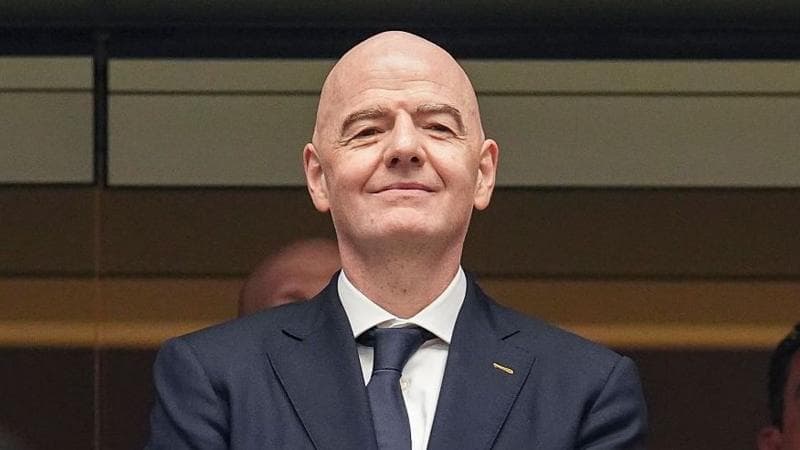
Uefa will formally withdraw its boycott threat against Fifa competitions on 26 August, according to reports from sports media, but the European confederation remains committed to challenging Gianni Infantino's presidency when he faces re-election in March 2027. The move follows Fifa's decision to abandon a controversial plan that would have allowed private investors to acquire stakes in World Cup and other major competitions.
The 55 Uefa member associations, along with Europe's representatives on the Fifa Council, will receive a letter on 26 August guaranteeing that the Fifa Forward Enterprise (FFE) investment scheme will not be revived. Formal confirmation of the boycott withdrawal will take place at Uefa's executive committee meeting in Monaco on the same day. This decision clears the way for the 2026 Fifa U-20 Women's World Cup to proceed as scheduled, with six European teams—England, France, Italy, Portugal, Spain and hosts Poland—participating in the tournament across four Polish cities: Bielsko-Biała, Katowice, Łódź and Sosnowiec from 5–27 September 2026.
Uefa's initial boycott decision had been unanimous, with all 55 member federations voting unanimously to reject the investment proposal. The rejected scheme would have offered each of Fifa's 211 members $20 million, with acceptance expected by mid-September before Uefa's intervention halted the plan.
Why is Uefa still pursuing Infantino's removal?
Despite lifting its boycott threat, Uefa remains confident that a unity candidate can be found to challenge Infantino when he stands for re-election in March. The vote is expected to be closely contested, with 106 of the 211 member associations' votes needed to secure election. However, Uefa has abandoned the idea of attempting to force a vote of no confidence, which would require three-quarters of member associations—159 votes—a threshold considered unrealistic to achieve.
Concacaf president Victor Montagliani is regarded as a serious potential candidate to oppose Infantino, though no formal nomination has been announced. Nominations must be submitted by 18 November. According to international sports reporting, Uefa's conditions for ending the boycott had not been fully met as recently as 6 August, indicating the dispute took several weeks to resolve after Fifa initially scrapped the investment plan.
How close will the presidential election be?
Uefa understands that any vote against Infantino is likely to be extremely close, and even if he were to win re-election, the narrow margin could inflict lasting damage to his presidency by compromising his legitimacy within world football's governing structures. The competitive nature of the contest reflects deep divisions within Fifa's membership over the direction of the organisation and its leadership.

What do former players say about Infantino?
The dispute over Infantino's future has divided prominent figures in football. On 25 August, a group of former players released a statement declaring that
change is necessaryat the head of Fifa. Former Manchester United and France defender Mikael Silvestre, who serves on Fifa's Players' Voice Panel, posted a statement titled
Enough is Enough!on social media. The message was subsequently shared by England defender Lucy Bronze, France's 1998 World Cup winner Emmanuel Petit and former England goalkeeper David James.
However, a separate group of former players took the opposite position. World Cup-winning Brazil captain Cafu, former Italy striker Christian Vieri, former Portugal captain Pepe and ex-Argentina international Esteban Cambiasso all posted supportive messages for Infantino on social media. All of these players hold the status of Fifa Legends, an official designation granted by the governing body.
Vieri's statement emphasised the work undertaken during Infantino's tenure, saying:
Over the past 10 years, we have seen the work Fifa and President Infantino have done to create representativity for players in football, which did not exist. We will remain available to support the great evolution our game has seen this past decade, so that it keeps reaching and benefiting people of every country that plays football all around the world.
Is this a victory for Infantino?
Uefa's decision to lift its boycott threat will provide significant relief to the six European Women's Under-20 teams whose players had faced uncertainty about their participation in the tournament. The withdrawal of the threat removes the risk that these athletes would become casualties in world football's escalating governance dispute.
Many observers view the outcome as advantageous to Infantino, who now appears increasingly likely to remain in power until at least the March 2027 presidential election. While the precise nature of the assurances Uefa has received remains unclear, the European confederation's decision to end its boycott threat—despite earlier tough rhetoric about potential legal action against Fifa—carries the risk of being perceived as a strategic retreat in its increasingly bitter confrontation with Infantino.
What happens next?
The formal withdrawal of Uefa's boycott threat will be confirmed at the executive committee meeting in Monaco on 26 August. The 2026 Fifa U-20 Women's World Cup will proceed as scheduled from 5–27 September 2026 across Poland. The presidential election campaign will intensify over the coming months, with nominations closing on 18 November and the election taking place in March 2027. Infantino, who has served as Fifa president since February 2016, will face his most serious challenge to date if a credible opposition candidate emerges.
Fifa responded positively to Uefa's decision, stating it is
pleased that all qualified teams will be participating in the upcoming Under-20 Women's World Cupand emphasising that the organisation
strongly believes that football has the power to unite, even in challenging circumstanceswhile remaining
committedto developing the game in
full dialogue with the confederations and stakeholders.