Two Premier League managers have already lost their positions this season, and several others face mounting scrutiny as the campaign's first extended international break approaches. The pause in fixtures—lasting three weeks rather than the usual two—creates both a challenge and an opportunity for clubs to make changes, with some bosses already under the microscope heading into a crucial period.
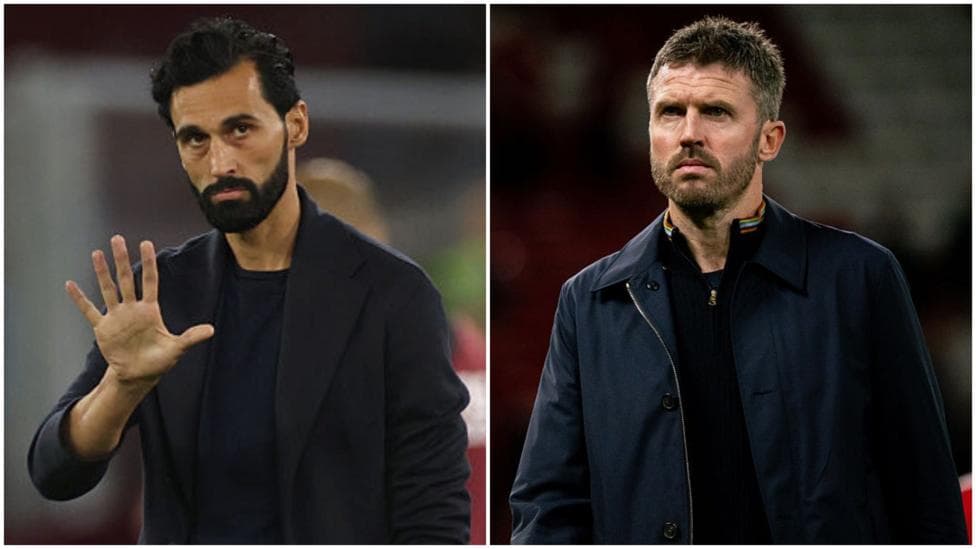
Alvaro Arbeloa at Fulham and Michael Carrick at Manchester United will meet on 20 September 2026 at Craven Cottage in what could prove a defining fixture before players disperse for international duty. The match, scheduled for 15:30 GMT, represents the final league game before the extended break.
Arbeloa's appointment as Fulham manager came in the summer following a brief spell overseeing Real Madrid's final 28 matches of the previous campaign. His early tenure at Craven Cottage has been turbulent: no victories and three defeats across his opening four Premier League outings, coupled with reports of unrest within the squad stemming from players' social media activity. According to Arbeloa's own comments, he recognises that pressure is an inherent part of managing in the top flight, stating that every Premier League manager operates under such demands.
Carrick's position at Old Trafford has grown increasingly precarious following a sequence of disappointing results. The 3-2 EFL Cup exit to Brighton on Wednesday proved particularly damaging—it marked the first occasion since 1976, a span of half a century, that United had surrendered a two-goal home advantage in this manner. This setback compounds the earlier 1-0 defeat to Manchester City's ten-man side, leaving the club with only victories against Ipswich Town and Sabah to show from their opening fixtures.
How often do clubs change managers during international breaks?
Historical data suggests that Premier League clubs rarely use international breaks as the moment to replace their manager, particularly early in the season. Over the past decade, only two bosses departed during the September stoppage: Javi Gracia at Watford in 2019 and Nuno Espirito Santo at Nottingham Forest last year. The October break has seen similarly few changes, with Francesco Guidolin at Swansea in 2016 and Xisco Munoz at Watford in 2021 being the only two departures during that window.
November, by contrast, has proven far more volatile. Six managers have lost their jobs during the second international break of the season across the past decade. This pattern reflects a broader tendency: while managerial changes do occur, they are more likely to happen after the break rather than during it. By the time the second international stoppage arrives—the point the season has now reached—nine coaches had departed their roles in the past ten campaigns. With no manager having yet left this season, the question remains whether the extended three-week break will alter this historical pattern.
Why do clubs use breaks to make managerial changes?
Tony Pulis, the former manager of Stoke, West Bromwich Albion and Middlesbrough, explains the strategic reasoning behind using international breaks for managerial transitions.
In my time, the October/November international breaks, the pause just after the Christmas period, and then early March would be the three sticking points for any manager who was struggling with results.
The logic is straightforward: a break in fixtures provides newly appointed managers with time to assess their squad, familiarise themselves with the club's infrastructure and personnel, and prepare their tactical approach before their first match in charge.
The pause in the season gives football clubs the chance to appoint a new manager with time for them to settle into their new role, to take stock of the surroundings, staff and time to prepare for their first game in charge.

Pulis notes that the timing of these breaks—particularly the Christmas pause, which typically precedes an FA Cup fixture—offers additional advantages.
After Christmas, usually the first game is an FA Cup match, which again gives the new boss a chance close up to see what they have to work with. First impressions can be a vital starting point, so again the manager has time to prepare and deliver their principles to the lads.
However, Pulis expresses reservations about the current early September break, arguing that it arrives too soon in the campaign to justify managerial upheaval.
I don't see this September break as a flashing light, it is too early in the season, but from then on in, the dates I have mentioned really do come into play.He also criticises the extended break itself from a practical standpoint, noting that whether a team is winning or losing, the disruption to momentum and the injury risks posed by international travel at such an early stage are problematic.
Which managers face the greatest threat?
While historical precedent suggests early-season managerial changes remain uncommon, several bosses are experiencing genuine pressure. Carrick's position, despite recent difficulties, appears more secure than surface-level analysis might suggest.
There are ways of losing games of course, but I don't see the trip to Fulham as being 'make or break' for Carrick in the sense of his job.Carrick himself has dismissed such talk as
ridiculous, and his stewardship of Manchester United into the Champions League last season provides sufficient credit in the bank to weather a poor start. However, a defeat at Craven Cottage—which would constitute United's first league loss at Fulham since 2009—against a team currently bottom of the table with a single point would intensify external scrutiny considerably. This heightened focus would carry particular weight when United resume their campaign against Tottenham on 10 October.
Arbeloa's situation carries greater uncertainty. Reports suggest genuine disquiet among elements of Fulham's squad, and his significant tactical departures from the approach established by predecessor Marco Silva have left the defence exposed, though a goalless draw away to Liverpool last weekend demonstrated improved solidity. Owner Shahid Khan has demonstrated ruthlessness in previous managerial transitions: Claudio Ranieri lasted merely 106 days in charge, while Felix Magath was dismissed in September 2014 despite having been appointed the previous season. Fulham will be without midfielder Tom Cairney through injury for the upcoming fixture.
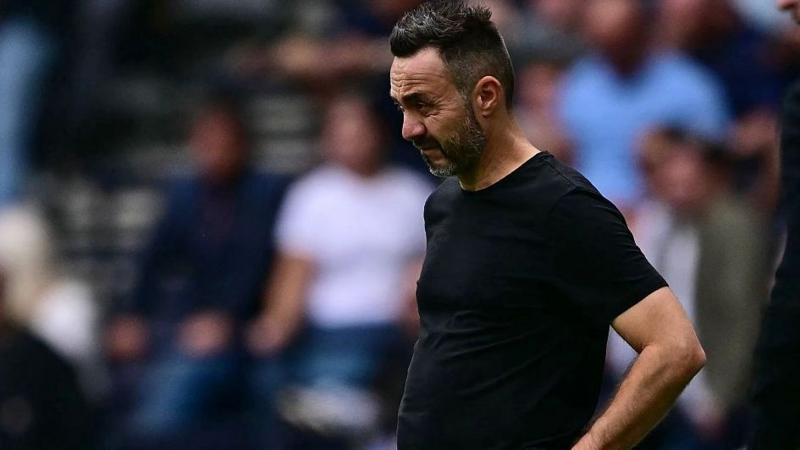
Roberto de Zerbi at Tottenham occupies a markedly different position despite the club's winless run across six league matches. Despite expenditure exceeding £300 million on summer recruitment yielding disappointing returns in terms of points and goals, no sense of pressure surrounds de Zerbi's position. The prevailing sentiment suggests the team's performance trajectory is improving and that results will follow, though the club requires this improvement to materialise sooner rather than later.
Pierre Sage's tenure at Crystal Palace has proven indifferent thus far. A solitary league victory has generated limited enthusiasm internally, and the team's defensive vulnerabilities since his arrival from Lens have drawn criticism. The unavailability of key attacking players Ismaila Sarr and Jean-Philippe Mateta—for various reasons—has provided some mitigation, and Thursday's 4-0 victory over Lech Poznan in the Europa League eased immediate pressure. However, a defeat at Leeds would arrive at a particularly inopportune moment for Sage's prospects.
Nicky Hayen departed Genk to lead Burnley's Championship promotion push, with the club positioned as third favourites behind West Ham and Wolves. The Clarets' winless run across their opening eight matches has proven deeply disappointing. Hayen acknowledged facing pressure during his pre-match press conference on Friday, describing the fixture against fellow struggling side Derby as essential. A disappointing 1-1 draw, with Derby equalising in stoppage time, left Burnley rock-bottom heading into the break, prompting the board to potentially assess alternative options.
Derby manager John Eustace, who nearly guided the club to the play-offs last season, similarly lacks security with his team occupying the relegation zone. Watford's managerial instability is legendary: Alessio Dionisi, appointed during the summer, became the club's 27th permanent manager in just under 18 years. Friday's defeat at Bristol City left the Hornets with two victories from eight league matches, positioning them 19th and merely three points above the drop zone. Owner Gino Pozzo's willingness to make early changes suggests an unexpected managerial transition would not surprise observers.
What happens next?
The Fulham versus Manchester United fixture takes place on 20 September 2026, with Peter Bankes appointed as referee and Nick Hopton as VAR. This match represents the final Premier League fixture before the three-week international break commences, making it a significant moment for both clubs and their managers. Following the resumption of domestic fixtures, Manchester United will face Tottenham on 10 October, providing another early opportunity for Carrick's side to demonstrate improvement.