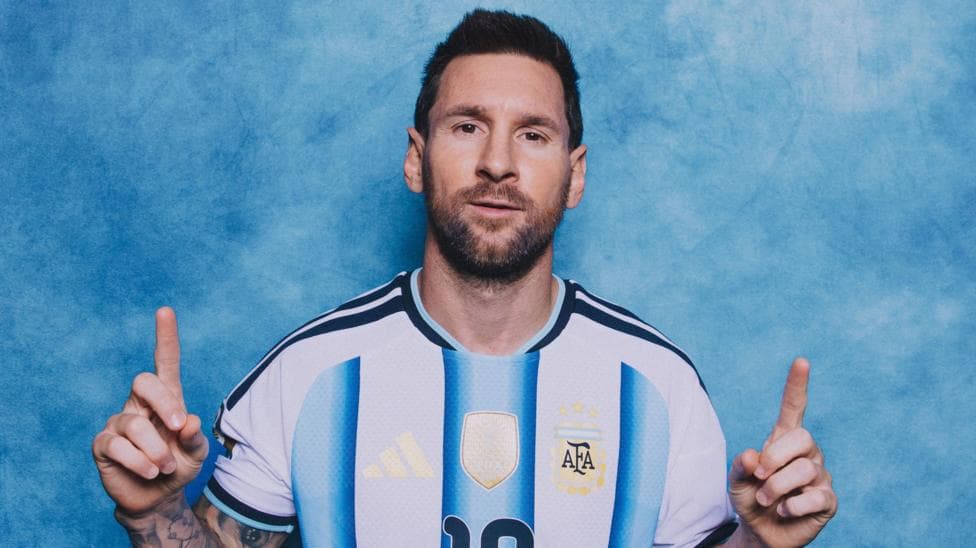
Lionel Messi stepped away from international football on Monday as Argentina's all-time leading scorer and most-capped player, having captained the nation to World Cup victory at Qatar 2022 and Copa America championships in 2021 and 2024. Yet the football world came perilously close to being robbed of his most transformative period wearing the famous blue and white shirt.
On 26 June 2016, at MetLife Stadium in New Jersey, Messi delivered a blow that shattered an entire nation's hopes. Just two days after his 29th birthday and moments after missing a penalty in Argentina's Copa America final shootout loss to Chile, he made a decision that would have rewritten football history.
After 113 appearances for his country, Messi was resolute. He believed he would never wear the blue and white again.
"For me, the national team is over. I've done all I can. It hurts not to be a champion,"
he declared, his voice trembling with emotion.
The anguish was justified. Argentina had fallen short in the 2014 World Cup final and Copa America finals in 2007, 2015, and now 2016. The player widely regarded as football's greatest had repeatedly failed to deliver when the stakes were highest for him personally.
"It was the thing I wanted the most, but I couldn't get it, so I think it's over. I think this is best for everyone."
Messi said, fighting back tears as another opportunity for glory slipped through his fingers.
Fortunately for Argentina, Messi would reconsider. Over the following decade, he authored one of sport's most remarkable comeback narratives. Since reversing that retirement announcement on 12 August 2016, he has made 94 additional appearances and scored 70 more goals for Argentina, lifting four major trophies in the process. The six-week interval between his June retirement declaration and his decision to continue playing for the "love of the country" may represent the most pivotal period in Argentine football history.
The Weight of Maradona's Shadow
As Messi departed the international stage, criticism levelled at him a decade earlier by Argentina's other legendary number 10 now seems almost absurd. Just weeks before Messi's initial retirement announcement, Diego Maradona had offered a stinging assessment.
"He's a really good person, but he has no personality. He lacks the character to be a leader."
Maradona said at the time.
By 2016, Messi had already accumulated eight La Liga titles and four Champions League crowns with Barcelona, along with five Ballon d'Or awards, yet he remained just 29 years old. Maradona's club career had never approached such heights, though he had almost single-handedly steered Argentina to World Cup triumph in 1986. Messi's sole major international honour to that point was Olympic gold from the 2008 Games.
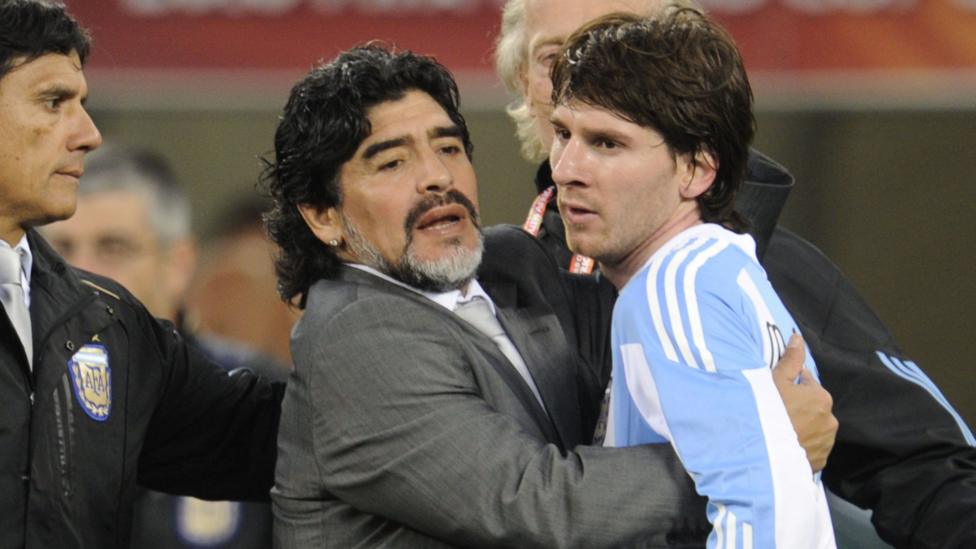
It is difficult to fathom now, with Messi shirts dominating the last two World Cups and the Argentine fanbase treating him with an almost religious reverence, but significant criticism surrounded him during that period. Detractors questioned whether he matched Maradona's abilities, claimed he disappeared during crucial matches, and blamed him for Argentina's repeated failures on the international stage.
This was not Messi's first brush with international retirement either. Guillem Balague, a Spanish football analyst and Messi biographer, explained the player's emotional struggles:
"Leo goes really down when he loses. He felt the pressure of being the captain of Argentina and the Maradona thing. Pecho Frio, people in Argentina called him, which means cold chest. It was an insult to say he had milk in his veins. So when he failed in 2016 at the Copa America, that was the third time – the first time in public – he had decided to leave the national side."
Balague continued: "The two previous ones was a matter of letting him lick his wounds, but this one he came out and said I've had enough. He sometimes cannot help himself as he says what he thinks."
The Maradona-versus-Messi debate has now effectively concluded. By most assessments, Messi stands as Argentina's greatest footballer. Many observers argue he is challenging Pelé for recognition as the sport's greatest player ever.
How Did a Nation Convince Him to Stay?
The moment Messi announced his departure, shockwaves rippled across Argentina. Yes, he had lost in four consecutive finals. Yet he remained the country's record goalscorer and the world's finest player.

A "Get Messi back" campaign erupted immediately, with teammates urging him to reverse course within minutes of his announcement. Sergio Romero, Argentina's goalkeeper, expressed the sentiment that gripped the nation.
"I can't imagine a national team without Messi,"
Romero said.
The social media hashtag #NoTeVayasMessi (Don't go Messi) circulated more than 20,000 times within a single day. Argentina's President Mauricio Macri personally telephoned Messi to persuade the Barcelona star to reconsider his decision.
"I told him not to pay any attention to the comments being made because, in truth, we are very happy with the job he has done,"
Macri told journalists.
Within hours, the mayor of Buenos Aires, Horacio Rodriguez Larreta, unveiled a statue honouring Messi and made a direct public appeal.
"As a football fan, Leo, I am asking you to please reconsider your decision,"
the mayor said. Thousands of supporters gathered throughout central Buenos Aires, while street signs across the capital implored Messi to continue playing for Argentina. Even Maradona himself urged Messi to stay and lead the team toward the 2018 World Cup.
The Coach Who Changed Everything
Edgardo Bauza took over as Argentina coach in August 2016, succeeding Gerardo Martino following the Copa America disappointment. Though his tenure would last only eight months, his opening days proved transformative. His first action was travelling to Barcelona to persuade Messi to reverse his retirement decision. The overwhelming public clamour for Messi's return proved decisive.
"I love this country and this shirt too much,"
Messi announced upon his return to the international fold.
"I'm grateful to all the people who wanted me to continue playing with Argentina. Hopefully we can give them something to cheer about soon."
Success, however, did not arrive immediately. Argentina fell to France in the 2018 World Cup last 16, prompting many to write off Messi's chances of ever lifting the trophy. Yet remarkably, Messi did not win a senior international tournament until age 34—and then captured four titles in barely three years, including the 2022 Finalissima.
Questions about his international future surfaced after each triumph, but he continued playing through his sixth World Cup in 2026. During that tournament, he scored eight goals and registered four assists as Argentina reached the final. Though he lacked the explosive pace of his younger years, he proved every bit as effective, strolling through matches with a footballer's intelligence and experience.
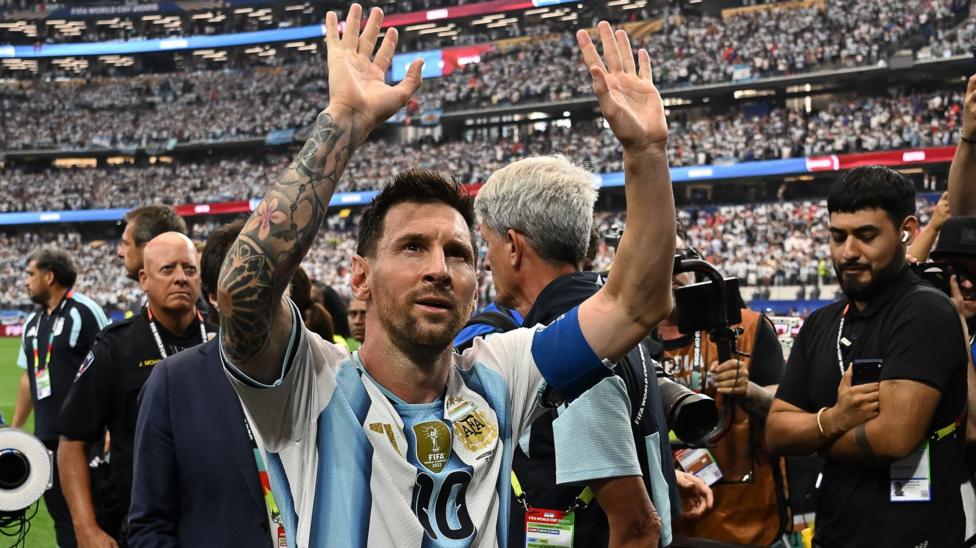
The final took place at the same stadium where Messi had "retired" a decade earlier. Argentina fell to Spain in that championship match. According to ESPN reporting, Messi announced his retirement from Argentina's national team on 31 August 2026 through an Instagram post, stating the decision "hurts deep in my soul."
Benjamin, an Argentina supporter who attended the 2016 final at MetLife Stadium, reflected on the emotional journey:
"When Messi retired it reminded us all how much we loved him. When I heard him retire, I cried, the country cried. He did get criticism but only because everyone cared so much. Without Lionel Messi, Argentina would still be waiting for their next World Cup since 1986."
What Lies Ahead for Messi?
Messi's international future became clouded following the death of his father Jorge just three weeks after the 2026 World Cup final. At 39 years old, another return to international football appears highly unlikely. According to reporting from the time, his last match for Argentina was the World Cup final versus Spain.
However, South American football writer Tim Vickery suggested an official farewell match could still materialise. He noted that Argentina faces stadium restrictions following disciplinary action from the World Cup, but once those punishments expire, an official goodbye at River Plate—South America's largest capacity stadium—remains a possibility.
According to USA Today, Messi will continue his club career with Inter Miami rather than pursue further international commitments. His contract with the Major League Soccer club extends through the 2028 season, ensuring his footballing future remains active despite his departure from international duty.
The narrative arc from that tearful June 2016 announcement to his final appearance in the 2026 World Cup final represents one of sport's most extraordinary redemption stories. The decade that almost never happened instead became the defining period of Messi's legendary career.