The Scottish Premiership has long been characterised by passionate, dramatic encounters, yet the league's reputation for technical and tactical sophistication has lagged behind other major European competitions. Early-season statistics from the 2026-27 campaign, however, suggest a fundamental transformation is underway, with clubs increasingly adopting possession-based, progressive football rather than relying on direct play.
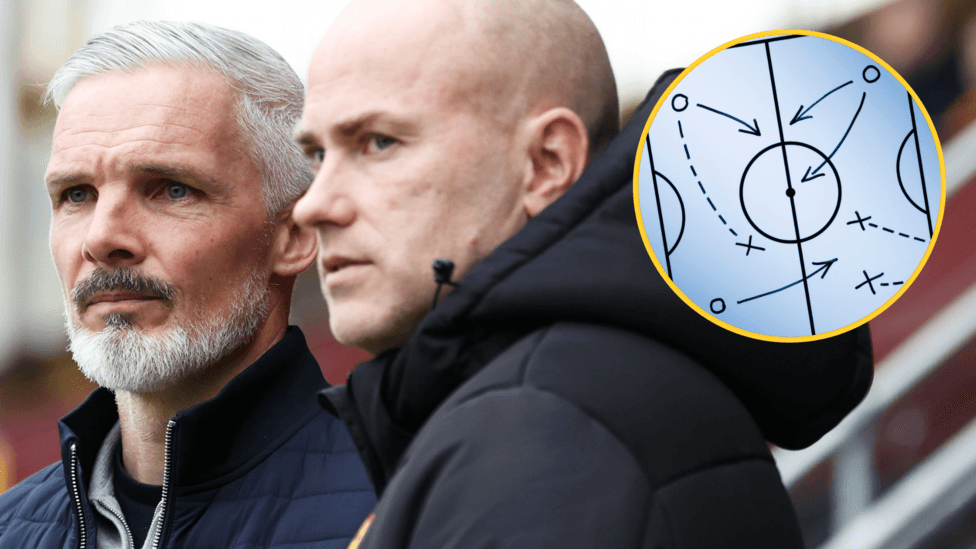
Dundee United manager Jim Goodwin has publicly acknowledged that the innovative approaches demonstrated by Motherwell and Falkirk last season prompted him to reconsider his tactical philosophy after more than 15 years working in Scottish football. The influence of those two clubs' success—both finished in the top half while playing expansive football on modest budgets—has rippled through the division, with multiple Premiership sides now pursuing similar stylistic changes.
How are passing patterns changing across the league?
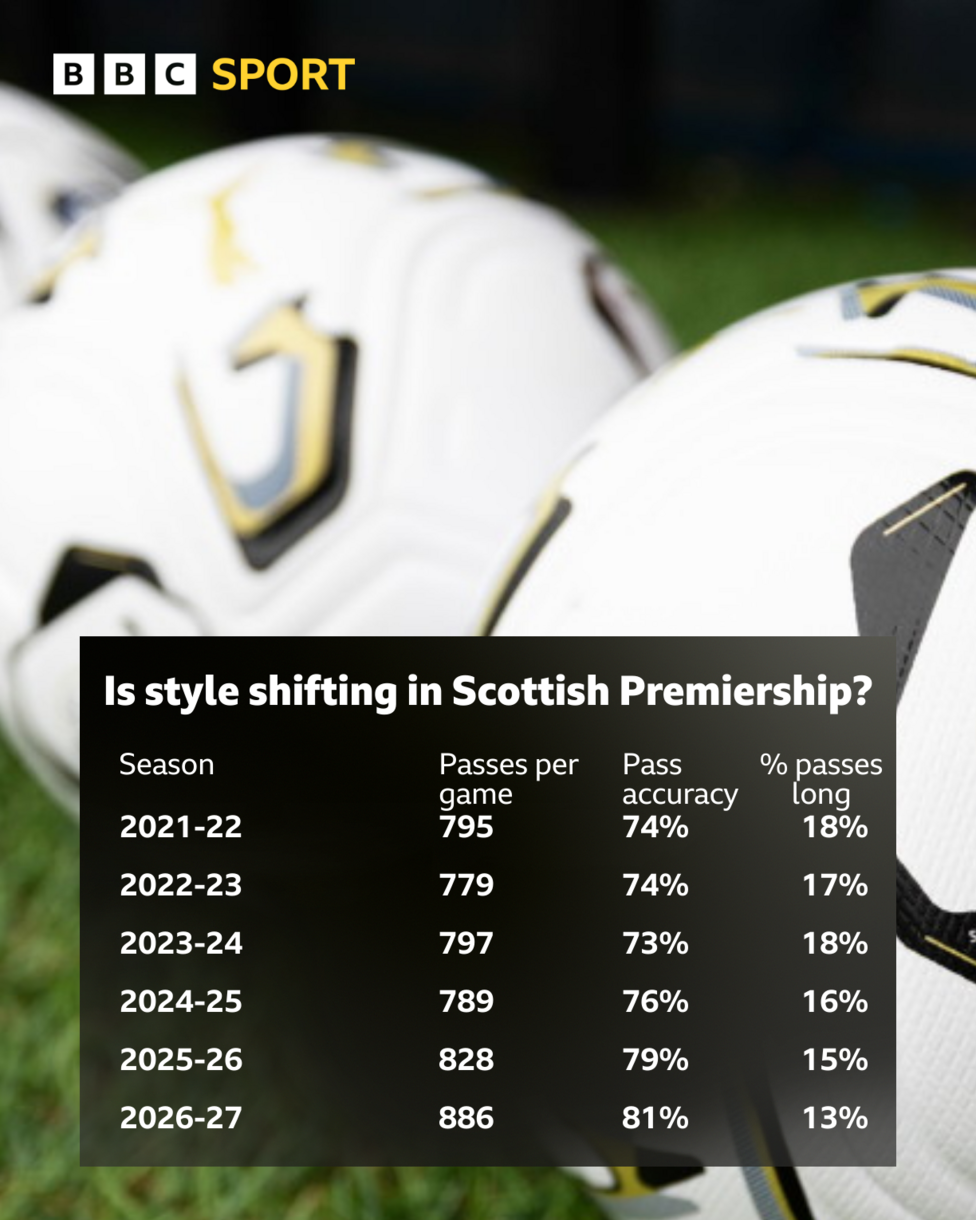
The shift towards shorter, more intricate passing is evident in the aggregate numbers. Clubs are now averaging 886 passes per match, a substantial jump of 58 from the previous season and 91 more than five years ago when the average stood at 795. Passing accuracy has also climbed to 81%, a significant improvement from the 73% recorded in 2023-24, reflecting the deliberate emphasis on controlled, short-range distribution.
The proportion of long passes has contracted to 13%, the lowest figure in the past five years, though Hearts and Rangers continue to employ direct play more frequently than their rivals. Goodwin's Dundee United exemplify the scale of change at individual clubs: their possession average has risen from 42% last season to 50% this term, while their accurate passes per match have surged from 219 to 320.
St Mirren under Craig McLeish and Kilmarnock under Neil McCann have undergone comparable transformations. At the summit of the possession table, Celtic and Alfred Johansson's Motherwell are locked together at 61%, with Motherwell's 2026-27 figures showing 58.9% possession, the second-highest in the division, and Celtic having completed more passes than any other side. The promotion of St Johnstone to replace Livingston has introduced another club committed to expansive football, while the recent appointment of Dutch head coach Marink Reedijk at Hibernian is expected to reinforce this trend further.
What inspired this tactical revolution?
For years, a prevailing orthodoxy held that Scottish clubs without elite technical talent could not afford to play progressive football. The argument went that only teams with players of the calibre of Virgil van Dijk or Kristoffer Ajer could safely split their centre-backs to initiate attacks from deep, or that only sides with midfielders like Callum McGregor could ask their number six to drop deep and progress play under pressure. The perceived risk and expense made such approaches seem the exclusive preserve of larger, wealthier clubs.
Jens Berthel Askou and John McGlynn dismantled those assumptions last season. Askou, now head coach at Toulouse in Ligue 1, and McGlynn demonstrated that technically sophisticated, flowing football could flourish on constrained budgets while delivering competitive success. Motherwell finished fourth and Falkirk sixth, both benefiting from increased attendances and summer transfer income as a result of their on-pitch appeal. Goodwin has credited Askou's work with providing "guys like myself a bit of a wake-up call" about the possibilities available to Scottish managers willing to embrace change.
Are supporters seeing more entertaining football?
The relationship between possession-based football and entertainment remains contested. Critics argue that an overemphasis on passing can produce sterile, slow-paced matches, with supporters preferring rapid transitions that move the ball quickly to attacking players rather than watching defenders and goalkeepers accumulate touches. Yet the early data presents a more nuanced picture.
Goals per match have fallen to 2.5, the lowest since 2021-22, which might suggest a less thrilling spectacle. However, the number of shots per game has risen to 28.6, higher than any of the previous five seasons. This apparent paradox reflects a broader coaching philosophy prioritising the creation of high-quality chances over speculative attempts from distance.
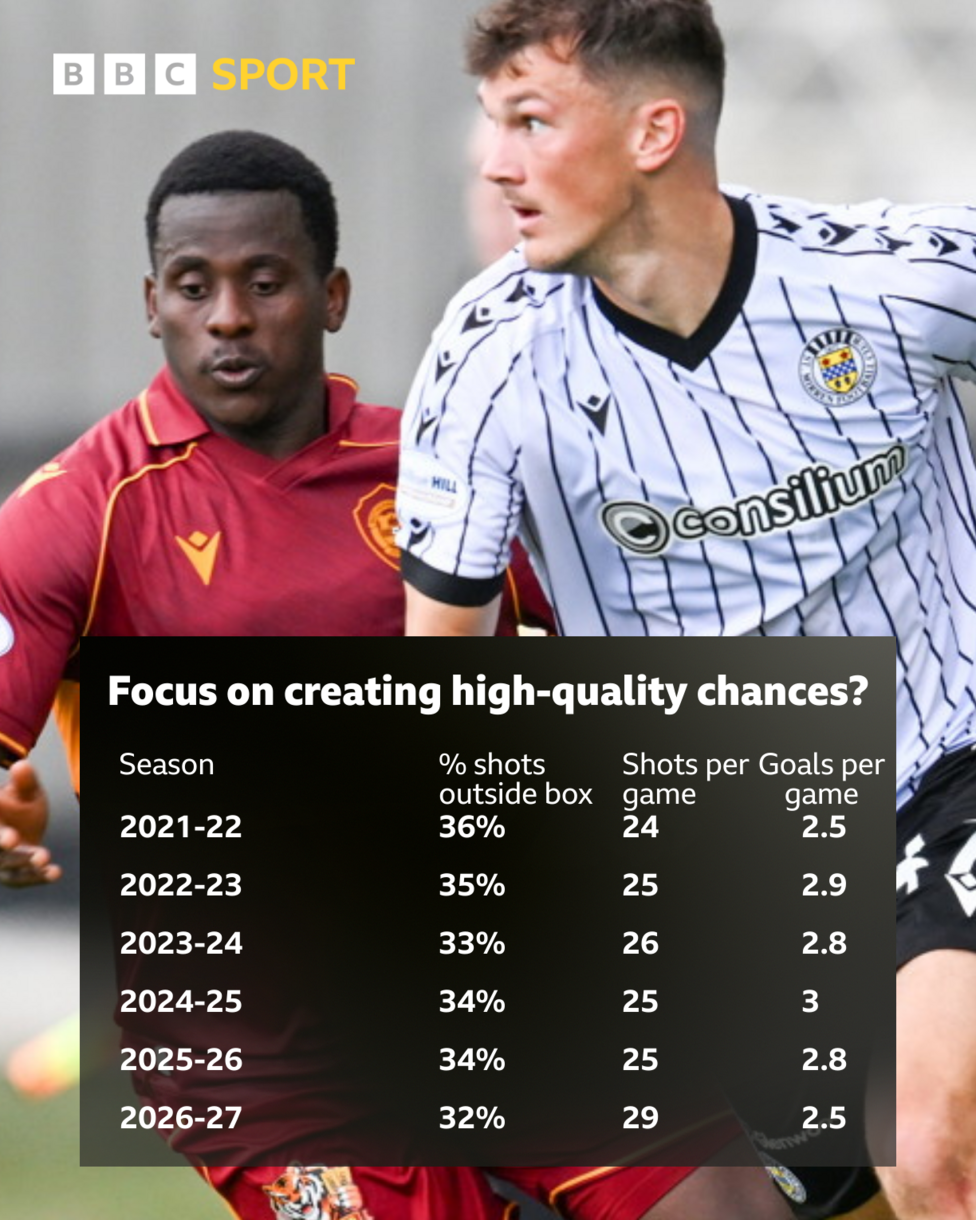
Shots from outside the box are approaching a new low this season, continuing a trend visible across modern football as managers increasingly discourage long-range efforts in favour of structured attacking play. This shift has prompted nostalgia among some supporters for the era of individual brilliance—the thunderbolt strikes of Bert Konterman or the spectacular free-kicks of Shunsuke Nakamura—moments that might now be sacrificed for a pass through the lines. Yet many fans appear energised by watching players they previously regarded as limited to aimless long balls now executing precise, penetrative passing sequences.
What happens next?
Six Premiership fixtures are scheduled for 10–11 October 2026, including Motherwell v Celtic on 11 October, offering further opportunity to assess whether the stylistic evolution continues. The sample size remains small after just seven matches per club, and sustained data collection over a full season will be necessary to confirm whether this represents a genuine, lasting shift or a temporary fluctuation.
The Scottish game has historically lagged behind continental peers in technical sophistication, but the evidence emerging from the opening weeks of 2026-27 suggests the division may finally be reconciling its celebrated passion with a more progressive approach to play. If the trend persists, supporters could witness an era in which the emotional intensity that has always defined Scottish football is matched by a standard of technical execution that rivals any other European league.