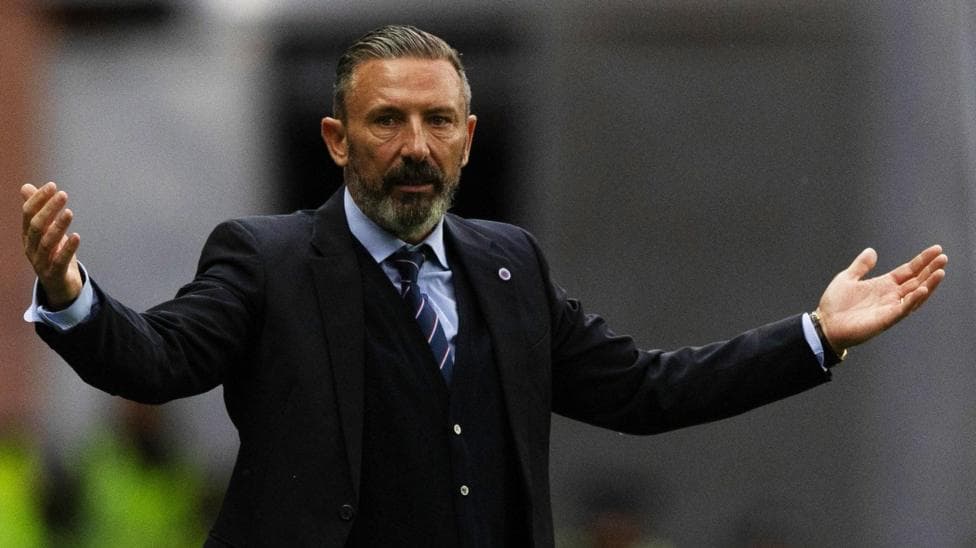
Derek McInnes secured his second consecutive victory, but Rangers' performance against Jablonec on 20 August 2026 at Ibrox Stadium lacked the quality expected of a team that has invested heavily in new talent. The Scottish side won 1-0 in the UEFA Conference League play-off first leg, with Ryan Naderi scoring in the 50th minute, but the victory came at a cost when midfielder Cammy Devlin was sent off in the 78th minute for a high tackle.
Among the uninspired football on display, Devlin's brief five-minute appearance as a substitute stood out for the wrong reasons. The midfielder, brought to Rangers to provide leadership and composure in tight matches, instead delivered a moment of recklessness that could have endangered the team's narrow advantage. His dismissal for a needless lunge suggested a lack of the mental discipline required to manage a slender lead in European competition.
Devlin was recruited to add steel to Rangers' midfield and help them avoid the mental lapses that plagued their run-in last season. Instead, his brief cameo raised questions about whether he could become part of the problem rather than the solution. Had Jablonec possessed greater attacking threat, the red card could have cost Rangers dearly, but the Czech side proved organised without being dangerous, committed without offering genuine goal-scoring opportunities.
The visitors relied on histrionics and defensive discipline rather than creative play, producing a display that lacked any real attacking ambition. Rangers, meanwhile, struggled to break down their opponents and took far too long to find the breakthrough that eventually came through Naderi's goal.
A laboured performance masking deeper concerns
McInnes spent much of the evening pacing frantically within his technical area, a confined space through which he likely covered thousands of steps in search of answers. The Rangers manager has inherited a squad that, despite significant investment, has not yet been shaped into a coherent attacking force. The team lacks the movement, positioning and tactical intelligence required to consistently unlock defences through intelligent play rather than brute force.
The first half was particularly difficult to watch. Rangers showed little movement off the ball and their defenders repeatedly looked downfield for passing options only to find their teammates tightly marked and immobile. Emmanuel Fernandez, the Rangers defender, faced a frustrating evening as he searched for outlets in possession, often forced to play the ball backwards to groans from the crowd. When he attempted a more ambitious pass that went astray, the crowd's frustration grew audible.
McInnes praised the clean sheet and the victory as important steps forward, noting that Rangers "lacked genuine drive and sustained pressure" in the first half, but he will know that performances of this quality will not be sufficient against stronger opponents in European competition or in the Scottish Premiership title race.

The spending question: has Rangers invested wisely?
The contrast between Rangers' laboured display and Celtic's fluid attacking football the previous evening raised uncomfortable questions about how effectively Rangers' new ownership has deployed its transfer budget. Since Andrew Cavenagh's consortium took control last summer, the club has made close to 30 signings with transfer fees exceeding £50 million. Eleven new players arrived in recent weeks alone, yet the team continues to produce uninspired performances in front of increasingly sparse crowds at Ibrox, with 15,000 empty seats visible during the match.
The spending has been substantial, but the results suggest it has not been strategic. Rangers have invested heavily in quantity rather than quality, accumulating players without building a cohesive unit. Compare this to Celtic's recruitment of players like Camilo Duran, who cost between five and six million pounds yet has delivered far greater impact than any single Rangers signing. Where are Rangers' equivalent to Duran, Callum McGregor, Benjamin Nygren or Kieran Tierney—the standard-setters and goal-scorers who drive teams forward?
The absence of Nico Raskin from the starting lineup added another layer of intrigue. The midfielder, who has been the subject of reported interest from Fenerbahce, remained unused on the bench despite Rangers' clear need for creative midfield play. Whether his absence was due to injury or transfer speculation remains unclear, but it underscored the uncertainty surrounding the squad's composition as McInnes attempts to forge a coherent team from disparate parts.
Context: Rangers' recent European struggles
This Conference League play-off represents a chance for Rangers to recover from recent European disappointment. Rangers had previously lost 2-1 away to Jablonec in an earlier qualifying round this month, making tonight's victory a necessary response. The team's European campaign has been marked by inconsistency, and McInnes faces the challenge of building momentum while managing a squad in transition.
The manager must now navigate a backdrop where Celtic threatens to extend their dominance with the resources they already possess and potentially additional funds from Champions League participation. If Celtic advances in European competition and secures the reported £40 million in Champions League revenue, the gap between the two Glasgow clubs could widen further.
What happens next
Rangers travel to the Czech Republic for the second leg against Jablonec on 27 August 2026, needing to protect their slender one-goal advantage. Following that tie, the team faces an away Premiership match against Aberdeen on 30 August 2026. The immediate priority is navigating the return leg without further defensive lapses or disciplinary issues that could undermine their European hopes.
The positives from the Ibrox encounter were limited but present: a one-goal lead to take abroad, a clean sheet, industry from Djeidi Gassama and James Penrice, assured defending from Olwethu Makhanya, and signs of improvement in Naderi's play. The full-time whistle was not accompanied by the booing that greeted the half-time interval, a small mercy in an otherwise underwhelming evening.
An hour after the final whistle, the only sound at Ibrox was the hum of lawnmowers gliding over the turf. The stadium was eerily quiet, a stark contrast to the noise and expectation that should accompany a club of Rangers' stature. McInnes will have little time to savour the calm. The pressure to deliver results and justify the investment will only intensify as the season progresses and the gap to Celtic becomes clearer.