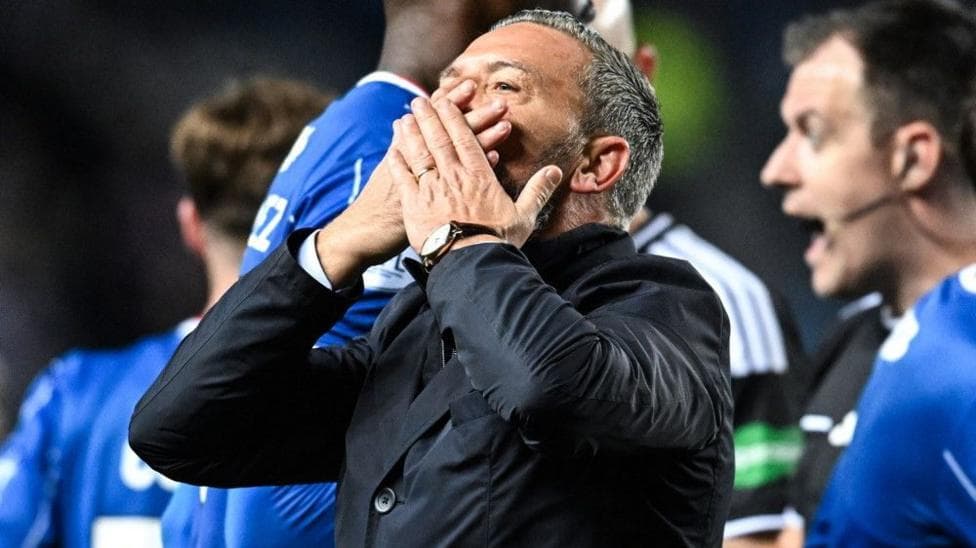
Derek McInnes was ecstatic at the final whistle, but the journey to that moment of elation had tested the patience of Rangers supporters and staff alike.
In football, momentum can shift in seconds. Had Bojan Miovski not produced a composed finish during stoppage time in Rangers' home fixture against St Mirren, the narrative emerging from Ibrox would have centred on the chorus of boos that had echoed through the stadium as the second half unfolded. Hundreds of supporters had already departed in frustration, dismayed by a disjointed display after the interval.
Instead, once the remaining moments of the match elapsed without St Mirren mounting a response, Rangers' players and coaching staff erupted into scenes of unbridled celebration more typically reserved for cup final triumphs. The relief was palpable, yet the performance raised questions about where McInnes' reconstructed squad truly stands as they prepare for two consecutive encounters with city rivals Celtic that could prove pivotal to their season.
The stakes of Miovski's intervention
The importance of the late goal cannot be overstated. Simultaneously, Celtic had defeated St Johnstone by an identical scoreline in Perth, preserving their flawless league record. Without Miovski's intervention, Rangers would have slipped seven points adrift of the defending champions with only six matches completed—a deficit that would have severely undermined confidence heading into Sunday's Premier Sports Cup quarter-final at Ibrox against Martin O'Neill's side, followed by a Premiership visit to Celtic Park seven days later.
Rangers now extend their unbeaten run at home to five consecutive matches, having won four of those since a defeat to Hibernian last month that had intensified early scrutiny of McInnes following the club's European exit. The fixture against St Mirren on 9 September formed part of a midweek programme where both Rangers and Celtic sought to maintain momentum ahead of their Old Firm cup clash.
McInnes could legitimately highlight the underlying statistics: six victories from seven matches, four consecutive wins, and a defensive record unmarred by conceded goals save for an own goal. Yet the trajectory since their emphatic 5-1 demolition of St Mirren at Ibrox a month earlier in the League Cup tells a more cautious story. Their subsequent four victories have each arrived by a single-goal margin, signalling that McInnes recognises his rebuilt squad remains a work in progress.
I thought we got what we deserved, granted St Mirren had a 20-minute period in the second half when they were better than us. They played with a bit more belief and came after us and we were guilty of so many poor decisions. But I thought the performance for the first hour was really strong, particularly the first half, where we absolutely battered St Mirren.
McInnes told a national broadcaster that while St Mirren had enjoyed a spell of dominance in the second period, Rangers had controlled the opening hour with intensity and precision, generating numerous opportunities. He acknowledged the precarious nature of their position at 0-0, recognising that St Mirren's escape from punishment had emboldened them.
Last-minute winners are great for players, coaches and fans. We'd rather not be in that position, but credit to the players for keeping going. There are obviously loads we have to improve on, but we have to meanwhile keep winning and we have to keep improving if we are to achieve anything this season.

Contrasting assessments of the second-half display
Former Rangers midfielder Andy Halliday offered qualified praise for the opening period but diverged sharply from McInnes' interpretation of the second half. Speaking on a national radio programme, Halliday highlighted Rangers' defensive improvements over recent weeks, noting their aggression and intensity had generated a wealth of chances early on. However, he contended that St Mirren's influence extended well beyond the 20-minute window McInnes had identified.
I thought in the first half Rangers were really good. They have shown a vast improvement off the ball over the last three or four games. They played with a lot of aggression, a lot of intensity and they've created an abundance of chances in the first half as well, but they just don't seem to have that ruthlessness in the top end of the pitch.
Halliday suggested Rangers had surrendered control and grown increasingly desperate as the match progressed, though he credited the directness that ultimately yielded the winning goal. The absence of clinical finishing in the final third has become a recurring frustration, compounded by the injury misfortunes affecting the striker department.
Injury crisis deepens at Ibrox
McInnes' attacking options have been severely constrained by long-term absences. Youssef Chermiti and summer signing Lawrence Shankland, both originally pencilled in as first-choice forwards, have been sidelined. The announcement that Japanese winger Daisuke Yokota would require surgery on a groin injury—with an expected absence of approximately two to three months—compounds the frustration. Yokota had been a doubt for the St Mirren encounter due to the injury sustained shortly after his arrival.
The injury toll has forced McInnes to experiment with alternatives. Ryan Naderi and Kevin Kelsy, the high-profile summer acquisition from Portland Timbers, have been preferred in recent weeks, leaving Miovski as a fifth-choice option. Yet his decisive intervention has altered perceptions dramatically.
It just shows you what football is like and how quickly it can change. It looked like he was out of the picture two or three weeks ago and it looked like he was going to be on his way in the transfer window, but he's come up with a massive goal.
Halliday suggested that while Miovski was unlikely to command a starting berth against Celtic, the significance of his goal had repositioned him within McInnes' thinking. The manager himself acknowledged the paradox, noting that Miovski's goal-per-minute ratio in the Premiership compared favourably with Shankland's record, and that a player of his Scottish football pedigree, deployed correctly alongside an appropriate partner, retained genuine scoring capability.
The Celtic double-header looms
Rangers will host Celtic in the Premier Sports Cup quarter-final on Sunday 13 September at noon, marking the first of two consecutive Old Firm encounters. The Premiership fixture follows a week later at Celtic Park on 20 September. These matches carry enormous weight for both clubs' seasons, with Rangers seeking to close the gap on the defending champions and demonstrate they possess the resilience required for a sustained title challenge.
The injury situation remains fluid. According to Rangers' team news updates, defender Tuur Rommens is targeting a return for the Premiership Old Firm match on 20 September after progressing through light training, while midfielder Kosta Nedeljkovic continues to manage a foot injury. The availability of key personnel will prove crucial as McInnes navigates the demanding fixture schedule ahead.
McInnes' ability to extract maximum value from his squad during this period of injury disruption will define whether Rangers can genuinely compete with Celtic across the season. Miovski's late intervention has provided temporary respite and a psychological boost, yet the underlying issues of inconsistency and finishing proficiency demand urgent attention if the club is to achieve its ambitions.