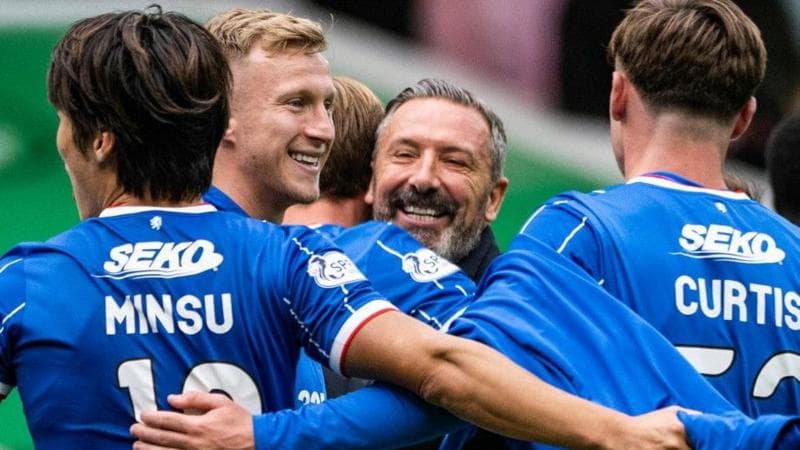
Derek McInnes has overseen a dramatic turnaround at Rangers, with the team now bearing the tactical hallmarks of their manager after securing a second Old Firm derby victory in seven days. Following a 3-0 triumph in the League Cup quarter-final at Ibrox on 13 September, Rangers defeated Celtic 1-0 at Celtic Park in the Scottish Premiership on 20 September 2026, extending their winning streak to six consecutive matches and cutting Celtic's league lead to just two points.
Ryan Naderi's goal proved decisive, capitalising on Kim Min-su's parried shot to guide the ball past the goalkeeper with his knee. Rangers dominated the encounter with a control that belied the single-goal margin. They won aerial duels 67.6 per cent to 32.4 per cent, accumulated eight shots to Celtic's one in the first half, and registered six on target compared to Celtic's zero. The superiority would have been better reflected in a wider scoreline, yet Rangers won as comfortably as possible when the margin remained just one goal.
"I like putting my name to this team at the minute,"McInnes reflected after the victory, a sentiment that underscores the transformation from the chaotic opening weeks of the season. Later, when addressing the historical significance of becoming the first Rangers manager since Graeme Souness in 1986 to win his opening two Old Firm matches, McInnes remained measured.
"Just three points,"he said.
"Three points closer to Celtic."
The Rangers manager's early tenure had been marked by humiliation. Exits from both the Europa League and Conference League competitions left supporters alarmed as the side fell behind Celtic's pace and appeared fundamentally disorganised. The squad looked adrift, lacking the structure and intensity that would define a McInnes-coached team.
That narrative has shifted entirely over recent weeks. Former Rangers midfielder Andy Halliday identified the shift on a national broadcaster's coverage, noting that
"a big thing that was quite confusing to people is: 'it doesn't look like a Derek McInnes team'. They don't look organised off the ball, they don't look aggressive, they don't look athletic."Yet Halliday observed that
"how that narrative has completely changed over the last three, four weeks. That for me is a Derek McInnes team, what we watched today. Front foot, aggressive, making contact with people, when they win the ball back playing forward, running forward and putting Celtic under constant pressure for large parts of the game."
McInnes acknowledged the weight of early criticism, admitting he remains
"embarrassed"by the European exits against Jagiellonia Bialystok and Jablonec. However, his track record across more than 800 managerial matches demonstrates his capacity to construct teams that are difficult to break down defensively.
How has Rangers' defence become so resilient?
Defensive organisation has become the foundation of Rangers' resurgence. The team has conceded just once in their last six matches, a stark improvement from their opening seven games when they managed only a single clean sheet. McInnes' Hearts side last season conceded fewer goals than any other team in the Scottish Premiership, and he has replicated that defensive discipline at Ibrox.
Right-back Dujon Sterling, deployed in his preferred position, has formed a physically commanding defensive unit alongside centre-backs Emmanuel Fernandez and Olwethu Makhanya. This trio's solidity permits left-back James Penrice to advance aggressively and bolster Rangers' midfield presence. For the second consecutive week, Makhanya, at 22 years old, proved the most dominant and classy defender on the pitch, delivering a composed performance that earned him the match award at Celtic Park.
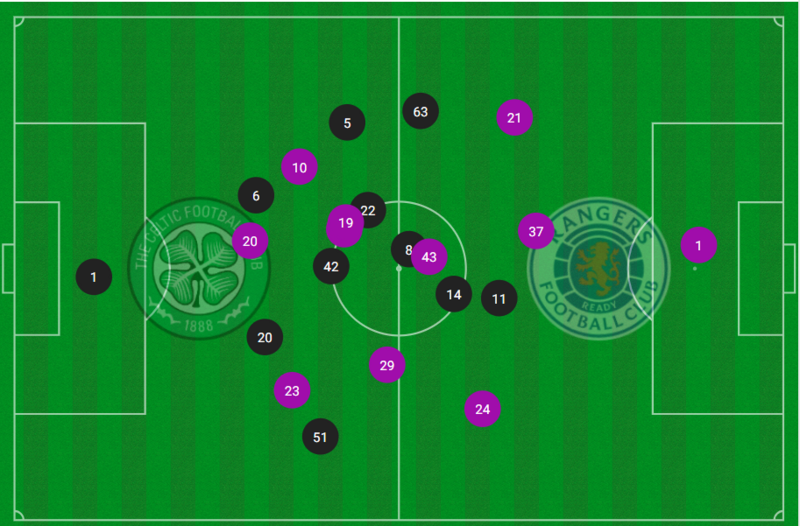
Fernandez, despite occasional lapses in concentration—he narrowly escaped dismissal at Celtic Park after an early booking and a subsequent challenge that went unpunished—proved immense once settled, recording 11 clearances. Celtic managed only one shot on target at home, a testament to Rangers' defensive control.
In midfield, Dan Neil and Nico Raskin have elevated their performances considerably. The pair completed the most passes among Rangers players, consistently finding each other and advancing the ball into dangerous areas. While Rangers attempted 75 fewer passes than Celtic overall, they completed 50 more passes in the opposition half, indicating superior efficiency in transitioning from defence to attack. Neil, aged 24 and now Rangers captain, has grown rapidly in influence after appearing fairly ordinary not long ago. Raskin, 25, was once again hugely influential in the middle of the park.
McInnes praised his midfield's contribution, stating that
"my midfield were terrific again. Celtic filled the midfield. We filled it with even more bodies, we just made sure we weren't going to get overrun in there. We look far more calm, far more settled in everything that we're doing. The players deserve so much credit for that."
How has Naderi filled the void left by Shankland?
The loss of captain Lawrence Shankland to a hamstring injury sustained against Motherwell raised immediate concerns about Rangers' attacking threat. Questions emerged about whether Alfredo Naderi and £9 million signing Kevin Kelsy could compensate for the experienced striker's absence.
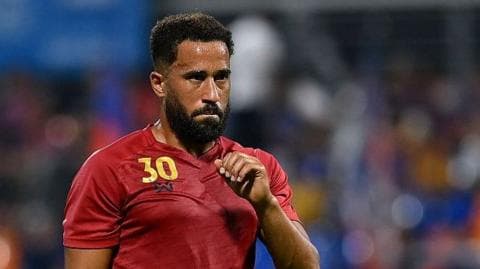
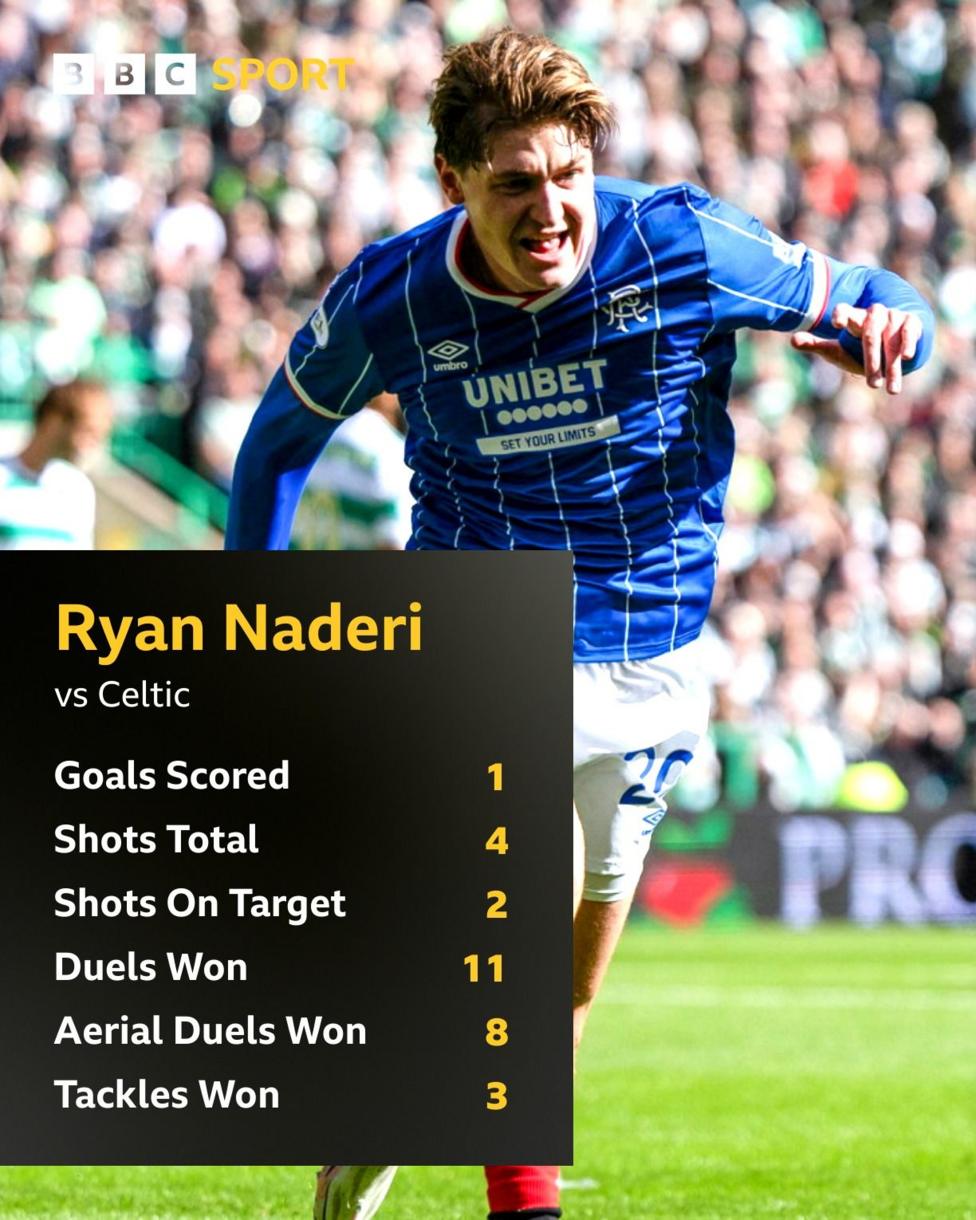
Naderi, who arrived from German third-tier side Hansa Rostock in January, had failed to fully convince during the second half of the previous season. Yet he has now scored four goals in 13 appearances, surpassing his entire output from the latter stages of last term. His finish at Celtic Park exemplified Rangers' clinical edge: he pounced on Kim Min-su's parried shot and guided the ball past the goalkeeper with his knee.

Beyond his goal, the 23-year-old German striker set the tone for Rangers' aggressive approach. For the second straight week, he proved the hardest-working and most effective attacking player on the pitch. He engaged in 34 duels, winning 11 of them, with 18 contested in the air. He accumulated the most shots and touches in Celtic's penalty area, his physical exertion so intense that he remained breathless during his post-match interview. Naderi recorded 23 touches of the ball, substantially more than Celtic's attacking options.
Former Rangers striker Kris Boyd assessed Naderi's performance on a sports broadcaster's coverage, observing that
"his all round play was really, really good. Him and [Kevin] Kelsy didn't have much link up play but they were working together. If one went short, one went long. Naderi's running power was really key for Rangers. When he came in at first there was a rawness about him. But there is a lot to like. If Derek can get a hold of him and work with him and make him that complete striker, because he works his socks off and he can finish."
What are Celtic's mounting problems?
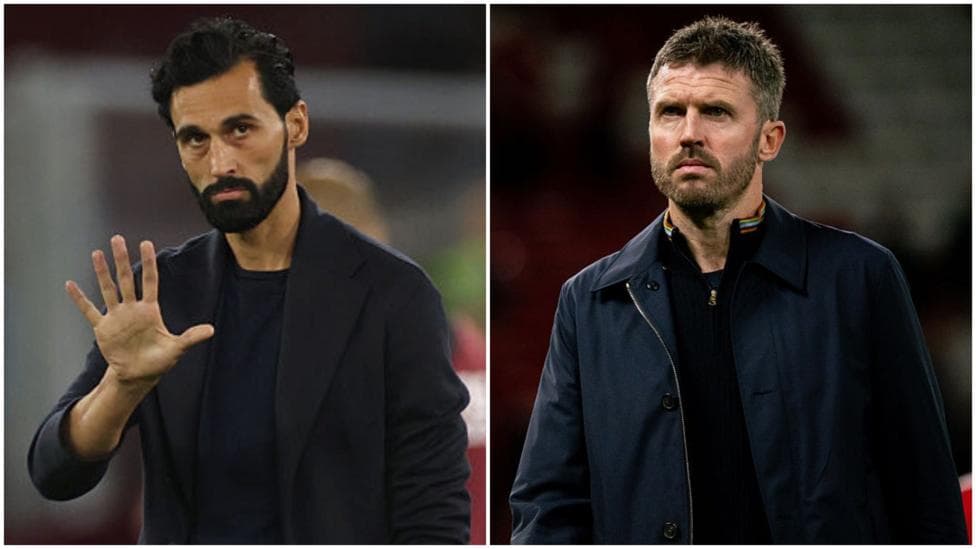
Celtic manager Martin O'Neill claimed there was "not much between the sides," but few observers agreed. Celtic's performance revealed deepening structural problems that extend beyond a single match. The team appeared physically weak and mentally substandard, having lost the elan demonstrated in early-season victories. They were out-played, out-muscled and out-coached.
O'Neill's recent tactical decisions have drawn scrutiny. Starting Sebastian Tounekti at Ibrox the previous week proved an odd call, requiring a half-time change. Deploying Sam Johnstone in goal at Rangers backfired. Giving Luke McCowan his first start of the season proved another curious decision that did not work, with the midfielder off the pace and withdrawn at half-time.
Celtic's attacking resources have deteriorated. With Yang Hyun-jun absent and Daizen Maeda, Liel Abada, Jota and Nicolas Kuhn unavailable or unfit, James Forrest, at 35 years old, represents the club's best available winger option. Even the club's record signing, Kasper Hogh, appeared devoid of belief when introduced, receiving minimal service and failing to execute with the consistency he demonstrated at Bodo-Glimt.
The broader picture is troubling for Celtic. They have suffered three poor losses in a row and four defeats within a month, including a 5-1 Champions League disintegration against LASK that appears to have removed not just confidence but heart and soul. O'Neill's famed ability to problem-solve and inspire has deserted him for now. When set against the newfound organisation and vigour of Rangers, Celtic look jaded and in need of a fundamental reset from board level through coaching and playing staff.
Can Rangers maintain this momentum?
McInnes faces mounting expectations given the significant investment in Rangers' squad. Without European football to navigate, consistent performances at the level demonstrated against Celtic will become the standard rather than the exception. The squad's average age of 24 means Rangers possess one of the youngest rosters in the league, adding an element of rawness despite their recent improvement. The oldest Rangers player in the starting line-up was James Penrice at 27, compared to Celtic's average age of 26.7 years.
McInnes has moulded his young squad into a group of players who have, against Celtic, shown maturity and togetherness. He has genuinely hit upon something. The transformation from the disorganised side that exited European competition to a team displaying front-foot aggression and tactical discipline represents genuine progress rather than temporary upturn.
Rangers face Celtic again at Celtic Park in the Scottish Premiership on 20 September 2026, only a week after their League Cup victory. This rapid sequence of derbies will test whether McInnes' tactical adjustments represent genuine progress or a temporary upturn.
Former Rangers winger Peter Lovenkrands suggested on national radio that consecutive derby victories will provide
"so much confidence"for the squad. McInnes' achievement in winning his first two Old Firm matches as Rangers manager—a feat unmatched by any Rangers boss since Graeme Souness—provides a strong foundation, though he remains cautious about the road ahead.
"There's a lot of growth in the team,"McInnes stated.
"And winning in places like this only helps. But there's plenty of league games to be won and we have to concentrate on that. It was hard to defend the criticism [at the start of the season]. We're on a strong run now, six wins in a row, which is the kind of consistency we're searching for. But at the start we didn't look ready, for whatever reason, we didn't look settled as a team, didn't carry an attacking threat. But we've knuckled down and worked hard, and hopefully that winning habit is something we can keep working towards."
According to performance analysis, Rangers had accumulated five consecutive league victories ahead of their Celtic return fixture, suggesting the improvement extends beyond cup competition. The League Cup semi-final draw has paired Rangers with Aberdeen and Hearts with Hibernian, with Rangers' semi-final scheduled for the weekend of 31 October or 1 November 2026.
What lies ahead for Rangers?
Rangers' fixture list includes Kilmarnock on 10 October and Dundee on 17 October 2026 before the League Cup semi-final against Aberdeen. The immediate priority remains consolidating their position in the Premiership. The manager's ability to sustain the defensive discipline and attacking intensity demonstrated in recent weeks will determine whether Rangers can genuinely challenge for the title or whether their early-season struggles prove too costly.
The momentum in Glasgow has shifted decisively. The energy, clarity and optimism now belong to Rangers, while Celtic appear lost in a haze of confusion and uncertainty. Rangers look, at the moment, like a club that knows where it wants to go. Whether that direction leads to a title challenge or merely a return to competitiveness remains to be seen, but the trajectory has changed fundamentally.
Key Facts
- Rangers defeated Celtic 1-0 at Celtic Park on 20 September 2026, securing back-to-back Old Firm victories within seven days
- McInnes became the first Rangers manager since Graeme Souness in 1986 to win his opening two matches against Celtic
- Rangers won aerial duels 67.6 per cent to 32.4 per cent and registered six shots on target to Celtic's zero in the first half
- Olwethu Makhanya (22) and Ryan Naderi (23) have emerged as standout performers in Rangers' resurgence, with Dan Neil and Nico Raskin providing midfield control
- Celtic face mounting structural problems, with manager Martin O'Neill's recent tactical decisions under scrutiny and the squad appearing physically weak and mentally substandard