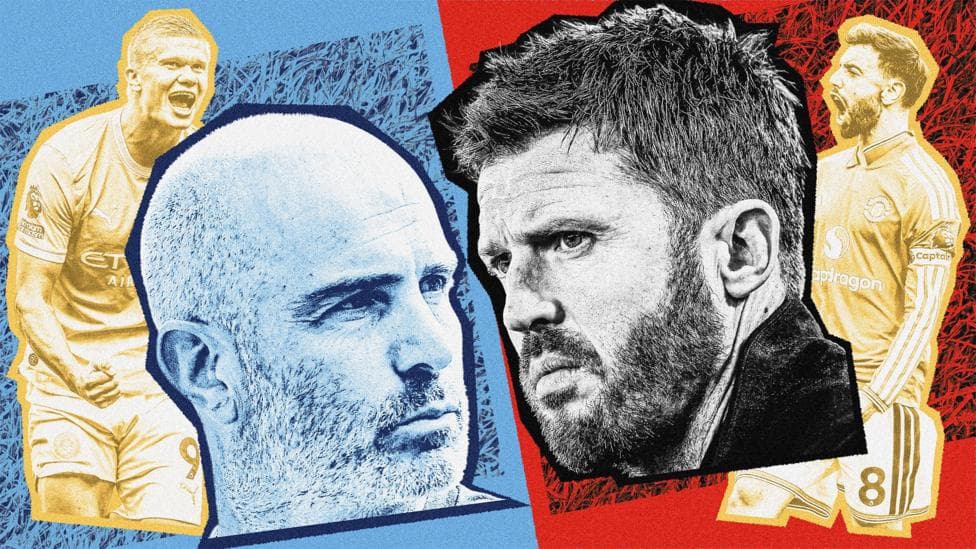
Manchester City and Manchester United will contest their first derby of the 2026-27 season on Sunday 13 September 2026 at Old Trafford, kick-off 16:30 BST. Despite being separated by just five miles and both harbouring ambitions to reclaim the Premier League title, the two clubs have adopted fundamentally contrasting tactical philosophies that will be on full display in this early-season encounter.
Enzo Maresca's City arrive at Old Trafford with a perfect record under the Italian manager, who succeeded Pep Guardiola in the summer. According to , this represents the first Manchester derby without Guardiola in a decade. Michael Carrick's United, by contrast, have experienced an inconsistent start to the campaign, though the manager has overseen a marked improvement since taking charge last season. Maresca has praised Carrick's work, describing how he inherited a difficult situation and has maintained momentum into the new season.
The tactical contrast between the two sides represents one of the most striking differences in modern Premier League football. Where Maresca has constructed a system built on rigid positional structure and precise player placement, Carrick has developed an approach that grants his players greater freedom within a looser framework of tactical principles.
How positional play shapes City's approach
Maresca, drawing on his experience as Guardiola's assistant during City's Treble-winning 2022-23 season, has embraced positional play as the foundation of his tactical system. This philosophy treats football similarly to chess, with each player occupying a specific zone and understanding their role within a carefully constructed pattern of play.
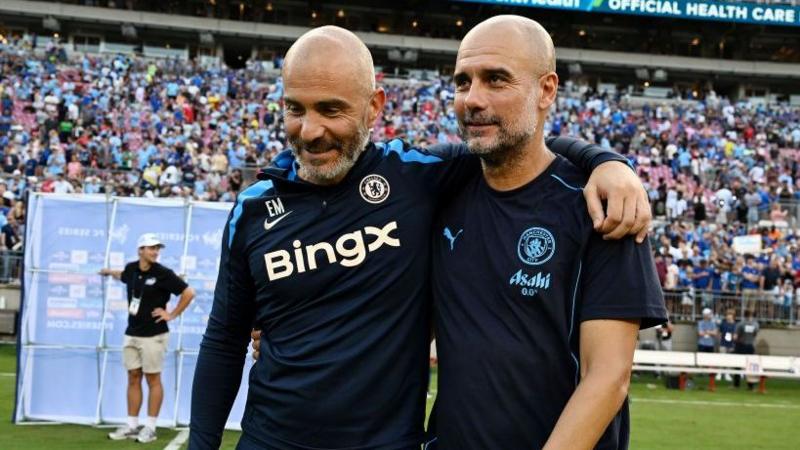
The Italian manager has frequently articulated his philosophy on player freedom in ways that distinguish his approach from more permissive systems.
If the freedom for you is that you can move everywhere, that is not freedom, that is chaos,he told a national broadcaster last September.
[Our] freedom? You can do what you want in the position you receive the ball.
City's structure typically operates within a 3-2-5 or 3-1-3-3 formation when in possession. Three central defenders occupy fixed defensive zones, a single holding midfielder anchors the build-up play, three attacking midfielders operate in predetermined areas, two wide wingers hug the touchlines, and a centre forward leads the line. While rotations occur between players, these movements conclude with the team reforming into this established shape.
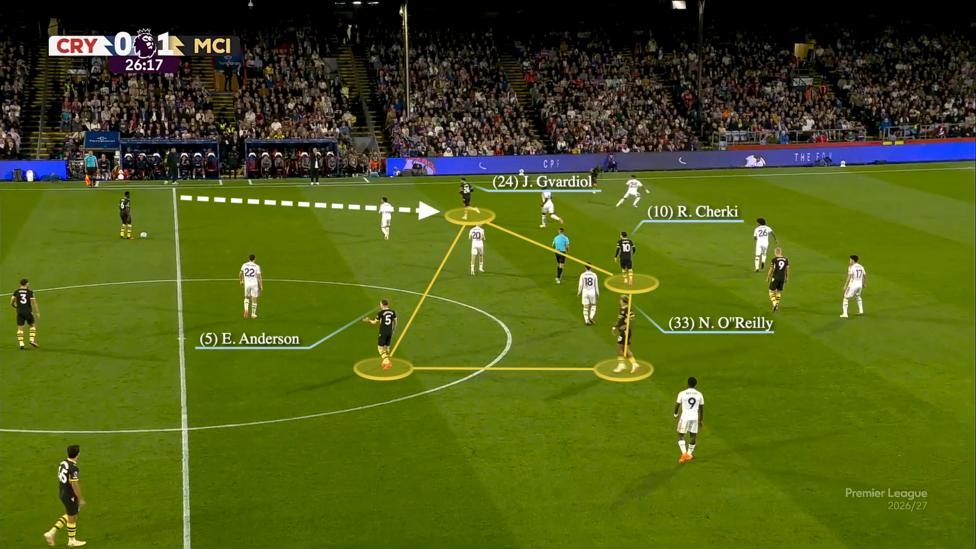
The advantage of this fixed approach lies in its consistency and speed of execution. Even when opponents anticipate City's movements, the precision and tempo of their passing can overwhelm defences. Additionally, because solutions are predetermined and drilled repeatedly throughout a season, players require less spontaneous decision-making to unlock opposition defences. Maresca has demonstrated this philosophy in practice: after City's victory against Coventry, he explained that new signing Iliman Ndiaye had received minimal training time and consequently was sometimes moving into incorrect positions for how City intend to operate.
United's framework of freedom within structure
Carrick's United present a markedly different picture. Rather than prescribing exact positions and movements, the manager has established a system that provides positional guidelines while allowing players the latitude to interpret situations and roam more freely across the pitch.
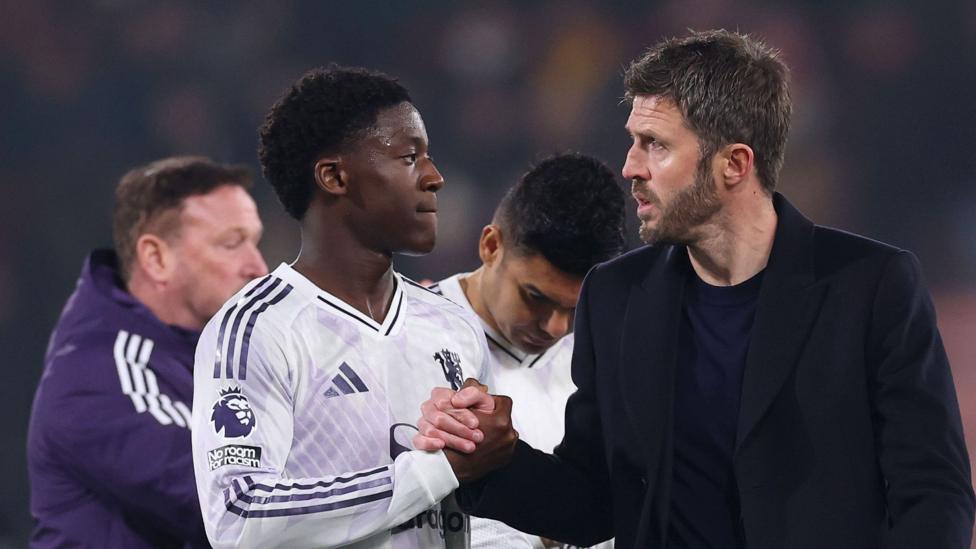
This philosophy emerged clearly when Carrick first worked with 21-year-old midfielder Kobbie Mainoo.
I [was] really conscious of not giving him an awful lot [of instructions],Carrick explained.
A couple of little pointers, a few positional things, but to trust in what he is. He's a fantastic footballer.
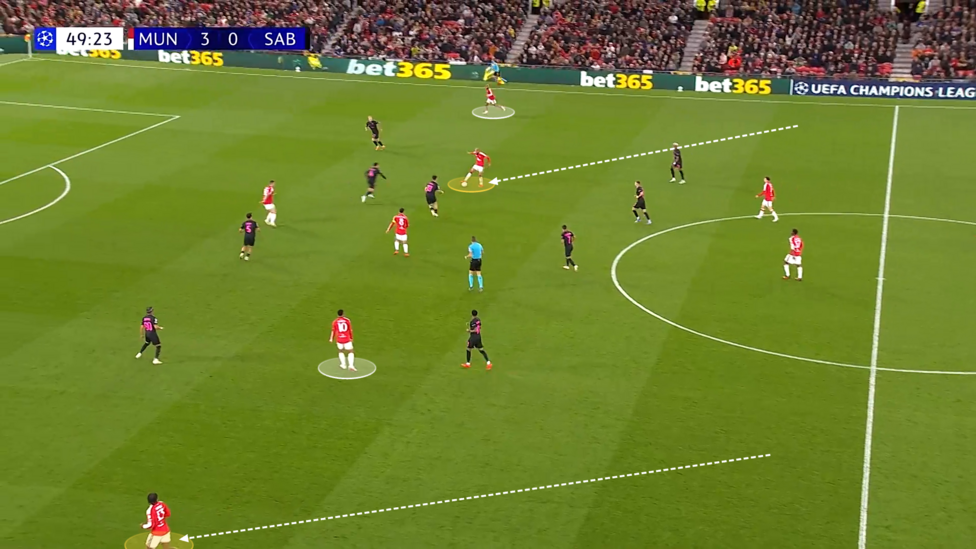
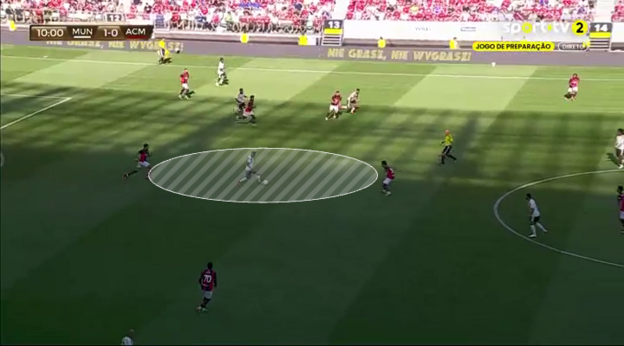
United's structure does incorporate positional elements, particularly in defence and midfield. The two centre-backs remain in fixed positions throughout build-up play. The deepest midfielder is tasked with supporting the build-up phase, either operating as part of a narrow midfield pairing or dropping deep to create a temporary back three alongside the centre-backs. When this back three forms, the second midfielder holds position alone in the centre of the pitch.
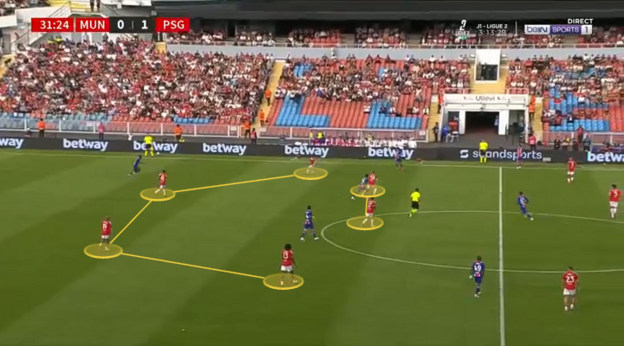
The full-backs begin in natural left and right positions during the build-up phase but are encouraged to join the attacking line higher up the pitch. When they do so, they position themselves based on their attacking teammates' locations—one moving wide while the other shifts more centrally. The number 10 and striker frequently drop deep, creating a fluid front two that lacks the rigid positioning of City's system.
How United's positioning creates attacking advantages
The logic underpinning United's shape provides tactical flexibility. By allowing the holding midfielder to drop and form a temporary back three, United gain the numerical advantage to overload teams that press aggressively with two strikers. Against narrowly-organised opponents, the wide positioning of United's full-backs offers an option to play around the press, though Carrick's team have been coached to favour playing through the middle of the pitch instead.

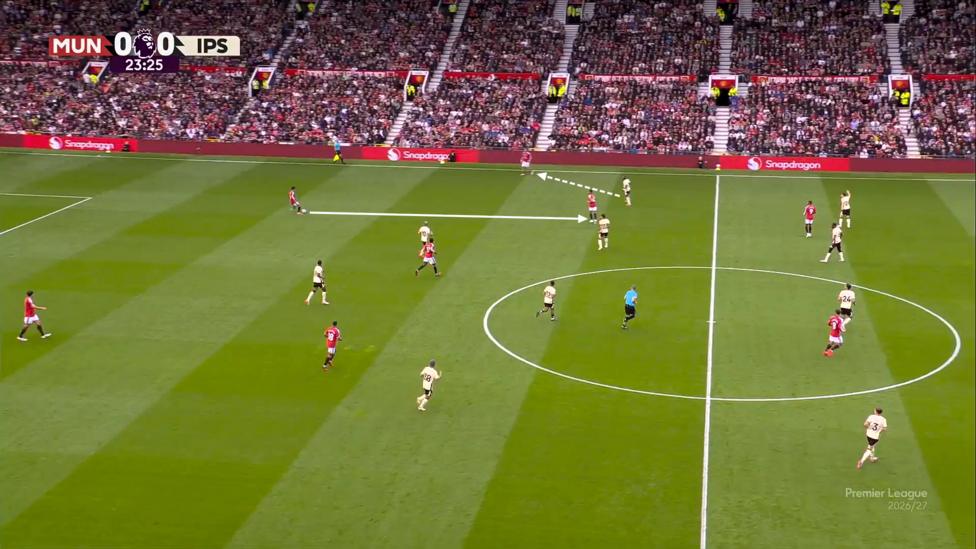
This central focus serves a specific purpose. The positioning of the full-backs stretches narrow opponents wider, as defending teams become concerned about the threat posed by United's wide players in space. As opposition players shift outward to cover these threats, space opens in the middle of the pitch for United's central midfielders to receive the ball under reduced pressure. By clustering players centrally, United also position themselves to crowd around the ball if possession is lost, improving their chances of winning it back quickly.
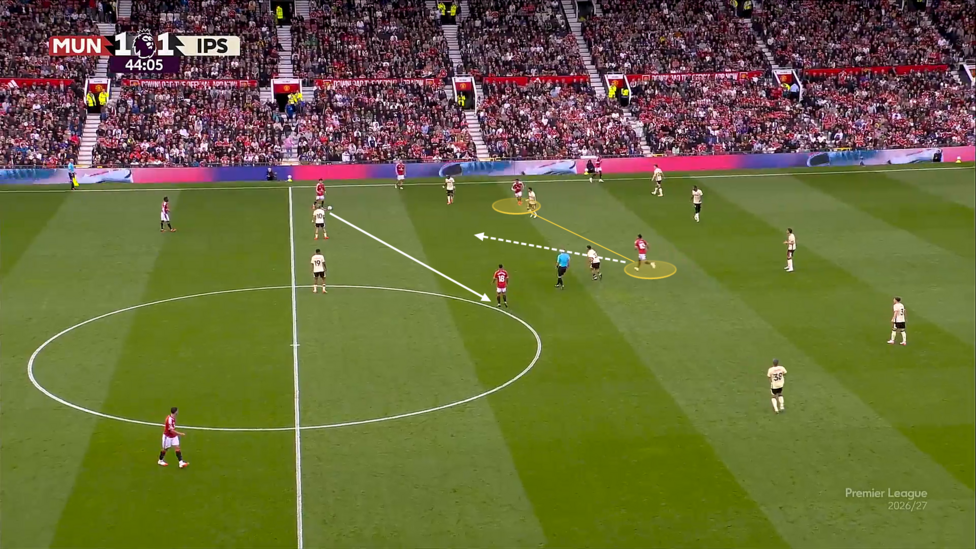
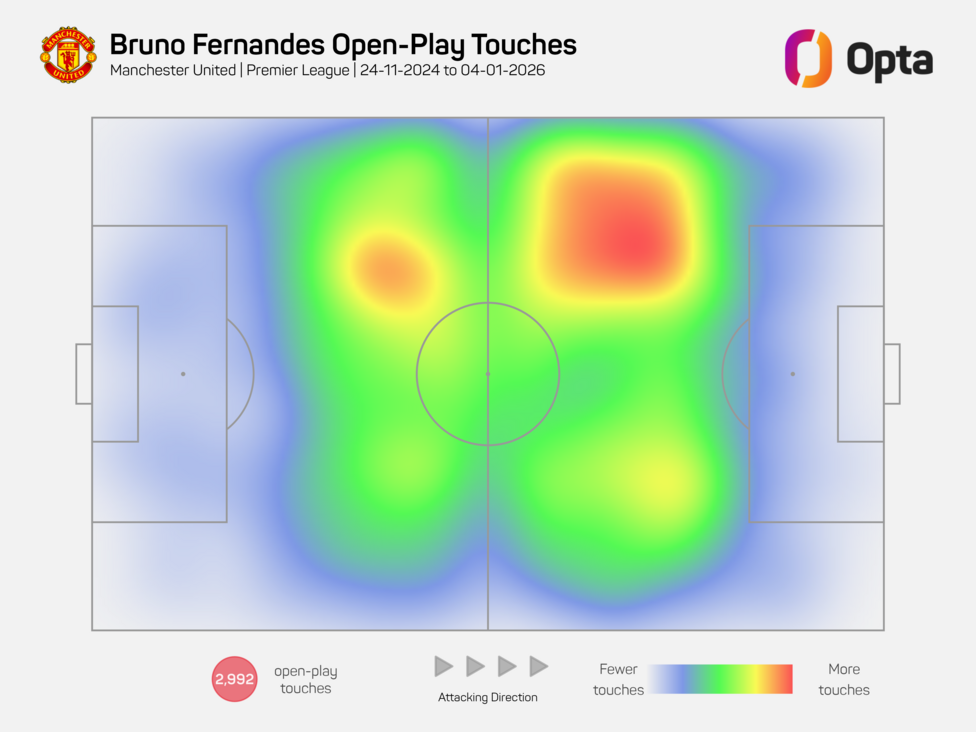
When United's attacking players—particularly Bruno Fernandes and wingers like Matheus Cunha—decide that the game requires them to move away from their starting positions, they are trusted to do so. This creates unpredictability for defending teams. If opposition defenders follow these movements, space opens in the middle of the defence for other United players to exploit. If they do not follow, United often find themselves outnumbering opponents around the ball, making it easier to escape pressure.
How Carrick introduces tactical order within freedom
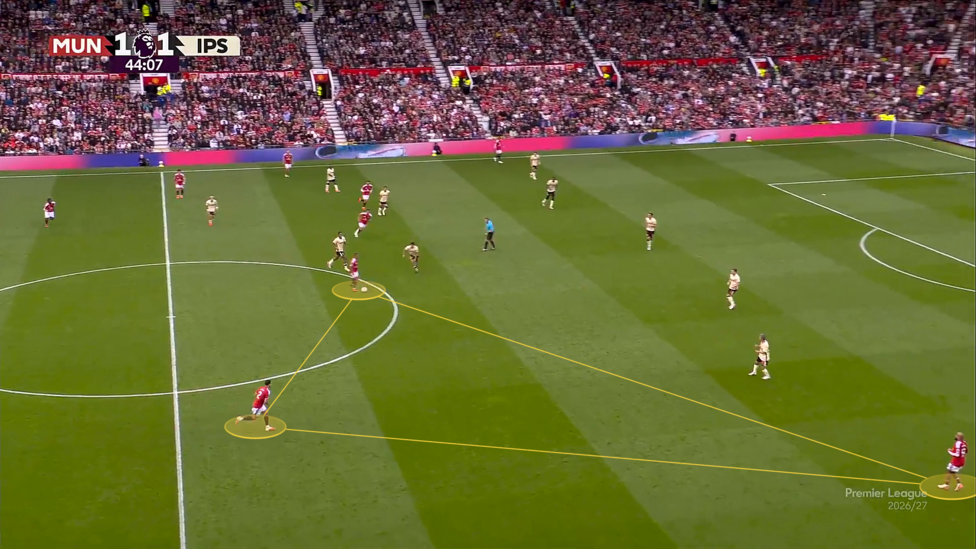
To provide direction within this freer approach, United have established a set of shared tactical principles and concepts. These include clustering around the ball, attracting pressure, and then locating teammates in space quickly. Unlike Maresca's specific, predetermined solutions, it is United's players who decide when and where to apply what they have been taught.
This distinction becomes evident in how United construct passing moves. Rather than executing triangles in fixed zones, Carrick's players create these patterns when they sense the moment is right. One player about to receive the ball will notice a teammate moving to become the next passing option, with the trio forming organically rather than by design.
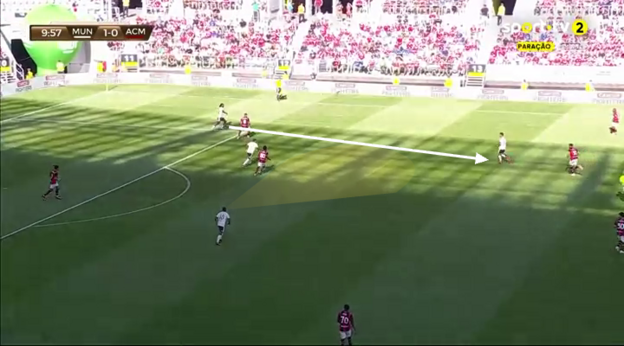
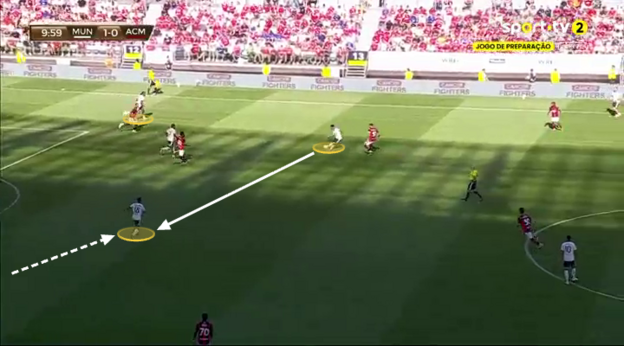
This shared tactical language provides clarity while maintaining unpredictability for opponents. Players operating on the same wavelength can escape pressure through quick combinations, with third-man runs and first-time passing creating space and tempo.
Individual players and system constraints
Both approaches carry distinct advantages and disadvantages for individual players. Bruno Fernandes has flourished under Carrick's system, with the freedom to roam across the pitch contributing to a significant boost in his output. He was subsequently crowned Premier League Player of the Season, validating the manager's trust in allowing him greater positional freedom.
Conversely, questions have arisen regarding how City's system has constrained creative midfielder Rayan Cherki. Guardiola made clear on numerous occasions that he believed Cherki would be more effective remaining between the lines, positioned closer to Erling Haaland.
He has the ability and quality in the final third. That's why I sometimes say when they go to the goalkeeper for the ball I say no, I want you there in the final third.
Maresca has echoed this sentiment, though less forcefully, explaining that
There is always a gameplan. When we are in our [half], Rayan drops a little bit to manage the tempo [of] the game [but] when the ball is in the opposite [half] we need Rayan in a position to be dangerous.During City's match against Coventry, Cherki started as a number 10 and initially sought to influence play more frequently, including in his own half. However, following apparent tactical reinforcement at half-time, he adopted a more positional approach in the second half, remaining closer to his designated zone.
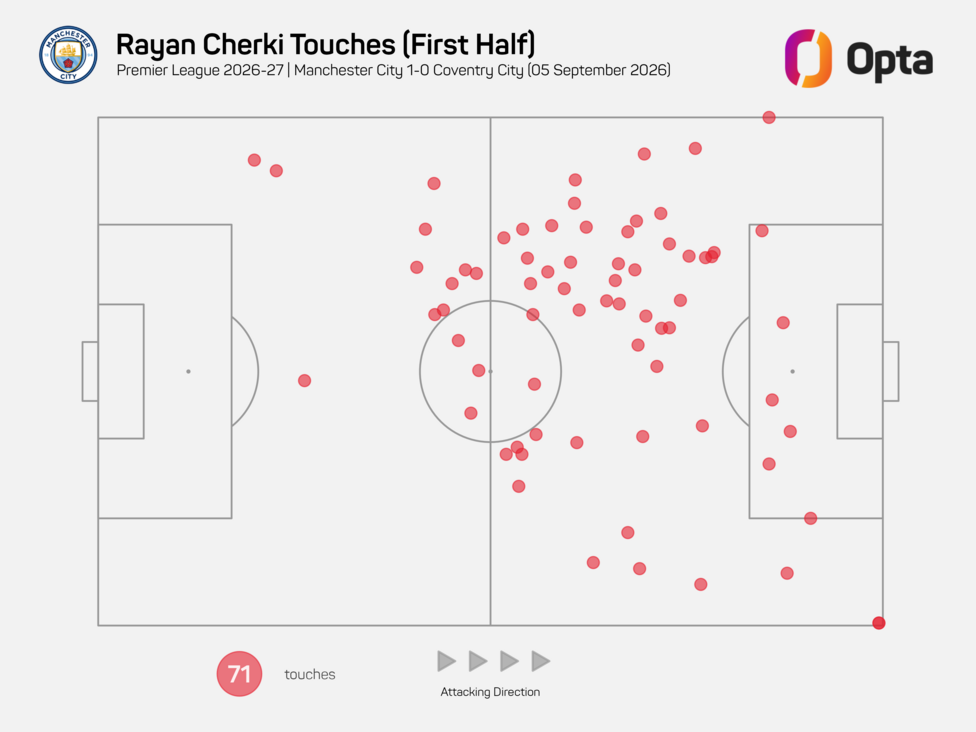
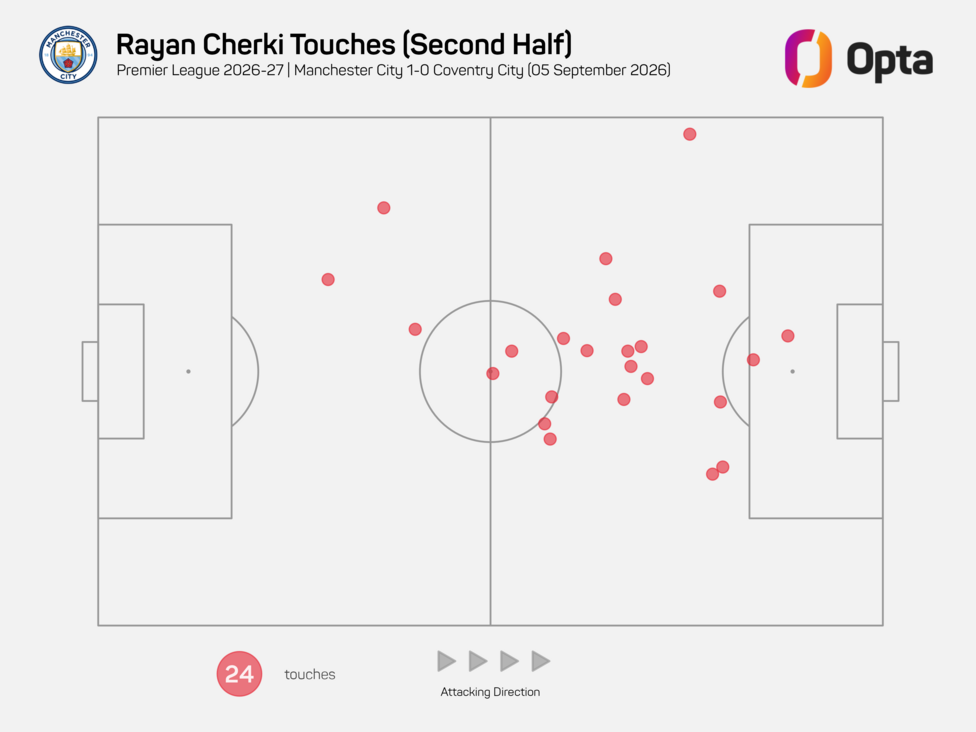
Some observers argue that Fernandes has been maximised individually by United in a way that Cherki has not yet been by City. However, the counterargument suggests that City's collective performance has been superior to United's at this early stage of the season.
The broader tactical trade-offs
Creating a freer style of play requires chemistry and understanding between players that develops over time. Fixed roles and predetermined patterns, by contrast, can be implemented more quickly and provide consistency regardless of which players start. This explains why Maresca, inheriting a squad accustomed to Guardiola's methods, has maintained similar structural principles while adapting them to his own preferences.
According to , this early-season encounter serves as a litmus test for both clubs. United aim to demonstrate they are genuine contenders, while City seek to maintain momentum under their new manager. Maresca has stated he is not the main focus ahead of his first Manchester derby, emphasising that City are concentrating on protecting their perfect start to the season.
In a football landscape dominated by coaches who prescribe detailed solutions, Carrick's willingness to grant players greater interpretive freedom represents a notable alternative approach. Whether this bet will ultimately prove successful remains to be seen, but the contrast between the two philosophies will be starkly illustrated when these rivals meet on Sunday.
Match details and broadcast information
The fixture takes place on Sunday 13 September 2026 at Old Trafford, with kick-off at 16:30 BST. The match will be broadcast on Sky Sports in the United Kingdom and on NBC/Peacock in the United States.