

Manchester United and Leeds United will meet in a pre-season friendly at Croke Park in Dublin on Wednesday, 12 August 2026, becoming the first two English clubs ever to play a fixture at the 82,300-capacity stadium. The match, a sell-out, is also the first football fixture staged at the venue since November 2009, when the Republic of Ireland faced France in a World Cup play-off.
The Roses rivals have already met three times in the past eight pre-seasons, most recently in July 2025, when they played out a goalless draw in Stockholm. This latest meeting, however, carries added significance simply because of where it is being played.
Why is Croke Park hosting this fixture?
According to Manchester United's own announcement, the club described the game as the first-ever club football match at the stadium, distinguishing it from the international fixtures previously played there. The national broadcaster RTÉ reported that the fixture falls just three days after the All-Ireland Camogie finals conclude the 2026 inter-county Gaelic games calendar, a scheduling gap that helped make the booking possible. The Athletic reported at the time that negotiations were all but finalised, with only final contracts left to be signed before the fixture was confirmed publicly.
Ticket demand appears to have matched the occasion's novelty. Manchester United said it expected a full house, opening pre-sale access for club members on 2 April with general sale details released later that month, according to the club's official statement. A separate report by Extra.ie put adult ticket prices starting at €50, with under-16 tickets from €25 plus a booking fee, and listed a 7:30pm kick-off.
What history does Croke Park carry?
Croke Park has long stood as a symbol of Irish nationalism. Association football and rugby, once labelled 'foreign' sports under the Gaelic Athletic Association's Rule 42, were barred from the stadium, and until 1971 anyone who played or even watched them was ineligible for GAA membership.
The ground was also the site of a violent reprisal in November 1920, when British forces killed 14 people inside the stadium, including Tipperary player Michael Hogan, and wounded many more. That attack came hours after Irish Republican Army leader Michael Collins had orchestrated a separate operation in south Dublin that killed 14 men he regarded as central figures in British intelligence in the city.
The prohibition on 'foreign' sports began to soften as reconstruction started at Lansdowne Road in 2007, the traditional home of Irish rugby and soccer. Amid considerable controversy, the GAA temporarily amended Rule 42 to permit football and rugby at Croke Park. When the Aviva Stadium opened on the Lansdowne Road site in 2010, the arrangement allowing case-by-case use of Croke Park for other sports was made permanent.
"Games like rugby and soccer were seen as being imperialistic or not part of our native culture," explains Peter McKenna, Croke Park's stadium and commercial director, in a chat with .
"In order to maintain membership, there was the so-called ban. Things change over time, people become more mature and more flexible. So that rule no longer exists, and we have a very strong relationship with the Football Association of Ireland and with the Irish Rugby Football Union."
How did attitudes change over time?
England's rugby team has played twice in the Six Nations at Croke Park, the first occasion in 2007 ending in a 43-13 defeat. Despite unease beforehand about how God Save The Queen would be received, the anthem was heard without incident, with visiting captain Phil Vickery, his teammates and travelling supporters clearly audible, even if their volume fell well short of the Irish anthems that followed. Ireland's comfortable win under Brian O'Driscoll made the day, from a home perspective, close to perfect.
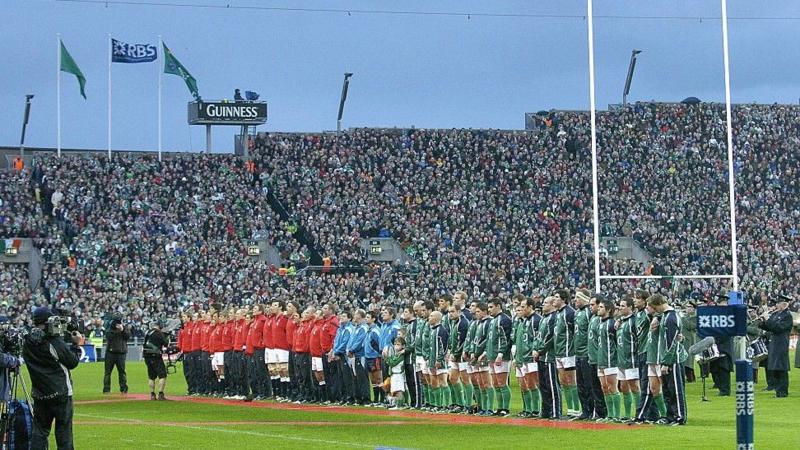

Not everyone was reconciled to the change. Sean Kelly, who served as GAA president between 2003 and 2006, recalled the atmosphere in comments reported on the42.ie this week.
"I remember one of them carried a placard while wearing a Celtic jersey [that read]: 'No foreign games in Croke Park.' Another one carried a jersey saying, Sean 'Judas' Kelly," he said.
"Most people accepted it. But to this day, some do not. And even at Congress this year, I went up to two fellas I hadn't seen for a while. One of them shook hands with me. The other said: 'I don't shake hands with you, you let the Brits into Croke Park.' I said: 'That's grand, thanks very much.'"
In May 2011, Queen Elizabeth II visited Croke Park as part of her landmark state visit to Ireland, the first by a British monarch in a century.
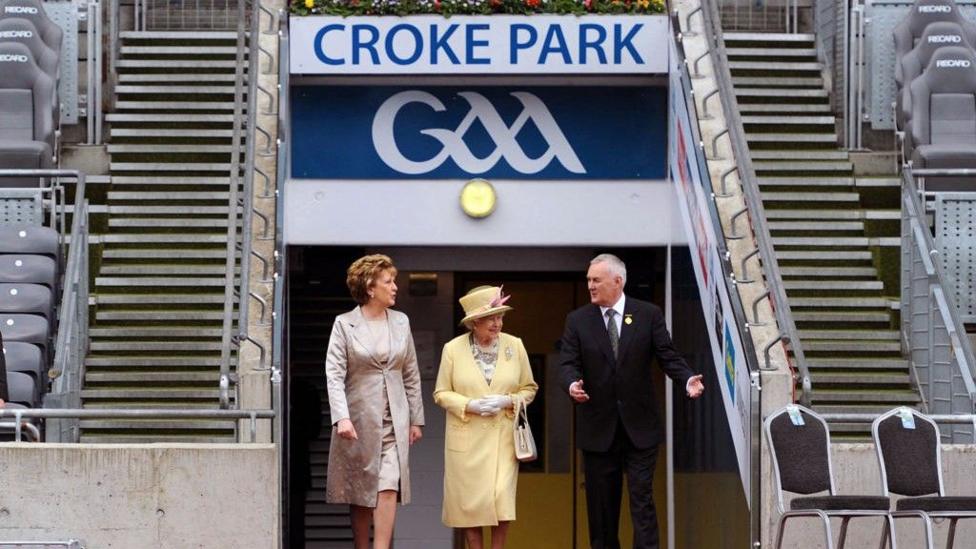
McKenna believes that visit marked a turning point in how the stadium's past is viewed.
"I think it has dissipated," said McKenna over opposition to English-originating sports being played in the stadium.
"We're all far more mature with our own national identity. What happens in war can be awful and you should never forget these things, but you can't live through them. You've got to move on. The seminal moment was when Queen Elizabeth visited the stadium. That said a lot about how our nations were far more comfortable, walking hand-in-hand as opposed to any other way. We're all part of a historical narrative and big stadiums like Croke Park have a story to tell. It is important to let them people know about it, but we have to live in the present."
Croke Park is not the only GAA venue recently opening its doors to association football. Derry City has begun playing League of Ireland fixtures at GAA's Celtic Park while Brandywell Stadium undergoes renovation, a separate but similarly notable example of Gaelic grounds hosting soccer.
What links do the clubs have to Ireland?
Both Manchester United and Leeds United draw substantial support across the island of Ireland, reinforced by playing connections stretching back decades. Jonny Giles and Denis Irwin represented both clubs, while former Manchester United captain Roy Keane adds to the Republic of Ireland ties that run through both dressing rooms historically.
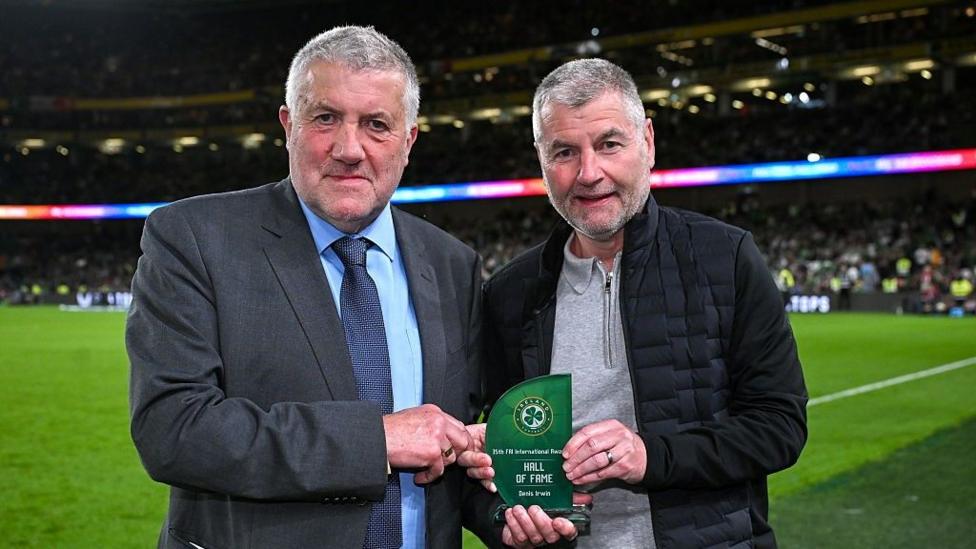
McKenna framed the fixture as an unprecedented pairing for the stadium.
"Historically we've never had two Premiership teams here or two non-international teams," said McKenna.
"To get one of the biggest teams in the world, Manchester United, to break our duck on that is fantastic, and there is a rivalry with Leeds, who have a huge support. You couldn't bring two better teams together to just say this is what can be done."
What happens next?
The match kicks off on Wednesday, 12 August 2026, and is listed as one of Manchester United's final warm-up fixtures before the 2026-27 season begins, according to ESPN's preview of the fixture, which also confirmed coverage arrangements including ITV1, STV, Premier Sports 2, FanCode in India, MUTV and LUTV worldwide. On the team news front, Mason Mount is expected to miss the game after being withdrawn early against Paris St-Germain with a foot injury, according to a report on Mount's fitness ahead of the Dublin trip, though manager Michael Carrick has described the substitution as precautionary.
Key Facts
- The friendly takes place at Croke Park in Dublin on Wednesday, 12 August 2026, and is sold out.
- It is the first club football fixture ever staged at the 82,300-capacity venue and the first football match there since November 2009.
- Manchester United and Leeds United last met in July 2025, drawing 0-0 in Stockholm, and have faced each other four times across eight pre-seasons.
- Ticket prices reportedly started at €50 for adults and €25 for under-16s, with a 7:30pm kick-off, per one ticketing report.
- Coverage is set to be shown on ITV1, STV, Premier Sports 2, FanCode in India, MUTV and LUTV worldwide.


