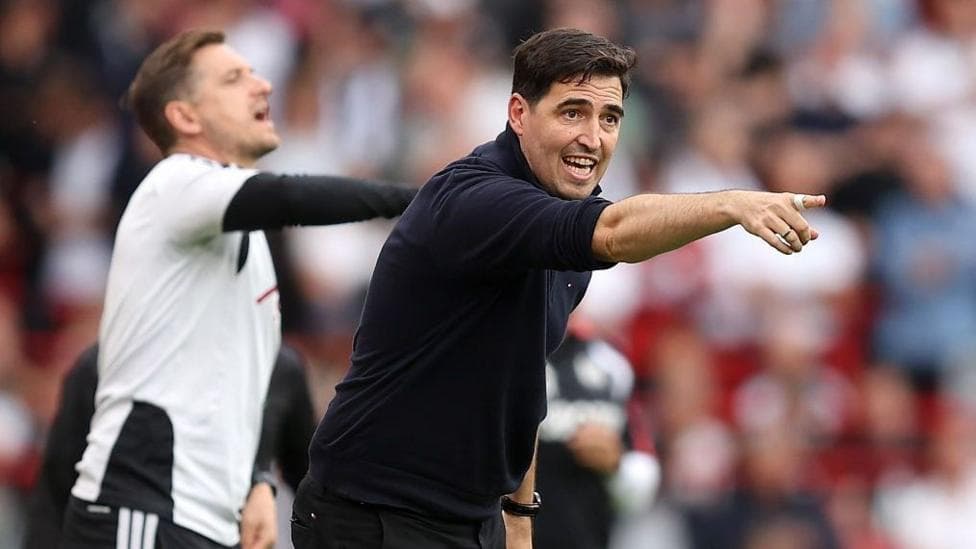
Andoni Iraola remains undefeated as Liverpool manager, but his side have now drawn three of their opening four Premier League matches, with Saturday's goalless stalemate against Fulham marking a second consecutive draw at home. On 12 September 2026, Liverpool drew 0-0 with Fulham at Anfield, extending a concerning run that has left the Reds with just six points from their first four league games.
The result represents a significant setback for the Spanish manager's early tenure. For only the third time in 63 years, Liverpool have failed to secure victories in both of their opening home league fixtures of a season, a statistic that underscores how far short of expectations this start has fallen.
The contrast between Liverpool's midweek Champions League display and their Saturday performance was stark. After an encouraging showing against Atletico Madrid—a side that reached the Champions League semi-finals last season—the Reds appeared physically and mentally drained against Fulham, who had conceded seven goals in their opening three league matches and arrived at Anfield lacking confidence.
What went wrong against Fulham?
Liverpool created insufficient chances and lacked the offensive cutting edge that defined their midweek performance. The attacking unit of Alexander Isak, Bradley Barcola and Florian Wirtz, which cost a combined £364 million, started together in a league match for the first time but failed to impose themselves on the contest.
Isak's involvement was minimal, recording just 16 touches across the 90 minutes—the second fewest for an outfield Reds player on record. Wirtz, who had been outstanding against Atletico Madrid, appeared a shadow of that performance, while Barcola and Isak showed only occasional glimpses of promise. The partnership between the three attacking players will require time to develop into a cohesive unit.
Iraola acknowledged the shortcomings in his post-match analysis.
What was lacking was quite clear, it is the first game we had problems to create chances and score goals and make the difference offensively, and that is the main reason we couldn't create chances.He told Match of the Day that
Bradley is one we are building up physically with games and the games will give him the condition we want. But it is not just Bradley, we lack the freshness. I only remember one clear chance [for Fulham] and we kept the structure but offensively we need to do much better.
How is the fixture congestion affecting Liverpool?
The rapid turnaround between matches is already taking its toll on Iraola's squad. With only 60 to 70 hours between the Atletico Madrid victory and the Fulham fixture, Liverpool showed visible signs of fatigue. By the hour mark, all three of Iraola's changes to the starting line-up had been replaced, with left-back Kostas Tsimikas withdrawn at half-time and both Ryan Gravenberch and Victor Munoz substituted after 60 minutes.
Despite introducing fresh legs in the form of Milos Kerkez, Cody Gakpo, Alexis Mac Allister, Rio Ngumoha and Jeremie Frimpong, Liverpool demonstrated little improvement in their attacking play. Iraola was candid about the situation, stating:
The players were tired and there is a lack of freshness - we cannot hide it. This is the worst turnaround in terms of 60 or 70 hours [since the last game], but this is going to happen in the season and we have to adapt and it is these kind of games that you need to win sometimes with a set-play or a moment of brilliance.

Before the Atletico Madrid match, Iraola had outlined his philosophy on managing such congested schedules. Rather than asking players to conserve energy for upcoming fixtures, he sought intensity across shorter bursts.
You play 55 minutes for me and you are dead and ask for a sub, then perfect. We have a top-level 55 minutes and then a top-level 35 minutes.Against Fulham, however, that approach appeared to falter as fatigue visibly compromised the team's output.
What do the statistics reveal about Liverpool's form?
The underlying numbers paint a concerning picture for Iraola's early weeks in charge. Liverpool have now gone five consecutive league matches without a clean sheet, a run that extends back before the Fulham stalemate. Their sole victory in the opening four matches came at Ipswich, where Alexander Isak scored twice inside the first nine minutes in Liverpool's 2-0 win on 5 September 2026, marking Iraola's first league victory as manager.
The return of six points from four matches falls significantly short of what a club of Liverpool's stature expects. Dropping four points at home to both Nottingham Forest and Fulham, combined with a draw at Newcastle, has left the Reds with ground to make up if they are to mount a genuine challenge for honours this season.
What is the broader context for Liverpool's struggles?
Iraola took charge of a squad that had entered September with an exceptionally demanding fixture schedule. Liverpool faced five matches across 17 days spanning the Premier League, Champions League and League Cup—a congestion that would test any manager's ability to maintain consistency and intensity.
Goalkeeper Alisson articulated the frustration within the squad following the Fulham draw.
We are not happy at all with the draw. It is not something that should happen with Liverpool. To be unbeaten, but with three draws, is not something to celebrate too much with this shirt. If we want to do something special [this season] we have to cope with playing a game Wednesday, Saturday and then Tuesday. We need to have the right mental state and that was not the case from what we showed. Inside we have it, but we have to just put it out and put more energy on the pitch.
The goalkeeper's comments reflect a recognition within the camp that while remaining undefeated carries some merit, the pattern of draws represents a failure to capitalise on opportunities against opponents Liverpool should be beating. The mental and physical demands of the schedule are proving more challenging than anticipated in these early weeks.
What happens next for Liverpool?
The fixture list offers little respite. Liverpool face Tottenham in the League Cup on 15 September 2026, followed by their next Premier League assignment away to Bournemouth on 20 September 2026. With at least seven more Champions League group-stage matches still to come this season, the congestion will only intensify.
Iraola and his players must find solutions quickly. The manager has already indicated that adaptation will be key—finding ways to secure results through set-piece opportunities or moments of individual brilliance when fatigue limits open-play creativity. How Liverpool respond to this early adversity, and whether they can maintain their unbeaten record while converting draws into victories, will define whether this opening period becomes a minor stumble or the beginning of a more troubling trend.