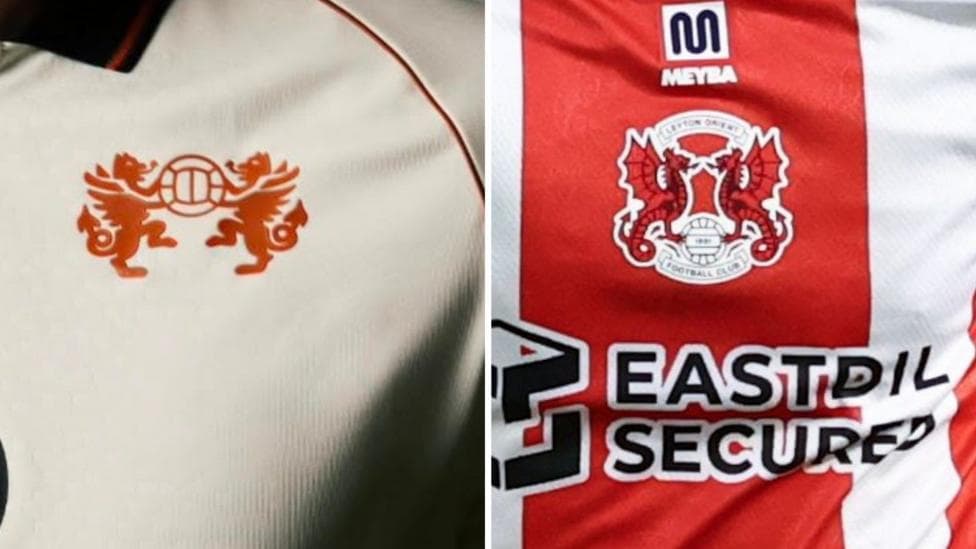
Leyton Orient have publicly objected to Wrexham and their celebrity owners Ryan Reynolds and Rob McElhenney over a newly designed badge that closely resembles their own crest.
Wrexham unveiled a cream-coloured third kit on Wednesday, with Reynolds and McElhenney featured modelling the strip on the club's official website. However, the accompanying badge sparked immediate controversy due to its striking similarity to Orient's established emblem.
Wrexham traditionally displays a crest featuring two red dragons facing inward, a golden football, the Prince of Wales feathers with a coronet, the club's motto, and Welsh flag colours. The new design represents a significant departure from this heritage, replacing the traditional imagery with two wyverns or dragons positioned facing each other across a football—a composition that closely mirrors the League One club's own badge.
The wyvern holds particular significance in Orient's identity, representing the defender of the Thames in mythology and of the sea through the historical Orient Shipping Company. The club adopted this emblem in 1976, and it has remained central to their visual identity ever since.

Orient responded to the kit reveal through their social media channels, questioning Wrexham's decision with the post: "What you playing at @VancityReynolds @RMcElhenney?", accompanied by a video clip of former England manager Roy Hodgson using emphatic language to express disapproval.
This latest dispute adds to recent tensions surrounding Wrexham's branding decisions. The club had previously withdrawn an anthem jacket from its merchandise range after fans voiced strong objections to the inclusion of a white dragon emblem on the design. That swift reversal demonstrated the sensitivity among supporters regarding the club's visual representation and adherence to Welsh traditions.
The badge controversy also comes amid broader scrutiny of Wrexham's high-profile ownership. Earlier this year, Swansea City raised concerns about impartiality when Reynolds and McElhenney were involved in commentary coverage of their club's match against Wrexham, highlighting ongoing questions about the influence of the Hollywood owners on the club's operations and public perception.
Since taking control of the Welsh club, Reynolds and McElhenney have overseen significant developments including business expansion, promotion of the Welsh language, substantial financial investment, stadium improvements, and notable success for the women's team. However, their tenure has also generated debate about maintaining the club's traditional identity while embracing modern commercial opportunities.