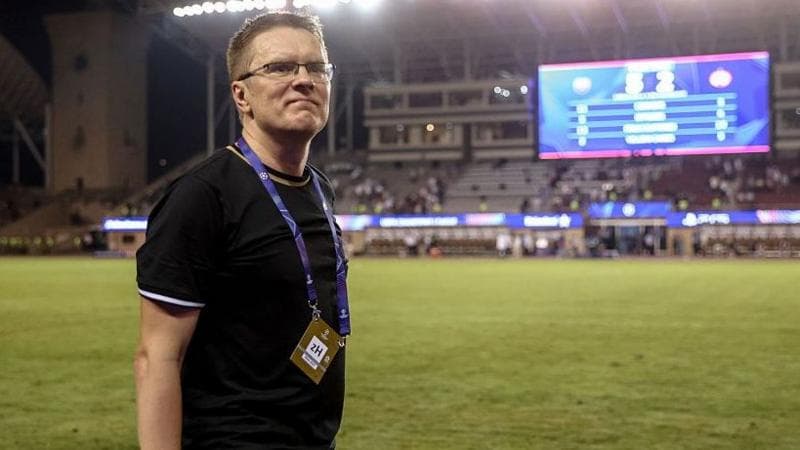
Valdas Dambrauskas will step into the Old Trafford dugout on 10 September 2026 as manager of Sabah, facing Manchester United in the Champions League. The 49-year-old Lithuanian's return to the stadium where his coaching journey began two decades earlier represents a remarkable full-circle moment—one that traces back to a modest game-show appearance and the determination to transform a £725 prize into a coaching career spanning five countries and 13 trophies.
When Dambrauskas walks out before the match, he will have travelled an improbable path from volunteer coach in London to the manager of a club making its historic debut in Europe's elite competition. Sabah qualified for the Champions League league phase, which runs until 27 January 2027, after navigating four qualifying knockout rounds—a feat no other club achieved from the first qualifying round.
The Game Show That Changed Everything
In 2002, Dambrauskas appeared on the Lithuanian version of Who Wants to Be a Millionaire? and won 4,000 litas—approximately £725 at the time. To the average Lithuanian worker then, that sum represented six months' wages. For Dambrauskas, it represented something far more valuable: a pathway out of Lithuania and into professional football coaching.
The story resurfaced on social media when Sabah qualified for the Champions League two weeks ago, surprising Dambrauskas himself.
This is so long ago,he reflected with a wry smile.
A back-in-the-year story that really was forgotten. And now suddenly everybody is speaking about this.
Yet Dambrauskas insists the real narrative extends far beyond the television appearance.
Everybody now takes only this part, you know, about the money. But yes, it is a true story. My idea was somehow I will try to go on these coaching courses to gain the coaching badge, maybe go back one day to Lithuania and start to work as a football coach.That modest ambition would evolve into something far grander.
Building a Foundation in England
Dambrauskas arrived in London in August 2002 at age 25 on a student visa, speaking limited English. He knew from age 12 that a playing career would not materialise, but coaching offered a way to remain embedded in football. What followed was eight years of relentless work, juggling multiple employment roles while raising two children and pursuing formal qualifications.
In 2004, he enrolled at London Metropolitan University to study sports science and coaching—his first formal step into the profession. Simultaneously, he volunteered with the Access to Sports Project, coaching deprived children in Finsbury Park. He progressed through London Tigers, a charitable community organisation running teams from junior to semi-professional level, eventually managing their first team in the Spartan South Midlands League, FA Cup and FA Vase across five years.
Dambrauskas became the first Lithuanian to obtain a UEFA coaching licence through the London Football Association.
I went on every possible course, every possible conference, London Football Coaches Association meetings,he explained.
Everywhere I could go just to gain some information, some knowledge, some extra diploma, extra course. That was very important for me and I took my chances.
His breakthrough at a professional club came in 2004 when Manchester United Soccer Schools appointed him. He spent five years coaching on residential courses across the UK and Europe.
That was the best thing that could happen in my life,Dambrauskas said.
I went through three or four interviews. I will be forever grateful to John Shiels, the way he gave me this chance, because I didn't have experience. I'd never been in a place with so many great personalities as I got in the Manchester United Soccer Schools.
After a brief spell with Fulham, he moved to Brentford, where academy director Ose Aibangee became one of his most significant influences, pushing him to expand his capabilities. Throughout this period, Dambrauskas maintained multiple employment roles to support his family.
I was a gardener, a handyman, doing newspaper rounds at the beginning, also polishing floors in a pub,he recalled.
So many jobs. Working in retail, and then as a sports development officer, then a sports development manager, and the central YMCA. I was doing two, three, sometimes four jobs.
The European Odyssey Begins
By the end of 2010, Dambrauskas had secured an opportunity to coach full-time, though it required leaving England. Lithuanian champions Ekranas appointed him assistant first-team and reserve-team coach. After four years, he became manager of Zalgiris Vilnius, Lithuania's biggest club, where his career accelerated dramatically. He won two league titles, three Lithuanian Cups and two Lithuanian Super Cups across three seasons, including a treble in 2016.

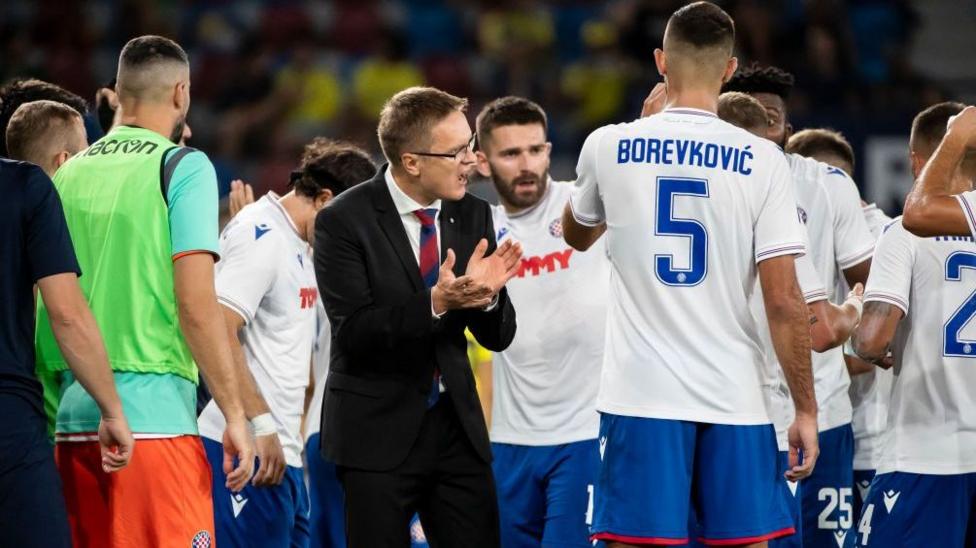
What followed was a nomadic nine-year period managing eight clubs across seven countries. He took charge of RFS in Latvia, winning the Latvian Cup, then moved to Gorica in Croatia. A third league title arrived with Bulgarian side Ludogorets Razgrad, accompanied by another Super Cup and Europa League qualification. He returned to Croatia with Hajduk Split, describing the experience as
absolutely amazingas the club won the Croatian Cup—their first trophy in a decade.
Subsequent appointments took him to OFI Crete in Greece, Omonia in Cyprus (who qualified for the Conference League), and Diosgyori in Hungary. By the summer of 2025, when he arrived at Sabah on a three-year contract, Dambrauskas had managed ten clubs. In his first season, he completed the domestic double, winning both the Azerbaijan Premier League and the Azerbaijan Cup—Sabah's first league title. His trophy tally across five countries reached 13.
The Path to the Champions League
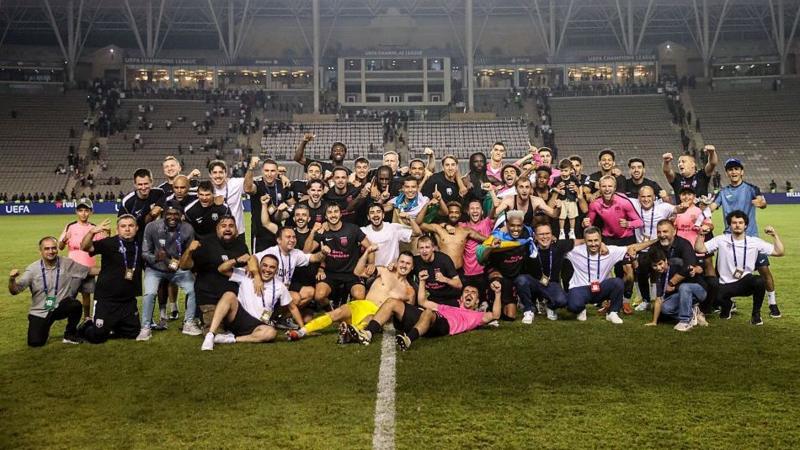
Sabah's journey to the Champions League required navigating four qualifying knockout ties. The club eliminated Welsh side TNS, Finland's KuPS, Danish outfit Aarhus and Israel's Hapoel Beer-Sheva. The final qualifying match epitomised the drama of Dambrauskas' own story: Sabah faced elimination until Tellur Mutallimov scored in the fourth minute of stoppage time, forcing extra time. They won 5-2 that evening and 6-4 on aggregate.
To go to the Champions League is something beyond imagination,Dambrauskas said.
We have never qualified for the Conference League, we have never qualified for the Europa League. We have never passed more than two rounds in a row in one competition, and now suddenly we are here.
Sabah, based in Masazir—30 miles north of Baku—was founded in 2017 and will celebrate its ninth birthday during the competition. The club's Bank Respublika Arena holds fewer than 9,000 spectators and does not meet UEFA regulations, so matches will be staged at the Olympic Stadium in Baku. The club will host Barcelona, Borussia Dortmund and Napoli at home, and travel to Arsenal, Manchester United and Villarreal.
It can be a very hard draw, and it can be a Sabah draw,Dambrauskas said, clearly energised by the prospect.
You dream for this, to play in this competition, to play against those teams. So now is the time to show that you can handle it, to find a way to compete and we will try to do this. We have a good team, we have an ambitious team, we have hungry players who are really keen to show themselves.
Sabah president Magsud Adigozalov praised Dambrauskas' influence beyond tactical acumen.
His influence goes beyond tactics,Adigozalov said.
He has instilled a mindset and winning mentality in the team. Even in the most difficult moments, the team never abandons its game or fighting spirit, which is the result of the coach's work.
Full Circle at Old Trafford
Twenty years ago, Dambrauskas stood on the Old Trafford pitch during a job interview, imagining one day he might occupy a dugout there. Now that dream materialises in the Champions League, the competition he watched during his formative years in England.
I lived in England when the battle between Manchester United and Arsenal was the biggest rivalry. Alex Ferguson and Arsene Wenger,Dambrauskas reflected.
Now I'm going to come back as a coach in the Champions League and hear that anthem. It's really amazing.
The connection to Arsenal carries additional resonance: one of the buildings at London Metropolitan University on Holloway Road overlooked Emirates Stadium, a daily reminder of the elite level he aspired to reach. When asked about his time in England, Dambrauskas' face brightens.
When I hear this word 'England', it for me sounds like opportunities,he said.
It was really amazing. England gave me all this and I'll forever be grateful.
What Happens Next
Sabah's league-phase campaign begins with the Manchester United fixture on 10 September 2026. The club will then face Arsenal away before hosting Barcelona, Borussia Dortmund and Napoli, with a final away trip to Villarreal. The league phase concludes on 27 January 2027, with the top eight teams advancing directly to the knockout round.
For Dambrauskas, the journey from a £725 game-show prize to managing in the Champions League represents validation of a philosophy forged through decades of sacrifice, education and relentless ambition. The boy who knew at 12 he would not play professional football has instead built a career that few could have imagined possible from such modest beginnings.