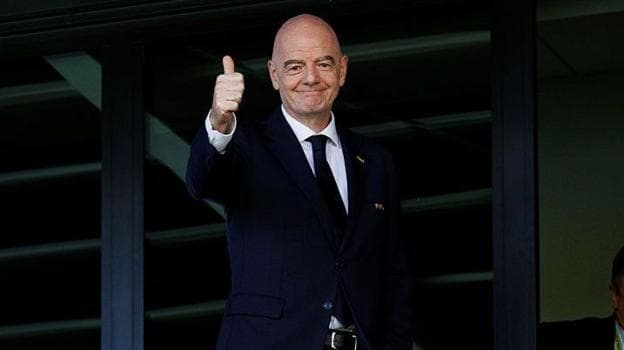
Fifa president Gianni Infantino has been instructed to make public all documents connected to his shelved scheme to privatise World Cup commercial rights, according to a formal letter from Football Association chair Debbie Hewitt. The FA chief, who also serves as a Fifa vice-president, has called for comprehensive disclosure ahead of the next Fifa Council gathering on 15 October.
Hewitt's correspondence, addressed jointly to Infantino and Fifa secretary general Mattias Grafstrom, raises serious concerns about governance failures and deteriorating institutional culture at world football's governing body. The letter demands not only the release of all FFE-related materials but also a written justification for the controversial reversal of United States forward Folarin Balogun's suspension during the World Cup.
The abandoned Fifa Forward Enterprise proposal would have established a new commercial entity to manage ticketing and broadcasting rights across all Fifa competitions. According to reporting on the scheme's structure, Fifa intended to create a $20 billion subsidiary before selling a stake to private investors. The plan specifically proposed selling a 20% interest, with UEFA's legal filings alleging the valuation was set at an "absurdly low" $4.2 billion.
Member associations were offered one-off payments of $20 million each to participate, with a deadline of 19 September 2026. The proposal collapsed on 31 July following coordinated opposition from UEFA, Concacaf and the Asian Football Confederation, all of which accused Infantino of breaching trust through secretive development and lack of consultation.
What triggered the FA's concerns?
The Balogun incident crystallised the FA's doubts about Infantino's leadership and decision-making processes. The 25-year-old striker received a straight red card for a challenge on Bosnia-Herzegovina defender Tarik Muharemovic during a 2-0 group-stage victory, which would normally trigger an automatic one-match ban. However, Fifa suspended the punishment for one year, allowing Balogun to play in the knockout stage against Belgium without explanation beyond citing a disciplinary code provision.
The FA had initially sent a letter backing Infantino's re-election before the Balogun decision, but the reversal raised alarm about potential political interference. US President Donald Trump subsequently confirmed he had contacted Infantino requesting a review of the ban, lending credence to concerns about improper influence on Fifa's disciplinary process.

How has the FFE scandal fractured football's leadership?
The privatisation proposal, announced just days after the World Cup final, triggered an unprecedented crisis of confidence in Infantino's stewardship. UEFA, Concacaf and the Asian Football Confederation issued a joint statement accusing Fifa and Infantino of operating through "deception" and breaking institutional trust. National associations including England, Wales and Scotland have since withdrawn their endorsements of Infantino's candidacy in the March presidential election.
The conflict has escalated into legal action. UEFA began preparing criminal proceedings against Infantino at three US courts in late August, with Fifa responding by accusing UEFA of a "smear campaign" in court filings. UEFA's legal team has sought discovery from Fifa-linked entities and named individuals including Joshua Kushner and Greg Maffei as witnesses whose evidence it intends to pursue.
Despite the withdrawal of support from major European and North American confederations, Infantino retains backing from African, South American and Oceania-based associations, suggesting the contest for the presidency remains competitive.
What accountability measures are being demanded?
Hewitt's letter calls for an independent review examining how the FFE proposal was conceived, which individuals championed it, and how the private investment opportunity was tendered. The FA chair has insisted that Infantino present all relevant documentation to the full Fifa Council before the 15 October meeting, ending months during which no formal explanation has been provided to the body's 35 members.
Fifa has committed to presenting a review of the shelved FFE proposal to its Council, according to an announcement made on 16 September. This represents a concession to mounting pressure for transparency, though critics have questioned whether an internal review will satisfy demands for independent scrutiny.
What happens next?
Infantino faces a critical test on 15 October when he must address the Fifa Council directly. The deadline for rival candidates to declare their intention to challenge him in the March election is 18 November, meaning the October meeting will occur during a pivotal window for potential challengers to assess whether Infantino's position has been weakened sufficiently to justify mounting a campaign.
The legal proceedings initiated by UEFA remain active across multiple jurisdictions, with discovery processes likely to continue through the autumn. The outcome of these cases could significantly influence the presidential election dynamics and Infantino's ability to secure a fourth term.