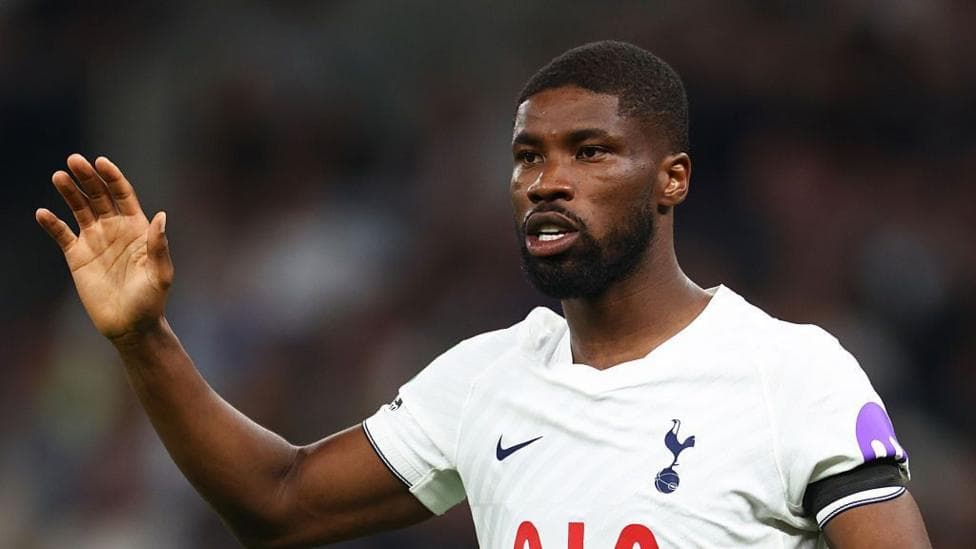
Julian Alvarez and Enzo Fernandez have dominated transfer window discussions, yet the final day of the summer market promises to deliver even more drama. As clubs race to complete signings before the window closes, understanding the mechanics of deadline day—from deal sheets to squad registration rules—is essential for following the action.
The summer 2026 transfer window opened on 15 June and will culminate in a final flurry of activity. This year's deadline represents a shift in timing: according to ESPN, the Premier League moved to an 11pm closing time, later than the previous two summers when the deadline was 7pm, a change intended to give football staff a more normal work pattern.
When do the transfer windows close across Europe and beyond?
The Premier League and EFL clubs must complete all transfers by 23:00 BST on Tuesday, 1 September. Other major leagues operate on similar or slightly earlier schedules:
The Bundesliga closes on Monday, 31 August at 18:00. Ligue 1, Serie A, and La Liga all close on Tuesday, 1 September, with deadlines at 18:59, 19:00, and 22:59 respectively. The Scottish Premiership extends slightly longer, closing on Thursday, 3 September at 17:00, while the Women's Super League also closes on 3 September at 23:00. The Saudi Pro League operates on a different calendar, closing on Sunday, 6 September, though the exact time remains to be confirmed.
FIFA regulations stipulate that no transfer window can exceed 16 weeks within a single calendar year, establishing a global framework within which individual leagues operate their own deadlines.
What is a deal sheet and why do clubs use it?
A deal sheet serves as a critical administrative tool during the final hours of the transfer window. Premier League clubs can submit one only during the last two hours of the window—this year, the earliest submission time is 21:00 BST, with completion required before the 23:00 deadline.
The deal sheet allows a club to formally confirm that an agreement has been reached with another club and a player, while also providing additional time to gather and submit the remaining required documentation. Without all paperwork submitted before 23:00, transfers cannot proceed. Since clubs frequently delay their transfer activity until the final moments, the deal sheet has become an essential mechanism for ensuring moves can be completed within the regulatory timeframe. According to NBC Sports, clubs that file a deal sheet before the deadline then have until 01:00 to submit full paperwork, providing a crucial grace period.
Can players be signed after the deadline closes?
Free agents who remain unsigned when the transfer window closes can be registered at any point during the year. However, they face restrictions on immediate participation. Unless their new club has available space in its registered 25-man squad, they must wait until the next official registration period to become eligible for competitive matches.
While no public deadline is formally announced, the registration window for free agents typically opens approximately one week after the main transfer window closes, allowing clubs a brief period to integrate late signings into their squad lists.
How many players can a Premier League club register?
Premier League squad lists are capped at a maximum of 25 senior players, with this list published for each club immediately following the closure of the transfer window. Of those 25 players, no more than 17 can be non-homegrown talent, a rule designed to encourage development of domestic players.

Players under 21 years of age at the registration cut-off date do not count toward the 25-player limit, allowing clubs to register unlimited numbers of younger players. This distinction means clubs must carefully manage their senior player numbers or risk having contracted players unable to participate in competitive matches.

Chelsea have faced public criticism for maintaining an oversized squad that previously led to the use of a so-called 'bomb squad'—a practice in which numerous contracted players were excluded from matchday squads. FIFA has since outlawed this approach, forcing clubs to be more strategic about squad composition.
Which high-profile players could still move before the deadline?
Several marquee names remain in flux as the window enters its final phase. Manchester City midfielder Jack Grealish is expected to return to Everton on loan, with Toffees winger Iliman Ndiaye moving in the opposite direction for £65m. Chelsea midfielder Enzo Fernandez has been linked with a potential reunion with former manager Enzo Maresca at Manchester City, though such a move would represent a significant development in the final days.
Xabi Alonso's Manchester City side are reportedly targeting Monaco midfielder Lamine Camara to strengthen their midfield options. Atletico Madrid striker Julian Alvarez remains a subject of interest for both Arsenal and Barcelona, with his departure from Spain still possible before the window closes.
Liverpool winger Cody Gakpo has attracted attention from both Tottenham and Manchester City, though any exit would depend entirely on the Reds securing a suitable replacement—a scenario that appears increasingly unlikely as the deadline approaches.
What are the most memorable deadline-day signings in football history?
Deadline day has produced some of football's most dramatic and consequential transfers. The most recent standout example came during the 2025-26 summer window when Alexander Isak's move from Newcastle United to Liverpool came down to the wire, with the transfer breaking the British transfer record.

Other iconic deadline-day signings span decades of football history. Claude Makelele transferred from Real Madrid to Chelsea in 2003, fundamentally changing how the defensive midfielder role was understood in English football. Wayne Rooney moved from Everton to Manchester United in 2004 in a high-profile switch. The 2006 window saw both Carlos Tevez and Javier Mascherano arrive at West Ham from Corinthians, while Ashley Cole completed his controversial transfer from Arsenal to Chelsea that same year.
More recent deadline-day moves include Hugo Lloris joining Tottenham from Lyon in 2012, Mesut Ozil signing for Arsenal from Real Madrid in 2013, Cristiano Ronaldo's return to Manchester United from Juventus in 2021, and Cole Palmer's transfer from Manchester City to Chelsea in 2023. Each of these signings demonstrated the unpredictability and drama that characterizes the final day of the transfer window.
How can you follow the deadline-day action?
Comprehensive coverage of transfer deadline day is available across multiple platforms. According to a national sports broadcaster's live coverage, a dedicated live page tracks up-to-the-minute Premier League deals and EFL news as the deadline approaches. Radio coverage spans 5 Live and local stations throughout the United Kingdom, with many local stations live-streaming their coverage so viewers can follow along in real time.
The action intensifies as 23:00 BST on 1 September approaches, with clubs submitting deal sheets and completing final paperwork. Fans and analysts will monitor developments across multiple outlets as the window's dramatic conclusion unfolds.