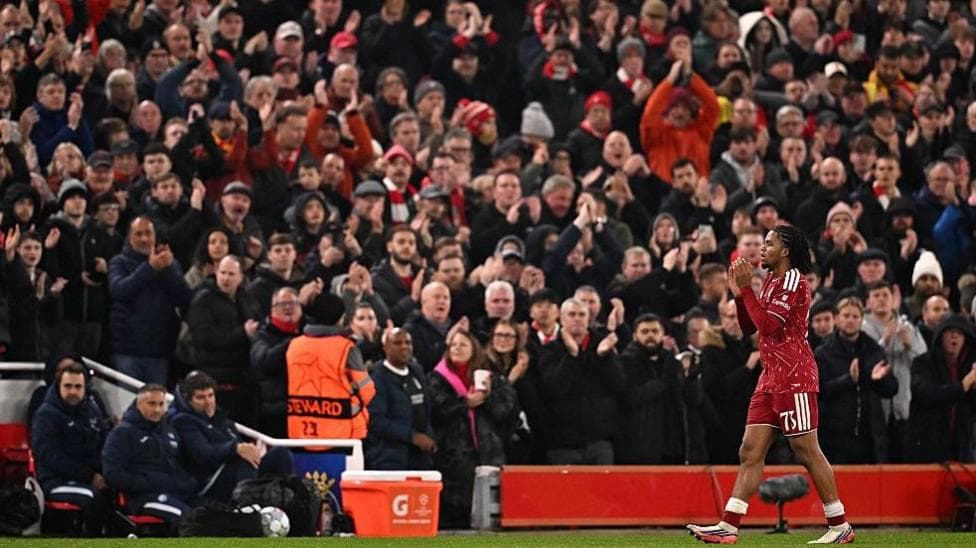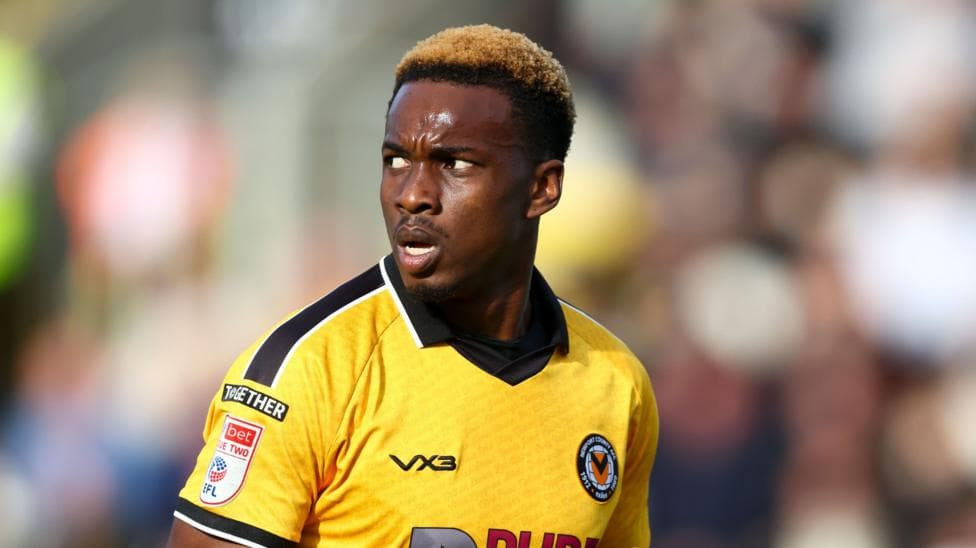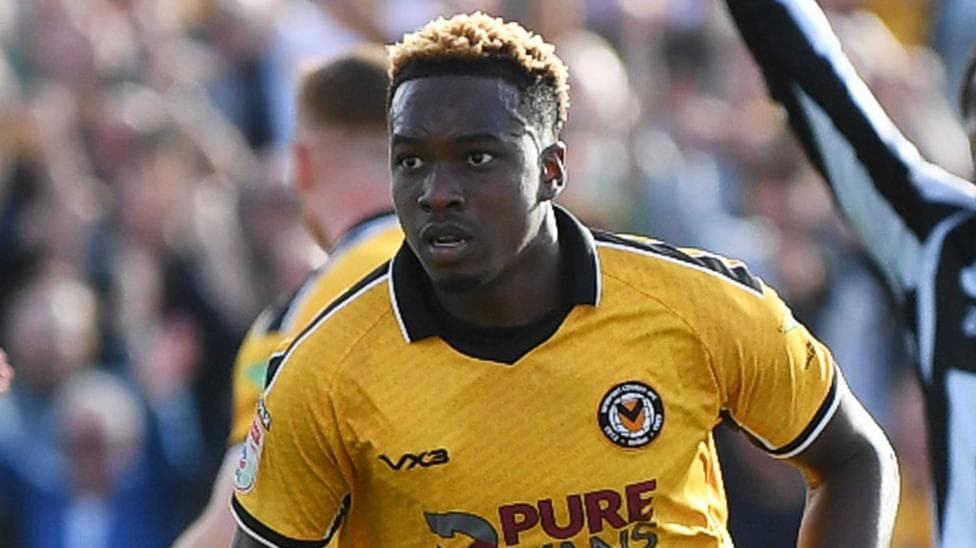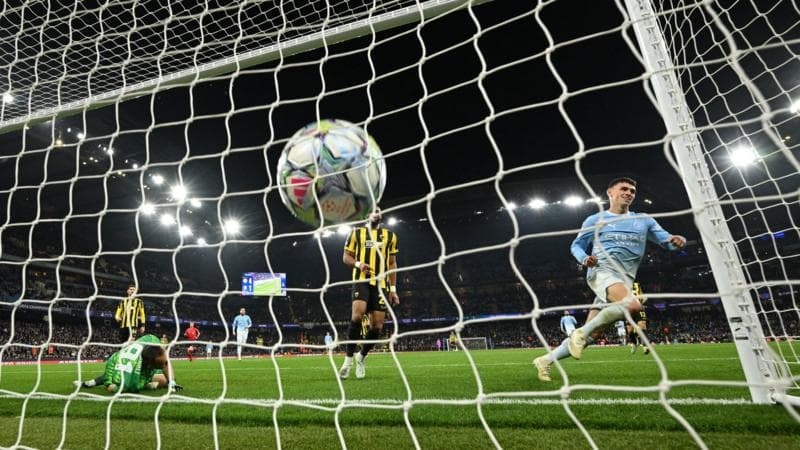
Manchester City's Phil Foden scored a hat-trick in a commanding 5-1 victory over AEK Athens, exemplifying the prolific attacking football that has defined the 2024-25 Champions League season. According to BBC Sport, the competition has witnessed an unprecedented goals explosion since the new format was introduced.
The restructured Champions League has fundamentally altered how European football's elite clubs compete. More teams, more fixtures, and crucially, more goals have transformed the competition into a goal-scoring spectacle that has shattered historical records.
How many goals are being scored?
The 187 goals scored across the opening phase have arrived at a rate of 4.16 per game—the highest average in Champions League history. This figure represents a dramatic acceleration from previous seasons, with the competition already trending upwards over the past two campaigns before this year's genuine goals boom took hold.
The scoring intensity reached extraordinary levels during matchday two. Last Wednesday produced 46 goals across matches—the third highest-scoring day in Champions League history, surpassed only by the final league-phase matchdays of the 2024-25 and 2025-26 seasons when 18 matches took place simultaneously. When combined with Tuesday's 40 goals across nine games, the two days yielded 78 goals, making matchday two the highest-scoring matchday ever recorded. This total exceeded matchday one's 69 goals by nine, which had itself been the second highest-scoring matchday since the new league phase began in 2024-25.
Former Liverpool defender Stephen Warnock characterised the volume of goals as
incredible, while ex-Manchester United and England winger Ashley Young observed on BBC Radio 5 Live that
Look how many goals have been scored, it's phenomenal. The attackers are being clinical.
How does this compare to previous European competition?
The current goals-per-game rate stands as not only the highest in Champions League history but also the third highest across all European Cup competitions. Only the 1959-60 season (4.19 goals per game) and the 1955-56 campaign (4.38 goals per game) have exceeded the current average. According to The Analyst, the first two matchdays of the 2026-27 season produced 147 goals in 36 matches, averaging 4.08 per game, indicating the trend continues into subsequent seasons.
The record-breaking pace suggests further milestones may fall. With matchday three already underway, the scoring trajectory appears positioned to challenge existing benchmarks again.
Why has the format changed?
The transformation stems from UEFA's 2021 announcement to restructure the Champions League, a decision implemented for the 2024-25 season. The competition's evolution began as a six-team invitational tournament in 1955-56 before expanding to a 32-team knockout format in 1967. The modern Champions League, established in 1992, introduced a group stage with the top two teams from each group advancing to a 16-team knockout phase.
For decades, the competition maintained a 32-team group stage divided into eight groups of four. This structure persisted through a brief two-group-stage experiment before reverting to the single group format for the 2003-04 season onwards.
The 2024-25 season brought radical change. The group stage was replaced with a 36-team league phase where each club plays eight one-off matches instead of six games against three opponents. The top eight finishers advance directly to the knockout stages, while teams finishing ninth through 24th enter a two-legged play-off round. The bottom eight teams are eliminated after eight matches, meaning 24 sides remain in contention. According to UEFA, the 2026-27 league phase runs from 8 September 2026 to 27 January 2027 across eight matchdays.
Does more entertainment mean better quality?
The proliferation of goals has undoubtedly increased entertainment value, though analysts debate whether it reflects improved quality. The Times football writer Tom Arnott told BBC Radio 5 Live that
I think the entertainment has gone up, although I'm not sure the quality has gone up. If I'm looking at the games it's brilliant to watch and thrilling because the football itself is fantastic - but what do they mean?
Arnott identified the format's structural impact on team mentality.
The lack of jeopardy, why would PSG and Barcelona play for a draw, why not go for it? If you need five wins from the eight games you know you've got some margin there. If you lose it's OK. I think the format allows all the teams to loosen up.He continued:
The entertainment value is there but I think you come away from these matches sometimes and still think 'what does it all mean?'. The lack of jeopardy early on does deliver entertainment.
The argument centres on whether reduced stakes encourage attacking football or simply produce hollow goal-fests. With 24 of 36 teams guaranteed to continue beyond the league phase, teams face less pressure to secure results defensively, potentially explaining both the attacking intent and the defensive vulnerabilities evident in the high-scoring matches.
What happens next?
Matchday three commenced on 20 October with Fenerbahçe drawing 2-2 against Slavia Praha and Sabah losing 1-2 to Borussia Dortmund. The matchday continues on 21 October with Bayern München facing Arsenal, Real Madrid meeting Leipzig, and Como hosting Manchester United. The competition will provide further evidence of whether the goals record continues to climb or whether teams begin adjusting their approach as the season progresses.