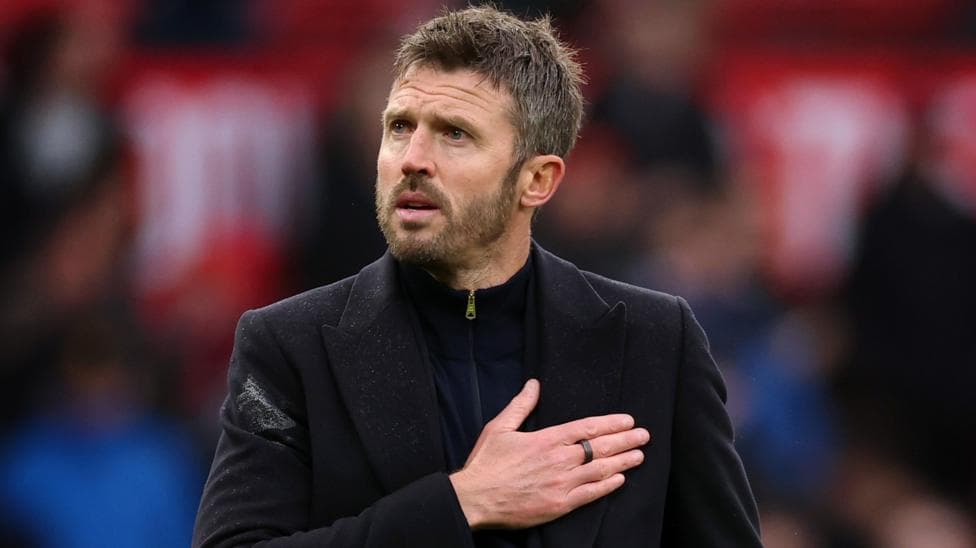
Michael Carrick will remain Manchester United manager for Saturday's trip to Chelsea after the club decided to give him and the squad another chance to turn around their faltering season. The decision came after a turbulent 48-hour period following a damaging home defeat to Bournemouth on Sunday, during which speculation mounted that the 45-year-old would be sacked. According to BBC Sport, United's hierarchy ultimately chose to back Carrick, with no timescale set on how long he will be given to improve results.
The decision to retain Carrick followed discussions involving co-owner Sir Jim Ratcliffe, chief executive Omar Berrada and director of football Jason Wilcox on Monday and Tuesday. The Athletic reported that the senior leadership group convened to determine the club's direction after the Bournemouth loss, ultimately concluding that Carrick would be afforded the opportunity to address the team's poor form.
The atmosphere at Old Trafford after Sunday's defeat was described as emotional. Carrick was the last to leave the stadium, patiently signing shirts and posing for selfies with supporters who remained despite the foul weather and disappointing performance. When asked at his post-match news conference whether he expected to remain in charge for the Chelsea fixture, Carrick responded cautiously:
I'm not expecting anything in particular, to be honest. I'm carrying on as normal.
Few observers believed such a position was tenable. Even members of Carrick's coaching staff questioned whether they would survive the night. Yet that is precisely what occurred, with the club opting to maintain continuity rather than make an immediate change.
United's current predicament represents one of the most challenging periods in recent club history. According to The Athletic, the club had accumulated just seven Premier League points after eight matches, their lowest tally at this stage of a season in 40 years, and remained winless across all competitions over the same span. The team sits 16th in the table, 14 points adrift of the top.
The Crisis That Preceded the Decision
Carrick had been under mounting pressure since the catastrophic 4-1 Champions League defeat to Como on 21 October, which was described by respected United supporter and United We Stand fanzine editor Andy Mitten as
an affront to the name of Manchester United. That performance in Italy represented one of the worst European nights in the club's history.
The situation deteriorated further when captain Bruno Fernandes publicly questioned Carrick's tactical approach and the coaching staff's inability to identify problems during matches. Fernandes' criticism came a week after defender Lisandro Martinez expressed disappointment at the level of squad investment and directed attention toward Jason Wilcox, saying he expected
more from our technical director.
These comments painted a picture of a squad spiralling out of control, presenting an immediate dilemma for United's leadership. The club initially decided against removing Carrick after the Como defeat, fearing such a move would appear reactionary and impulsive. Instead, they retained him for the Bournemouth match, only for that fixture to produce a performance that many observers considered even worse than the Italian debacle.
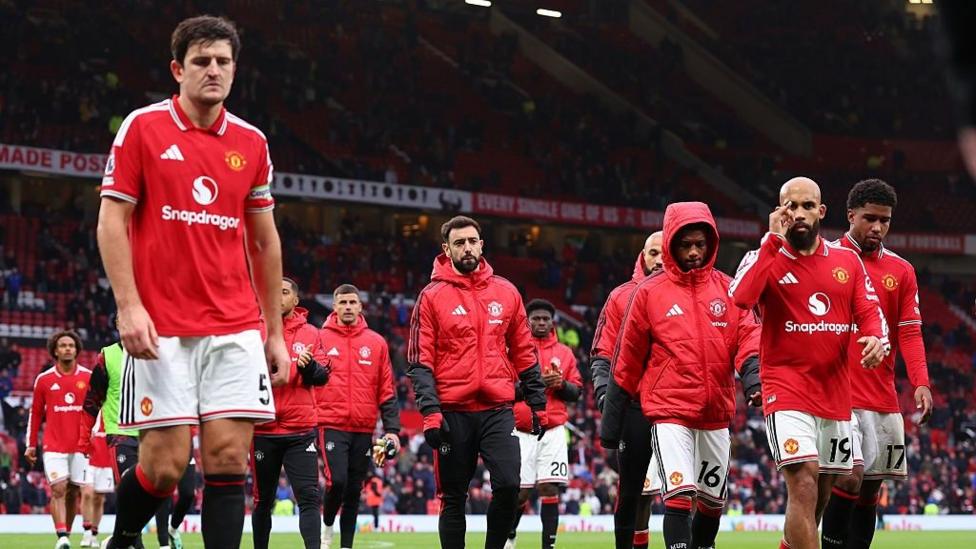
Fernandes was dropped to the bench for the Bournemouth encounter and took no part in the match. Following the defeat, the Portugal international liked an Instagram post carrying the caption:
Never push a loyal person to the point where they no longer care. This action fuelled further speculation about the relationship between captain and manager.
The 48 Hours of Uncertainty
Late on Sunday night, BBC Sport was informed that a final decision on Carrick's future had not been made, with the judgement expected to extend into Monday. However, no announcement materialised on Monday either. The United players who started against Bournemouth were given the day off, though Fernandes and Carrick both remained at Carrington. Fernandes underwent pre-planned treatment while Carrick observed a closed-doors Under-21s match.
Also present at the training ground were Berrada and Wilcox, engaged in discussions about the club's immediate direction. Sources indicated that minority owner Ratcliffe and the Glazer family would have been involved in these conversations, though they were not physically present.
It was not until early evening that it became clear no update on Carrick's future would be forthcoming. His arrival at Carrington at 07:30 GMT on Tuesday morning signalled that he would conduct training as normal. Alongside Fernandes and several other players, Carrick signed autographs and posed for photographs with a group of supporters invited to the training ground that day. Four hours later, United sources confirmed he would lead the team at Stamford Bridge.
Why Did the Club Decide to Keep Carrick?
Senior figures at United view the current predicament as not being entirely attributable to Carrick's management. Club leadership believes the squad possesses sufficient quality to qualify for the Champions League but is underperforming significantly and should bear some responsibility for the poor results.
There appears to be a general desire within the playing group to assist Carrick in reversing the situation. One player told BBC Sport:
The feeling is that we all want to put it right. Players, staff, everyone.It remains unclear whether this sentiment extends to Fernandes, and BBC Sport has not been informed of any conversations between the captain and his manager.
One former senior United official told BBC Sport:
Ordinarily, Michael would have gone. The last two performances were unacceptable and team discipline is broken. Not doing it is fascinating and risky.This assessment underscores the unconventional nature of the decision to retain Carrick.
Pragmatic considerations may have influenced the outcome. It is considerably easier to replace one manager and his backroom team than an entire squad of players. Additionally, securing a suitable replacement before the Chelsea fixture would have presented significant logistical challenges. Some observers have suggested that the inability to appoint a successor quickly may have been a determining factor in keeping Carrick.
Carrick signed a two-year contract at the end of last season after guiding United to third place during an interim spell. A dismissal would have represented the club's eighth permanent managerial change or head coach appointment since Sir Alex Ferguson's departure in 2013, a statistic that may have weighed on the decision-makers' minds.
Who Were the Alternatives?
BBC Sport previously reported that Eddie Howe and Julian Nagelsmann were among the options explored by United as they weighed whether to make a change. Yahoo Sports noted that Howe was open to joining United if Carrick were dismissed, though any appointment would trigger a multi-million pound compensation payment from his former club Newcastle.
BBC Sport has also been informed that former Chelsea manager Antonio Conte is willing to have a conversation about the position, although no direct contact has been established. Kieran McKenna, who worked alongside Carrick as part of Ole Gunnar Solskjaer's coaching team at United before departing for Ipswich, is also out of work and represents another potential option.
Aston Villa manager Unai Emery has strong backing within United, but the club recognises the realistic difficulties involved in tempting the Spaniard away from Villa Park.
Uncertainty Surrounding Berrada and Wilcox
Jason Wilcox's future has also come under intense scrutiny during this period. One source close to United suggested it is inevitable the former Blackburn and Leeds player will eventually lose his position if a third managerial change in as many seasons becomes necessary.
There is sympathy for Wilcox, who did not establish the summer transfer budget. Others contend that Ratcliffe has provided substantial funds for transfers since assuming control of football operations in early 2024, in addition to injecting £300 million of his own capital into the club.
While disgruntled supporters may point to the recruitment strategies of clubs such as Brentford and Brighton as evidence that quality players can be secured without astronomical expenditure, options available to larger clubs like United were reportedly scarce during the summer transfer window. Nevertheless, questions persist regarding why the club prioritised strengthening midfield last summer rather than addressing evident personnel gaps at left-back and centre-forward. Injuries to Luke Shaw and Benjamin Sesko have exacerbated these deficiencies.
A senior figure in the game told BBC Sport that both Wilcox and Berrada may be vulnerable, suggesting Ratcliffe could be contemplating a wider restructuring of senior staff. For the present, however, attention is focused on the immediate challenge ahead.
What Happens Next?
Carrick is scheduled to lead United against Chelsea on 31 October, with kick-off at 12:30 GMT. The fixture marks the beginning of a critical period for the club, with a Champions League encounter against Roma following three days later on 3 November, succeeded by a Premier League match against in-form Aston Villa before a two-week international break.
No official timescale has been announced for assessing Carrick's tenure, but the sequence of fixtures during this window would represent the most logical juncture for the club to evaluate whether a managerial change is required. Carrick is due to address the media on Thursday ahead of the Chelsea fixture.