
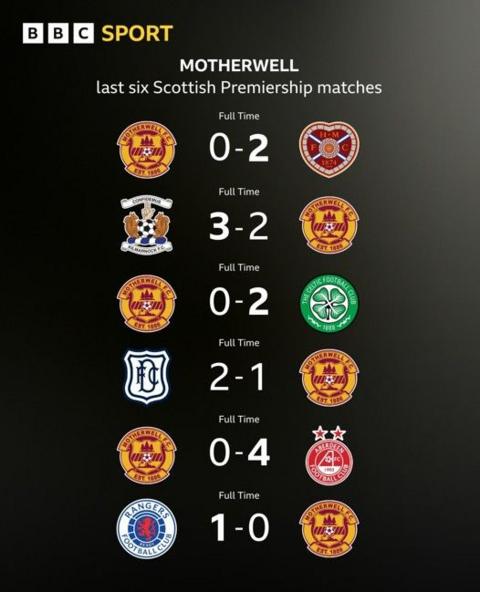
Motherwell's dramatic fall from grace has left supporters reeling. Once hailed as the Scottish Premiership's most captivating side, the Fir Park club now finds itself battling relegation form after losing six consecutive league matches. According to BBC Sport, the Steelmen's collapse represents their worst run since Terry Butcher's tenure 23 years ago, raising urgent questions about whether this is a temporary setback or a fundamental breakdown of the system that made them title contenders just months earlier.
Sky Sports reported that Motherwell lost 0–2 to Hearts on 25 October, a result that equalled the unwanted record from April 2003. The club now sits 10th in the table with eight points from 10 matches, a stark contrast to their position as outside title contenders before the winter split last season.
What made Motherwell so special under Askou?
The transformation under Jens Berthel Askou was remarkable. Former Celtic and Hibernian midfielder Scott Allan captured the essence of their appeal when he described their style:
"The reason they were connected last year is because they're passive with the ball and building out. Everybody was close together. Then they would bring the opposition over to one side of the park and then they would switch the players. It was really hard to play against."Their football was so effective that pundit Chris Sutton declared them
"the best football team I've seen this season north or south of the border."
Despite finishing fourth in the Scottish Premiership, Motherwell's performances were mesmerising. They dismantled Celtic over the festive period in a manner rarely witnessed by another Scottish team, beat Rangers at Ibrox, and demolished St Mirren in Paisley. The foundation of this success rested on four key players: Elijah Just, a New Zealand midfielder who became the heartbeat of the side; Stephen Welsh, who has since represented Scotland; Elliot Watt; and Callum Slattery. All four departed in the summer, generating substantial revenue but leaving a void that proved impossible to fill.
The departure of Askou to Toulouse compounded the problem. Askou had positioned Motherwell as key contenders in the Scottish Premiership and on the brink of European qualification, but his exit left the club facing European competition under new manager Alfred Johansson with a squad stripped of its architects and key performers.
Why have the statistics not reflected the decline?
The numbers paint a puzzling picture. This season, Motherwell average 1.1 goals per game compared to last season's 1.55, yet their expected goals have actually risen from 1.48 to 1.6. They are averaging an extra shot on target per game at 14.5, while touches in the box and "big chances" remain roughly level with last year. Successful passes ending up in the final third have also increased slightly.
This apparent paradox reveals the real issue: Motherwell under Askou were far more efficient at converting the chances they created. Allan explained the disconnect:
"They're just not as connected as they were last year."The intricate passing patterns that once pulled opponents out of shape have been replaced by pragmatism and patience as Johansson attempts to stabilise the ship.
Is the defence the real culprit?
While attacking statistics suggest Motherwell remain competitive, their defensive record has deteriorated alarmingly. According to Opta data, their average goals conceded has almost doubled from 0.95 per game to 1.8. Expected goals against has surged from 1.24 to 1.76, and they now face an average of five more shots per game while winning almost 5% fewer duels than last season.
The absence of Stephen Welsh has been particularly damaging. The Scottish international's departure removed a commanding presence at the back. Club captain Paul McGinn has also been unavailable through injury, while goalkeeper Calum Ward's move to QPR introduced further instability. Allan identified the core problem:
"The foundations have to be that you don't give goals away. The manager spoke about that, both boxes. And that is what's killing them at this moment in time."

Can Johansson turn this around?
Motherwell's promising start in Europe and an opening league victory at Easter Road under Johansson now feels distant. Elimination from the League Cup at Stenhousemuir added to the gloom. However, Allan offered a note of cautious optimism:
"It's not as if you watch Motherwell and you think, they're really, really poor in all departments. There are signs of performance there. That gives you a bit of belief if they can turn it around. It might just take a 1-0 scrappy goal."
Johansson has described the past five weeks as "a sort of pre-season" because the European campaign left little time to train, and he remains "100% confident" the team will turn its form around. The manager faces a perfect storm: new players bedding in, injuries disrupting selection continuity, a new tactical approach replacing last season's blueprint, and the psychological weight of repeated defeats.
What happens next?
Motherwell face a critical period. They are scheduled to visit St Johnstone on Wednesday 28 October at 19:45, then host St Mirren on Saturday 31 October at 15:00. Johansson indicated that Lucas Fadinger and Regan Charles-Cook could be available for the St Johnstone match, while Callum Hendry and Paul McGinn were not ready, with Alex Lowry unlikely to return before the international break.
The challenge is stark: rebuild cohesion, restore defensive solidity, and rediscover the attacking efficiency that made them title contenders. Whether this represents a temporary crisis or a fundamental collapse remains to be seen, but the next two matches will provide crucial indicators of whether Motherwell can arrest their alarming slide.