The controversy surrounding Manchester City's systematic rule violations represents far more than a club-level dispute. The Premier League's determination that City "systematically broke Premier League Rules for nearly a decade" carries implications that ripple across Manchester itself, the national sporting structure, and Britain's standing as a global football authority.
This situation carries particular weight because England's top flight functions as a colossal international brand. The ramifications extend beyond football enthusiasts to affect the nation's reputation worldwide, making it a matter of genuine public concern regardless of one's interest in the sport.
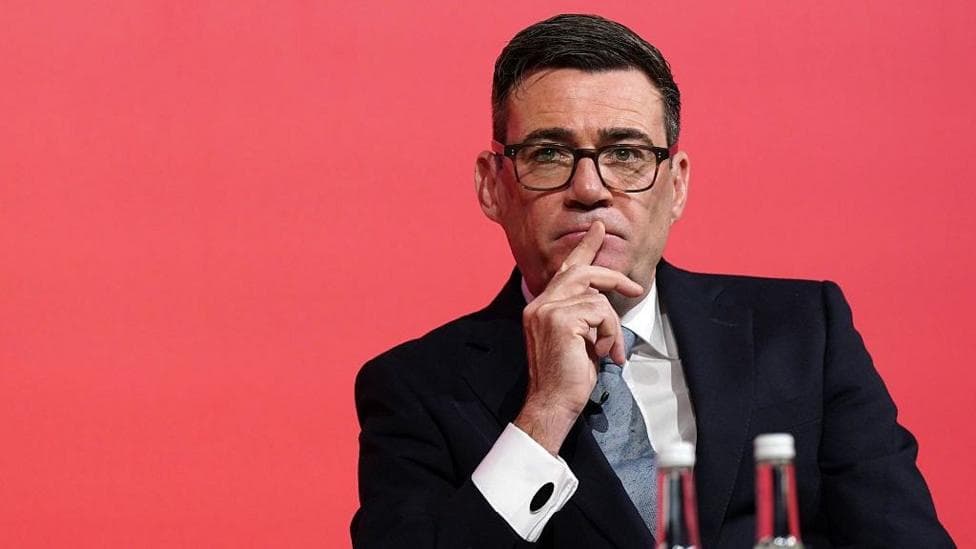
Andy Burnham occupies a uniquely complicated position in this unfolding drama. The former Greater Manchester mayor, who departed that role only months ago, now serves as prime minister while maintaining a passionate connection to football. This convergence places him at the intersection of local politics, national governance, and international diplomacy—especially given the ongoing disputes about whether Manchester City's Abu Dhabi ownership operates independently from state interests, and the United Arab Emirates' status as a significant UK ally.
When I interviewed Burnham on Wednesday as the Labour Party conference concluded in Liverpool, I posed a series of questions about his stance on the matter. His responses, followed by two separate attempts to clarify his position within 24 hours, represent perhaps his most significant self-created difficulty since arriving in Downing Street in July.
What did Burnham say about Manchester City's future?
When asked whether he worried that Manchester City's Emirati owners might divest from the club, Burnham expressed genuine concern about losing their involvement. His full response revealed the complexity of his thinking on the issue:
Well, I would be really concerned to lose them. They've been such a huge partner in the building of modern Manchester. Obviously, the building of Manchester City into the global force that it is. I can't intervene more in the process. It would be wrong for me to do that. It would be wrong, I think, to jump to a conclusion before having really studied all of the detail, but obviously it's ongoing, and because it's still contested by Manchester City, then I think it's right that I don't say much more.
This answer generated substantial scrutiny from football commentators and Conservative opponents, who characterized his remarks as "completely out of touch" and "extraordinary." The language carried multiple layers of meaning that observers quickly identified.
His stated anxiety about losing the substantial financial investment that has transformed both the club and parts of Manchester revealed his perspective on the owners' contribution. Equally significant was his phrase "I can't intervene more"—the word "more" suggested prior involvement or consideration of involvement in an ongoing process.
Throughout our conversation, Burnham attempted to maintain distance from the matter. He stated explicitly: "I am not getting directly involved in the process" and "I have to keep my distance from it." Yet the cumulative effect of his comments suggested sympathy toward Manchester City's predicament, particularly when he repeatedly drew parallels to a smaller disciplinary matter involving his own club, Everton.
How did Burnham's Everton experience shape his thinking?
Burnham drew on his history as an Everton supporter to explain his caution about the Manchester City case. He reflected on what he perceived as unfair treatment of Everton during its own financial investigation:
I remember people proclaiming Everton guilty at the time, and you know, with hindsight, I think more people would say that wasn't fair the way that was handled. So it would be wrong of me to leap to one side given the experience that I'd had before becoming prime minister.
Everton had faced Premier League points deductions as a result of its disciplinary proceedings. Burnham's invocation of this experience suggested he believed hasty judgments about financial rule-breaking cases could prove unjust, making him reluctant to criticize Manchester City despite the gravity of the charges it faces.
Notably, despite the seriousness and scope of Manchester City's situation, Burnham offered no direct criticism of the club during our interview.
How did Downing Street respond to the backlash?
The remarks ignited immediate controversy across sports media, news outlets, and social platforms. By Thursday evening, Downing Street initiated damage control.
A written statement was released that adopted a markedly different tone and substance from Burnham's on-camera comments:
As the prime minister made clear, the initial judgement is serious and there can't be any suggestion that anyone is above the rules. He also stressed that it is an ongoing independent process. It is essential that it is allowed to run its course and the outcome respected. If wrongdoing is established, those responsible should face the appropriate consequences.
This 59-word statement effectively reversed the impression created by Burnham's interview, employing language and framing entirely distinct from his earlier remarks. However, the reversal proved incomplete and short-lived.
Within hours, critics seized on a single word: "if." The Premier League's independent commission had already determined that Manchester City arranged "sham contracts" with commercial partners as part of a scheme to conceal approximately one billion pounds in secret funding. Although the club denies wrongdoing and is considering an appeal, the Premier League's conclusion was unambiguous.
Yet Downing Street's statement employed conditional language—"if wrongdoing is established"—despite the commission's findings. Within approximately 90 minutes, the statement was re-issued with "if" replaced by "wherever." The real-time revision exposed the government's discomfort and uncertainty about the matter.
What are the key facts about Manchester City's case?
On 29 September, the Premier League confirmed that an independent commission found Manchester City guilty of all charges relating to serious financial-rule breaches spanning nine seasons, and of most charges relating to failure to cooperate with the league's investigation. The commission's findings cover a nine-season period, with sanctions to be considered separately, including potential fines, points deductions and other sporting penalties.
The Premier League initiated charges in February 2023 following an investigation that began in 2019. The independent commission hearing extended from 16 September through 6 December 2024, representing an extensive examination of the allegations.
What happens next in the Manchester City case?
Manchester City has until 2 October 2026 to appeal the commission's findings. The sanction hearing will be conducted separately and privately, with the Premier League not yet announcing when this proceeding will occur.
Burnham, positioned as the embodiment of Manchester identity and a genuine football enthusiast, now confronts one of the year's most significant domestic stories—one that is only beginning to unfold. His attempt to navigate local attachment, national responsibility, and diplomatic sensitivity has exposed the inherent tensions in his role. This will not be the final occasion on which he faces scrutiny regarding Manchester City.