Matthew Brennan has condemned the sport of cycling for failing to implement meaningful safety reforms following the death of fellow British rider Fin Tarling last month, calling the lack of progress "disgraceful."
Tarling, aged 19, was killed on 14 August during the Volta a Portugal when a van crossed onto the closed racing course and collided with him at high speed. His funeral service took place in Aberystwyth on Thursday. According to reporting on the incident, Portuguese police confirmed that Tarling was racing without a police escort at the moment of impact.
Brennan, a 21-year-old rider competing for Dutch outfit Visma-Lease a Bike, expressed his frustration in stark terms.
It was very sad what happened with Fin. We were watching his funeral yesterday and I said to my friend: 'It's so sad we've lost someone so special and also nothing has changed.' I really think that is disgraceful. Instead of someone somewhere in these organisations saying: 'OK, this should never ever happen again', it feels the world has moved on, nothing has changed and there's events where cars have been on the course still.
How widespread is the safety problem?
The cycling community faces a troubling pattern of fatalities. Six riders have died during road races over the past three years, and American competitor Ezra Caudell remains hospitalised with severe injuries following a crash at the Philadelphia Cycling Classic. Tarling's death marked the first road-race fatality of 2026, underscoring the ongoing risks that professional cyclists encounter.
The incident has prompted action at the sport's governing level. The UCI announced on 4 September 2026 that it will establish rules and a regulatory framework for real-time tracking of riders and vehicles at professional road races, according to a sports news agency report. The Professional Cycling Council meeting that produced this tracking plan opened with a tribute to Tarling and framed the issue as an urgent safety priority. The new system is intended to start with the UCI World Tour and UCI Women's World Tour before broader rollout.
What structural changes does Brennan advocate?
Rather than viewing the UCI's tracking proposal as sufficient, Brennan argues that cycling requires an independent body with enforcement power to hold all stakeholders accountable.
I think these big organisations and [sport's world governing body] the UCI should have a look at what they need to do to increase the safety. In my personal opinion, there should be an independent organisation that holds the organisations, the UCI and everything accountable to some very strict rules that makes sure the safety of the riders is held as a priority.

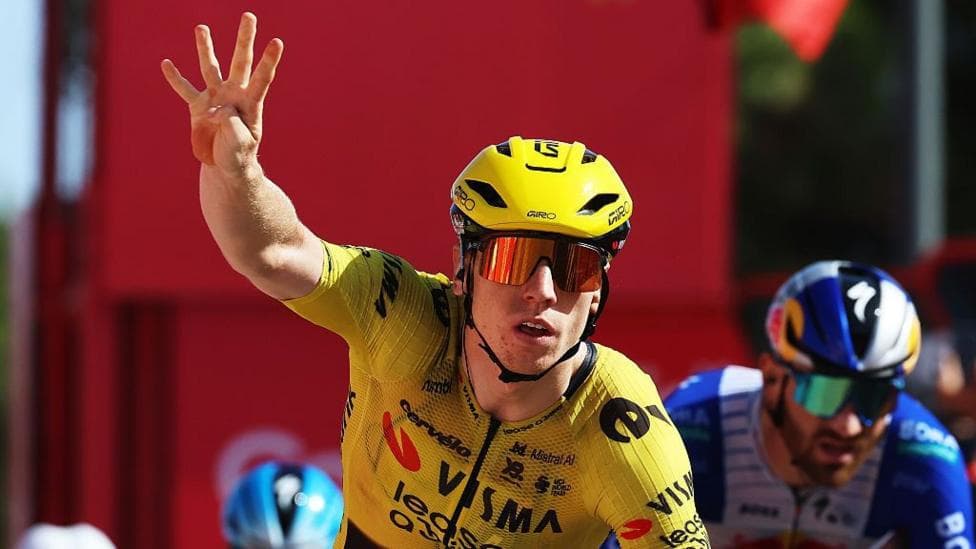
Brennan, who won five stages at the recent three-week Vuelta a Espana Grand Tour and claimed the prestigious one-day classic Kuurne-Brussels-Kuurne this year, believes the sport's expansion and changing demands have outpaced safety infrastructure. He pointed to external pressures, particularly television scheduling, as a factor in unsafe conditions.
We have big outside factors such as TV ... I would say that's a massive one. The instances of racing in Spain, and instead of moving it forward to racing at 09:00 we're racing at 15:00 in the midday heat. I think a real independent organisation that can really say to the teams whether something is safe, or whether something needs to be changed would benefit the sport and hopefully would stop these sad tragic events that happened at World Championships [referring to Muriel Furrer in 2024] and what happened with Fin and all the other sad events that happen in the sport.
Why do safety standards vary between races?
The sport's biggest races, including the three-week Tour de France, maintain strong safety records through extensive protective measures, including total road closures on stages for much of the day. Smaller events such as the Volta a Portugal and Tour of Britain employ 'rolling roadblocks', where police and officials travel in front of and behind the peloton.
Third-tier races like the Volta a Portugal, which sell broadcast rights at lower fees than major events, rely on more cost-effective road closure management. This two-tier system creates inconsistent safety standards across the professional calendar. According to reporting from cycling media, the riders' union president Adam Hansen called for stricter traffic management and a helmet-safety upgrade following Tarling's death.
The investigation into the circumstances of Tarling's death remains ongoing, according to reporting on 1 September 2026, meaning further findings or potential charges may emerge as authorities complete their work.
What happens next?
The UCI's planned protocols and regulatory framework for live rider-and-vehicle tracking represent the next concrete governing-body step toward reform. However, no fixed implementation date has been announced, and the system's effectiveness will depend on how rigorously it is enforced across all race categories. Brennan's call for an independent oversight body suggests that riders and observers believe the UCI's current response, while a step forward, may not go far enough to prevent future tragedies.