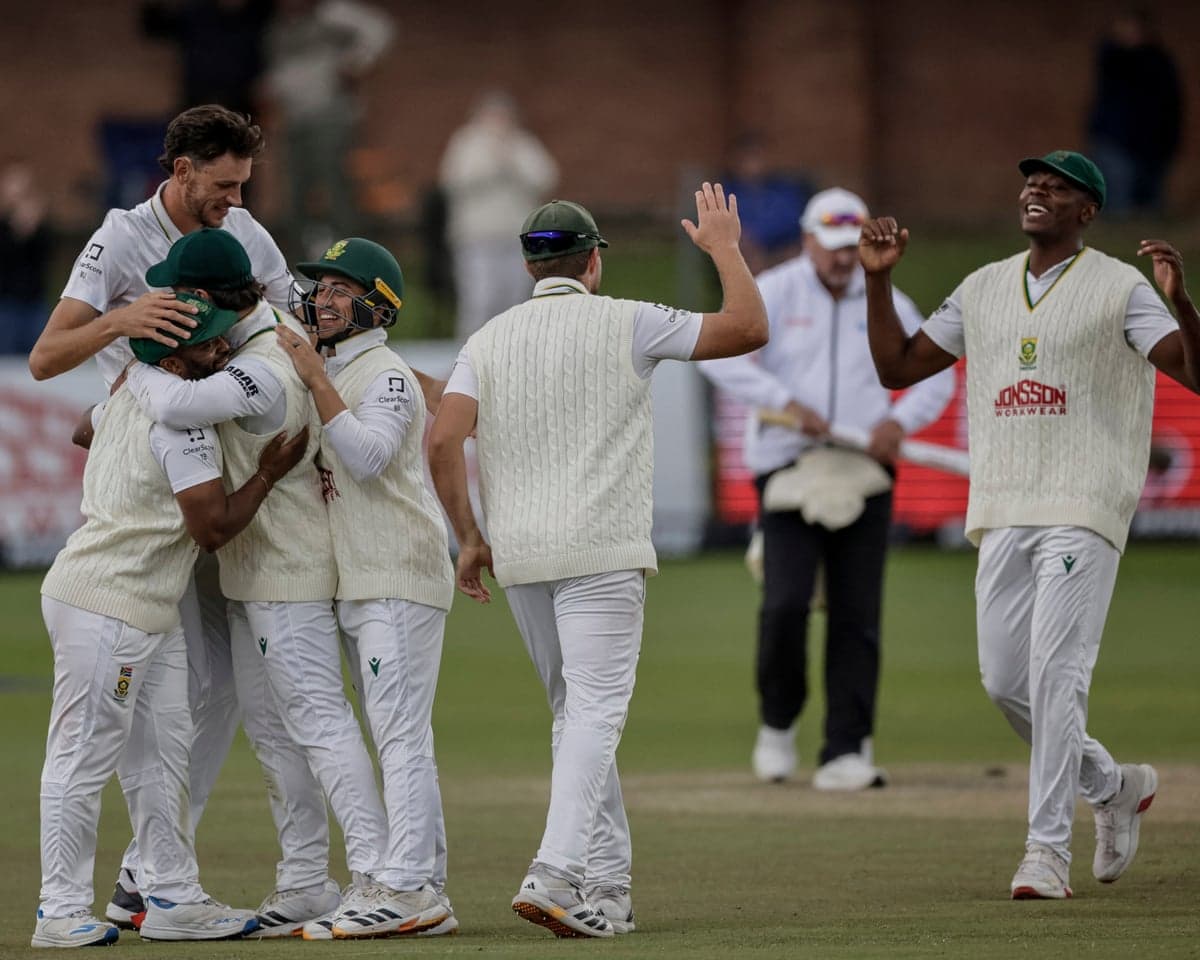
South Africa secured a dramatic innings and 31-run victory in the second Test at Gqeberha on 22 October 2026, levelling the three-Test series at 1-1 and setting up a decisive final match in Cape Town. According to The Guardian, the hosts forced Australia to follow on after their first innings total proved insufficient, then held their nerve through a tense fifth day to secure victory despite determined resistance from the visitors. BBC Sport noted that South Africa broke Australia's resistance in the final session as the light faded late on the last day.
Australia's second innings collapse was built on a foundation of poor decision-making from experienced players who had no excuse for their lapses in judgment. The visitors reached 295 in their first innings but fell well short of the 326 required to avoid following on, leaving them to bat again 170 runs behind. What followed was a salvage operation conducted in increasingly desperate circumstances, as South Africa's bowlers maintained relentless pressure across the final day.
The morning session on 22 October was washed out, reducing the day's allocation from 98 overs to 82 and offering Australia a brief respite. However, this reprieve proved insufficient as South Africa's attack, led by Kagiso Rabada and Wiaan Mulder, systematically dismantled the Australian batting order. Mulder's performance was particularly telling: the least celebrated member of South Africa's fast-bowling contingent delivered the match-winning spell with clinical precision, taking three for 64 by hitting the seam and waiting for the ball to jag away from the right-handers.
Scott Boland emerged as Australia's primary resistance, batting for 166 balls—his longest Test innings to date—and scoring 40 runs. The nightwatcher, who had already batted briefly on the fourth morning, returned to the crease on the final evening and extended his vigil deep into day five. His approach was methodical: careful defence on the front foot, evasion on the back foot, and the occasional stylish cut when opportunities arose. Yet even Boland's determination could not withstand Mulder's seam bowling, which found the gap between bat and pad to remove him from the crease.
Travis Head provided the more substantial resistance with a century, scoring 121 from 190 balls in an away Test—his first official hundred in such circumstances, with his previous century against India at the Oval in 2023 classified as a neutral venue. Head's innings was notably sedate by his standards, marked by careful accumulation rather than aggressive strokeplay. However, his dismissal to Mulder, who forced him to glove a short delivery down onto his stumps, proved the turning point in the match.
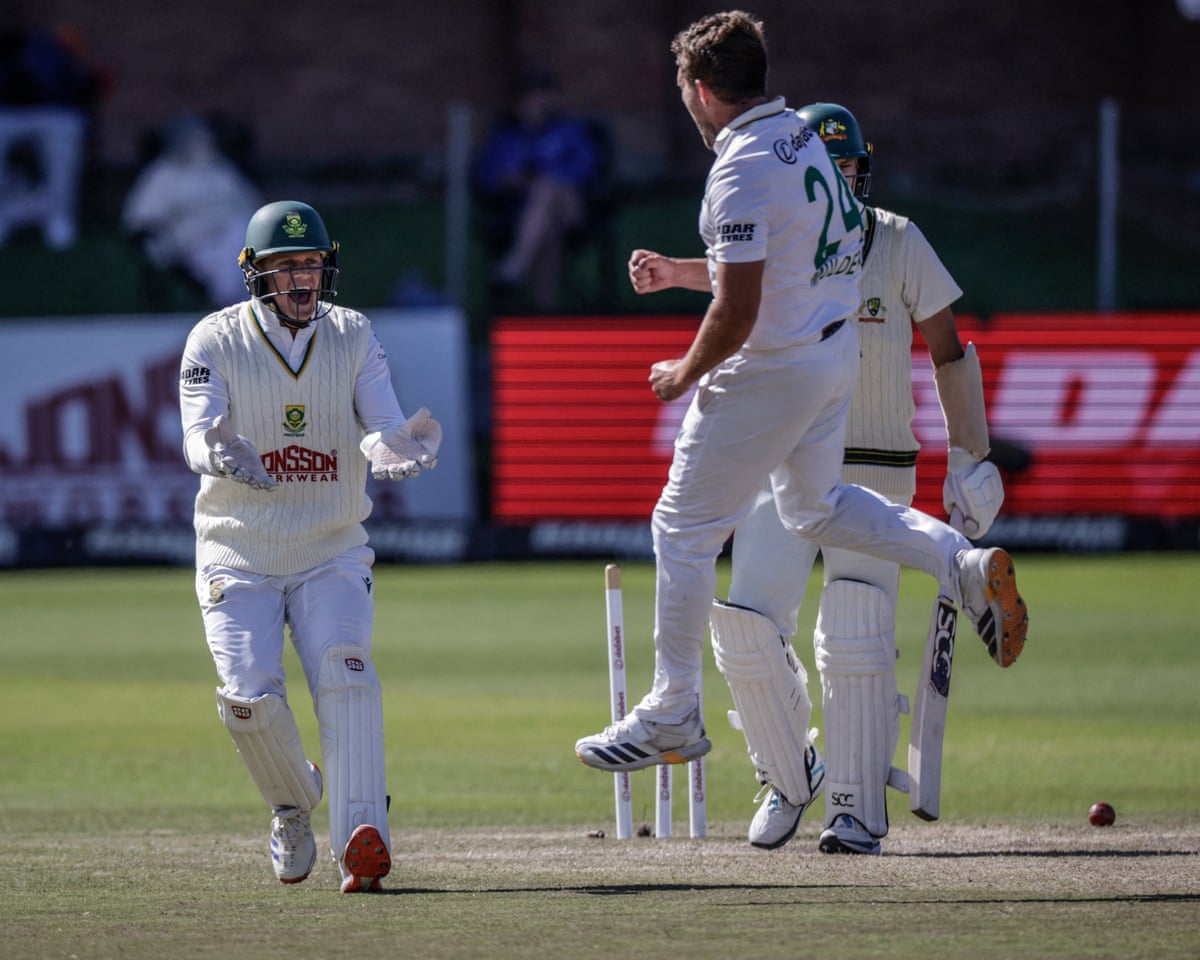
The collapse accelerated once Head departed. Steve Smith, showing no sign of the stiff neck that had troubled him the previous day, threw away his wicket with an atrocious pull shot off Rabada from outside off stump, a decision as catastrophically poor as Marnus Labuschagne's attempted six off Simon Harmer's spin the day before. Mitchell Starc attempted to swing Rabada over the leg side but found only fresh air, losing his leg stump. Josh Hazlewood tried a booming drive through cover and nicked to slip, leaving Alex Carey stranded on 37 not out. Marco Jansen took the final wicket, while Rabada finished with four for the innings. According to BBC Sport, Jansen's five for 33 on day four had already put South Africa in the ascendancy before the final session sealed the outcome.
The Australian performance was defined by fundamental failures of decision-making from players whose celebrated experience offered no excuse for such lapses. With so few overs remaining and heavy cloud rolling in, the match could have been saved with greater application from one or two key players. Instead, South Africa's comeback from a precarious position on day two proved complete.
How did South Africa reach this position?
South Africa's path to victory began with a remarkable batting recovery that defied early predictions of defeat. After Scott Boland took four for 31 on day two, the hosts collapsed to 97 for five in rain-affected conditions. However, the middle and lower order mounted an extraordinary fightback. Temba Bavuma scored a career-best 179, facing 334 balls over 552 minutes and striking 18 fours and one six, according to AP News. His partnership with Simon Harmer proved transformative: the pair added 183 runs for the eighth wicket, a South African Test record, with Harmer contributing a career-best 82, as reported by India Today.
Earlier in the innings, Bavuma and Marco Jansen had forged a seventh-wicket partnership of 132 runs that broke a South African record standing since 1896. These partnerships transformed South Africa's first innings from a position of near-certain defeat into a total of 426, which proved decisive in forcing Australia to follow on. The resilience displayed by the lower order contrasted sharply with the fragility shown by Australia's top and middle order in both innings. Notably, ESPN reported that Australia wicketkeeper Alex Carey took his 200th Test catch when he caught Bavuma off Mitchell Starc during South Africa's first innings.
What does this mean for the series?
The victory levels the three-Test series at 1-1, with everything to play for in the decider. South Africa has demonstrated the capacity to recover from adversity and execute under pressure, while Australia's inconsistency—particularly the poor decision-making from experienced players—has cost them dearly. The hosts will carry momentum into the final Test, though the visitors will seek to reassert themselves after a disappointing performance in Gqeberha. This comeback ranks among South Africa's great Test victories against Australia, comparable to their triumph in the World Test Championship final two years earlier and their 2018 victory on the same ground.
What happens next?
The third Test, the series decider, is scheduled to begin on 27 October 2026 in Cape Town. Both teams will use the intervening week to reassess their approaches and prepare for a match that will determine the series winner. South Africa will seek to build on their comeback victory, while Australia will need to address the decision-making failures that undermined their position in Gqeberha. The stage is set for a climactic conclusion to the tour.