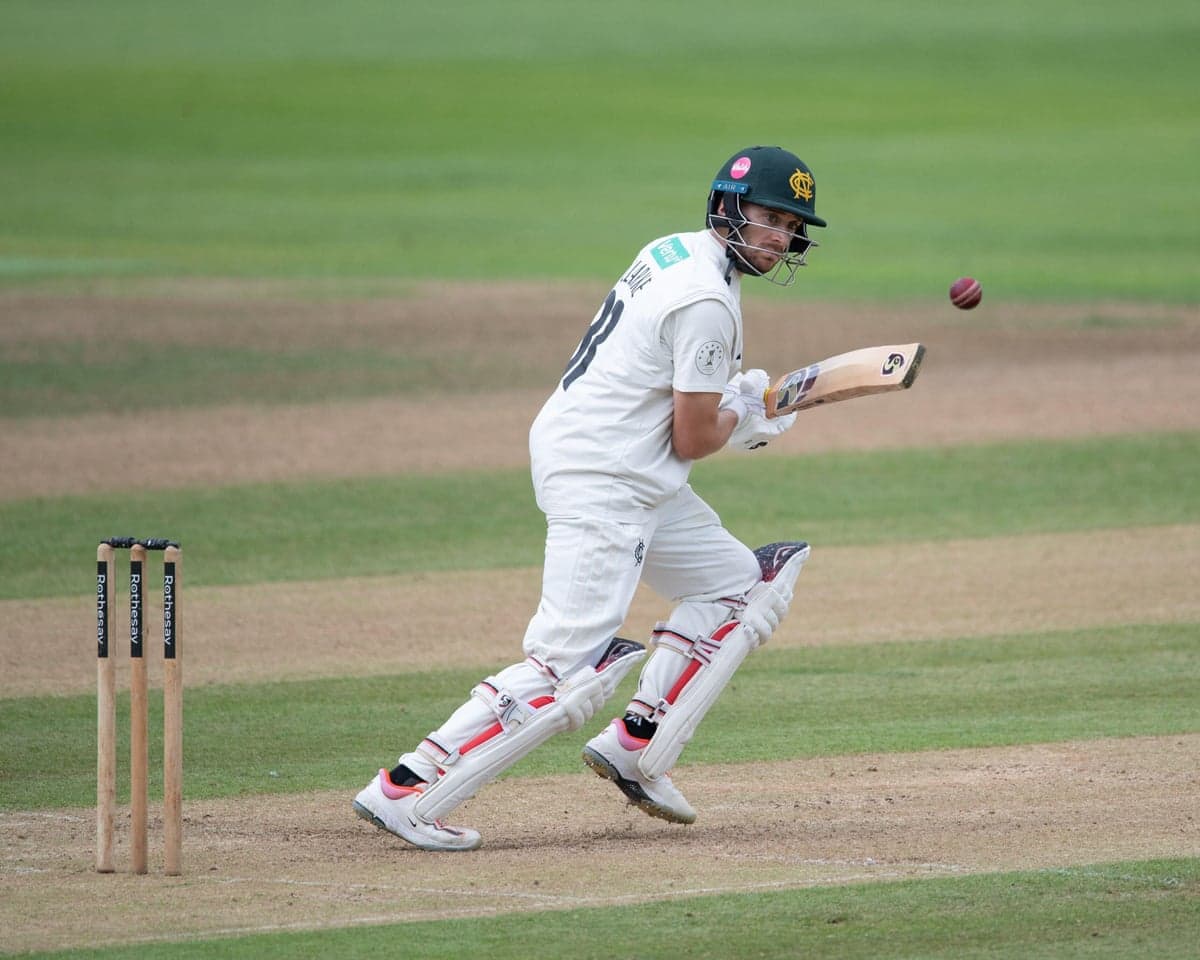
Nottinghamshire strengthened their position at the summit of Division One during a week dominated by stalemates across the County Championship. The champions accumulated 13 points from their draw against Warwickshire, more than any other team in the division, while Yorkshire collected the fewest with nine points. According to Somerset's official records, Nottinghamshire now lead on 148 points, with Somerset on 144 and Warwickshire on 140 after this latest round of matches. With only four rounds remaining in the season, the margin separating the contenders remains narrow despite the 1,202 points already distributed across the division.
The tight nature of the title race reflects the challenge facing all teams in securing decisive results. According to Wisden's County Championship coverage, the compressed schedule and weather interruptions have created numerous opportunities for teams to consolidate positions rather than advance them significantly. Nottinghamshire's ability to extract maximum points from their encounter with Warwickshire demonstrates their consistency, though Somerset and Warwickshire remain within striking distance as the season enters its final phase.
How has Joe Clarke strengthened Nottinghamshire's position?
Clarke's unbeaten 150 against Warwickshire proved instrumental in Nottinghamshire's draw, pushing the batsman past 1,000 runs for the season. His tally now stands 191 runs ahead of Tom Abell, making him the division's leading scorer. At 30 years old, Clarke is performing at the height of his abilities, and his consistent run-scoring has become central to Nottinghamshire's title defence. His form raises questions about his prospects for international selection, though circumstances beyond the playing field have complicated such considerations.
Why did Somerset's aggressive approach backfire at Hove?
Somerset's final day at Hove presented an opportunity to press for victory or secure leadership of the table. Starting the day two wickets down with a 119-run advantage, captain Lewis Gregory faced two potential routes to 19 points and top position. He could have negotiated a declaration bowling arrangement with Sussex, setting a target of 303 in two sessions that would have tempted Tom Haines into a chase. Alternatively, he could have accelerated the batting dramatically, employing aggressive strokeplay to manufacture a target under white-ball conditions.
Instead, Somerset added 83 runs for the loss of a single wicket before lunch—a middle course that satisfied neither objective. This cautious approach allowed Sussex, threatened by relegation, to bat out time against the red ball without genuine pressure. Somerset remain in contention for their first title, but the missed opportunity at Hove may prove costly as the season concludes. Earlier in the match, Henry Crocombe delivered a memorable performance with a hat-trick, an achievement that offered the crowd something to celebrate as he prepares to join The Oval next season. His performances over the coming weeks could prove decisive in determining whether Sussex avoid the drop and whether Surrey descend.
How did Ben Foakes frustrate Essex in the Surrey draw?
Surrey faced a precarious position when Dean Elgar, announcing this as his final season as a professional cricketer, compiled a century that appeared written in the stars. Rahul Chahar, the spinner representing Surrey, had claimed six Essex wickets, yet the home side still held a 96-run first-innings advantage—a position that looked commanding when Simon Harmer and his colleagues began their assault.
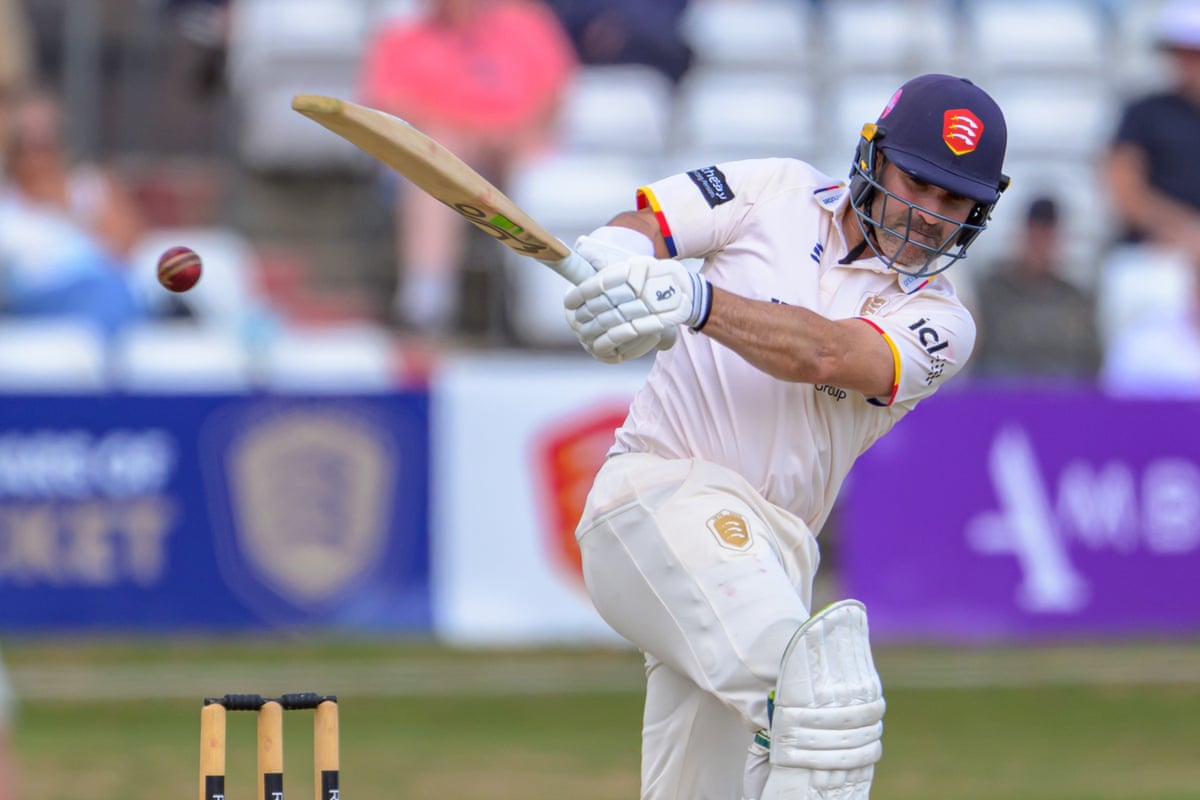
Essex reduced their opponents to 92 for six off 45 overs, still trailing on the scoreboard with substantial time remaining. The trap seemed set for a decisive home victory. However, Ben Foakes, the former Essex player, mounted a determined five-hour century to frustrate his old county. He found stubborn partners lower in the order through Adam Thomas and Tom Lawes, frustrating Essex's bowling attack. Tom Westley deployed Simon Harmer and Sam Cook extensively but was forced to rotate through eight bowling options before both captains agreed to a draw.
Essex currently occupy sixth position in the table and should retain their top-flight status, but Surrey must rediscover their winning formula if they are to avoid relegation. According to Sky Sports' coverage of the Championship, Surrey had won only one match earlier in the 2026 season, making their struggle for points increasingly urgent.

How did Hampshire's aggressive batting fail to inspire Glamorgan?
Facing the desperation of bottom-table status with time slipping away, Hampshire departed from Somerset's cautious template and launched an aggressive assault on the fourth day. Toby Albert and Andrew Neal deployed the long handle to devastating effect, crashing 176 runs before lunch and setting Glamorgan a target of 302 in two sessions.
Glamorgan appeared unlikely to chase from the outset, and their position deteriorated sharply when they collapsed to 21 for three. Kyle Abbott, Eddie Jack and Sonny Baker had begun to exert pressure when bad light halted play, followed by rain. The first-innings scores—162 all out versus 161 all out—meant each team extracted 11 points from the match, while the second-innings positions (Hampshire's 330 for eight and Glamorgan's 21 for three) counted for nothing in the final reckoning. Hampshire's gamble yielded only a draw, leaving their relegation battle unresolved.
What happened in Durham's controversial victory over Gloucestershire?
Before their encounter at Chester-le-Street, Durham had compiled six victories and three draws from nine Division Two matches, while Gloucestershire had managed only one win against eight defeats. The outcome proved predictable. David Bedingham compiled a century at nearly a run per ball, while Kasey Aldridge captured nine for 63, propelling Durham 40 points clear at the top of Division Two and leaving Gloucestershire 50 points adrift at the bottom.
Bad light suspended play on day three with four runs remaining in Durham's second innings. Play resumed on the fourth day for six balls, and Durham's makeshift opening pair completed the task against a spinner. The conclusion sparked controversy when Gloucestershire's approach to the final session became apparent. Coach Mark Alleyne explained his team's reasoning: the visitors had declined a reasonable request to bowl spin in the evening gloom to complete the innings and conclude the match. Instead, Gloucestershire chose to deploy their fast bowlers, which triggered bad light stoppages and forced a resumption the following day.
While the umpires cannot be faulted for applying the regulations correctly, the incident highlighted the tension between teams pursuing their own interests and the broader health of the format. The county game faces enough scepticism from a national media often hostile to its longest format without teams appearing to exploit procedural technicalities. The manner in which the match concluded drew criticism from observers concerned that such tactics undermine the sport's credibility.
How did rain and bonus-point calculations dominate the Northamptonshire-Kent draw?
Northamptonshire began their match against Kent trailing their visitors by four points in the battle for the second promotion slot, with Durham close to securing the first. The rain-affected draw allowed Northamptonshire to close that gap. They batted out the fourth day, with 345 playing 450 for six when the match was abandoned.
Cricket contains numerous arbitrary inconsistencies—a captain may invite the follow-on with a 150-run lead but not with 149—yet such quirks reflect broader patterns in sport and life. No player, captain or coach acted contrary to their team's interests, but once Luke Procter's side reached 196 for two, a draw became inevitable and attention shifted to bonus-point calculations. The fans, players and Championship deserve better than contests that devolve into point-gathering exercises once time has been lost.
The regulations governing rain-affected matches could be reformed to preserve genuine competition. Computer simulations could generate thousands of scenarios to ensure fair balance between teams' first innings and the resumption of play, creating regulations that promote opportunities to keep matches alive. Modern technology has solved comparable problems in limited-overs cricket—the Duckworth-Lewis method transformed how rain interruptions are managed in one-day formats. A similar innovation could address the structural problems that reduce Championship cricket to a bonus-point lottery when weather intervenes.
What lies ahead in the Championship season?
The County Championship season continues through 27 September 2026, with several rounds of fixtures remaining. According to the official fixture schedule, matches are scheduled for 2–5 September and 8 September, with the final round commencing on 24 September. Nottinghamshire's narrow lead means every result in the coming weeks will shape the title race, while the relegation battle in Division One remains equally competitive. Surrey and Essex must secure victories to ensure survival, while teams in Division Two face their own promotion and demotion calculations as the season reaches its climax.