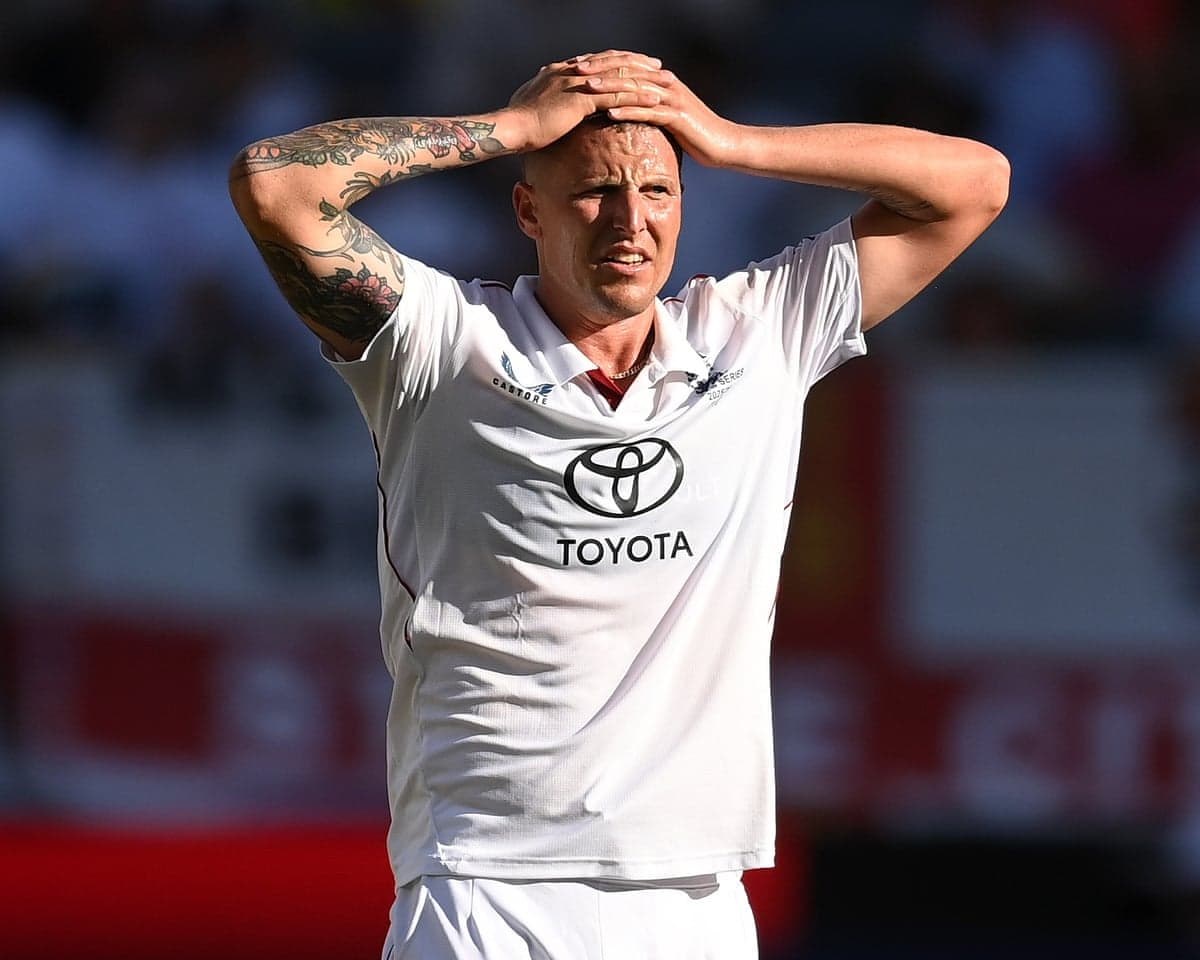
England's focus has shifted once more from on-field performance to player conduct. The England and Wales Cricket Board moved swiftly after footage emerged over the weekend depicting fast bowler Brydon Carse at a Derby nightclub, removing him from the squad for the second Test at Lord's and escalating the matter to the independent Cricket Regulator for investigation. While this response represents an appropriate initial step, it exposes a deeper cultural problem within the playing group that current coaching and executive leadership has failed to address.
According to reporting on the incident, Carse was withdrawn from England's squad after the ECB referred the Derby nightclub matter to the Cricket Regulator, which confirmed it would investigate while establishing the full facts. Hampshire's Sonny Baker was named as his replacement in the squad, with Carse due to have joined the group on Monday. Video circulating on social media appeared to show Carse in handcuffs being led away by four police officers, though it was understood he was not arrested.
The incident occurred after Carse had played county cricket for Durham that same day, helping them defeat Derbyshire inside three days with a contribution of 26 runs and 2 for 82. This latest episode follows a pattern of behavioural lapses that have plagued the England squad throughout the summer, undermining the team's efforts to rebuild following the departure of captain Ben Stokes and the removal of head coach Brendon McCullum.
How did previous England leadership handle similar crises?
When I was coaching with England during the early stages of the 2017-18 Ashes tour, a disciplinary incident prompted Andrew Strauss, then the ECB's director of England cricket, to fly out and address the squad directly. He communicated with absolute clarity what standards of behaviour would and would not be tolerated. That intervention proved decisive: from that point forward, the squad operated under strict protocols. Once a Test match concluded, players were permitted to socialise, but only in controlled environments—designated venues with cordoned-off areas, professional security presence, and organised logistics. Nobody left that meeting uncertain about their responsibilities.
The principle was straightforward: representing your country stands as the highest honour in a cricketer's career, and that status carries obligations that persist whether you are on international duty or not. You remain an England player from the moment you are selected until you retire, and that identity shapes how you conduct yourself in public.
Who can provide the leadership England needs now?
The question facing English cricket today is who possesses the authority and willingness to deliver the kind of intervention Strauss provided in 2017. Rob Key, the managing director of men's cricket, cannot fill that role. His tenure has been marked by inconsistent messaging about acceptable standards and a failure to prevent a culture from taking root that has repeatedly produced these incidents. Brendon McCullum, selected and repeatedly backed by Key as head coach, promised at the start of the summer to establish
a firm grip, yet that grip has not materialised. His departure from the red-ball role last month means he is no longer positioned to attempt improvement.

Marcus Trescothick, serving as interim coach during the Pakistan series, is compromised by his association with the staff that oversaw the past four years of instability. His temporary status further undermines his authority to enforce meaningful change. Stephen Fleming, appointed as McCullum's permanent successor and tasked with leading this group over the next four years, has not yet arrived in England, let alone begun to establish his presence in the dressing room.
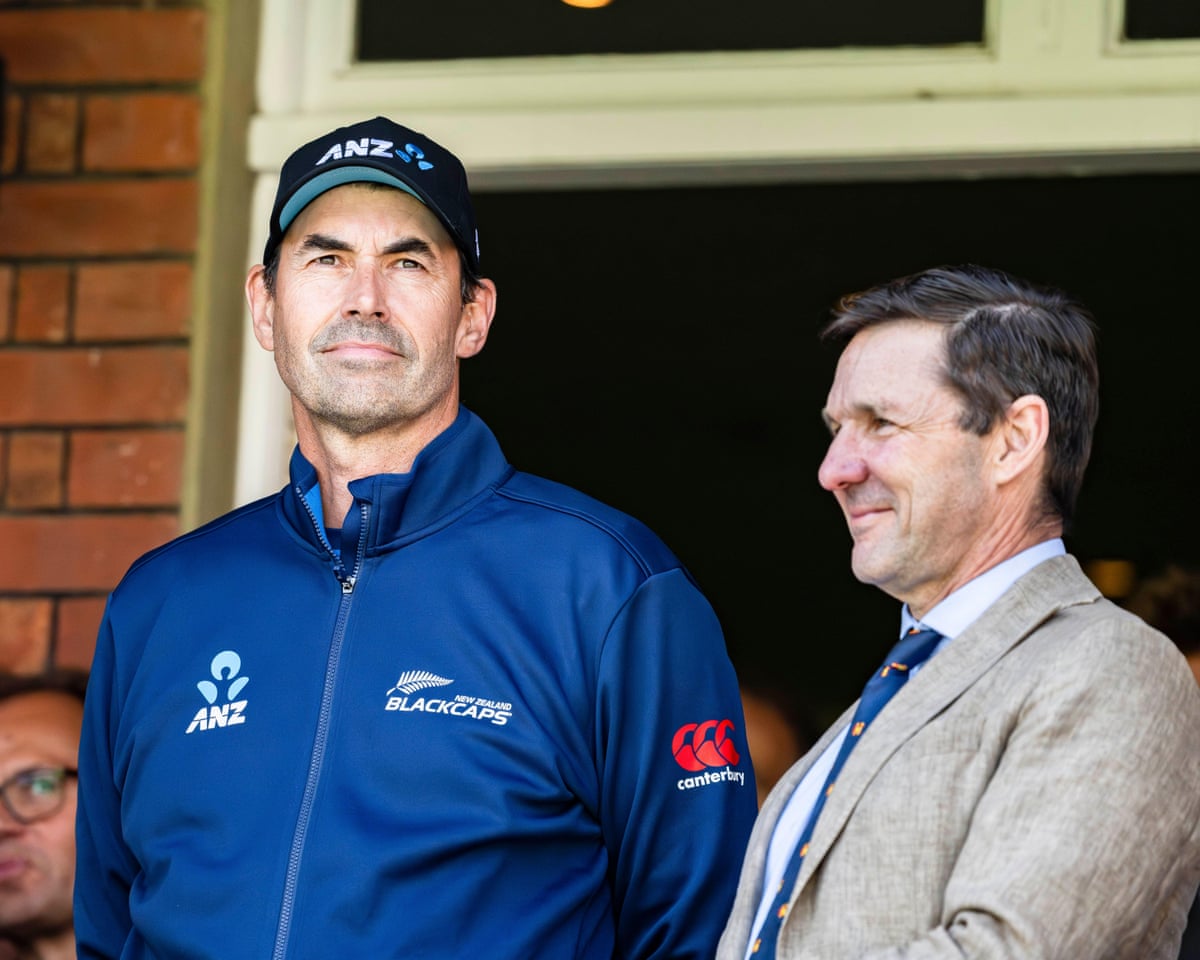
Fleming should have been on the first available flight to England to begin the essential work of communicating standards and demonstrating leadership. Even if obligations at home had restricted that initial visit to a few days, the opportunity to meet each player face-to-face and articulate his expectations—both on and off the pitch—would have carried weight that no virtual communication can replicate. You cannot establish authority over Zoom. Fleming is scheduled to arrive next month, but his presence is required with greater urgency. This squad requires strong leadership, and the burden cannot fall entirely on captain Joe Root.
What does the broader drinking culture reveal?
Ben Stokes recently suggested that the issue lay not with individual players or coaching staff but with the entire sport, which he characterised as harbouring
a culture that is associated with alcohol. While recreational cricket exists precisely for the purpose of bringing people together to play and socialise, with alcohol often part of that experience, the culture at professional level has shifted noticeably. Young players progress through the recreational phase, but once they sign their first professional contract, their county should establish and reinforce its own standards, values, and culture.
During my own county career, it was customary for players to gather after play, visit the pub, discuss the day's cricket, and perhaps share dinner and wine. I have been teetotal throughout my life, but I understood why many teammates found that ritual helped them decompress after the physical and mental demands of the day. The culture has become more extreme since then, however. Something has shifted beyond the simple fact that cameras are now ubiquitous and capable of capturing any transgression.
Stokes's remarks, while superficially acknowledging a systemic issue, functioned as a convenient deflection from personal accountability—a pattern familiar to those who have followed his career. Stokes was present in Derby when Carse's incident occurred, seemingly uninvolved but visible in the background of the viral video alongside England-contracted seamer Matthew Potts, as the Durham squad celebrated their victory over Derbyshire. The presence of three England cricketers in that setting underscores the problem: they are not simply county players enjoying a night out, they are international representatives whose conduct carries implications for the entire sport.
What happens next?
England's second Test against Pakistan at Lord's is scheduled to begin on 27 August 2026 at 11:00. The Cricket Regulator is expected to continue its investigation into the Derby incident and issue further findings or updates as the facts become clearer. Fleming's first Test as England head coach is scheduled for December on the South Africa tour, but his involvement in establishing standards and culture should begin immediately, not after the Pakistan series concludes.
The fundamental issue is one of accountability and leadership. Carse will hopefully recognise that being an England cricketer—a status carrying prestige and privilege—is not a position to jeopardise through lapses in judgment. But recognition at the individual level is insufficient without systemic change. The ECB, the coaching staff, and the incoming head coach must demonstrate that representing your country means accepting responsibilities that extend beyond performance on the field. Until that message is communicated with the clarity and authority that Strauss brought to the 2017-18 Ashes tour, these incidents will continue to undermine the team's efforts to rebuild and restore public confidence in English cricket.