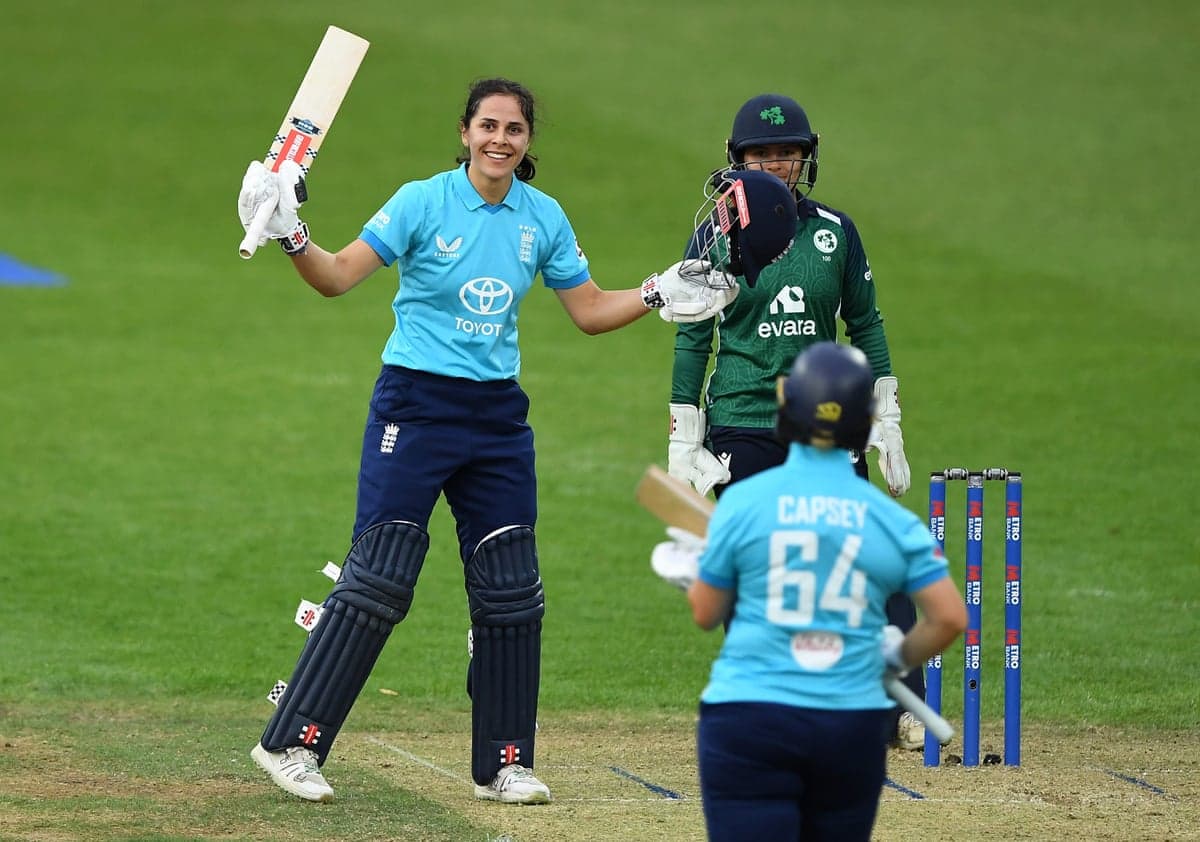
Maia Bouchier struck an unbeaten 104 to guide England to a record one-day international run chase against Ireland at Leicester on 1 September 2026, with the hosts reaching their target of 282 and winning by six wickets with 71 balls remaining. The victory marked a dominant start to England's transitional batting line-up following the retirements of Heather Knight and Tammy Beaumont, and gave the hosts a 1-0 lead in the three-match series.
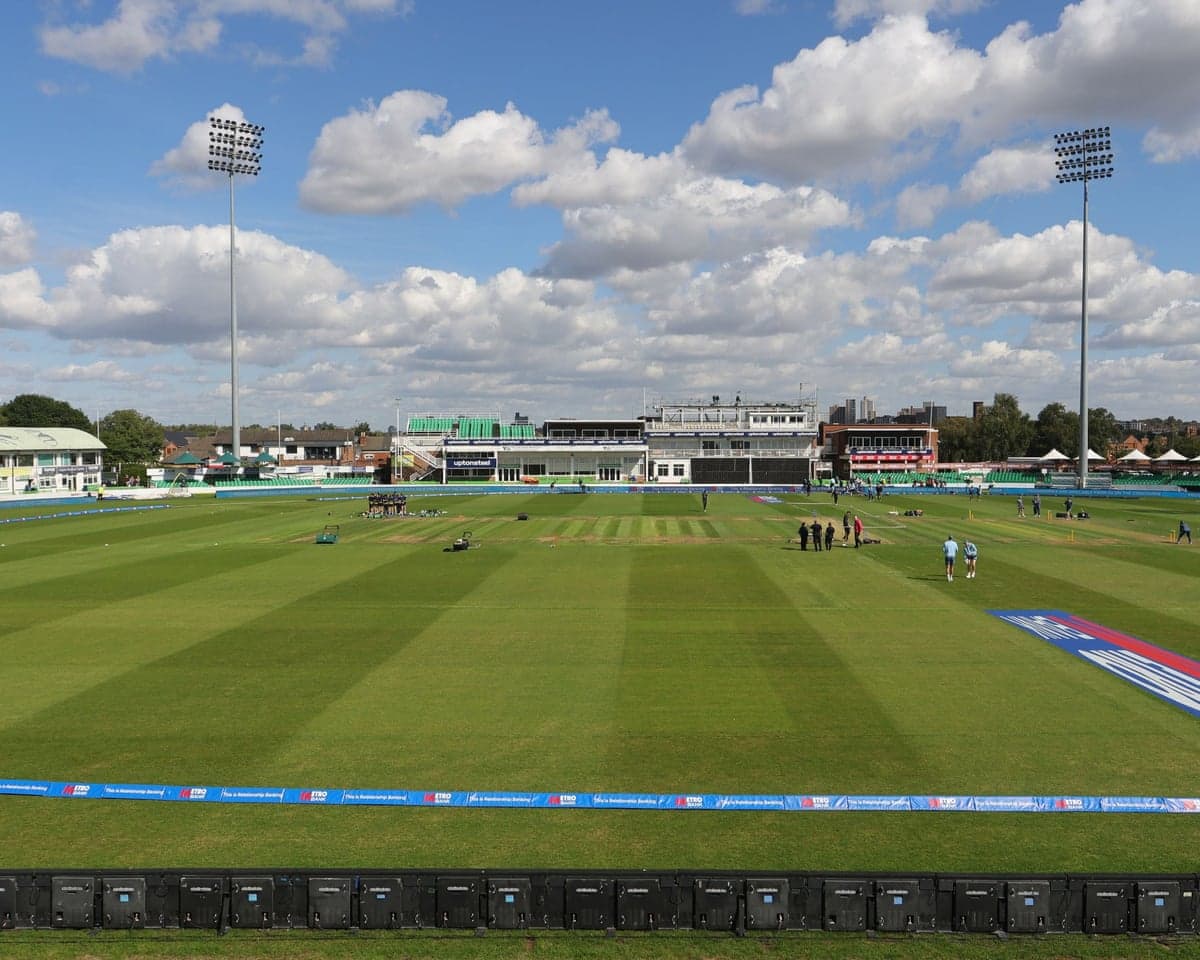
The match, played at the Uptonsteel County Ground in Leicester at 13:00 BST, saw England field first after winning the toss. Bouchier's innings demonstrated the depth of England's batting resources even with several key players absent from the squad, including injured captain Nat Sciver-Brunt, and others being rested for strategic rotation.
How did England's opening partnership set the platform?
Bouchier and Sophia Dunkley combined for a 143-run opening partnership that laid the foundation for England's successful chase. Dunkley made 73 from 61 balls, striking her fastest fifty in ODI cricket from just 47 deliveries as she was brutal against Ireland's wilting bowling attack. Bouchier started watchfully, making just eight from her first 19 balls before a flurry of boundaries off medium-pacer Jane Maguire in the sixth over kickstarted her innings. England reached 72 without loss in the powerplay, with Dunkley playing the more aggressive role initially.
Dunkley was caught and bowled off leg-spinner Cara Murray in the 20th over, but Bouchier held her nerve and took ownership of the chase. She accumulated runs steadily against an Irish attack that struggled to contain the English batters, eventually holing out to long-on after a lapse of concentration with just 59 runs needed.
How did England's middle order finish the job?
Alice Capsey and Freya Kemp made light work of the remaining runs with a quickfire stand of 54 off 38 balls that put England within touching distance. Kemp struck 36 from 22 deliveries to showcase the power of England's rapidly improving depth, with five batters missing from the team that started the 50-over World Cup semi-final the previous year. Capsey hit the winning boundary to finish unbeaten on 41, demonstrating her value in both batting and wicketkeeping roles.
Jodi Grewcock, the 21-year-old batting at number three as part of England's squad rotation, was dismissed by Murray when bowled through the gate while still in single figures, but the damage had already been done by the time she departed.
What was Ireland's batting contribution?
Ireland posted 281 for five, a total that initially appeared competitive but ultimately proved insufficient on a flat pitch offering little assistance for the bowlers. Three batters reached half-centuries: captain Gaby Lewis made 69 from 89 balls, Amy Hunter scored 62 from 90 balls, and Rebecca Stokell struck 54 not out from 48 balls.
Lewis and Hunter combined for a 136-run partnership for the second wicket, taking advantage of England's bowling limitations. Stokell's counter-attacking knock provided a late boost, as she struck the ball cleanly down the ground with regularity. Her path to her milestone was unconventional—a boundary over fine leg was ruled to have come off her pad and counted as leg-byes, forcing her to celebrate reaching 50 twice after the umpire mistakenly awarded runs for that delivery. She eventually reached the milestone in a fifth-wicket stand of 84 with Leah Paul.

The most unusual moment came off the penultimate delivery when Stokell attempted a ramp shot but missed, with the ball striking the base of the stumps. Despite dislodging nothing, the ball ricocheted across the boundary rope, awarding Ireland four byes and taking their total to 281 for five.
What challenges did England's bowling face?
England's attack lacked the penetration required to restrict Ireland's scoring. The absence of Lauren Bell and Sophie Ecclestone—both being rested—left a notable gap in bowling depth. Issy Wong struck early to dismiss Alice Tector for 11 with assistance from a fine one-handed catch from Capsey, but overall Wong was too inconsistent, bowling five wides in her spell. Stand-in captain Charlie Dean held things together with 2-44, but it was a tough outing for young left-arm spinner Tilly Corteen-Coleman, who bowled seven wicketless overs for 53 as the pitch offered little.
Discipline proved problematic, with England conceding 33 extras overall, including 20 wides—the second-highest number of wides conceded by England in an ODI during the professional era. These extras contributed meaningfully to Ireland's total.
Capsey, keeping wicket for the first time in a full international in place of the rested Amy Jones, produced a brilliant one-handed diving catch to dismiss Alice Tector and showed promise with the gloves. However, questions remain about whether a more experienced keeper might have prevented some of the wayward bowling.
Why are so many England players absent?
England contested this three-match series without several established players. Nat Sciver-Brunt remains sidelined through injury, while Lauren Bell, Danni Wyatt-Hodge, Sophie Ecclestone, Amy Jones and Linsey Smith are being rested. This strategic absence creates an opportunity to evaluate emerging talent and build depth for future competitions, with head coach Charlotte Edwards building towards next summer's Ashes with places up for grabs in the top order.
The squad rotation has introduced younger players to international cricket. Grewcock's inclusion at number three and the return of off-spinning all-rounder Mady Villiers—who had been absent from white-ball cricket for two years—signal England's investment in their next generation.
Ireland entered the series following a 3-0 ODI defeat to West Indies in the preceding month, with players including Arlene Kelly and Alice Tector returning after missing that campaign.
What tactical decisions lie ahead?
Head coach Charlotte Edwards faces a strategic equation regarding wicketkeeping. The choice between fielding Amy Jones, the more consistent batter, versus Capsey, the superior keeper, involves weighing the runs saved by superior glovework against the runs gained by a more reliable batter. Capsey's performance on 1 September—including her diving catch—suggests she can contribute effectively in both roles, but the balance between batting strength and fielding excellence will require careful consideration.
What happens next?
The series continues with the second ODI in Derby on 3 September 2026, followed by the third and final match in Worcester on 6 September 2026. England will seek to extend their advantage, while Ireland will attempt to respond after their heavy defeat in the opening fixture. With two games to go, further records could be broken—especially if England are tasked with batting first.
Key Facts
- Maia Bouchier's unbeaten 104 guided England to a record ODI run chase against Ireland, winning by six wickets with 71 balls to spare
- Sophia Dunkley made 73 from 61 balls, striking her fastest fifty in ODI cricket from 47 deliveries
- Ireland scored 281 for five, with three batters reaching 50: Amy Hunter (62), Gaby Lewis (69), and Rebecca Stokell (54 not out)
- England conceded 33 extras including 20 wides, the second-most wides in an ODI during the professional era
- The match was played at Leicester on 1 September 2026 as part of a three-match ODI series scheduled for Derby on 3 September and Worcester on 6 September 2026