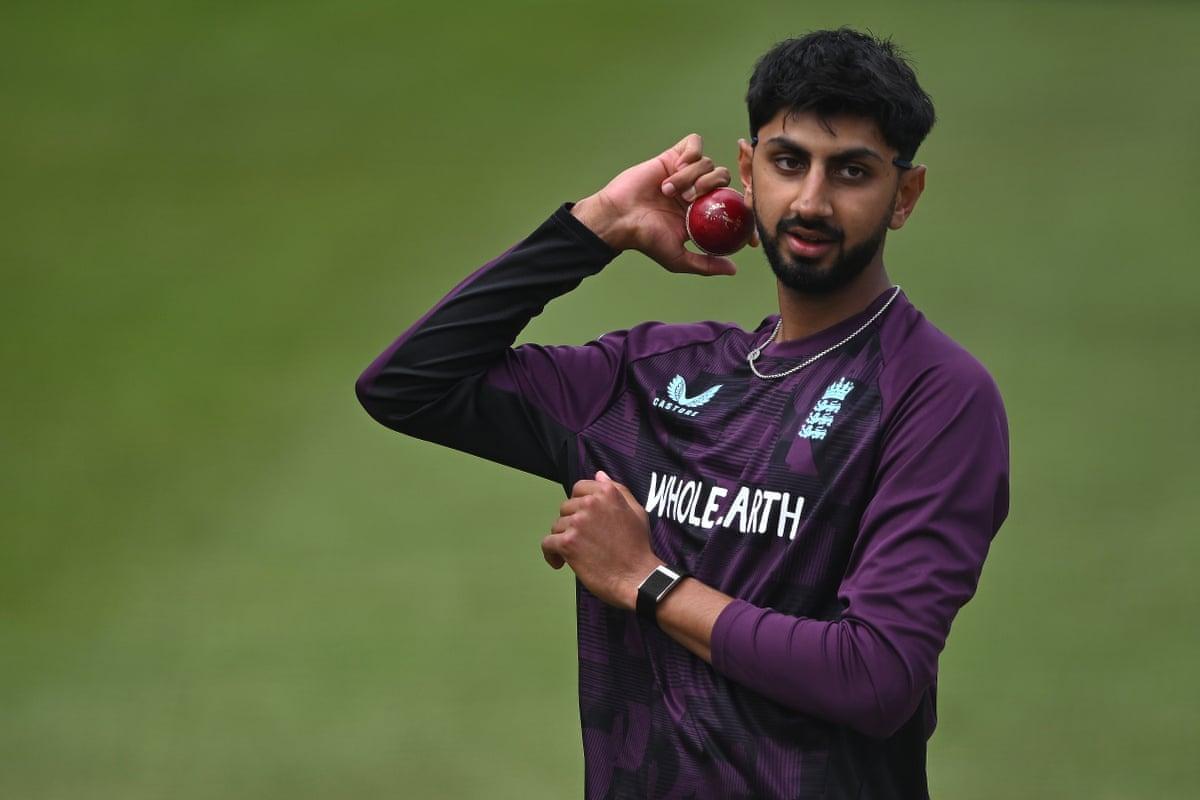
Shoaib Bashir has been excluded from England's squad for the tour of South Africa, a decision that crystallises a broader crisis afflicting red-ball spin bowling across international cricket. According to The Guardian, the 23-year-old's omission represents not merely a squad rotation but the formalisation of a shift in how England values specialist spinners in an era dominated by T20 cricket and algorithmic selection methods.
The selector Marcus North defended the decision by emphasising Bashir's youth and potential, yet the reasoning revealed deeper structural problems. England named uncapped left-arm spinner Liam Patterson-White in its 15-player Test squad, a choice justified partly on the grounds that Patterson-White can bat, whereas Bashir contributes little with the willow. Bashir has instead been assigned to the England Lions red-ball squad, which will tour South Africa from 26 November to 21 December, with the possibility of elevation to the senior party should circumstances demand it.
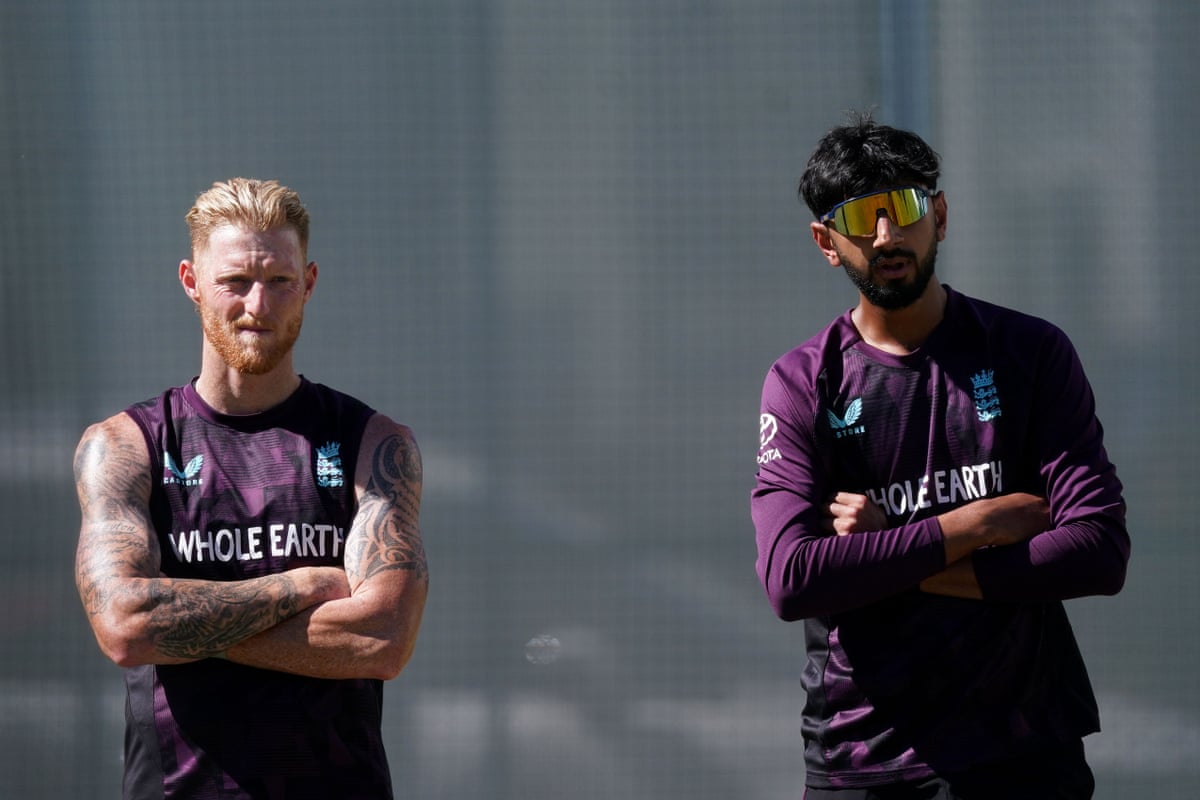
How did Bashir's England career reach this point?
Bashir's trajectory embodies a peculiar modern paradox: he was selected on the basis of algorithmic serendipity rather than conventional merit pathways. Ben Stokes discovered his bowling through viral social media clips and championed his inclusion, a decision rooted in intuition and visual impression rather than systematic development. The spinner made his Test debut during the Ashes and has since accumulated 71 wickets at an average of 39.4 across 21 matches, never returning a wicketless performance in any Test where he actually bowled. Yet despite receiving a central contract the month before the squad announcement, his position has steadily eroded.
Throughout the past year, Bashir existed in a state of perpetual precariousness—dropped without formally being dropped, treated as a luxury rather than a necessity. His exclusion from the South Africa tour formalises what had become increasingly apparent: he functions as a squad-filler, a fringe presence whose value proposition has been fundamentally questioned by the modern game's priorities and data-driven decision-making frameworks.
Why is Test match spin bowling in decline?
The deterioration of Bashir's prospects reflects a systemic contraction in the role of specialist spinners across international cricket. A quarter of all Tests played this decade have concluded within three days, while fewer than half reach a fifth day—the stage when pitch deterioration typically favours spin bowling. The World Test Championship has intensified pressure on teams to pursue results, forcing a strategic emphasis on pace bowling and result-oriented pitches, particularly outside Asia where spin traditionally flourishes.
The evidence of spin's marginalisation is stark. Sri Lanka recently fielded a Test team without a single specialist spinner. Australia entered the Sydney Test in January without a spinner for the first time since the 1880s. Nathan Lyon no longer commands an automatic place in Australia's XI, while India's Kuldeep Yadav—arguably the subcontinent's finest spinner—faces similar uncertainty. Ajaz Patel, who orchestrated New Zealand's victory in India two years ago, has played only one Test since that triumph. Will Jacks emerged as England's most-used spinner during the recent Ashes series, a telling indicator of how the position has been recalibrated.
Wrist spin and mystery spin have virtually vanished from five-day cricket, driven by the disproportionately superior returns available in Twenty20 leagues. Even the reliable, all-surface spinner—the traditional backbone of red-ball attacks—faces obsolescence. The gravitational pull of Indian Premier League money and franchise cricket has fundamentally reoriented how cricket boards evaluate talent, with data analytics systematically privileging what is easily quantifiable: runs scored, pace generated, batting utility.
What does Bashir's case reveal about English cricket's approach to spinners?
Bashir's selection was itself a product of this algorithmic age—a gamble that England could circumvent conventional talent pathways by identifying raw ability through social media and accelerating development through high-profile exposure. It was, in many respects, a quixotic venture: selection based on hunches, silhouettes, and the serendipity of a captain scrolling through viral clips rather than systematic progression through county cricket and age-group structures. The narrative was compelling, and Bashir proved a wholehearted competitor, but the experiment has ultimately vindicated those who questioned whether such an approach could sustain a specialist spinner's career.
England's historical treatment of spinners reveals a deeper institutional bias. Jack Leach is frequently dismissed as a product of Taunton's conditions rather than a genuine craftsman, while Mohammad Abbas receives credit for mastering seaming pitches. Farhan Ahmed, a teenager whom Graeme Swann has identified as possessing world-class potential for the next 15 years, has not played a Championship match for Nottinghamshire since July 2025—yet his teammate Patterson-White, who can bat, remains in contention. The pattern is consistent: spinners are valued as secondary skills, useful primarily when they contribute with the bat, whereas specialist fast bowlers command investment and patience.
How does T20 cricket shape these decisions?
The fundamental driver of spin bowling's decline is the economic and cultural dominance of Twenty20 cricket. Data analytics, which increasingly govern selection decisions, naturally privilege metrics that are straightforward to measure: runs, strike rates, batting averages. The qualities that define elite spin bowling—the ability to build pressure through subtle variations, the parabolic geometry of a perfectly delivered off-break, the strategic value of containing runs across long spells—resist quantification and therefore receive diminished weight in algorithmic evaluation.
This creates a vicious cycle. As T20 leagues proliferate and franchise cricket expands, young spinners gravitate toward formats where their skills command premium salaries. Red-ball cricket, by contrast, offers diminishing returns for specialists who cannot contribute with the bat. Coaching structures, talent identification systems, and investment priorities all orient toward the T20 ecosystem, leaving traditional spin bowling increasingly marginalised within national team planning.
What happens next for Bashir and England's spin strategy?
Bashir will likely resurface during England's two-match tour of Bangladesh in February 2027, though his trajectory suggests a future as a squad rotation player rather than a cornerstone of the attack. More immediately, selector Marcus North indicated that England would continue investing in Bashir, and that Lions players could be promoted to the senior touring party if conditions warranted elevation.
England's first Test against South Africa is scheduled for Johannesburg on 17 December 2026, with subsequent matches in Centurion on 26 December and Cape Town on 3 January 2027. The tour arrives at a moment when South Africa's Simon Harmer recently took 10 wickets in a Test against Australia, a performance that underscores spin bowling's residual potency on certain surfaces. Whether England's selection strategy will adapt to such conditions remains uncertain under new head coach Stephen Fleming, who is overseeing his first Test series in the role.
The Lions' preparation camp in Pietermaritzburg begins on 25 November, offering Bashir and fellow squad members the opportunity to stake claims for inclusion. Yet the broader trajectory is unmistakable: red-ball spin bowling is being systematically devalued across international cricket, with specialist spinners increasingly treated as secondary options rather than essential components of a balanced attack. Bashir's omission is not an isolated incident but a symptom of a sport being reshaped by T20 economics, data-driven decision-making, and the gravitational pull of franchise cricket. Whether traditional spin bowling can survive this transformation remains one of the defining questions facing the future of Test cricket itself.