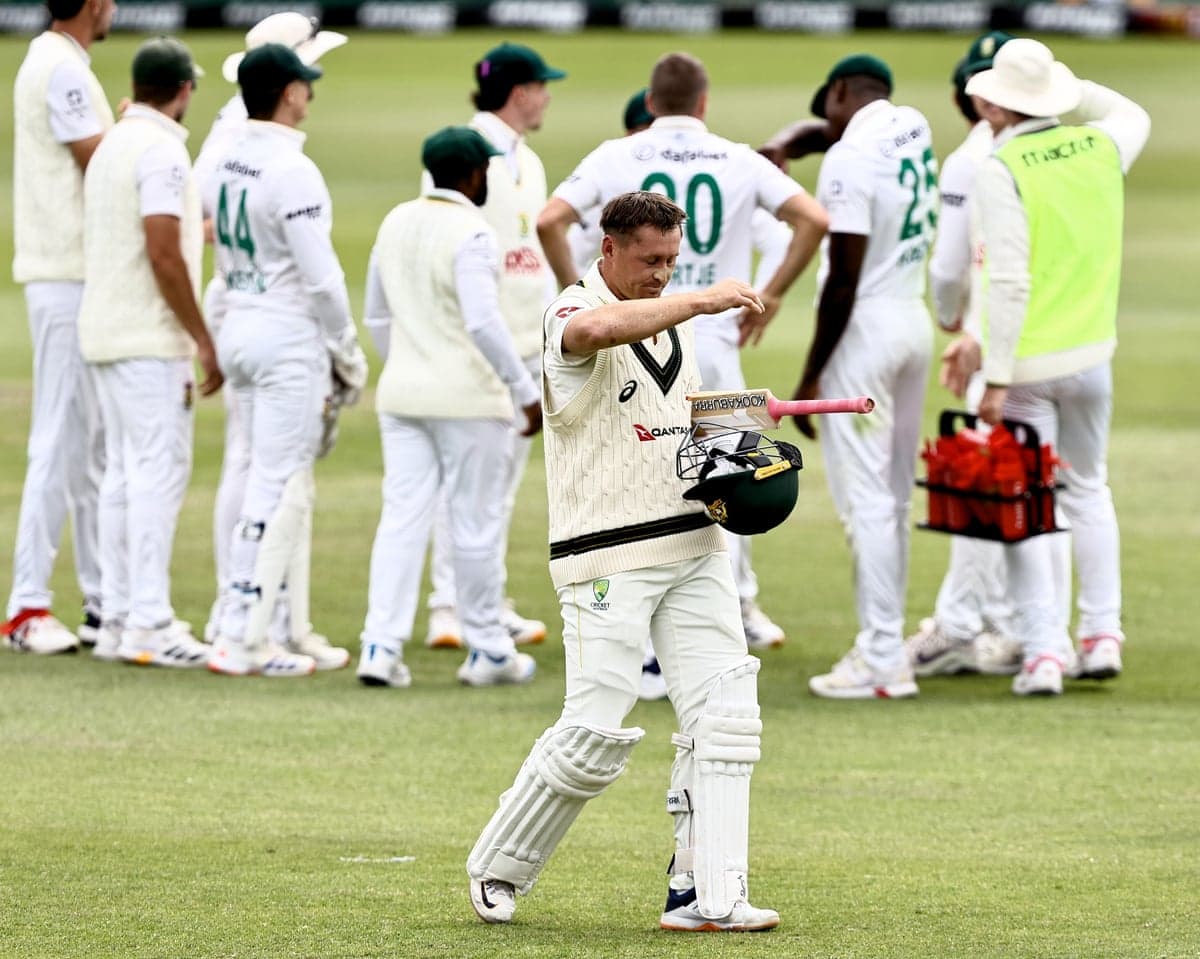
Australia's Test team returned from South Africa in 2026 having surrendered a series lead, losing the final two matches after winning the opener in Durban. The side was bowled out for low totals in both defeats, prompting serious questions about the decision-making that shaped the squad. According to The Guardian, the team's management has relied on vague justifications rather than acknowledging the flaws in their selections.
Captain Pat Cummins has maintained that performances do not define the team's trajectory, concluding his post-match remarks in Cape Town by stating he remained "overall relatively happy with how we're going". Yet having twice fielded a side reduced to 4 for 40 before losing both matches decisively, such equanimity sits uneasily with the scale of the collapse. The pattern reflects a broader reluctance among leadership—from Cummins through coach Andrew McDonald to selection chair George Bailey—to confront evident problems directly.
The most indefensible decision centred on Nic Maddinson's recall to open the batting. Selectors brought in a player whose last substantial first-class innings came more than two and a half years earlier, who had not played in 19 months, and who had endured serious illness. According to BBC Sport, Maddinson had been diagnosed with cancer in 2025, with the disease spreading to his lung and abdominal lymph nodes before he completed chemotherapy and was cleared to resume his career. The Nightly reported that selectors intended the recall to provide batting flexibility and allow Matt Renshaw to bat at No. 5 while Cameron Green recovered from injury, with George Bailey indicating Maddinson remained in consideration for future series.
Asking such a player to face Kagiso Rabada in fading light gave him virtually no realistic chance of success—a fundamental obligation selectors must meet. The decision was unfair to the player, weakened the team's structure, disrupted the batting order, and inflicted lasting damage by signalling to state cricket that hard work counts for little among those outside the inner circle. The outcome proved predictable: four innings yielding 56 runs, with feet frozen except when retreating, desperate slashing strokes, and catches following.
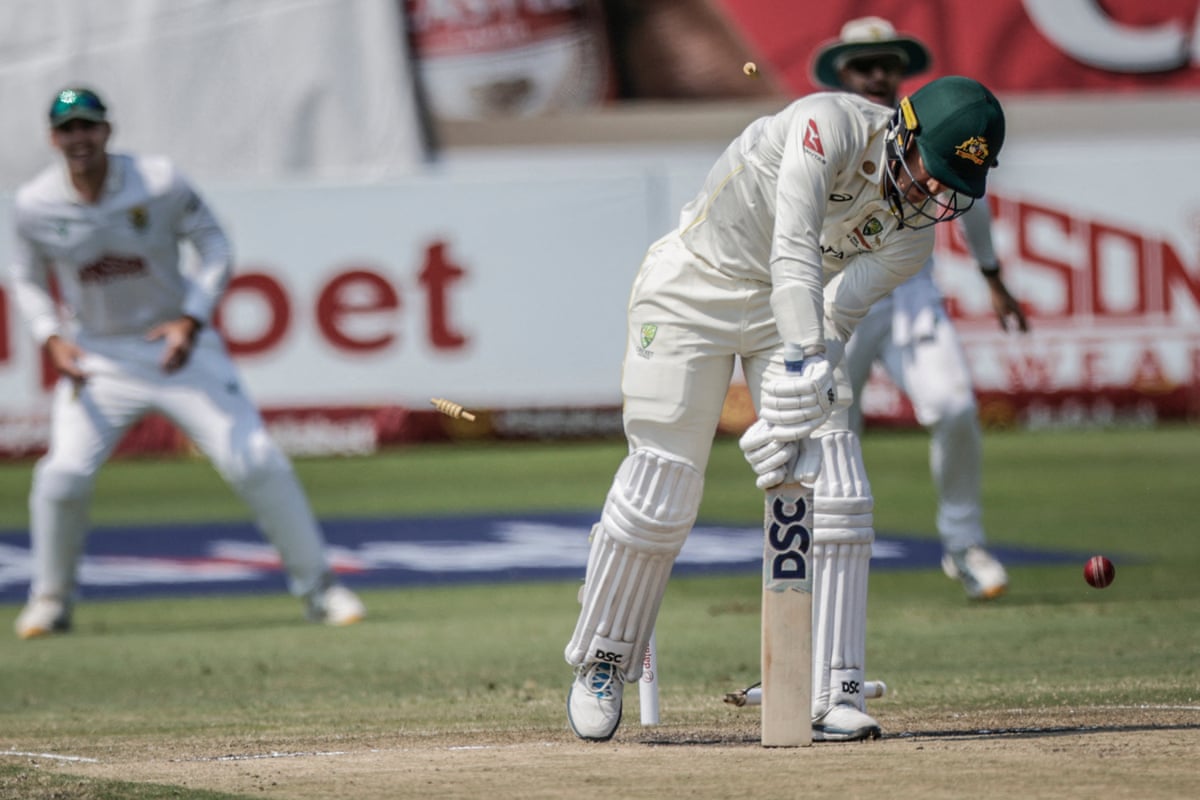
Before the series, Bailey dismissed concerns with a smug assertion that armchair selectors reading Shield scorecards faced inherent disadvantages against his panel's superior knowledge. After the first Test, McDonald employed what amounted to wholesale reframing, describing Maddinson's 33-ball duck—filled with loose strokes—as a fine example of disciplined batting. Neither acknowledged the obvious: players actively competing in cricket generally perform better than those inactive, and batsmen who have not scored runs for years are unlikely to reverse that trend suddenly.
The contradictions extended through the squad. Jake Weatherald received an expensive national contract, then was dropped after a single Test—an admission that at least one decision had been mistaken. His replacement departed the series not at Cape Town but back in the New South Wales middle order. Marnus Labuschagne, clearly requiring a reset after three poor years, continued at three despite widespread recognition of his struggles through the Ashes and Bangladesh series. His scores of 0 and 4 in Cape Town proved decisive in losing that match.
Why promote Alex Carey to six?
The needless elevation of Alex Carey to the sixth position added nothing to his capabilities at age 35. Moving him up shortened his break after keeping wicket, ill-suited his counterpunching style, and pushed Josh Inglis, Beau Webster, and now Cooper Connolly into a confusingly peripheral seventh position. All-rounders in that spot lack the responsibility and trust of the top six, rarely producing strong results. The shift coincided with Webster's decline and his replacement by Connolly.
What is Cooper Connolly's role?
Connolly possesses talent, but the attempt to fast-track him as a Test option rests on no foundation in results. Framed as an all-rounder, he made his debut in 2025 without a first-class hundred or wicket to his name. During the 20 months between that Test and his second appearance this week, his wicket tally rose to five while his century column remained unchanged. He bowled 13 overs in the match with minimal impact, a player without a clear function.
Where does the batting go from here?
Batting problems have been evident for years. An Inglis century in Cape Town and Cameron Green's recent improvement expand the middle-order candidate list, yet they do not address fundamental questions higher up the order. Travis Head's aggressive approach, effective in many contexts, raises questions about its utility when batting conditions tighten. Steve Smith's erratic tour leaves his optimal role unresolved. According to ESPN, Australia lost the third Test by 176 runs, giving South Africa the series 2–1 after Australia had won the opener and South Africa the second Test by an innings and 31 runs.
What comes next for Australia?
The team's management must present decisions grounded in logic rather than offering hollow justifications for flawed choices. Supporters' anger at the South Africa failure stems from a clear source: observers outside the inner circle identified the problems coming, while the highly paid decision-makers were left surprised. South Africa's next scheduled Test series is against Bangladesh, beginning in Johannesburg on November 15, 2026, giving Australia time to recalibrate before their own next assignment.
Key Facts
- Australia led 1–0 after the first Test in Durban but lost the series 2–1 to South Africa
- Nic Maddinson, recalled after 19 months away and following cancer treatment, scored 56 runs across four innings
- Marnus Labuschagne's 0 and 4 in Cape Town proved pivotal in Australia losing the deciding Test
- Selection decisions including Jake Weatherald's contract and Alex Carey's promotion to six have been contradicted by subsequent moves
- The team's leadership has avoided direct acknowledgment of selection failures, instead offering reframed justifications