Australia's first-innings total of 390 proved decisive on day three of the opening Test against South Africa in Durban, with the home side bowled out for 284 to trail by 106 runs. The quartet of Mitchell Starc, Josh Hazlewood, Pat Cummins and Nathan Lyon combined to dismantle South Africa's batting lineup, claiming nine wickets across the innings and extending their historic partnership.
The achievement by Starc, Hazlewood, Cummins and Lyon represents an unprecedented chapter in Test cricket history. All four bowlers entered this match as members of the exclusive 300-wicket club, having first achieved this distinction together during a Test in Mackay two months earlier. They remain the only quartet in cricket history to take the field simultaneously as part of this elite group. By the conclusion of day three, their combined tally had grown to 1,650 wickets, with Cummins finishing with three for 54, while Hazlewood and Lyon took two wickets each.
Beyond individual milestones, these four bowlers have redefined what it means to function as a cohesive unit. Their partnership across 38 Tests and counting shatters the previous record for frontline bowling combinations, however that group is defined. The age profile of the quartet—each player exceeding 33 years—might ordinarily invite questions about longevity, yet their sustained excellence continues to silence such doubts.
How did Australia's bowlers dismantle South Africa's innings?
South Africa's third day began with promise. The pitch appeared docile, a gentle breeze offered little assistance to the bowlers, and Aiden Markram and David Bedingham were accumulating boundaries with relative ease. Bedingham struck three consecutive fours from Starc in the opening session, suggesting the home side might build a substantial partnership.
The momentum shifted dramatically when Starc found his rhythm. Operating around the wicket, he drew Markram's edge on 37 with a delivery that lifted sharply, forcing an error from the batsman's ambitious drive. Temba Bavuma followed almost immediately, caught at slip attempting a reverse-sweep off Lyon. Bedingham's resistance ended at 49 when Cummins extracted lift to induce another edge. The scorecard at that juncture reflected balanced contributions: Cummins one for 18, Lyon one for 14, Starc one for 37, Hazlewood one for 35.
The match appeared to be drifting when Wiaan Mulder and Tristan Stubbs settled into a partnership that reached the 46th over. Australia's resort to Travis Head as a part-time spinner offered temporary respite, with Mulder striking the occasional boundary. However, Cummins reasserted control with a spell of hostile bowling that proved decisive. His breakthrough came via a short-pitched delivery that, despite being pitched outside off-stump, carried sufficient pace and bounce to unsettle Mulder. The batsman's attempt to withdraw from the shot came too late, and the ball lobbed to a fielder. In Cummins' next over, Stubbs fell to a similar tactic, hooking carelessly to fine leg. The 55-run partnership evaporated as both batsmen departed in the 30s.
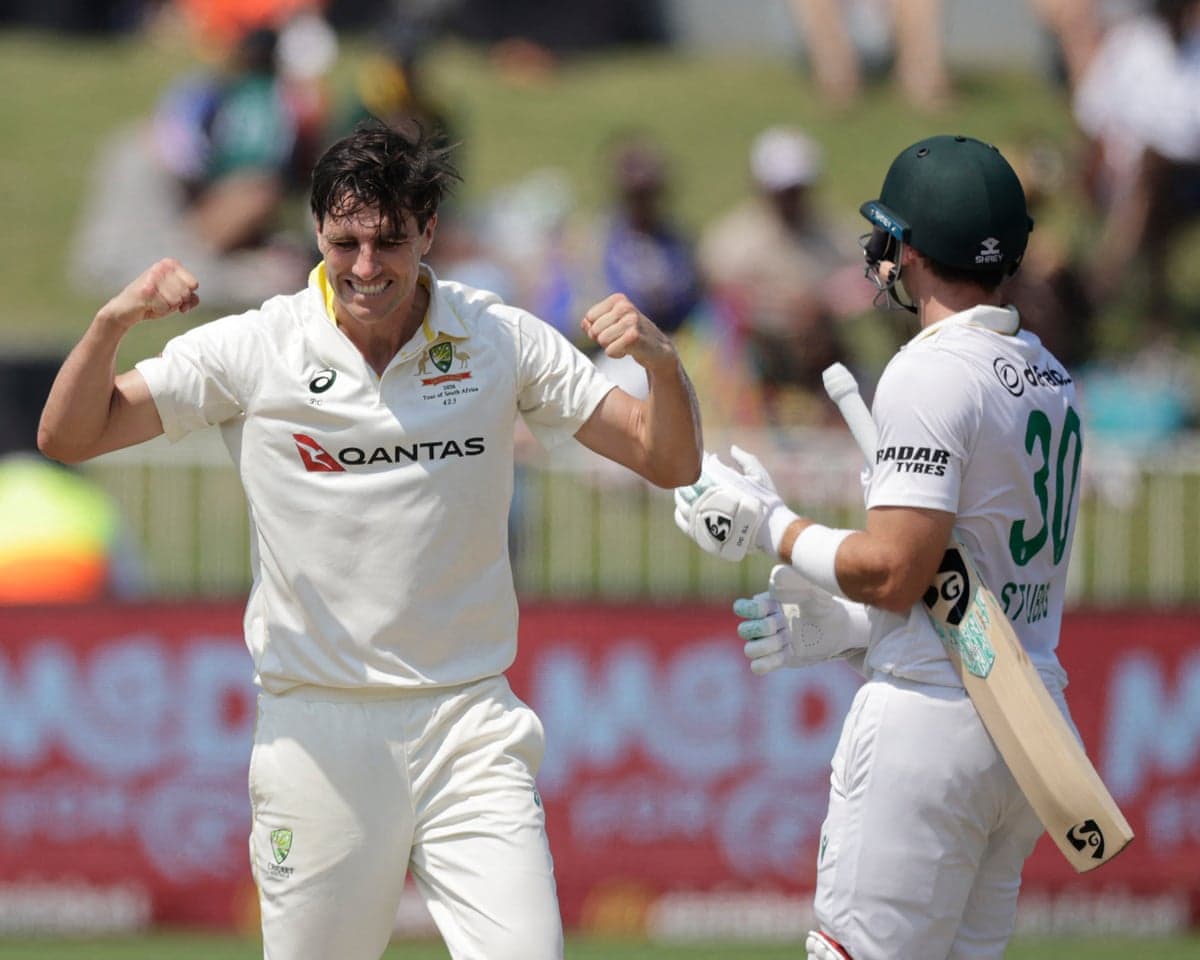
Marco Jansen's aggressive approach yielded 26 runs from 20 balls but little else of value for South Africa. His dismissal, caught at mid-off off Hazlewood, left the home side at 197 for eight. The tail attempted resistance through Simon Harmer, who added 52 runs with Keshav Maharaj and 35 with Anrich Nortje. Maharaj was caught at cover off Starc following the tea interval, while Nortje fell to a straightforward slip catch, also off Starc. Beau Webster's dismissal of the number 11 prevented Australia's four bowlers from claiming all ten wickets.
What role did Steve Smith's fielding play in Australia's dominance?
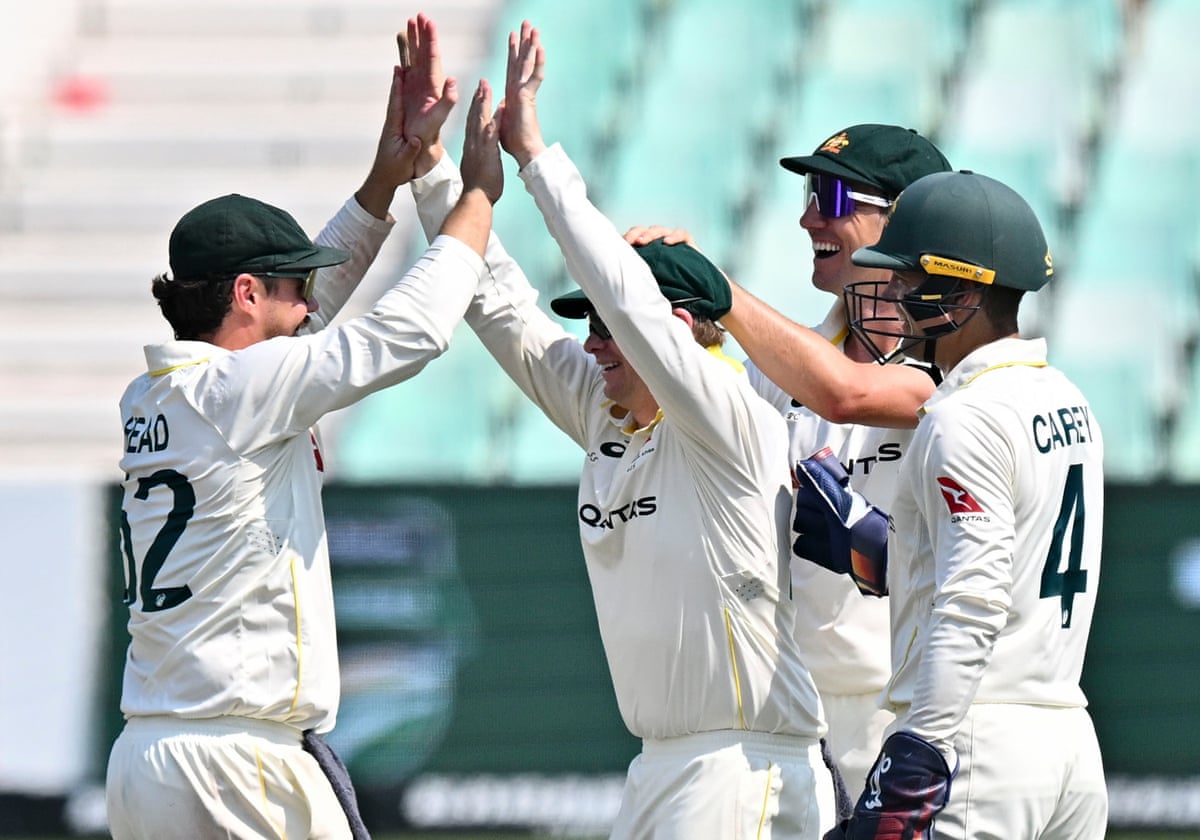
Steve Smith's catching prowess proved instrumental in Australia's bowling success. His three dismissals on day three elevated him back to the top of the Test catching list, in an ongoing statistical contest with England's Joe Root that will continue as long as both players remain active. Of Smith's 223 Test catches to date, 150 have come directly from deliveries bowled by the current quartet of Australian bowlers.
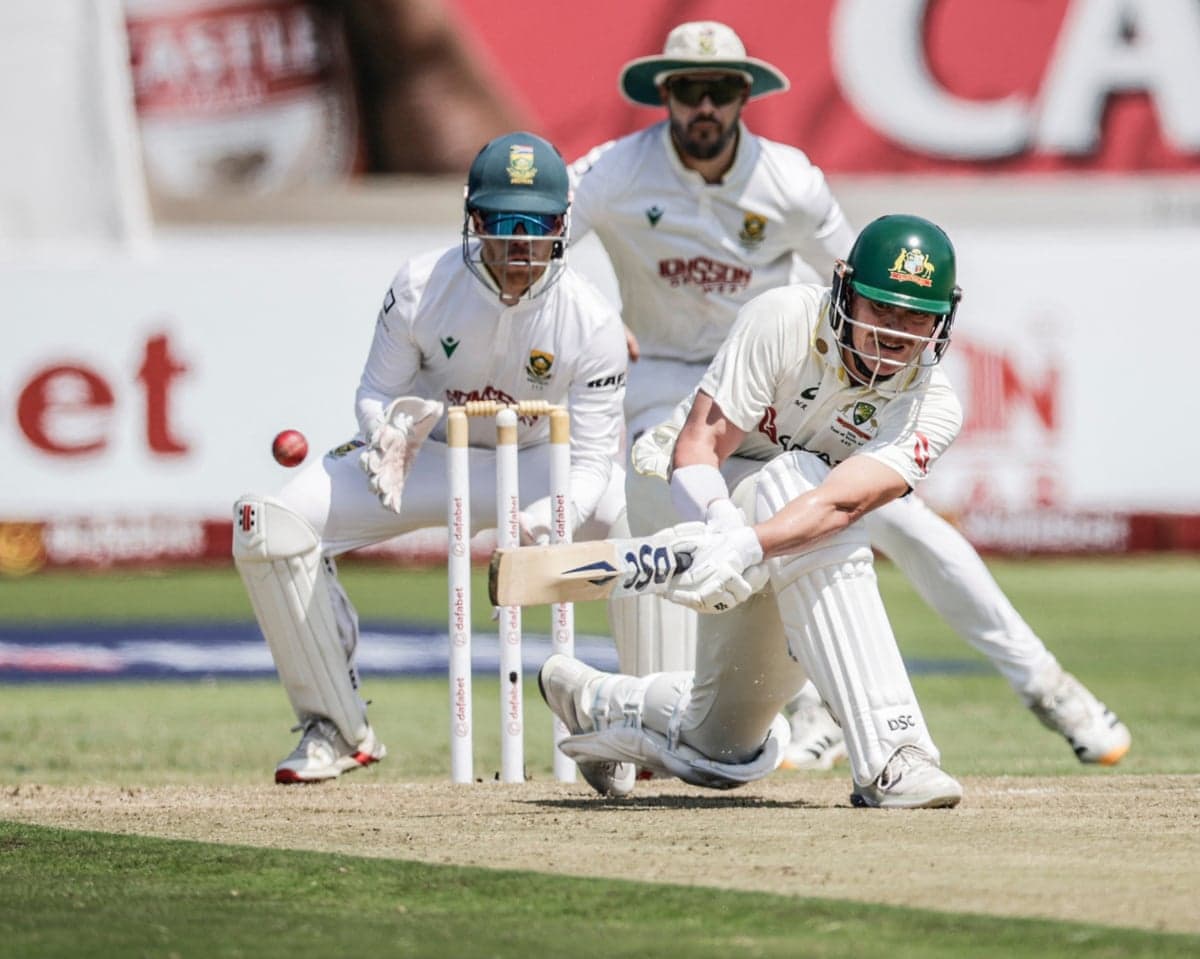
Smith's first catch of the day saw him dive across from second slip to intercept a ball destined for first slip when Bedingham edged Starc. When Bavuma attempted a reverse-sweep off Lyon, Smith demonstrated exceptional footwork and anticipation, sidestepping several metres to position himself in the path of a delivery that would otherwise have eluded the fielders. His third catch, dismissing Kyle Verreynne, required a full dive to his right and a one-handed effort that Smith himself rated among his finest fielding moments. Smith took two notable slip catches, including Bavuma off Lyon and Verreynne off Lyon, showcasing the synchronicity between bowler and fielder that has defined this partnership.
What is the broader context of this Test match?
This opening Test forms part of the 2025–27 ICC World Test Championship, a competition that determines the leading Test nations over a two-year cycle. The match is being contested at Kingsmead in Durban, one of South Africa's traditional strongholds, yet Australia's performance through three days suggests they have seized the initiative.
Australia's first-innings total of 390 reflected solid batting contributions, though the precise breakdown of individual scores was overshadowed by the bowling performance. South Africa's reply of 284 left them trailing significantly, and with Australia's second innings yet to commence, the home side faces an uphill task to salvage the match.
What happens next in the Test?
The first Test is scheduled to continue at Kingsmead on October 12, with the match running through October 9–13. Australia's second innings will determine whether South Africa receives a realistic opportunity to chase a target or whether the match concludes decisively in Australia's favour. The trajectory of play thus far suggests Australia holds a commanding position, though Test cricket's unpredictability means the outcome remains uncertain.
The performance by Starc, Hazlewood, Cummins and Lyon underscores why their longevity at the highest level continues to defy conventional wisdom about aging athletes in professional sport. While their ages might invite scrutiny, their quality and effectiveness remain undimmed, and their historic partnership shows no signs of diminishing.