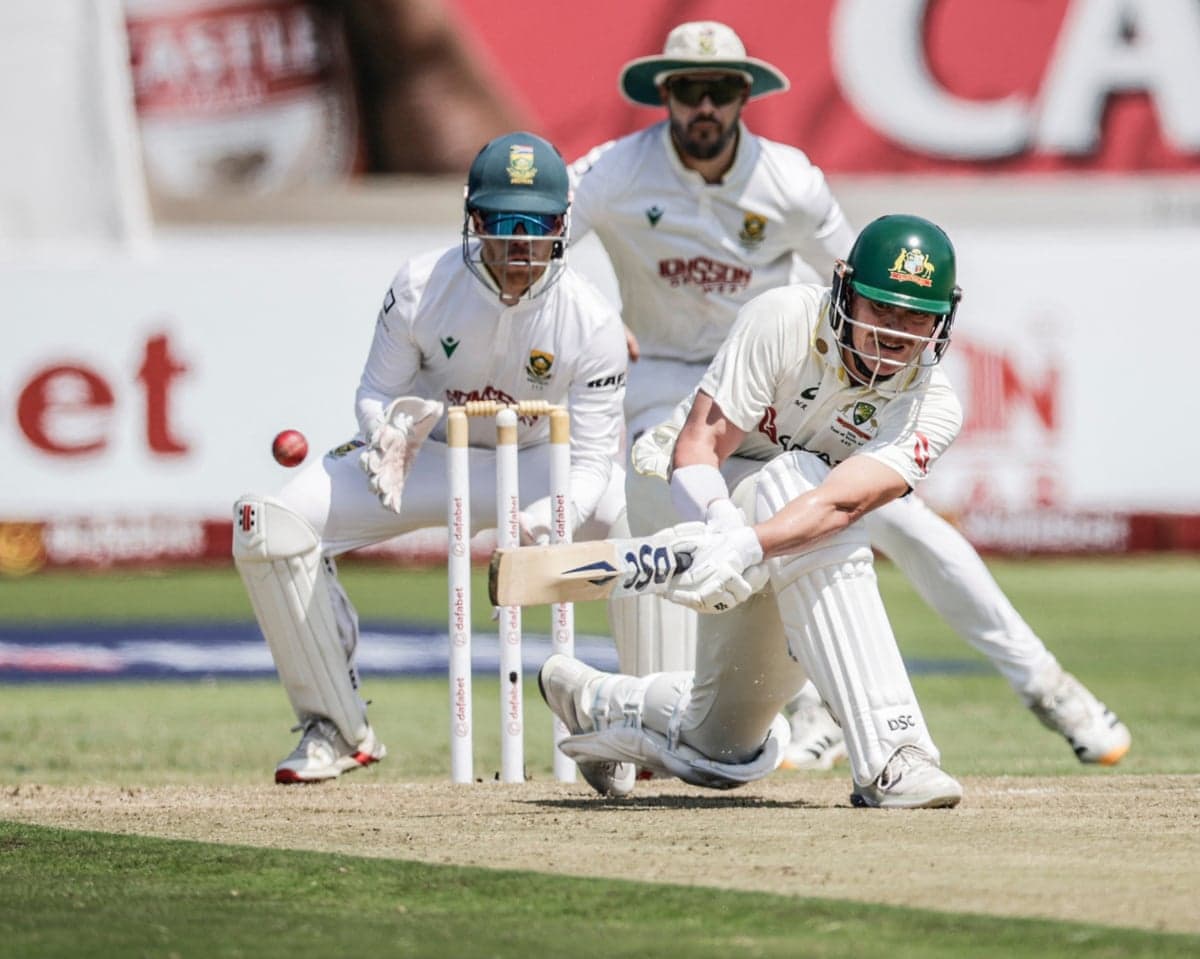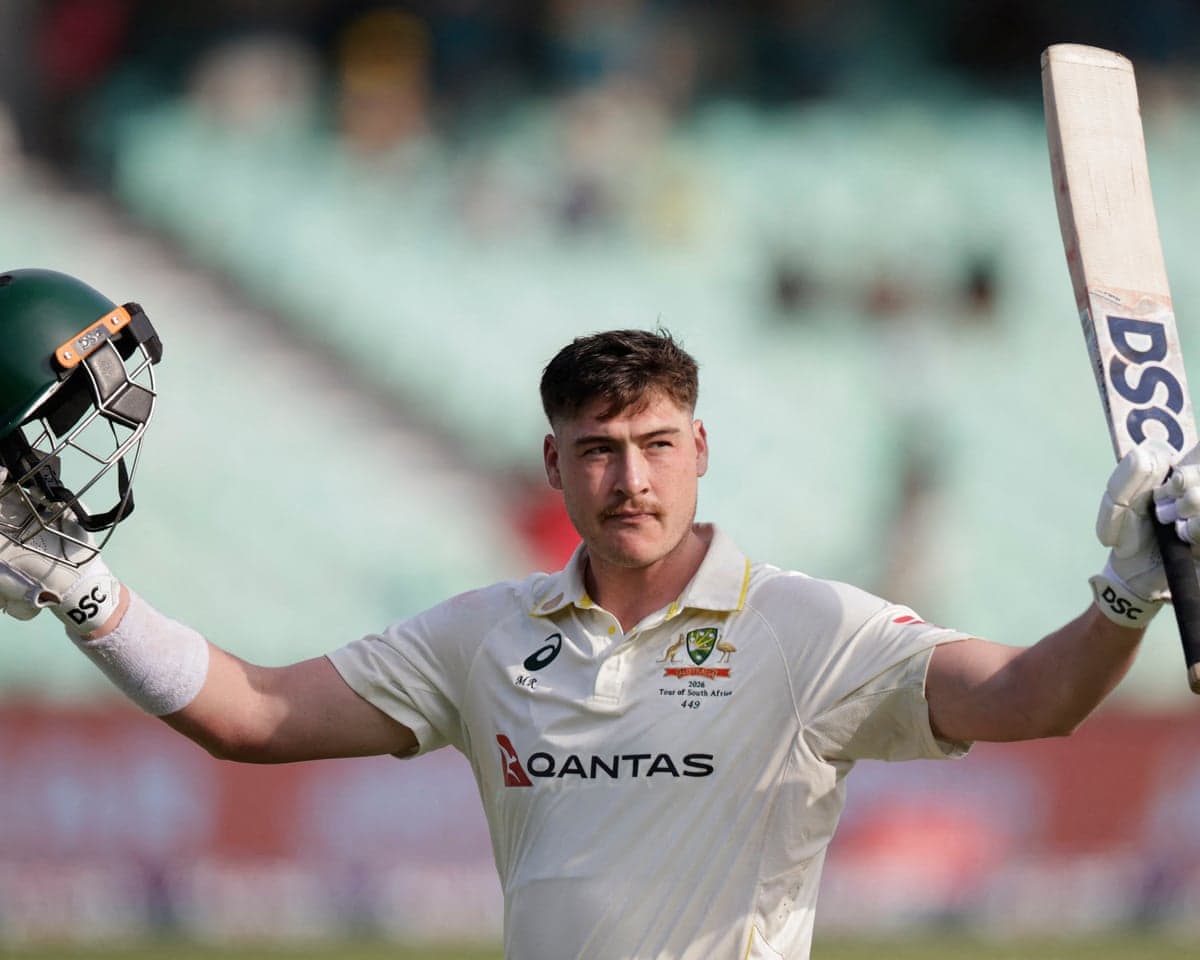
Matthew Renshaw's unbeaten 190 has transformed Australia's position in the first Test against South Africa at Kingsmead in Durban. After collapsing to 124 for six on the opening day, the 30-year-old steadied the innings and built it into a commanding total of 390, with crucial support from the lower order helping him bat through two extended sessions. South Africa reached 27 for one by stumps on day two, already 363 runs behind.
Renshaw's century marked his return to Test prominence after a nine-year and 280-day drought between hundreds. The Middlesbrough-born batter, who was discarded after averaging 19.41 across his first 10 Tests following a debut aged 20, has now secured a proper second chance at international cricket with a display built on the fundamentals of patience, concentration and careful pacing rather than any elaborate technique.
The decision to promote Nic Maddinson to open in Durban, which proved unsuccessful when he was bowled for a duck, had an unexpected benefit: it pushed Renshaw down to number five. From that position, he resumed his unbeaten 46 from day one and continued in the same measured style, defending calmly, rotating the strike with singles and capitalising on loose deliveries. On day one, he attacked only 14.2 per cent of deliveries in making his first 50 runs, the lowest figure among Australia's top order. Despite testing spells from Marco Jansen and Anrich Nortje, South Africa's bowling lacked the consistency to dislodge him. Wiaan Mulder's more modest pace and bounce proved more threatening, and he removed both Pat Cummins, who fell for 43 after a lapse in concentration, and Mitchell Starc with an unplayable delivery that pitched on leg stump and seamed away.
At 230 for eight, South Africa appeared poised for a quick finish. However, captain Temba Bavuma's decision to spread the field for Renshaw backfired. The Australian batter happily defended or accumulated runs early in each over, then turned over strike from the fourth or fifth ball to allow Nathan Lyon to face the remaining deliveries. Lyon's temperament proved equally crucial: he did not score for 16 overs either side of lunch, facing 24 balls in total, yet remained unruffled.
The partnership between Renshaw and Lyon flourished as the pitch deteriorated. By the second session, South African bowling had lost its bite, prompting the inclusion of part-timer Aiden Markram alongside the two specialist spinners. Lyon had never previously been part of a century stand in Test cricket, but that milestone arrived: no cricketer has played more than his 144 Tests before achieving such a partnership. According to live coverage from the match, their 134-run stand became the highest ninth-wicket partnership recorded at Kingsmead.
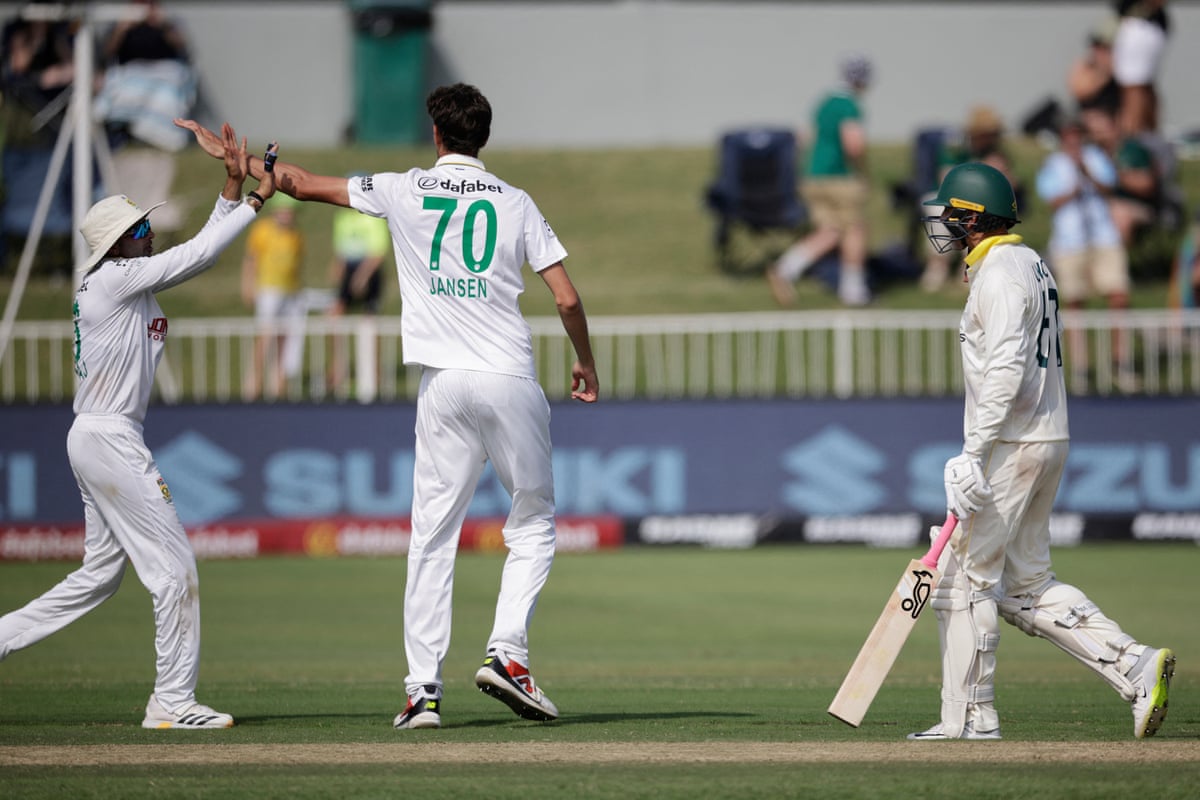
Jansen eventually ended the partnership by striking Lyon in the foot with a fierce yorker from around the wicket, but by then the damage was done. Lyon contributed 27 from 92 balls, while Renshaw accelerated, uppercutting Nortje for six and pulling for four. Josh Hazlewood provided further support, helping Renshaw bat through a marathon session lasting two hours and 45 minutes, extended once to make up lost overs and again because Australia had nine wickets down.
Renshaw fell two balls after the resumption, driving off-spinner Simon Harmer to slip, but his innings was otherwise flawless. According to match reports, his century came off 204 balls, with a reverse-sweep boundary helping him reach 150. The 190 set multiple records: it is the highest score by an Australian at Kingsmead, surpassing Phil Hughes's 160, and the highest score by any batter batting at five or below at the venue, eclipsing the previous mark set at Headingley. According to live coverage, Australia reached 390 all out with Renshaw unbeaten on 190 and Hazlewood on five at tea.
What does this mean for Renshaw's future?
Renshaw's selection at number five came after Australia's controversial decision to open with Maddinson, which backfired spectacularly. However, his position in the batting order remains uncertain. The shuttle between number five and opening has continued throughout Australia's recent series, with Usman Khawaja moving from five to the top, then Travis Head doing the same. Renshaw has now been moved from opening to five, but may soon have to return to the top of the order to accommodate Cameron Green, who was Australia's most convincing batter in the previous series but is currently injured. When Renshaw was recalled in August, it was as an opener in place of Jake Weatherald, but his performance at number five has surely secured his immediate future at least. With Green expected to return and Maddinson's failure on day one, a potential solution to Australia's top-order struggles would be to move Renshaw back up the order, reuniting him with Head, who made the surprise move to opener to impressive effect in the Ashes with centuries in Perth, Adelaide and Sydney, but has also shown vulnerability in failing to pass 22 in his four innings since.
How significant is this comeback?
At nine years and 280 days, Renshaw's wait between Test centuries ranks among the longest in Australian cricket history. Only Bob Simpson and Warren Bardsley have endured longer droughts between hundreds. His celebration was chiefly a smile of vast relief, reflecting the weight of expectation that has followed him since his early promise as a 20-year-old prospect. The innings also vindicated Australia's bowling-heavy selection strategy for the South African tour, which mirrors the structure used in 2018, compensating for uncertain batting with elite pace bowling. Renshaw's background adds another dimension to his comeback: born in Middlesbrough, he is a childhood friend of England captain Joe Root, whose father played together with Renshaw's father in English club cricket before Renshaw's parents left the UK for New Zealand and then Australia when he was seven.
Australia's bowlers had limited opportunity to press their advantage before bad light halted play in the final session, managing fewer than nine overs. Josh Hazlewood did remove opener Ryan Rickelton with a drive to slip from a ball that lacked sufficient length, according to live coverage, but South Africa will begin day three with a substantial deficit to overcome.
What happens next?
The second Test of the series is scheduled for 18–22 October at St George's Park in Gqeberha, giving Australia the chance to build on this strong position. Renshaw's performance has answered immediate questions about the middle order's stability, though the broader question of where he will bat in future matches remains unresolved. This series has been eagerly anticipated, given it is a repeat of last year's World Test Championship final, which was won by South Africa, and is the third in a possible 21 Tests for Australia before the end of the Ashes next summer.