Cricket Australia had avoided hosting a Test against Bangladesh for 23 years, a decision rooted in financial pragmatism rather than sporting merit. The governing body calculated that staging such a match would drain resources without generating sufficient revenue to justify the outlay. That calculation shifted only when the World Test Championship mandate forced administrators to end the drought. For Australia's current batting unit, the two-Test series that followed proved equally unrewarding, despite the team securing a series victory.
The manner in which Australia won—particularly the emphatic five-session conclusion in Mackay—will offer little comfort if the forthcoming contests against South Africa, New Zealand, India and England unfold poorly. The series scoreline masks a deeper malaise: the team's batting remains fundamentally fragile, propped up repeatedly by exceptional bowling performances rather than resolute accumulation.
Australia's current bowling attack represents a generational achievement. Before the Mackay Test, no Test team had fielded all four bowlers simultaneously in the 300-wicket club. Two of those four rank among the top 10 wicket-takers in Test history. When an opponent cannot score runs, the burden on batting diminishes dramatically. In recent years, Australia's bowling has repeatedly compensated for batting shortcomings, allowing mediocre batting performances to pass without consequence.
In Darwin, visiting batters managed to negotiate Mitchell Starc, Josh Hazlewood, Pat Cummins and Nathan Lyon effectively enough that Australia's specialist batters nearly surrendered the match by an innings. In Mackay, where Australia prevailed, the batting unit showed no meaningful improvement. Scorecards of 152 for six and 193 for six in the first Test deteriorated to 146 for six in the second. This decline was masked only by bowling so dominant that even a mid-strength total sufficed for victory.
The upshot is that Bangladesh's visit has left the ideal Australian team structure even more uncertain than before. With Australia's first Test in South Africa scheduled for 9–13 October 2026 in Durban—a tour featuring fast bowlers and conditions suited to pace—the batting order bristles with question marks. Only one position has gained clarity from the Bangladesh series: number five for Cameron Green.
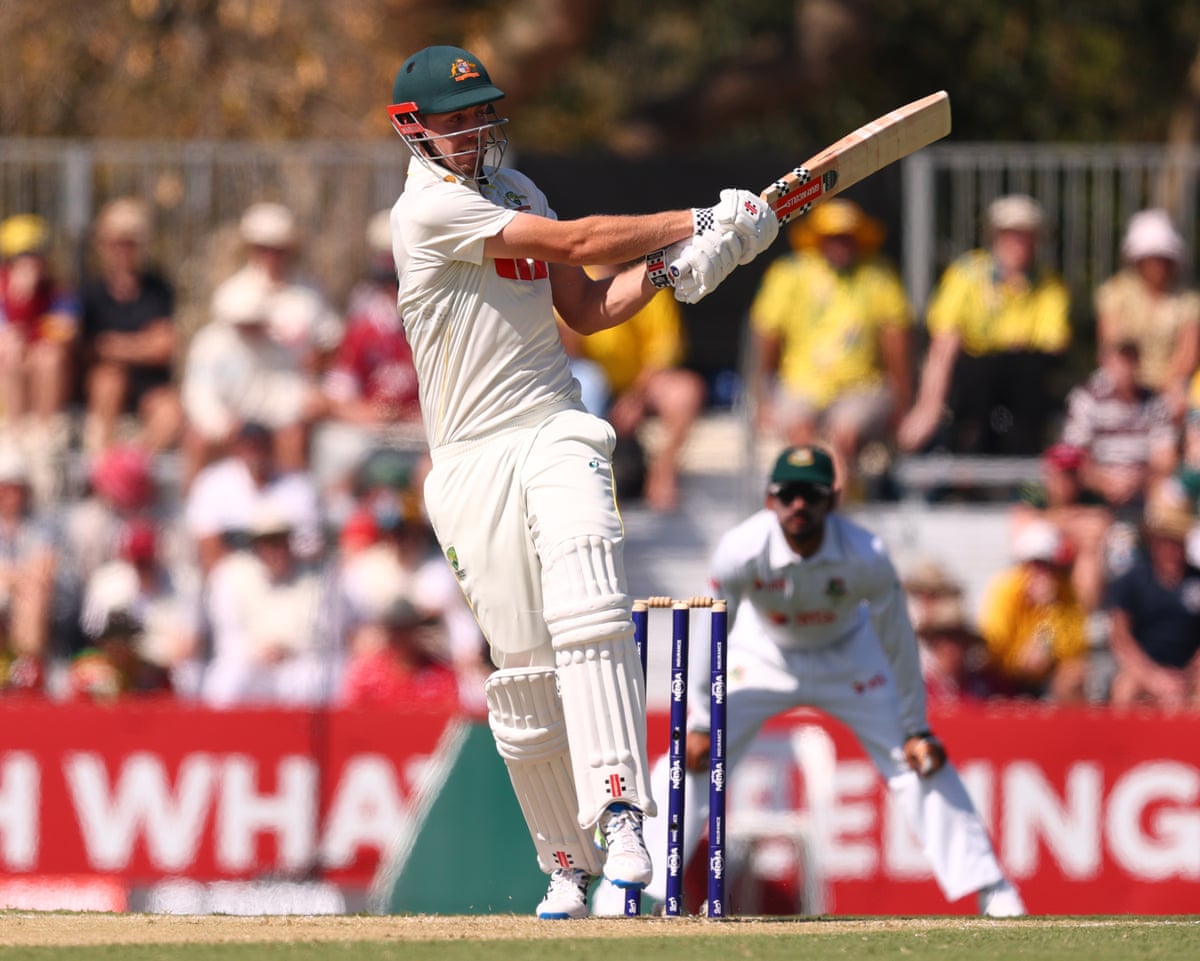
Green's rearguard century in Darwin might have altered the result had he received adequate support, while his 67 in Mackay proved crucial to Australia's eventual dominance. After a sequence of underwhelming returns, his improved patience and decision-making offered genuine encouragement. His selection appears secure, though further development remains necessary.

Steve Smith remains manifestly Australia's finest batter when performing at full capacity, yet the steely concentration that once propelled him toward centuries now appears more likely to dissipate between the 40s and 70s. Smith at number four represents the only other locked-in position. Travis Head is certain to play, but his series proved more bust than boom given the inherent risks of his aggressive approach. Conversation has already begun about whether his tenure at the top of the order should prove temporary, with suggestions he might return to the middle order.
This instability at the top stems partly from the axing of Jake Weatherald, the sole sacrifice offered to atone for Darwin's failure. Weatherald had been granted latitude following a poor Ashes campaign, with selectors providing encouragement and a national contract. An opportunity existed for him to capitalise on that backing. However, if selectors intended to move against him, that decision should have arrived during the Ashes itself. Having chosen to persist with him eight months later, that commitment needed to extend beyond two innings. Now the team enjoys the benefits of neither approach. In his place, Matt Renshaw received 10 balls and a leading edge in the second Test, insufficient opportunity to establish momentum. Whether he represents the correct choice for South Africa remains unknowable, least of all to Renshaw himself.
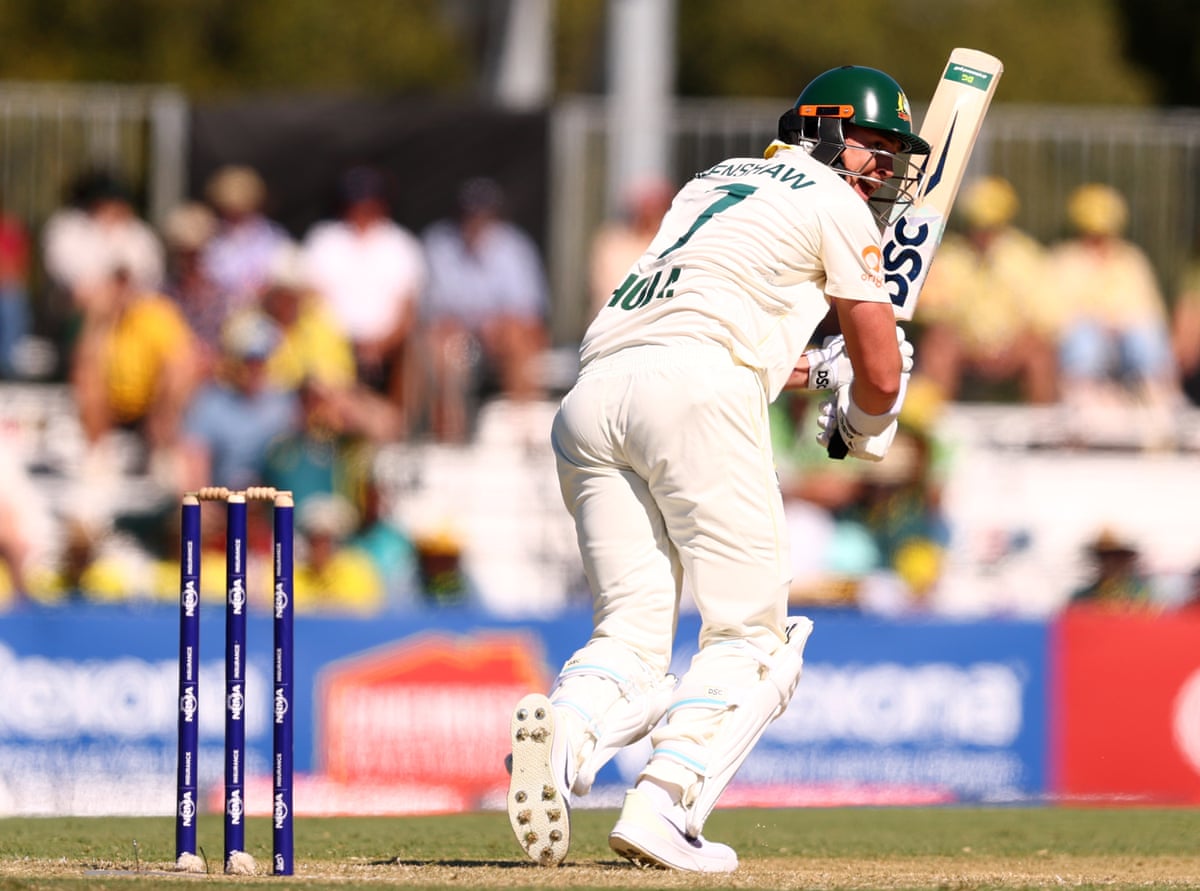
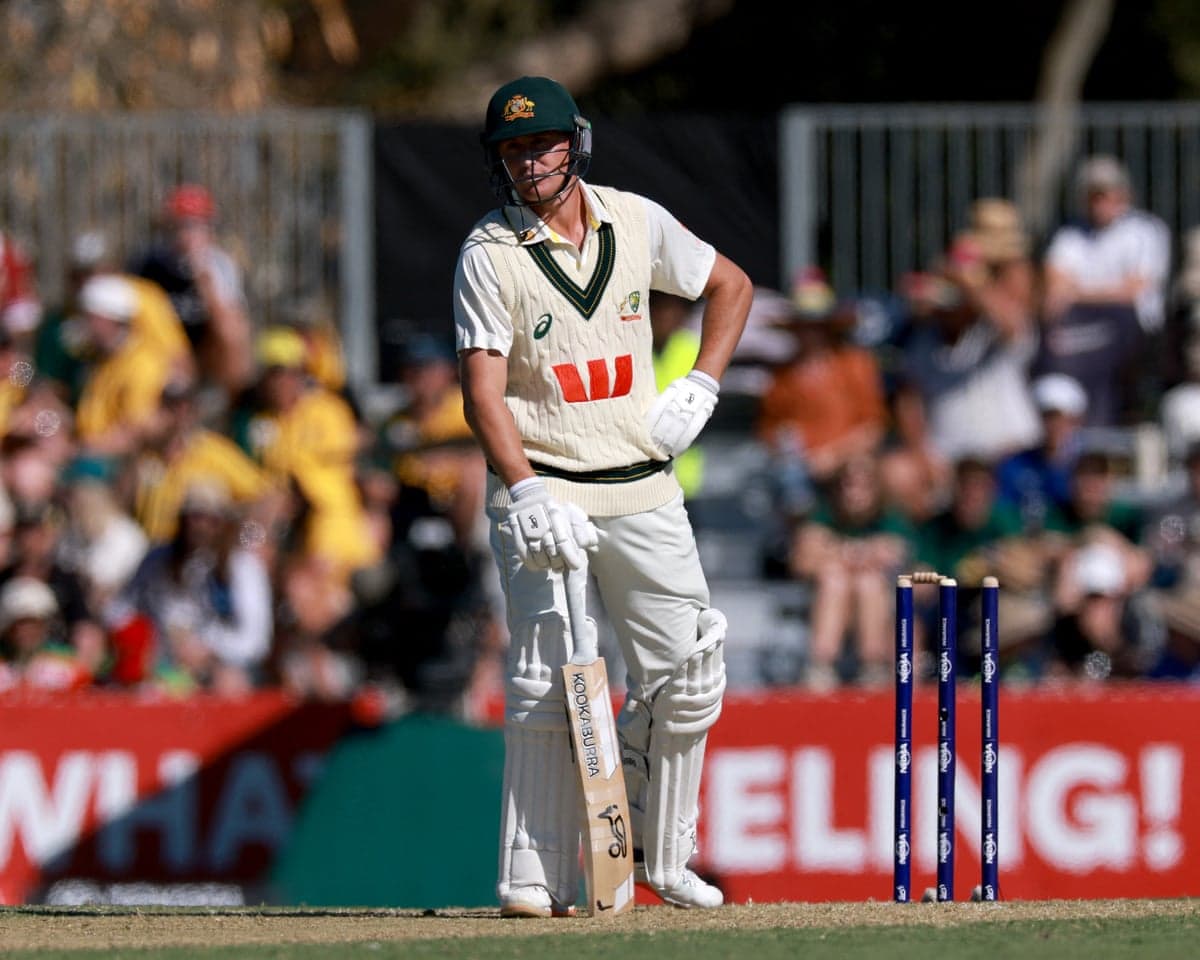
At first drop, Marnus Labuschagne's prospects of further appearances have dwindled to near-invisibility. A return to his native South Africa representing his adopted nation would carry emotional resonance, much like Weatherald becoming Australia's first player from Darwin while playing in an exceptionally rare Test at Marrara Oval. Yet if Weatherald's full circle might also mark his full stop, Labuschagne's extended trajectory toward South Africa may fall marginally short. The manner of his final dismissal—moving so far toward off stump that he kicked the ball onto leg stump before remonstrating with the stumps—suggested a player approaching exhaustion. Only unwavering faith from selectors could reignite his prospects.
The top order presents an almighty jumble. Below that sits the lower middle order, where Alex Carey's commitment to counterattacking wicketkeeping principles led him to bat more like a number nine than a number six. Beau Webster at number seven proved a triple failure, selected after a limited career yielding some important fifties but no truly significant score.
Little of this picture appears compelling. Nor, however, does Test batting in most parts of the world currently. South Africa possess a ball-to-bat disparity on paper more pronounced than Australia's own. Perhaps the October tour will become a contest between which team can better bridge that gap. Australia's planned schedule of 20 Tests across the year has already been reduced, but the issues exposed during these two matches may well influence the 18 that remain.
What happens next
Australia's South Africa tour begins with white-ball cricket, with the first ODI scheduled for 24 September 2026 in Durban. The Test series follows, with the opening match running from 9–13 October 2026 in Durban and the final Test concluding on 27–31 October 2026 in Cape Town. These contests will provide the first genuine examination of whether Australia's batting has genuinely improved or whether the team remains dependent on bowling dominance to mask deeper structural problems.