Australia's batting order disintegrated in spectacular fashion on day four of the second Test in Gqeberha, posting a first-innings total of just 99 runs before being compelled to bat again. According to The Guardian, the tourists' second innings saw them reach 156 for four by stumps, still 170 runs adrift of South Africa's first-innings lead of 326. The collapse leaves Australia facing an uphill battle to avoid defeat on the final day, with the home side in commanding position to level the three-Test series. BBC Sport noted that 99 is Australia's lowest score in Tests since being bowled out for 91 by India in Nagpur in 2023.
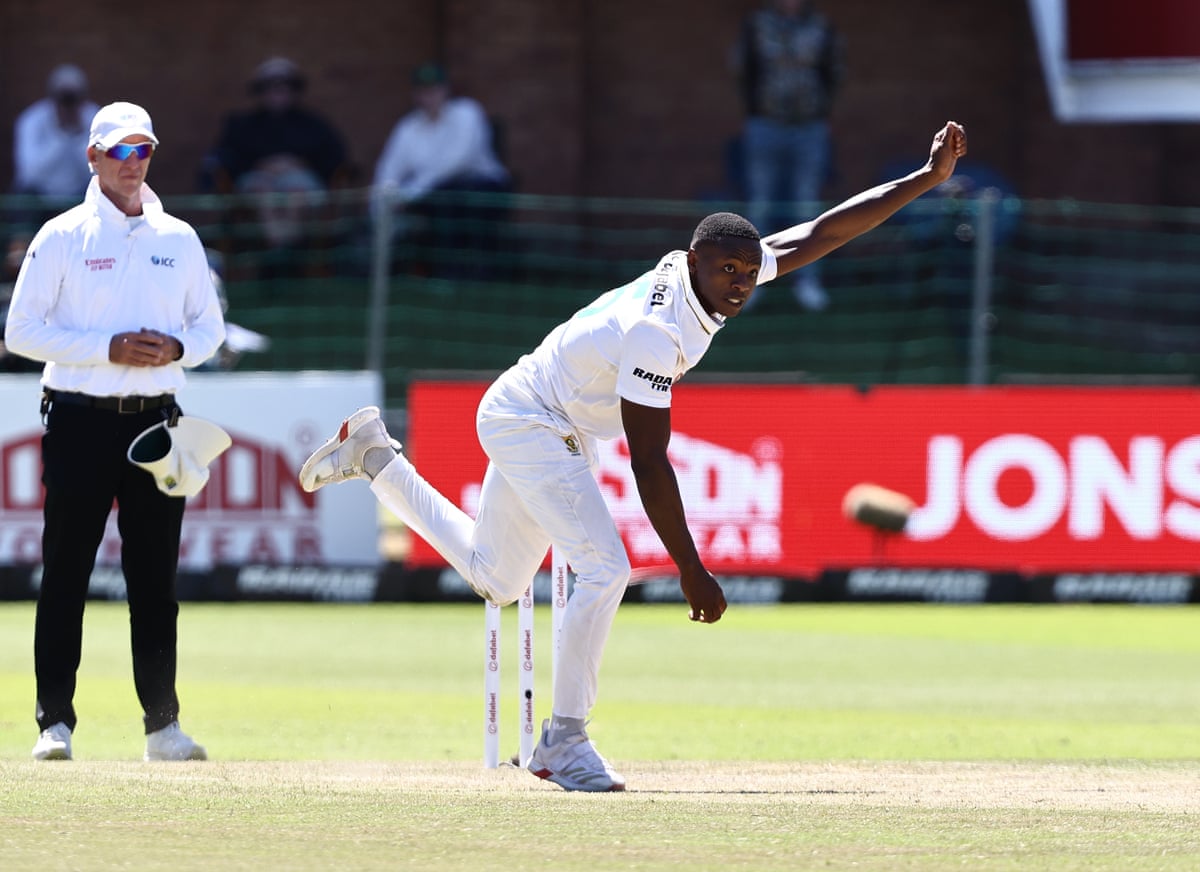
Nine Australian wickets tumbled in 38.3 overs as South African pace bowlers Marco Jansen and Kagiso Rabada unleashed sustained spells of hostility, combining pace with precision to dismantle the visitors' middle order. The scale of the batting failure ranks among Australia's most humiliating performances in recent memory, following previous low scores of 47 all out in Cape Town during the 2011 Test and 85 all out in Hobart in 2016. This was also the biggest first-innings deficit Australia has conceded since a Test against West Indies in November 1984.
Australia were forced to follow-on for only the third time in the past 38 years. The last occasion was against India at Sydney in 2019, with the most recent previous instance being the fourth Ashes Test at Trent Bridge in 2005.
How did the collapse unfold on day four?
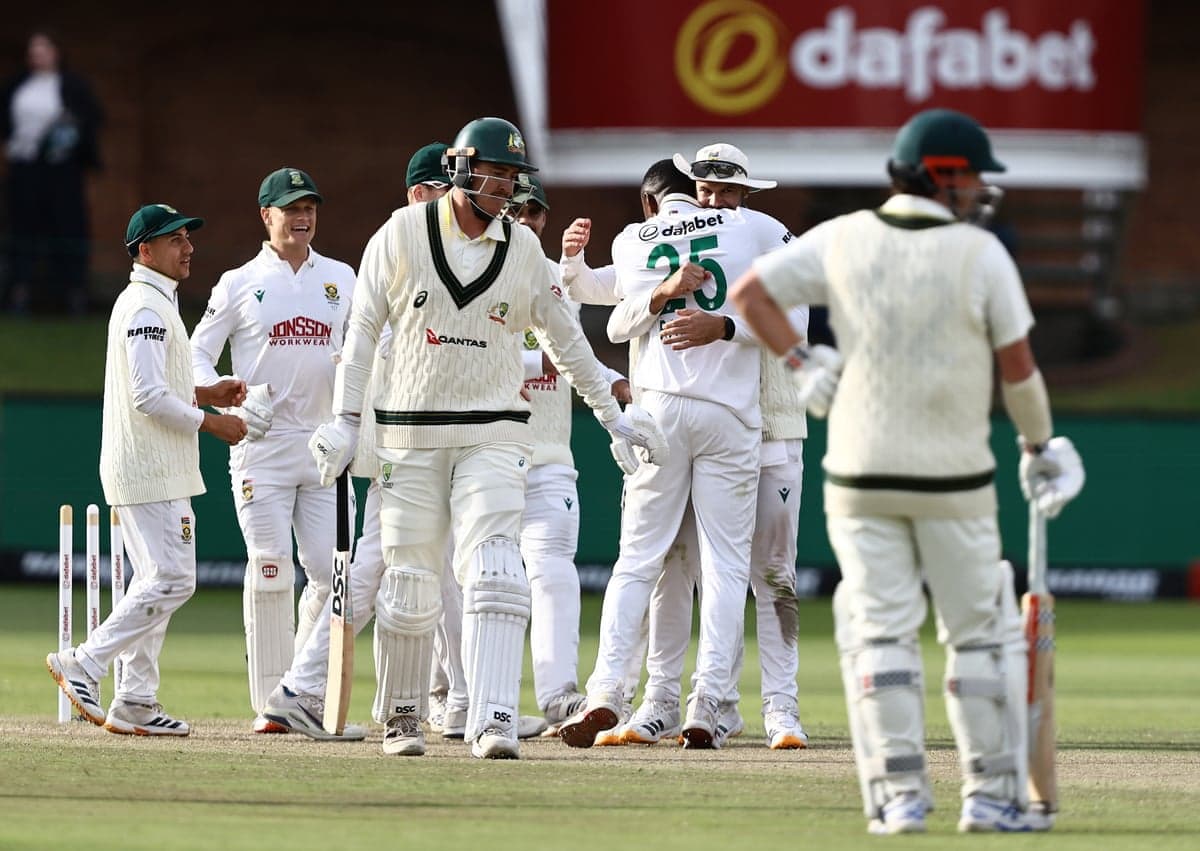
Jansen sparked the collapse by dismissing nightwatchman Scott Boland with his first ball of the day at the start of the second over. Four overs later he pinned Travis Head lbw on review for 14 and Marnus Labuschagne was brilliantly caught at slip by Simon Harmer off the bowling of Anrich Nortje for the same score. After Jansen nicked off Matt Renshaw and Alex Carey in the same over, he also found the edge of Beau Webster for his fifth Test five-wicket haul.
Jansen claimed five for 33, with Rabada and Wiaan Mulder taking two wickets each as Australia's batters surrendered soft dismissals throughout the innings. Alex Carey and Beau Webster both played reckless punches off the back foot to rising deliveries, handing catches to the fielders. Mitchell Starc repeated the error against Rabada, while Marnus Labuschagne edged Anrich Nortje to slip where Simon Harmer took a sharp catch. Pat Cummins abandoned all pretence of defence and slogged to the deep.
Steve Smith, who became the twelfth player to surpass 11,000 Test runs, appeared uncomfortable throughout his 28-run innings, a discomfort later attributed to a neck problem that restricted his head movement. When Wiaan Mulder's nip-backer eventually bowled him, Smith was positioned nowhere near the ball. Smith had received treatment to his neck throughout his 88 balls at the crease.
No other batter passed 14 runs, and the highest partnership was just 23. Mitchell Starc and Australia captain Pat Cummins fell within 11 balls of each other, after which captain Bavuma signalled to Australia's dressing room that they would have to bat again.
How did Maddinson's selection prove costly?
Nic Maddinson's opening partnership has become the tour's defining selection nightmare. After opener Nic Maddinson was dismissed late on day three, South Africa took the remaining nine wickets inside 40 overs on day four. In his first innings, he lasted just four balls on the third evening. His second-innings appearance proved scarcely more productive: he faced 10 balls, struck two fours, then retreated his back foot away from Rabada's line while dangling the bat out for a simple nick. The selection of a batter whose last strong run in first-class cricket occurred closer to three years ago than two represents a fundamental misunderstanding of the role. Test openers must face the opposition's best bowlers in their freshest state, with the new ball, under the most challenging conditions—a responsibility Maddinson has repeatedly failed to discharge.
What happened in Australia's second innings?
After being forced to follow on, Australia's second-innings resistance began promisingly. Travis Head and Marnus Labuschagne appeared to carry the blessing of fortune, with Head's edges finding gaps in the cordon while Labuschagne struck short leg twice and successfully overturned an lbw decision that was missing leg stump by the narrowest of margins. The pair took the team's second-innings total past their first-innings score of 99 for the loss of just one wicket, suggesting a possible escape route.
The partnership unravelled when Labuschagne, having beaten his recent bogey score of 37, fell at 39 attempting an ambitious launch over leg side against Harmer's spin. With Smith absent through injury, Matthew Renshaw—the key stabilising figure—was bowled for 11 by Rabada's ball that decked in sharply from around the wicket. Harmer then straightened an off-break to trap the promoted Beau Webster for eight. Scott Boland was called upon to perform nightwatch duties for the second time in the same day.
What is South Africa's path to victory?
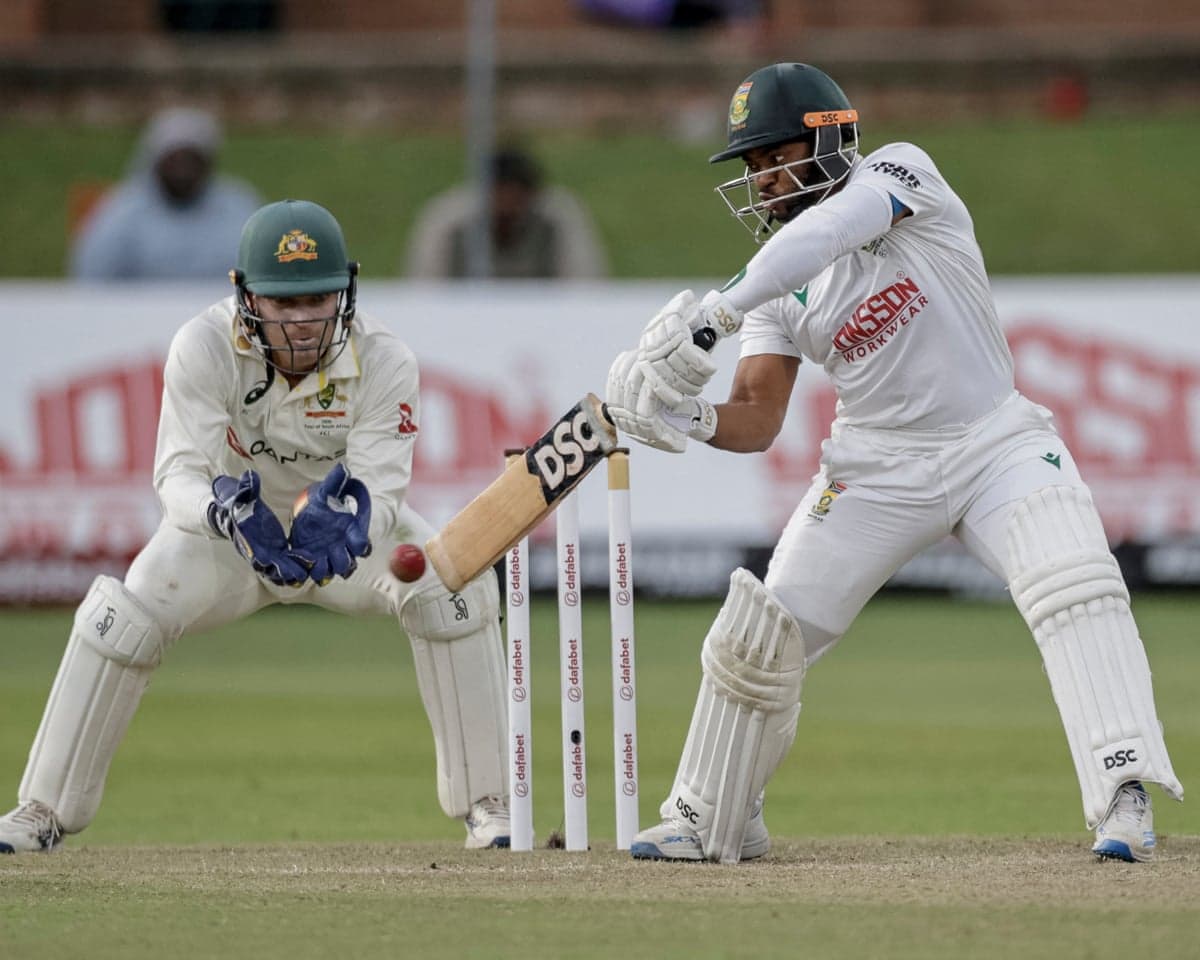
South Africa's first-innings total of 425 for nine was built on the foundation of Temba Bavuma's commanding 179 off 334 balls, which included an eighth-wicket record stand of 183 with Simon Harmer, who contributed 82. With Australia still 170 runs behind entering the final day, South Africa need only prevent a substantial partnership between the remaining batters to secure victory and level the series. Cricket News reported that Australia won the first Test in Durban by 214 runs, making this second Test crucial to the series outcome. South Africa now have more than 150 overs to complete victory.
Anrich Nortje was only able to bowl 3.3 overs because of an apparent groin issue, which will impact the remainder of the Test if he is unable to bowl again.
Can Australia mount a last-day rescue?
Any final-day salvation rests heavily on the shoulders of the injured Steve Smith, wicketkeeper Alex Carey, and Travis Head, who resumed on 87. Head's record as an opener reveals a stark split: averaging 33 in first innings but over 70 in second innings, suggesting he may be better suited to a different batting position. According to ESPN Australia, Australia were 69 for six after 33 overs on day four, with Marco Jansen having taken four for 16 at that point, underlining the depth of the crisis.
Pat Cummins has recently spoken about the possibility of altering batting orders between innings, and Head's contrasting performances provide the strongest argument for such experimentation. If he cannot anchor a successful rearguard action with support from his teammates, fundamental changes to Australia's batting structure will become unavoidable for the remainder of the tour.
What comes next?
The third and final Test of the series is scheduled to commence on October 27 and run through October 31 at Newlands Cricket Ground in Cape Town. Australia's selection strategy and batting order will likely face intense scrutiny following this collapse, particularly regarding the continued inclusion of Maddinson and the overall composition of the middle order.
Key Facts
- Australia's first-innings total of 99 ranks among their worst performances in recent Test history, the lowest since 91 against India in Nagpur in 2023
- Marco Jansen took five for 33 and Kagiso Rabada and Wiaan Mulder claimed two wickets each in Australia's first innings
- South Africa's 326-run first-innings lead was built on Temba Bavuma's 179 and Simon Harmer's 82, including an eighth-wicket record stand of 183
- Australia entered the final day at 156 for four, still 170 runs behind South Africa's first-innings total
- The series is level at one Test each, with the decider to be played at Newlands in Cape Town from October 27–31