

Chepstow Racecourse is celebrating a century of horse racing this month, having opened its gates in August 1926 on land bought from the historic Piercefield Park estate in Monmouthshire. The venue, which nearly folded within a decade of launching, went on to serve as a Royal Air Force base during the Second World War and later hosted concerts by performers including Tom Jones, before establishing itself as the home of the Welsh Grand National, the richest race in Wales.
Ten local dignitaries pooled their resources to buy 370 acres of rolling Monmouthshire parkland and build the near-two-mile course. Among the backers were Lords Tredegar, Glanely and Queenborough, whose investment laid the foundation for what would become one of only a handful of British racecourses to stage both flat and jumps racing throughout the year.
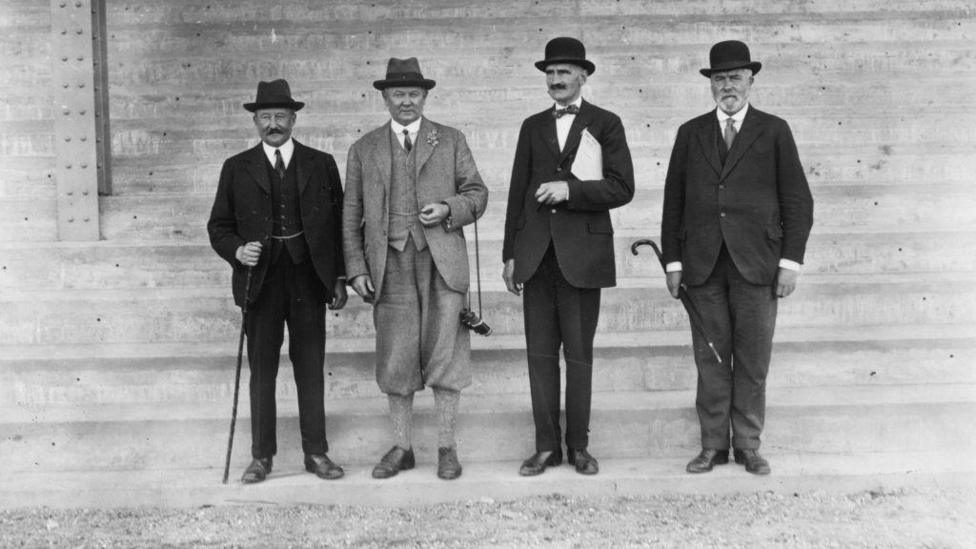
The inaugural meeting in August 1926 drew a crowd of roughly 20,000, with Lord Harewood's horse Conca D'Oro winning the very first race staged on the new track. A year later, Chepstow held its first jumps meeting, and according to a report marking the centenary, National Hunt racing arriving in 1927 came shortly after the course first opened its doors. Money troubles nearly forced the track to close during its first ten years, but it survived to become a fixture of the British racing calendar.
Why do jockeys rate the course so highly?
Riders consistently single out Chepstow for its fair, galloping layout, according to former Welsh jump jockey Alan Johns.
"Unanimously, Chepstow is loved by jockeys," he said.
"It's what we call a big galloping track so it has really long straights, big sweeping bends and generally that means the best horse wins.
"It probably has the the nicest fences in Britain, horses tend to jump very well here.
"The Aintree Grand National, the Gold Cup at Cheltenham and the Welsh Grand National would be in that sort of breath."
What are the most memorable moments in Chepstow's history?
Chepstow's hundred years have produced a string of standout stories, from a world-record run of winners to a Hollywood film inspired by a horse bred on a Blackwood allotment. No jockey has matched the feat of Sir Gordon Richards, who followed a victory at Nottingham with six wins from six rides at Chepstow the next day in October 1933, then added five more the following day at the same meeting — a run of 12 consecutive victories that stands as a world record.
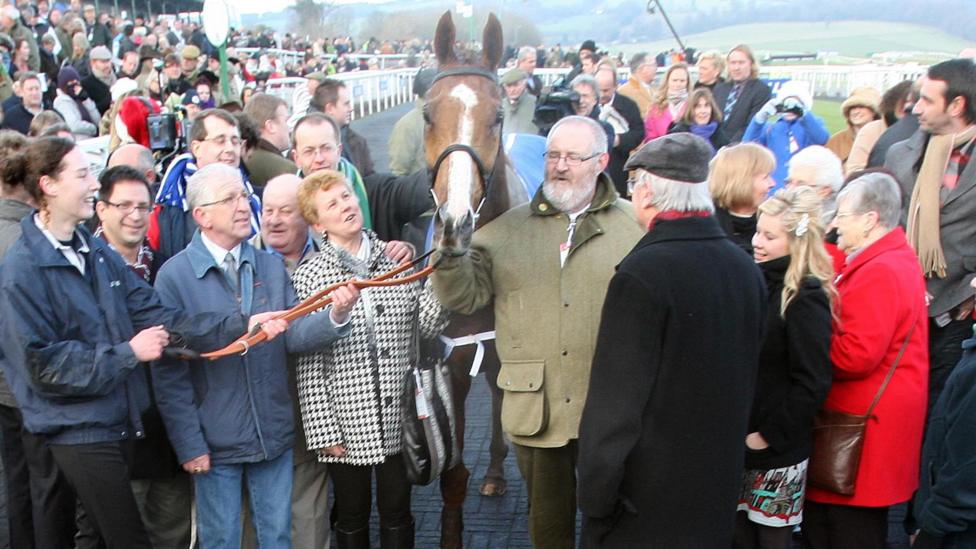
Perhaps the most celebrated tale, however, belongs to Dream Alliance, a horse raised on an allotment near Blackwood by owner Janet Vokes and a syndicate of friends who each contributed £10 a week towards his upkeep. After severing a leg tendon in 2008 — an injury that might have ended many horses' careers, or worse — the syndicate paid £20,000 for pioneering stem-cell treatment rather than give up on him.
The gamble paid off spectacularly. Jockey Tom O'Brien rode the then eight-year-old Dream Alliance to victory in the 2009 Welsh Grand National at odds of 20-1, a comeback story so remarkable it was later adapted into the 2021 film Dream Horse, starring Toni Collette and Damian Lewis.

How significant is the Welsh Grand National?
Since 1949, the Welsh Grand National has been the centrepiece of Chepstow's racing calendar, traditionally run over the Christmas period. According to the Racing Post, Chepstow became home to the race after Ely racecourse and then Newport racecourse closed in 1948, cementing its status as the spiritual home of jump racing in Wales.
The race has grown in prestige over the decades, with horses including Bindaree, Corbiere, Earth Summit, Rag Trade and Silver Birch completing the demanding double of winning both the Welsh National and the Aintree Grand National. Burrough Hill Lad, Cool Ground, Master Oats and Native River all proved their credentials at Chepstow before going on to glory at the Cheltenham Gold Cup.
One of the most memorable recent renewals came in 2025, when Welsh-trained Haiti Couleurs won the Welsh Grand National in front of a passionate home crowd. The horse was trained by Pembrokeshire-based Rebecca Curtis and ridden by champion jockey Sean Bowen.
"As a Welsh jockey or a Welsh person in racing, it's one of the races at the very top of the list to be involved in," added Johns.
"The Aintree Grand National, the Gold Cup at Cheltenham and the Welsh Grand National would be in that sort of breath really."
How is the centenary being marked?
Chepstow's hundredth anniversary is being celebrated with a dedicated Centenary Raceday, held on Sunday 9 August 2026, according to the racecourse's own announcement. The flat-racing card features six races, with gates opening at 12:06, the first race at 14:06 and the last at 17:01, and includes a contest billed as the "Training Series" Apprentice Handicap in honour of the milestone, according to race listings.
The celebrations extend beyond the track itself, with heritage displays, family entertainment and special drinks offers planned for the first hour after gates open, according to local coverage of the centenary. The racecourse has also introduced a "99p for 99 years" admission promotion for selected summer fixtures, according to the Racing Post, while attendance at the venue is reported to be up 29% this year compared with last year, according to WalesOnline.
Visit Monmouthshire has described the centenary meeting as a landmark moment intended to celebrate the course's story "from its earliest fixtures through to the present day," according to the tourism body's listing for the event.
Racecourse executive director Luke Admans said the anniversary was an opportunity to honour those who built and sustained the venue over the past century.
"I wanted to do something that was going to pay tribute to the 100 years of the racecourse and all the effort it took to get the racecourse open and the work that everyone's done [in that time] to make it such an amazing venue," he said.
"The flat course is very much horses for courses, it's an undulating surface, some horses really handle it, some not so much.
"There's a real core jumps racing fan base here. The Welsh National obviously has so much history, we launched the Welsh Racing Festival last year and it gets the jumps action going in October when we launch that three-day festival."
What happens next at Chepstow?
The racecourse says 29 fixtures are scheduled at Chepstow across 2026 following publication of the British Horseracing Authority's fixture list, according to the venue's own centenary announcement. Two further discounted fixtures under the "99p for 99 years" promotion are set for 19 August and 2 September 2026, according to the Racing Post.
The biggest event remaining on the calendar is the Coral Welsh Grand National, scheduled for 27 December 2026, which the racecourse describes as the year's flagship meeting. Organisers are also continuing to develop the Welsh Racing Festival, a three-day jump racing event first staged last October, which they hope will offer an intimate alternative to the Cheltenham Festival and help launch the British National Hunt season each autumn.
Key Facts
- Chepstow Racecourse opened in August 1926 on 370 acres bought from the Piercefield Park estate, drawing around 20,000 spectators to its first meeting.
- Sir Gordon Richards set a world record of 12 consecutive race wins across two days at Chepstow in October 1933.
- Dream Alliance, raised on a Blackwood allotment, won the 2009 Welsh Grand National at 20-1 after recovering from a severed leg tendon, inspiring the 2021 film Dream Horse.
- The Centenary Raceday takes place on Sunday 9 August 2026, with six races and gates opening at 12:06.
- The Coral Welsh Grand National, the biggest meeting of the year, is scheduled for 27 December 2026.


