

The Department of Homeland Security has confirmed plans to equip US Immigration and Customs Enforcement agents with gloves capable of delivering electric shocks, in a purchase that could cost up to $20m (£14.8m). The devices, known as the Generated Low Output Voltage Emitter, or GLOVE, would be issued to officers in Homeland Security Investigations and Enforcement Removal Operations, according to a DHS note published on Monday.
According to the Associated Press, ICE intends to purchase thousands of the devices and finalise the acquisition by March, tying the rollout to a specific procurement timeline rather than an open-ended plan.
How do the shock gloves work?
The GLOVE devices are triggered by a button that, when pressed, can deliver up to 380 volts of electricity — roughly three times the output of a standard American power socket — at a rate of as many as 30 pulses per second. A built-in microprocessor logs every activation.
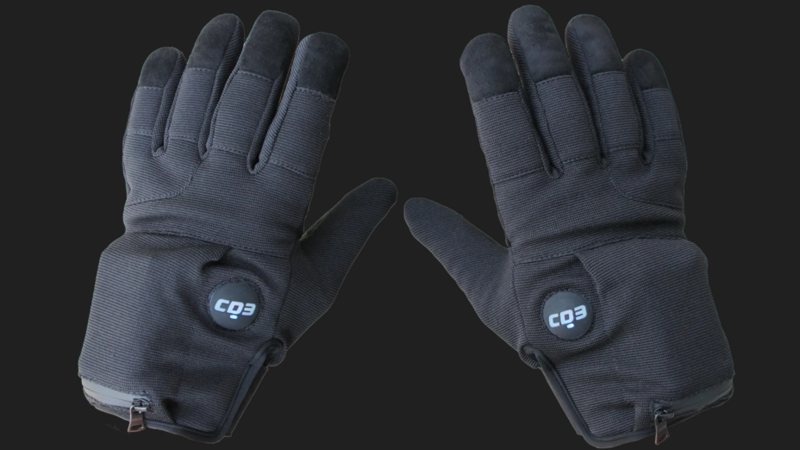
Unlike a taser, which drives barbs into the skin and can deliver shocks of up to 50,000 volts to complete a circuit inside the body, the gloves rely on direct contact with exposed skin to work. The manufacturer, Compliant Technologies LLC, describes them on its website as producing what the Associated Press reports the company calls “conductive distraction and de-escalation devices,” adding that the shock can only be transmitted once the glove touches bare skin rather than clothing.
Lt Butch Gallion, an administrator at Hawkins County jail in Tennessee, where the gloves are already in use, said officers rely on the deterrent effect of the device as much as the shock itself.
"We may or may not deploy them. It just depends on how they act. When you push the button to turn them on there's a light that displays. The inmates understand that light, and often just seeing the light brings compliance," he says.
He explained that officers can make initial contact through a subject's clothing and only move to bare skin — typically the wrist or elbow — if the person becomes combative.
"then you can apply the gloves to an area that the skin is exposed. And it's an instant complier for me".
What restrictions come with the devices?
The manufacturer's user manual advises against using the gloves on elderly people, small children, pregnant women or the "severely handicapped," and recommends that a second officer be present to help restrain a subject while they are deployed. The Associated Press reports that the manufacturer also warns the gloves should not be used as punishment or against people who are merely verbally defiant or belligerent, and that officers must complete a training course before use and be recertified every two years.

A former police chief, John Peters, told the Associated Press that he could envisage the gloves being used during vehicle removals and inside and outside detention facilities, but cautioned that officers would need robust policies and thorough training to use them responsibly.
What is DHS saying about the purchase?
In a statement, the Department of Homeland Security defended the move as part of routine equipment planning for its workforce.
"ICE is constantly assessing the needs of our officers in the field to ensure they have the tools and equipment necessary to safely arrest and remove criminal illegal aliens from our country."
Compliant Technologies LLC said it was unable to comment on the sale. The Department of Homeland Security said a no-bid purchase contract could be published as early as Friday.
Why are civil rights groups concerned?
The American Civil Liberties Union has voiced alarm over the plan, pointing to what it describes as a pattern of aggressive tactics by immigration officers with limited oversight. Jenn Rolnick Borchetta, deputy director on policing at the ACLU, criticised the agency's record on use of force.
"ICE spent the last year showing this country that they are willing to disregard the law and are too quick to use force, with devastating and at times fatal consequences for citizens and noncitizens alike," said Jenn Rolnick Borchetta, deputy director on policing at the ACLU.
She warned that the discreet nature of the gloves could make abuses harder to detect and address.
"Now they [ICE] might be equipped with a device that allows them to deliver an electric shock with their hands by pushing a small button, in a move that might be imperceptible to those watching," Borchetta said.
"Giving immigration agents a concealed means of delivering terrible pain is a recipe for more harm to the public and less accountability."
How does this connect to recent ICE controversies?
The proposed purchase comes amid heightened scrutiny of ICE's use of force following a string of fatal incidents. Mexican national Lorenzo Salgado Araujo was fatally shot by ICE agents during a Houston traffic stop, with the Department of Homeland Security later confirming he was not the intended target, as detailed in earlier coverage of the Houston shooting. Separately, a Colombian national, Johan Sebastián Durán Guerrero, was killed during an immigration enforcement operation in Maine, a case examined in reporting on the Maine shooting and in a related account describing him as a 26-year-old man killed during a removal operation.
Those two fatal shootings prompted ICE to order a nationwide pause on most vehicle stops, a significant policy shift detailed in coverage of the vehicle-stop suspension. The agency has also faced pressure to meet daily arrest quotas as it carries out President Donald Trump's deportation agenda, a backdrop that critics say raises the stakes around any new use-of-force tool.
What happens next?
The Department of Homeland Security has indicated that a no-bid contract solicitation for the gloves could be published as early as Friday, according to footage reviewed on a video report on the planned procurement. If the timeline holds, ICE could finalise its purchase of thousands of the devices by March, according to the Associated Press, setting up a rapid expansion of the tool's use across immigration enforcement operations nationwide.
Key Facts
- ICE plans to spend up to $20m (£14.8m) on GLOVE electric-shock gloves, according to a Department of Homeland Security note published on Monday.
- The gloves can deliver up to 380 volts and 30 pulses per second, and must contact bare skin to activate.
- Reports indicate ICE aims to buy thousands of units and complete the purchase by March.
- A no-bid contract solicitation could be published as early as Friday.
- The purchase follows fatal ICE shootings in Texas and Maine that prompted a nationwide pause on most vehicle stops.


