

David Crowley has won the Democratic primary for Wisconsin governor, narrowly defeating progressive challenger Francesca Hong in a race called after a delay caused by late-reporting absentee ballots. The result, projected by CBS News, a partner of this broadcaster, halts a recent run of primary victories for the party's left wing and sets up a November general election contest between Crowley and Republican nominee Tom Tiffany.
Crowley, who serves as chief executive officer of Milwaukee County, edged out Hong, a state assemblywoman, in what was widely seen as a surprise given her standing as the perceived frontrunner heading into election day. Writing on X after the result was called, Crowley signalled he was ready to move forward.
get to work
He added that his priorities would include:
making life more affordable, strengthening our schools, creating good-paying jobs, and making sure opportunity reaches every corner of our state
Tiffany, who currently represents Wisconsin in the US Congress and has President Donald Trump's backing, comfortably won the equivalent Republican primary. He too has centred his campaign on affordability, alongside pledges to cut taxes, support farmers and improve healthcare access.
Why did the result take so long to call?
The race remained too close to call for hours after polls closed because of delayed reporting from Milwaukee County. According to a local television station's report, roughly 28,000 absentee ballots were uploaded late due to human error, while a national newspaper's live coverage put the figure at around 20,000 ballots delayed by a technical glitch. When Milwaukee's absentee tally was finally reported, it favoured Crowley by about five percentage points, according to the same live coverage, which proved decisive in tipping the outcome his way.
Crowley's final margin of victory was under one percentage point, according to Wisconsin public broadcasting's report, meaning Hong retained the legal right to request a recount. She chose not to, and the Associated Press subsequently confirmed Crowley's win after her concession, closing off the possibility of a formal recheck of the vote.
How did Hong's campaign unravel?
Hong, a state assemblywoman, single mother and former chef, had been aiming to become the first democratic socialist elected to lead Wisconsin. She faced sustained scrutiny during the campaign over past remarks on police funding and the Thanksgiving holiday, some of which she later retracted, and questions persisted about whether her positions could hold up against a Republican opponent in a general election.

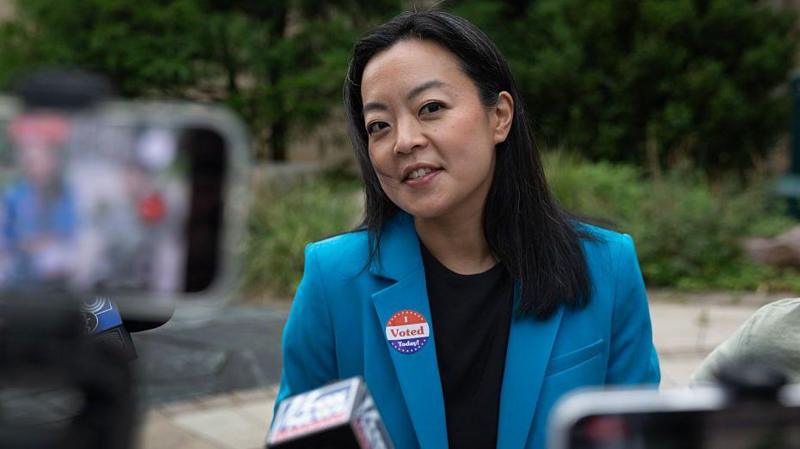
Notably, prominent progressive figures such as Vermont Senator Bernie Sanders and New York Congresswoman Alexandria Ocasio-Cortez, who have frequently backed insurgent candidates like Hong, did not weigh in on the Wisconsin race. Following the result, Hong's campaign manager said Hong was proud of the race they had run, according to reporting from the Associated Press.
How does this fit into the wider pattern of Democratic primaries?
Crowley's win breaks a recent streak of primary successes for candidates aligned with the party's left flank, some of whom have been endorsed by or affiliated with the Democratic Socialists of America. These candidates have built support not only by opposing Republican policy but by challenging the Democratic establishment in Washington, including through calls to end or reduce US funding to Israel over its military campaign in Gaza.
Last week, Abdul El-Sayed won Michigan's Democratic Senate primary, defeating Congresswoman Haley Stevens in a contest that exposed deep party divisions over Israel, campaign finance and the direction of the Democratic Party, as detailed in our earlier coverage of that race. In June, New York City Mayor Zohran Mamdani endorsed three progressive candidates in House primaries, all of whom won, unseating two incumbents and defeating a retiring congresswoman's chosen successor, according to our coverage of that sweep.
That leftward momentum continued elsewhere on the same night as the Wisconsin result. In neighbouring Minnesota, Peggy Flanagan won the Democratic nomination for the state's US Senate seat, defeating the more centrist Angie Craig. In South Carolina, Darline Graham Nordone advanced to a run-off later this month in a special Republican Senate primary triggered by the death of her brother, Senator Lindsey Graham; she will face Democrat Annie Andrews for the vacant seat.
What happens next?
Crowley will face Tiffany in Wisconsin's general election for governor in November, a contest expected to be tightly fought and one with implications beyond the state given its bearing on control of Congress in the midterm elections. Tiffany's campaign is expected to keep its focus on affordability, including proposals to lower taxes, support farmers and expand healthcare access, according to a report from a national broadcaster's political coverage. Crowley re-entered the governor's race last month after briefly withdrawing to back a rival candidate, doing so with the backing of current Governor Tony Evers, a factor that helped frame him as the establishment-aligned choice in the primary.

Key Facts
- David Crowley, Milwaukee County's chief executive, won Wisconsin's Democratic gubernatorial primary over state assemblywoman Francesca Hong.
- The race was delayed for hours by late-reporting Milwaukee absentee ballots, estimated at either roughly 20,000 or 28,000 depending on the source, attributed to a technical or human error.
- Crowley's final margin was under one percentage point; Hong conceded rather than seek a recount, and the Associated Press then confirmed his win.
- Crowley will face Republican Tom Tiffany, a sitting US congressman backed by President Trump, in November's general election.
- The result breaks a recent winning streak for progressive Democratic candidates, following wins by Abdul El-Sayed in Michigan and Mamdani-backed candidates in New York.


