

South Carolina Republicans will choose between interim Senator Darline Graham and congressman Ralph Norman in a runoff on 25 August 2026 to decide who carries the party's nomination for the seat once held by the late Senator Lindsey Graham. The two emerged from a crowded field after Tuesday's abbreviated special primary, held on 11 August 2026, failed to produce a majority winner. Whoever prevails will face Democratic nominee Annie Andrews, a pediatrician, in the November general election.
Graham entered the primary with a narrow polling advantage, and surveys pointed to an unusually tight scramble for the second runoff slot. According to the most recent survey from the Trafalgar Group, Norman, congressman Russell Fry and former governor Mark Sanford were bunched within a single percentage point of one another heading into election day.
Who else appeared on the ballot?
The primary drew a far larger field than the top contenders alone. According to a report by the New York Times, ten candidates in total sought the Republican nomination, including businessman Mark Lynch, whose candidacy had drawn little attention before the vote compared with the more prominent names in the race.
What does Graham say qualifies her for the seat?
Graham, a political newcomer who has leaned on her record running a state agency, argued after casting her ballot on Tuesday that her short time in Washington had already produced results.
"I ran a state agency. I turned it from a struggling agency into a national model. I think that's great experience to bring to the table," Graham said, after casting her ballot on Tuesday. She highlighted the passage of a sanctions bill targeting Russia during her short tenure in Washington. "I was the deciding vote on Todd Blanche as attorney general. So I think I've accomplished a whole lot in three weeks."
Graham has emphasized her endorsement from President Trump while also securing backing from South Carolina Governor Henry McMaster and Senate majority leader John Thune. In interviews, she has framed her outsider status alongside a stated focus on affordability as the case for voters to send her back to Washington on her own terms.
What is Norman's pitch to voters?
Norman, who has represented a Charlotte-area congressional district since 2017, drew strength from a district that punches above its weight in statewide primary turnout. He also retained much of the statewide campaign infrastructure built during his unsuccessful bid for governor in June 2026.
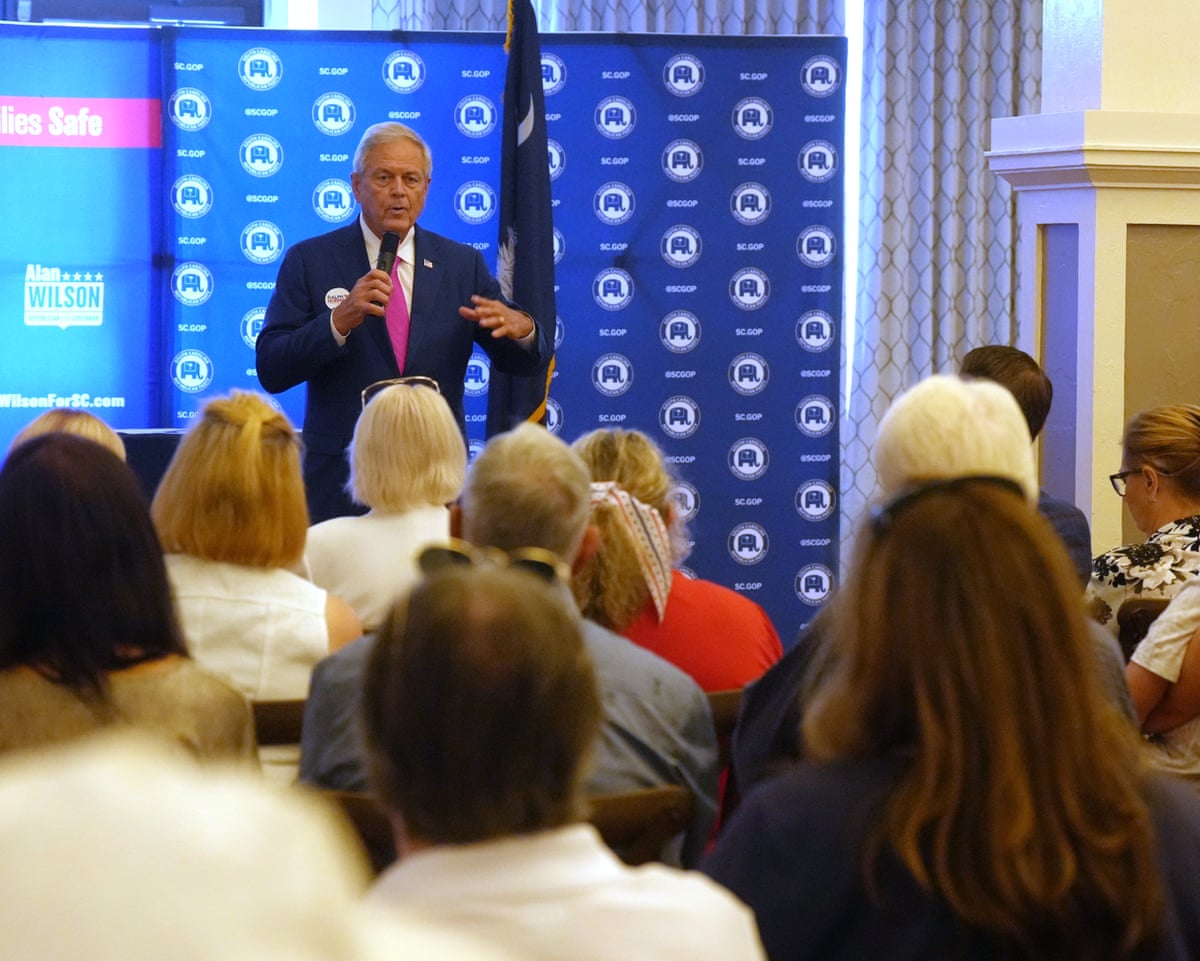

His campaign has centered on support for the Save America Act, a Trump-backed measure that would require proof of citizenship for voter registration and mandate that states submit their voter rolls for federal oversight. Norman has also promoted legislation to strip housing funding from cities that decline to cooperate with Immigration and Customs Enforcement.
How did the other candidates campaign against each other?
The compressed primary window produced sharp exchanges among the leading Republicans, playing out across debates, social media and paid advertising. Sanford, who served as governor between two separate stints in Congress, ran on fiscal restraint and pointed to the scale of the federal debt as his central concern.
"I got into this race because I believe our nation is at a financial tipping point." Sanford wrote on social media on Tuesday. "I held the line on spending as Governor unlike any Governor before or since and ask for your vote today so that I might fight for our grandkids' ability to afford the American Dream."
Fry, meanwhile, built advertising around a debate remark from Graham that appeared favorable toward data center development, and has compared her appointment to the Senate to an act of "DEI" — a reference to diversity, equity and inclusion policies that have become a target for conservative critics. Fry himself faced criticism from Graham and other rivals for running for the Senate seat while simultaneously seeking to keep his House seat.
How did Graham get the seat, and has her eligibility been questioned?
Graham's path to the ballot began with the death of her brother, Senator Lindsey Graham, which triggered the compressed special election timeline. As reported previously, Darline Graham Nordone was named by South Carolina's governor as his temporary Senate replacement, with the appointment intended to run through 2027 in honor of her brother's legacy following his death from an aortic tear. According to , Graham was sworn in on a Tuesday in mid-July 2026 to fill the seat on an interim basis while the special election process moved forward.
Her candidacy has not gone unchallenged within party ranks. also reported that CJ Westfall, the chair of the South Carolina Republican Party in Dorchester County, formally petitioned the state party's rules committee to review Graham's eligibility to run for the seat before candidates were officially certified. Separately, reporting from Fox News noted that President Trump had personally asked Graham to enter the primary and had endorsed her candidacy ahead of the vote, even as several other prominent Republicans chose to run against his preferred successor.
What historical precedent does this election follow?
Statewide special Senate elections are uncommon in South Carolina. The last comparable episode followed the 2013 resignation of Senator Jim DeMint, who stepped down to lead the Heritage Foundation. Then-Governor Nikki Haley appointed then-congressman Tim Scott to fill the vacancy, and Scott went on to win both the nomination and the special election comfortably, becoming only the second Black Republican senator since Reconstruction and the first Black senator from the South elected directly by voters. He remains the longest-serving African American senator in American history.
What happens next?
According to the New York Times, the Republican runoff between Graham and Norman is scheduled for 25 August 2026, with the winner advancing to face Democrat Annie Andrews in November's general election. Coverage of the broader South Carolina contest has also touched on other unfolding national stories, including earlier reporting on the primary's closing polls, which also covered ICE equipment purchases, new Medicaid restrictions on transgender youth care, and a lawsuit over International Criminal Court sanctions.
Key Facts
- Darline Graham and Ralph Norman advanced to a runoff after the 11 August 2026 primary produced no outright winner.
- The Republican runoff is scheduled for 25 August 2026; the winner faces Democrat Annie Andrews in November.
- Ten candidates ran in total, including businessman Mark Lynch, according to the New York Times.
- Graham was appointed to the seat following the death of her brother, Senator Lindsey Graham, and was sworn in as interim senator in mid-July 2026.
- A South Carolina GOP county chair formally requested a review of Graham's eligibility before candidates were certified, per .


